Ciri dan struktur
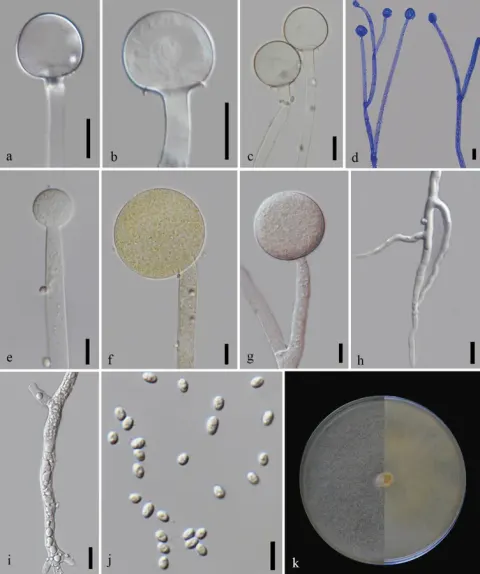
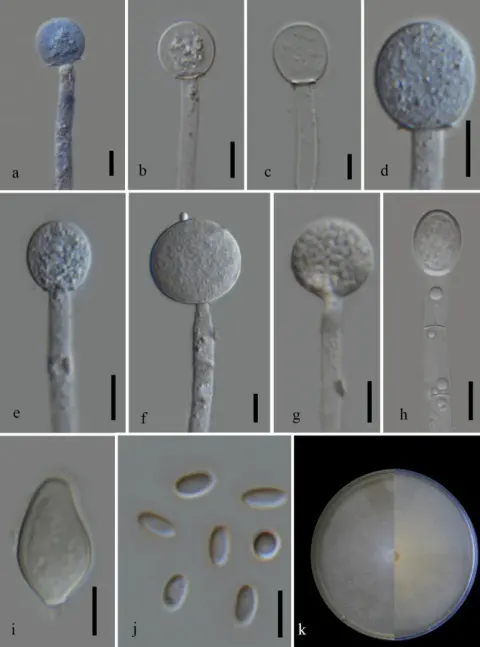
Dicranophora fulva was illustrated by botanist Charles Geoffrey Dobbs in 1938. The mold produces two types of sporangia: one type is tree-like in shape, with mostly single-spored sporangiola; the other type has a morphology more typical of the Mucorales. Zygospores produced by the fungus have irregular surface crevices. It appears to require high humidity and ample moisture, cool temperatures and abundant bolete mushrooms to flourish, a set of conditions more likely to occur in montane regions, which might explain the lack of records for this species. The mold becomes dormant in the autumn, but the circumstances that induce it to germinate are unknown.
Habitat dan peran ekologis
It is unclear whether Dicranophora fulva is a mycoparasite (living off living material) or saprotrophite (living off dead or decaying material). It was initially thought to be the former, as are many Mucorales. However it is readily cultured on a wide variety of substrates such as bread and is hence suspected of being saprotrophic.
- Habitat atau konteks temuan
- kultur yang didokumentasikan
- Substrat
- Informasi belum tersedia pada sumber rilis ini.
- Peran atau konteks
- Pengurai
Reproduksi
Dicranophora fulva was illustrated by botanist Charles Geoffrey Dobbs in 1938. The mold produces two types of sporangia: one type is tree-like in shape, with mostly single-spored sporangiola; the other type has a morphology more typical of the Mucorales. Zygospores produced by the fungus have irregular surface crevices. It appears to require high humidity and ample moisture, cool temperatures and abundant bolete mushrooms to flourish, a set of conditions more likely to occur in montane regions, which might explain the lack of records for this species. The mold becomes dormant in the autumn, but the circumstances that induce it to germinate are unknown.
Catatan identitas dan cakupan
- Nama diterima mengikuti Catalogue of Life Base2026-09-11; uraian mempertahankan konsep dan nama sumber aslinya.
- Original geographic, specimen and life-cycle scope retained; source import awaits individual editorial review.
- Impor dan terjemahan otomatis belum diperiksa editorial per profil. Struktur reproduktif yang disebutkan tidak membuktikan seluruh siklus hidup diketahui.
- Pengukuran pada uraian mengikuti spesimen, kultur, dan metode sumber; angka tidak diperluas ke semua populasi.
Catatan distribusi dalam narasi mengikuti sumbernya. Dokumentasi spesimen atau foto mengikuti catatan sumber. Bukti wilayah Indonesia dan penilaian konservasi tidak disimpulkan dari gambar.
Melihat dengan konteks
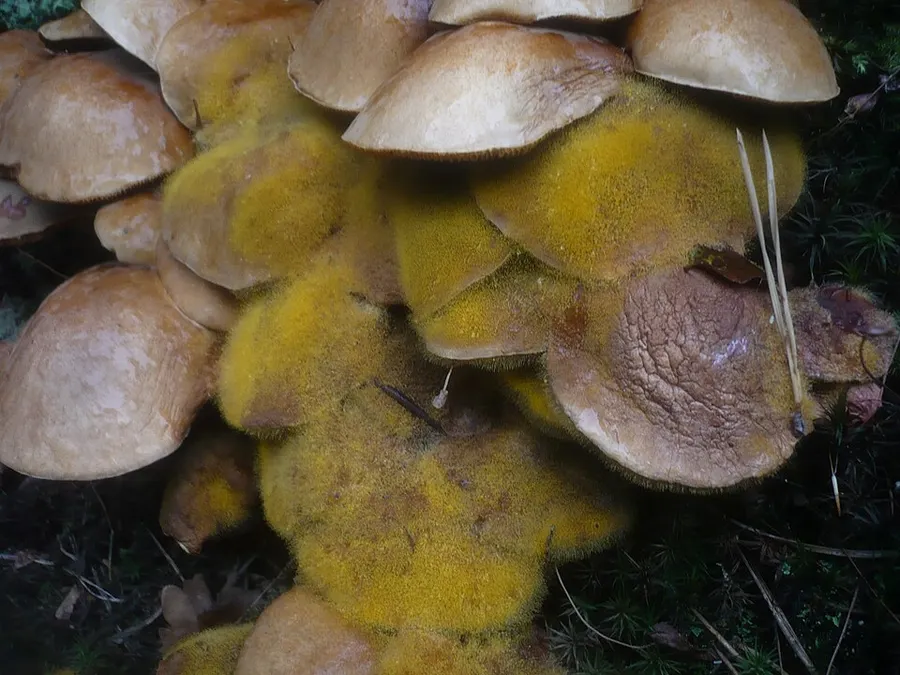
Dokumentasi Dicranophora fulva dari Wikimedia Commons. Fruitbodies of the bolete fungus Suillus bovinus attacked by the yellow mold Dicranophora fulva . Specimens found in Mitterriegel, Marz, Bezirk Mattersburg, Burgenland, Austria. Identifikasi mengikuti record berkas sumber.
- Jenis
- Fotografi
- Kredit
- Gerhard Koller (Gerhard)
- Lisensi
- CC BY-SA 3.0
- Sumber media
- Buka entri sumber
Sumber profil
- [1] Dicranophora fulva — Wikipedia (en)
- [2] Catalogue of Life Base2026-09-11 — Dicranophora fulva
- [3] Dokumentasi visual — Dicranophora fulva
Rujukan halaman ini
Fungi. Dicranophora fulva. Rilis data fungi-2026-10-12-expansion-2. https://fungi-atlas.mgadib.chatgpt.site/jamur/dicranophora-fulva/.
Status: impor sumber; pemeriksaan editorial per profil belum selesai. Untuk klaim biologis, gunakan rujukan pada bagian terkait dan periksa konteks sumber aslinya.