01 / Morfologi

Ciri dan struktur

The thallus of Eschatogonia triptophyllina is composed of tiny, scale-like with that are extremely short and intricately or shallowly cut, imparting a delicate, frilled appearance that remains evident even through a hand lens. While still closely attached to the bark when young, the lobes tend to lift slightly as they mature, creating a subtle three-dimensional texture. Unlike most others in the genus, no crystals or colour-forming acids can be demonstrated in the medulla using thin-layer chromatography or standard chemical spot tests, and the remains green throughout. Fruiting bodies (apothecia) are reddish brown and convex; detailed spore measurements remain uncertain. The protologue reported (needle-shaped) spores 23–32 μm long, whereas T. D. V. Swinscow and Hildur Krog later gave a range of 40–55 μm; Timdal could not find mature spores in the lectotype to resolve the discrepancy. No asexual propagules have been observed in this species.

Sebagian uraian ditampilkan dalam bahasa sumber; terjemahannya belum tersedia atau belum lolos pemeriksaan.

Rujukan: [1]

Pengukuran mengikuti objek, spesimen atau kultur, dan metode yang disebutkan sumber. Baca uraian asli untuk konteks lengkap.

02 / Kehidupan

Habitat dan peran ekologis

Little is known about the ecology of E. triptophyllina. The lectotype label indicates a corticolous habit (growing on bark) in tropical rainforest, consistent with other members of the genus, but gives no precise locality beyond the broad "tropical America/Africa" range historically ascribed to Eschatogonia. Timdal points out that E. triptophyllina is "known from only one collection" and was not encountered during extensive surveys in Amazonian Peru.

Sebagian uraian ditampilkan dalam bahasa sumber; terjemahannya belum tersedia atau belum lolos pemeriksaan.

Rujukan: [1]

Habitat atau konteks temuan
Informasi belum tersedia pada sumber rilis ini.
Substrat
Informasi belum tersedia pada sumber rilis ini.
Peran atau konteks
Pembentuk liken
Temukan hubungan serupa
03 / Siklus hidup

Reproduksi

Fruiting bodies (apothecia) are reddish brown and convex; detailed spore measurements remain uncertain. The protologue reported (needle-shaped) spores 23–32 μm long, whereas T. D. V. Swinscow and Hildur Krog later gave a range of 40–55 μm; Timdal could not find mature spores in the lectotype to resolve the discrepancy. No asexual propagules have been observed in this species.

Sebagian uraian ditampilkan dalam bahasa sumber; terjemahannya belum tersedia atau belum lolos pemeriksaan.

Rujukan: [1]

Sinonim menurut acuan taksonomi rilis: Lecidea triptophyllina; Psorella triptophyllina; Thalloidima triptophyllinum
04 / Batas informasi

Catatan identitas dan cakupan

  • Nama diterima mengikuti Catalogue of Life Base2026-09-11; uraian mempertahankan konsep dan nama sumber aslinya.
  • Original geographic, specimen and life-cycle scope retained; source import awaits individual editorial review.
  • Impor dan terjemahan otomatis belum diperiksa editorial per profil. Struktur reproduktif yang disebutkan tidak membuktikan seluruh siklus hidup diketahui.
  • Pengukuran pada uraian mengikuti spesimen, kultur, dan metode sumber; angka tidak diperluas ke semua populasi.

Catatan distribusi dalam narasi mengikuti sumbernya. Dokumentasi spesimen atau foto mengikuti catatan sumber. Bukti wilayah Indonesia dan penilaian konservasi tidak disimpulkan dari gambar.

05 / Dokumentasi

Melihat dengan konteks

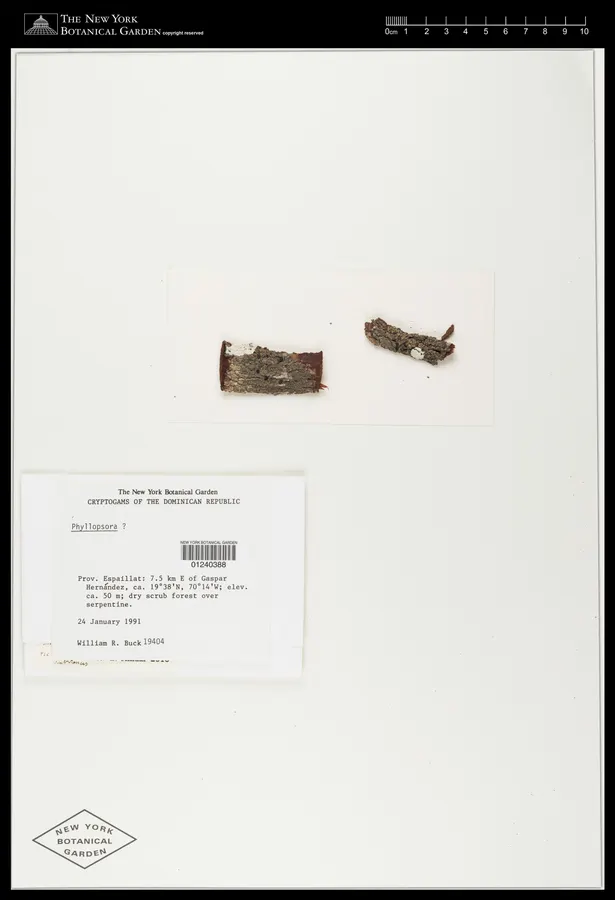
Voucher herbarium Eschatogonia triptophyllina (01240388), The New York Botanical Garden. Identifikasi mengikuti record spesimen sumber. Foto bahan, kemasan, atau label herbarium sebagaimana tersedia pada record institusi; bukan foto lapangan atau penentuan spesimen independen.

Jenis
Voucher herbarium
Kredit
The New York Botanical Garden
Lisensi
CC BY 4.0
Sumber media
Buka entri sumber

Gambar menunjukkan objek menurut identifikasi sumber, bukan verifikasi independen spesimen oleh Fungi. Tidak ada skala baru yang ditambahkan.

06 / Rujukan

Sumber profil

  1. [1] Eschatogonia triptophyllina — Wikipedia (en)Bagian sumber: Frozen revision 1294117838
    Tanggal penghimpunan sumber: 2026-10-12
    Teks sumber: CC BY-SA4.0 · Wikipedia contributors
  2. [2] Catalogue of Life Base2026-09-11 — Eschatogonia triptophyllinaBagian sumber: ColDP NameUsage.tsv ID 3BGRV; accepted species; source 2073
    Tanggal penghimpunan sumber: 2026-10-12
  3. [3] Dokumentasi visual — Eschatogonia triptophyllinaBagian sumber: Individual media record; identification follows the source, not independent determination
    Tanggal penghimpunan sumber: 2026-10-12
    Media sumber: CC BY 4.0 · The New York Botanical Garden

Adaptasi teks: CC BY-SA 4.0. Wikipedia contributors — Eschatogonia triptophyllina — Wikipedia (en)

Uraian asli dan riwayat sumber

Riwayat atau halaman sumber

Ringkasan sumber

Eschatogonia triptophyllina is a rare species of lichen in the family Ramalinaceae. It was first described in 1863 by the Finnish lichenologist William Nylander as Lecidea triptophyllina and was transferred to the genus Eschatogonia by Klaus Kalb in 2004. The species is distinguished by its tiny, intricately scalloped , reddish-brown apothecia (fruiting bodies), and complete absence of detectable lichen products, and is known from only a single collection with an uncertain tropical location.

Revisi sumber

Morfologi sumber

The thallus of Eschatogonia triptophyllina is composed of tiny, scale-like with that are extremely short and intricately or shallowly cut, imparting a delicate, frilled appearance that remains evident even through a hand lens. While still closely attached to the bark when young, the lobes tend to lift slightly as they mature, creating a subtle three-dimensional texture. Unlike most others in the genus, no crystals or colour-forming acids can be demonstrated in the medulla using thin-layer chromatography or standard chemical spot tests, and the remains green throughout. Fruiting bodies (apothecia) are reddish brown and convex; detailed spore measurements remain uncertain. The protologue reported (needle-shaped) spores 23–32 μm long, whereas T. D. V. Swinscow and Hildur Krog later gave a range of 40–55 μm; Timdal could not find mature spores in the lectotype to resolve the discrepancy. No asexual propagules have been observed in this species.

Revisi sumber

Ekologi sumber

Little is known about the ecology of E. triptophyllina. The lectotype label indicates a corticolous habit (growing on bark) in tropical rainforest, consistent with other members of the genus, but gives no precise locality beyond the broad "tropical America/Africa" range historically ascribed to Eschatogonia. Timdal points out that E. triptophyllina is "known from only one collection" and was not encountered during extensive surveys in Amazonian Peru.

Revisi sumber

Struktur reproduksi sumber

Fruiting bodies (apothecia) are reddish brown and convex; detailed spore measurements remain uncertain. The protologue reported (needle-shaped) spores 23–32 μm long, whereas T. D. V. Swinscow and Hildur Krog later gave a range of 40–55 μm; Timdal could not find mature spores in the lectotype to resolve the discrepancy. No asexual propagules have been observed in this species.

Revisi sumber

Rujukan halaman ini

Fungi. Eschatogonia triptophyllina. Rilis data fungi-2026-10-12-expansion-2. https://fungi-atlas.mgadib.chatgpt.site/jamur/eschatogonia-triptophyllina/.

Status: impor sumber; pemeriksaan editorial per profil belum selesai. Untuk klaim biologis, gunakan rujukan pada bagian terkait dan periksa konteks sumber aslinya.