Ciri dan struktur
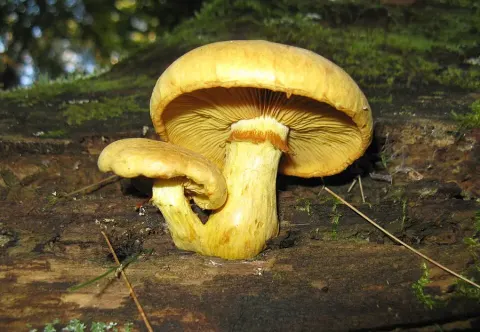
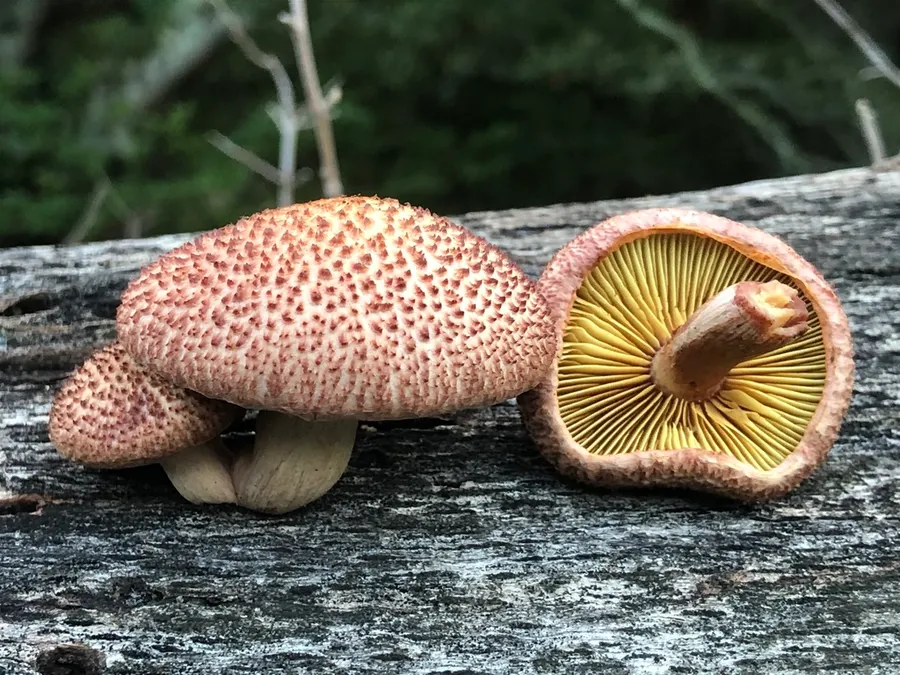
The fruit bodies have reddish to purplish to yellow caps 2 to 11 cm in diameter, which can stain bluish-green. This cap surface is covered with fasciculate scales that start out purplish, soon fade to brick red, and finally fades to yellow as the mushroom matures. The context is reddish to light lavender, fading to yellowish as the mushroom matures. The gills have adnate attachment and start off yellow, turning rusty brown as the spores mature. The stipe is the same color as the cap, often dusted with rusty-brown spores, fibrillose, measuring 3–9 by 3–10 mm thick, equal to enlarged near the base. The stipe often has greenish stains near the base. The taste is bitter. The spores are bright rusty brown in deposit, measuring 6–8.5 x 4–4.5 μm, ellipsoid to subellipsoid, inequilateral, roughened and dextrinoid, with no germ pore. The basidia measure 24–28 x 6–7 μm and are 4-spored. The basidioles are often brown. The pleurocystidia (cystidia on the gill face) measures 30–38 x 5–10 μm, hyaline, fusoid to subventricose. The cystidia on the gill edge (cheilocystidia) measures 23–28 x 4–7 μm, ventricose to flash shaped, often capitate. The lamellar flesh (trama) is made up of parallel hyphae 5–18 μm across, frequently septate, with yellowish pigment that is dissolved by potassium hydroxide. The pileus trama is interwoven, and the pileus cuticle has brown tufts of brown incrusted hyphae. The pileocystidia measure 44–53 μm, and are club-shaped, cylindrical or ventricose terminal elements on the hyphae that forms the scales on the cap. Cystidia on the stipe (caulocystidia) are 20–63 x 3–15 μm, club shaped, ventricose or flask shaped.
Habitat dan peran ekologis
It grows in dense clusters on dead hardwoods and conifers in North America, where it is common. It appears generally from June to October, or September to March on the West Coast.
- Habitat atau konteks temuan
- Informasi belum tersedia pada sumber rilis ini.
- Substrat
- Informasi belum tersedia pada sumber rilis ini.
- Peran atau konteks
- Belum dikategorikan pada rilis ini.
Reproduksi
The fruit bodies have reddish to purplish to yellow caps 2 to 11 cm in diameter, which can stain bluish-green. This cap surface is covered with fasciculate scales that start out purplish, soon fade to brick red, and finally fades to yellow as the mushroom matures. The context is reddish to light lavender, fading to yellowish as the mushroom matures. The gills have adnate attachment and start off yellow, turning rusty brown as the spores mature. The stipe is the same color as the cap, often dusted with rusty-brown spores, fibrillose, measuring 3–9 by 3–10 mm thick, equal to enlarged near the base. The stipe often has greenish stains near the base. The taste is bitter. The spores are bright rusty brown in deposit, measuring 6–8.5 x 4–4.5 μm, ellipsoid to subellipsoid, inequilateral, roughened and dextrinoid, with no germ pore.
Catatan identitas dan cakupan
- Nama diterima mengikuti Catalogue of Life Base2026-09-11; uraian mempertahankan konsep dan nama sumber aslinya.
- Original geographic, specimen and life-cycle scope retained; source import awaits individual editorial review.
- Impor dan terjemahan otomatis belum diperiksa editorial per profil. Struktur reproduktif yang disebutkan tidak membuktikan seluruh siklus hidup diketahui.
- Pengukuran pada uraian mengikuti spesimen, kultur, dan metode sumber; angka tidak diperluas ke semua populasi.
Catatan distribusi dalam narasi mengikuti sumbernya. Dokumentasi spesimen atau foto mengikuti catatan sumber. Bukti wilayah Indonesia dan penilaian konservasi tidak disimpulkan dari gambar.
Melihat dengan konteks
Dokumentasi Gymnopilus luteofolius menurut asosiasi foto pada record takson iNaturalist. Kredit: LJ Moore-McClelland. Identitas mengikuti sumber; bukan penentuan spesimen independen.
- Jenis
- Fotografi
- Kredit
- (c) LJ Moore-McClelland, some rights reserved (CC BY), uploaded by LJ Moore-McClelland
- Lisensi
- CC BY 4.0
- Sumber media
- Buka entri sumber
Dokumentasi tambahan
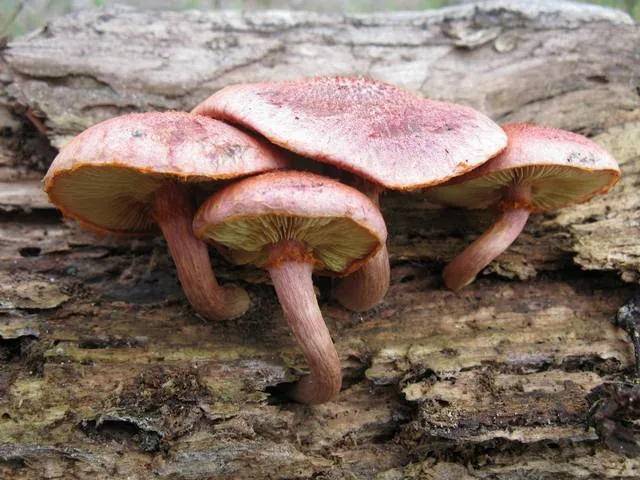
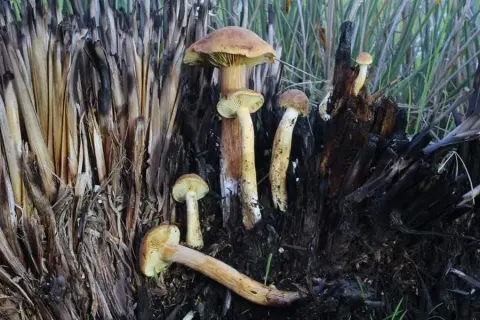
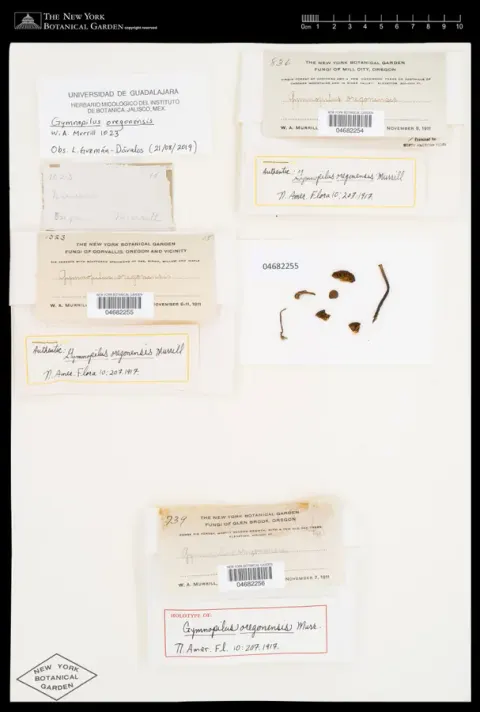
Foto yang diasosiasikan dengan Gymnopilus luteofolius pada iNaturalist. Identifikasi mengikuti sumber; bukan penentuan spesimen independen.
Kredit dan penggunaan
(c) Sava Krstic, some rights reserved (CC BY-SA)
Ukuran dan format gambar disesuaikan tanpa pemotongan, retus, atau penambahan skala. Lisensi sumber dipertahankan.
Sumber profil
- [1] Gymnopilus luteofolius — Wikipedia (en)
- [2] Catalogue of Life Base2026-09-11 — Gymnopilus luteofolius
- [3] Dokumentasi visual — Gymnopilus luteofolius
- [4] Dokumentasi visual — Gymnopilus luteofolius
Rujukan halaman ini
Fungi. Gymnopilus luteofolius. Rilis data fungi-2026-10-12-expansion-2. https://fungi-atlas.mgadib.chatgpt.site/jamur/gymnopilus-luteofolius/.
Status: impor sumber; pemeriksaan editorial per profil belum selesai. Untuk klaim biologis, gunakan rujukan pada bagian terkait dan periksa konteks sumber aslinya.