01 / Morfologi

Ciri dan struktur

Hydnellum gracilipes forms small, stalked fruit bodies (basidiocarps) with caps (pilei) up to 3 mm across. Young caps are clothed in fine hairs (tomentose), giving them a velvety feel; as they mature these hairs wear off and the surface becomes dull and smooth (glabrous). The overall tone is a pale purplish‑brown, tending toward a more yellowish shade at the centre. On the underside, short downward‑pointing spines reach up to 2 mm in length; these are initially pale purplish‑brown and deepen slightly in colour as they age. The flesh (context) is very thin—around 1.5 mm thick—and shows a faint two‑layered (duplex) appearance, becoming a gentle purplish‑brown at maturity. The stem (stipe) measures up to 1.5 cm in height and about 4 mm in thickness. Like the cap, it begins with a fine, hairy covering and later smooths out, retaining the same colour as the pileus. Under the microscope, the hyphae (filamentous cells) are simple septate—meaning each cell is divided by cross‑walls—and range from 2 to 6 μm in width. The spores produced on the spines are small (4.3–4.6 by 2.7–3.6 μm), pale in colour, and ornamented with tiny surface projections, which help in species identification. They are roughly spherical with a diameter of no more than 5 μm.

Sebagian uraian ditampilkan dalam bahasa sumber; terjemahannya belum tersedia atau belum lolos pemeriksaan.

Rujukan: [1]

Pengukuran mengikuti objek, spesimen atau kultur, dan metode yang disebutkan sumber. Baca uraian asli untuk konteks lengkap.

02 / Kehidupan

Habitat dan peran ekologis

Hydnellum gracilipes is widely distributed in northern Europe, where it forms ectomycorrhizae with conifers. In Norway, the northern extent of its distribution is in Finnmark. Collections made in Scotland have been found by lifting the dense ground cover of common heather (Calluna vulgaris), which the fungus seems to use to as support to compensate for its flimsy stipe.

Sebagian uraian ditampilkan dalam bahasa sumber; terjemahannya belum tersedia atau belum lolos pemeriksaan.

Rujukan: [1]

Habitat atau konteks temuan
Informasi belum tersedia pada sumber rilis ini.
Substrat
Informasi belum tersedia pada sumber rilis ini.
Peran atau konteks
Mitra tumbuhan
Temukan hubungan serupa
03 / Siklus hidup

Reproduksi

Hydnellum gracilipes forms small, stalked fruit bodies (basidiocarps) with caps (pilei) up to 3 mm across. Young caps are clothed in fine hairs (tomentose), giving them a velvety feel; as they mature these hairs wear off and the surface becomes dull and smooth (glabrous). The overall tone is a pale purplish‑brown, tending toward a more yellowish shade at the centre. On the underside, short downward‑pointing spines reach up to 2 mm in length; these are initially pale purplish‑brown and deepen slightly in colour as they age. The flesh (context) is very thin—around 1.5 mm thick—and shows a faint two‑layered (duplex) appearance, becoming a gentle purplish‑brown at maturity. The stem (stipe) measures up to 1.5 cm in height and about 4 mm in thickness.

Sebagian uraian ditampilkan dalam bahasa sumber; terjemahannya belum tersedia atau belum lolos pemeriksaan.

Rujukan: [1]

Sinonim menurut acuan taksonomi rilis: Calodon gracilipes; Hydnum gracilipes
04 / Batas informasi

Catatan identitas dan cakupan

  • Nama diterima mengikuti Catalogue of Life Base2026-09-11; uraian mempertahankan konsep dan nama sumber aslinya.
  • Original geographic, specimen and life-cycle scope retained; source import awaits individual editorial review.
  • Impor dan terjemahan otomatis belum diperiksa editorial per profil. Struktur reproduktif yang disebutkan tidak membuktikan seluruh siklus hidup diketahui.
  • Pengukuran pada uraian mengikuti spesimen, kultur, dan metode sumber; angka tidak diperluas ke semua populasi.

Catatan distribusi dalam narasi mengikuti sumbernya. Dokumentasi spesimen atau foto mengikuti catatan sumber. Bukti wilayah Indonesia dan penilaian konservasi tidak disimpulkan dari gambar.

05 / Dokumentasi

Melihat dengan konteks

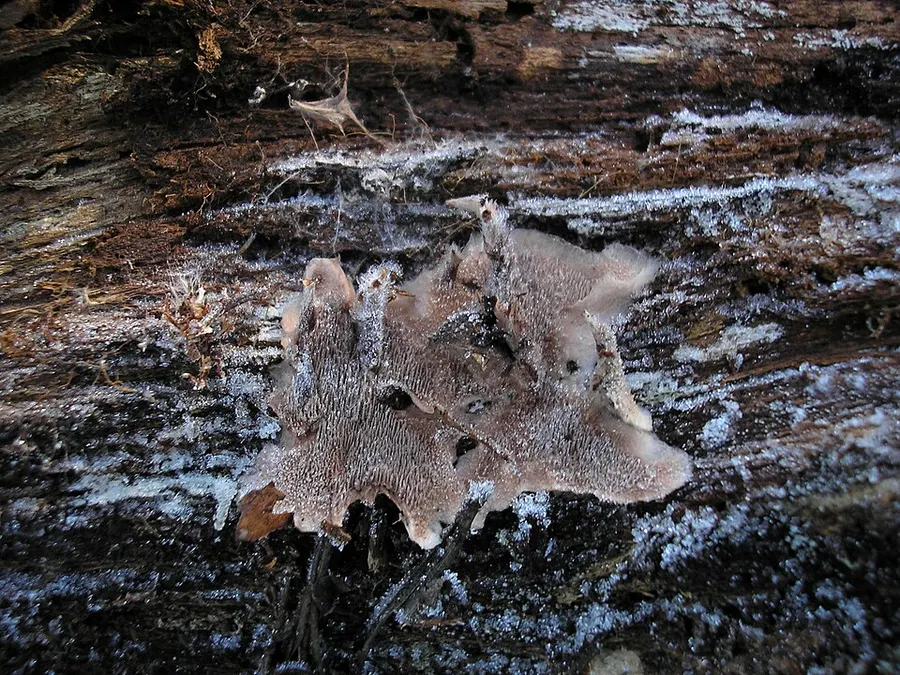
Dokumentasi Hydnellum gracilipes dari Wikimedia Commons. A rare mushroom that grows attached to the underside of decaying logs and can only be found by turning over logs. Presumably it uses wood decaying insects to spread its spores. Identifikasi mengikuti record berkas sumber.

Jenis
Fotografi
Kredit
caspar s
Lisensi
CC BY 2.0
Sumber media
Buka entri sumber

Gambar menunjukkan objek menurut identifikasi sumber, bukan verifikasi independen spesimen oleh Fungi. Tidak ada skala baru yang ditambahkan.

06 / Rujukan

Sumber profil

  1. [1] Hydnellum gracilipes — Wikipedia (en)Bagian sumber: Frozen revision 1314807543
    Tanggal penghimpunan sumber: 2026-10-12
    Teks sumber: CC BY-SA4.0 · Wikipedia contributors
  2. [2] Catalogue of Life Base2026-09-11 — Hydnellum gracilipesBagian sumber: ColDP NameUsage.tsv ID 6MHHS; accepted species; source 2073
    Tanggal penghimpunan sumber: 2026-10-12
  3. [3] Dokumentasi visual — Hydnellum gracilipesBagian sumber: Individual media record; identification follows the source, not independent determination
    Tanggal penghimpunan sumber: 2026-10-12
    Media sumber: CC BY 2.0 · caspar s

Adaptasi teks: CC BY-SA 4.0. Wikipedia contributors — Hydnellum gracilipes — Wikipedia (en)

Uraian asli dan riwayat sumber

Riwayat atau halaman sumber

Ringkasan sumber

Hydnellum gracilipes forms small, stalked fruit bodies (basidiocarps) with caps (pilei) up to 3 mm across. Young caps are clothed in fine hairs (tomentose), giving them a velvety feel; as they mature these hairs wear off and the surface becomes dull and smooth (glabrous). The overall tone is a pale purplish‑brown, tending toward a more yellowish shade at the centre. On the underside, short downward‑pointing spines reach up to 2 mm in length; these are initially pale purplish‑brown and deepen slightly in colour as they age.

Revisi sumber

Morfologi sumber

Hydnellum gracilipes forms small, stalked fruit bodies (basidiocarps) with caps (pilei) up to 3 mm across. Young caps are clothed in fine hairs (tomentose), giving them a velvety feel; as they mature these hairs wear off and the surface becomes dull and smooth (glabrous). The overall tone is a pale purplish‑brown, tending toward a more yellowish shade at the centre. On the underside, short downward‑pointing spines reach up to 2 mm in length; these are initially pale purplish‑brown and deepen slightly in colour as they age. The flesh (context) is very thin—around 1.5 mm thick—and shows a faint two‑layered (duplex) appearance, becoming a gentle purplish‑brown at maturity. The stem (stipe) measures up to 1.5 cm in height and about 4 mm in thickness. Like the cap, it begins with a fine, hairy covering and later smooths out, retaining the same colour as the pileus. Under the microscope, the hyphae (filamentous cells) are simple septate—meaning each cell is divided by cross‑walls—and range from 2 to 6 μm in width. The spores produced on the spines are small (4.3–4.6 by 2.7–3.6 μm), pale in colour, and ornamented with tiny surface projections, which help in species identification. They are roughly spherical with a diameter of no more than 5 μm.

Revisi sumber

Ekologi sumber

Hydnellum gracilipes is widely distributed in northern Europe, where it forms ectomycorrhizae with conifers. In Norway, the northern extent of its distribution is in Finnmark. Collections made in Scotland have been found by lifting the dense ground cover of common heather (Calluna vulgaris), which the fungus seems to use to as support to compensate for its flimsy stipe.

Revisi sumber

Struktur reproduksi sumber

Hydnellum gracilipes forms small, stalked fruit bodies (basidiocarps) with caps (pilei) up to 3 mm across. Young caps are clothed in fine hairs (tomentose), giving them a velvety feel; as they mature these hairs wear off and the surface becomes dull and smooth (glabrous). The overall tone is a pale purplish‑brown, tending toward a more yellowish shade at the centre. On the underside, short downward‑pointing spines reach up to 2 mm in length; these are initially pale purplish‑brown and deepen slightly in colour as they age. The flesh (context) is very thin—around 1.5 mm thick—and shows a faint two‑layered (duplex) appearance, becoming a gentle purplish‑brown at maturity. The stem (stipe) measures up to 1.5 cm in height and about 4 mm in thickness.

Revisi sumber

Rujukan halaman ini

Fungi. Hydnellum gracilipes. Rilis data fungi-2026-10-12-expansion-2. https://fungi-atlas.mgadib.chatgpt.site/jamur/hydnellum-gracilipes/.

Status: impor sumber; pemeriksaan editorial per profil belum selesai. Untuk klaim biologis, gunakan rujukan pada bagian terkait dan periksa konteks sumber aslinya.