Ciri dan struktur
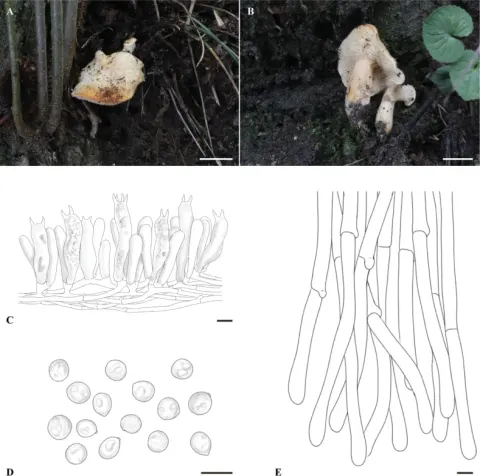
Closely related to Hydnum umbilicatum but differs from it by ITS sequence divergence as well as more elliptic basidiospores. Known so far in the southeastern and upper midwest United States. Differs from H. aerostatisporum by the smaller basidiomes and slightly larger basidiospores. Pileus (11)15–50 mm wide, round to oval or irregular and reniform, convex when young, becoming plane or depressed, margin incurved and entire, becoming irregularly wavy or degraded; surface glabrous, sometimes floccose-scaly or scabrous near the umbilicus, dull orange to deep orange-brown (5A6–6B7–6D8, “Tawny” to “Mikado Brown”), olive-brown with KOH, at times faded in color towards the margin. Spines 1–8 mm long, shorter near the margin, adnate, pale buff, cream-orange, or tan-orange (7.5YR 8/4–8/6 or 5A3–A5). Stipe 15–50 × 3–10(12) mm, central or eccentric, equal or enlarged towards base, sometimes curved, texture smooth, buff to peach-brown (5A2–A3 to 5B6–C6), sometimes with hazy thin white patches especially towards apex, staining only very slightly light brown (10YR 7/4–7/6 or 5A–B7); cottony white basal mycelium often present. Context often hollow, flesh white to cream. Odor not distinctive or sweet and fruity. Taste not distinctive. Basidiospores (7)7.5– 8.5 –9.5(10.0) μm × 6– 7.2 –8.5 μm, Q =1.01– 1.18 –1.38(1.52) (n=99/6), subglobose to irregularly rounded-elliptic, smooth, thin-walled, hyaline in KOH. Basidia 39–56 × 7–9 μm with 3–4 sterigmata. Pileipellis an interwoven cutis, hyphae smooth, cylindrical, thin-walled, mostly 4–7 μm wide. Clamp connections present.
Habitat dan peran ekologis
Eastern U.S. – Michigan (KU612606, MG162266), North Carolina, Tennessee (type), and Georgia. In deciduous or mixed woods with Quercus, Pinus, Tsuga, Fagus, Betula, Carya, Carpinus, Picea. June to October.
- Habitat atau konteks temuan
- Informasi belum tersedia pada sumber rilis ini.
- Substrat
- Informasi belum tersedia pada sumber rilis ini.
- Peran atau konteks
- Belum dikategorikan pada rilis ini.
Reproduksi
Closely related to Hydnum umbilicatum but differs from it by ITS sequence divergence as well as more elliptic basidiospores. Known so far in the southeastern and upper midwest United States. Differs from H. aerostatisporum by the smaller basidiomes and slightly larger basidiospores. Pileus (11)15–50 mm wide, round to oval or irregular and reniform, convex when young, becoming plane or depressed, margin incurved and entire, becoming irregularly wavy or degraded; surface glabrous, sometimes floccose-scaly or scabrous near the umbilicus, dull orange to deep orange-brown (5A6–6B7–6D8, “Tawny” to “Mikado Brown”), olive-brown with KOH, at times faded in color towards the margin. Spines 1–8 mm long, shorter near the margin, adnate, pale buff, cream-orange, or tan-orange (7.5YR 8/4–8/6 or 5A3–A5).
Catatan identitas dan cakupan
- Nama diterima mengikuti Catalogue of Life Base2026-09-11; uraian mempertahankan konsep dan nama sumber aslinya.
- Preserve original treatment localities, hosts and substrate scope. Materials examined describe documented specimens, not the full global range.
- Impor dan terjemahan otomatis belum diperiksa editorial per profil. Struktur reproduktif yang disebutkan tidak membuktikan seluruh siklus hidup diketahui.
- Pengukuran pada uraian mengikuti spesimen, kultur, dan metode sumber; angka tidak diperluas ke semua populasi.
Catatan distribusi dalam narasi mengikuti sumbernya. Dokumentasi spesimen atau foto mengikuti catatan sumber. Bukti wilayah Indonesia dan penilaian konservasi tidak disimpulkan dari gambar.
Melihat dengan konteks
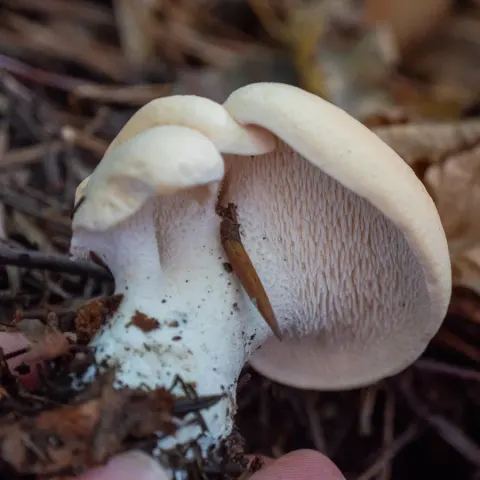
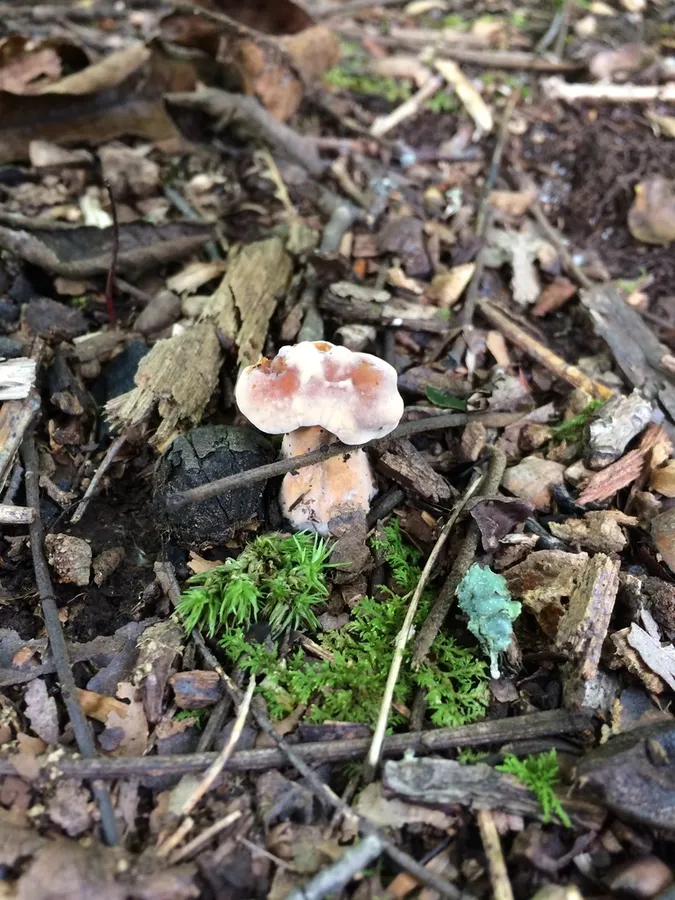
Dokumentasi Hydnum cuspidatum menurut asosiasi foto pada record takson iNaturalist. Kredit: Brian C. Hunt. Identitas mengikuti sumber; bukan penentuan spesimen independen.
- Jenis
- Fotografi
- Kredit
- (c) Brian C. Hunt, some rights reserved (CC BY), uploaded by Brian C. Hunt
- Lisensi
- CC BY 4.0
- Sumber media
- Buka entri sumber
Dokumentasi tambahan
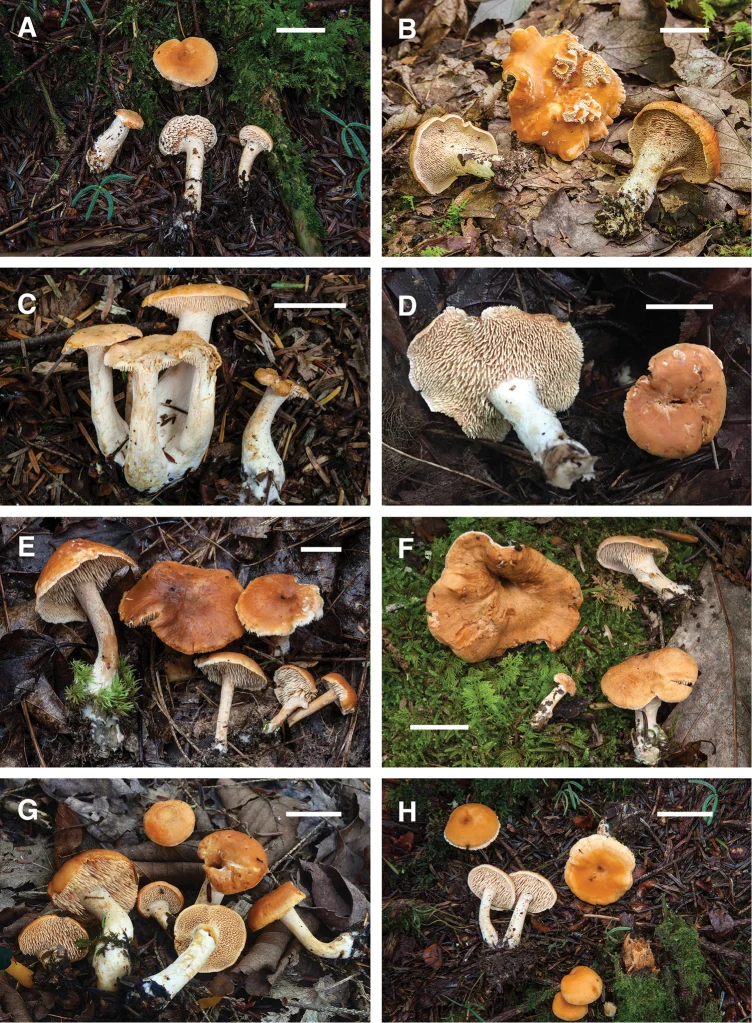
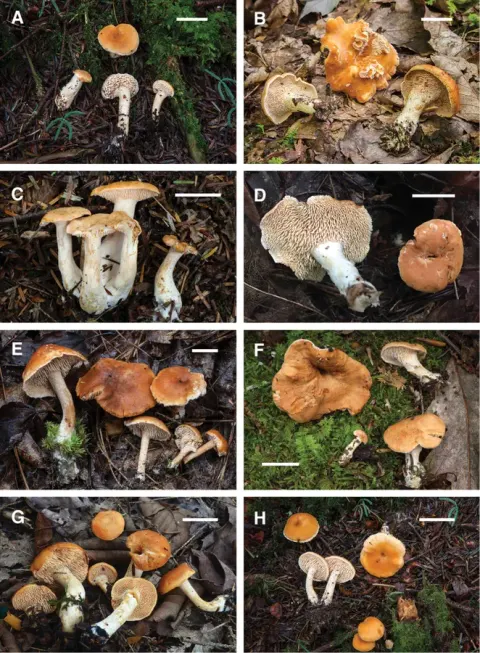
Pelat perbandingan tubuh buah. Hydnum cuspidatum ditampilkan pada panel E–F; panel lainnya memuat spesies pembanding. Pembagian panel mengikuti keterangan sumber.
Kredit dan penggunaan
Rachel A. Swenie, Timothy J. Baroni, P. Brandon Matheny
Ukuran dan format gambar disesuaikan tanpa pemotongan, retus, atau penambahan skala. Lisensi sumber dipertahankan.
Sumber profil
- [1] Six new species and reports of Hydnum (Cantharellales) from eastern North America — Hydnum cuspidatum
- [2] Catalogue of Life Base2026-09-11 — Hydnum cuspidatum
- [3] Dokumentasi visual — Hydnum cuspidatum
- [4] Dokumentasi visual — Hydnum cuspidatum
Rujukan halaman ini
Fungi. Hydnum cuspidatum. Rilis data fungi-2026-10-12-expansion-2. https://fungi-atlas.mgadib.chatgpt.site/jamur/hydnum-cuspidatum/.
Status: impor sumber; pemeriksaan editorial per profil belum selesai. Untuk klaim biologis, gunakan rujukan pada bagian terkait dan periksa konteks sumber aslinya.