Ciri dan struktur
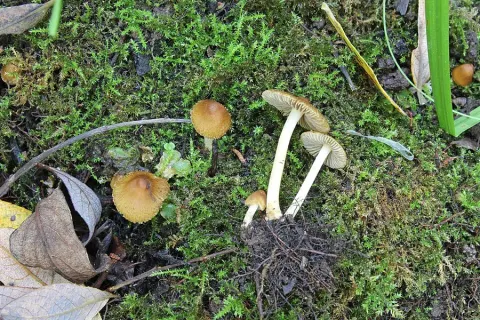
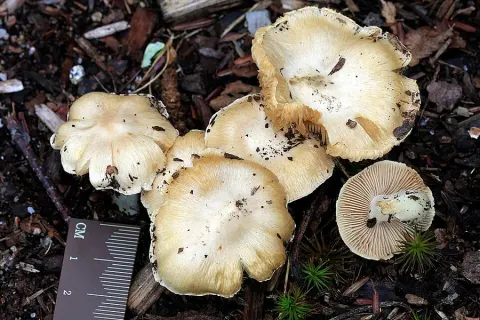
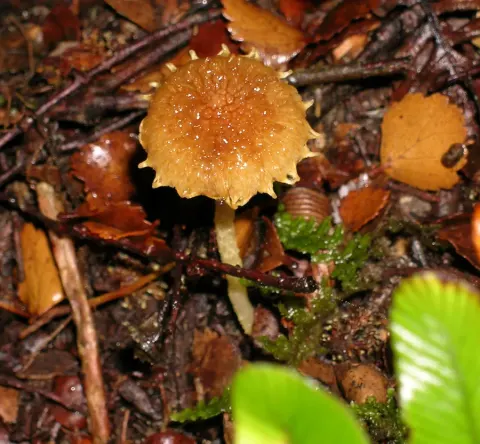
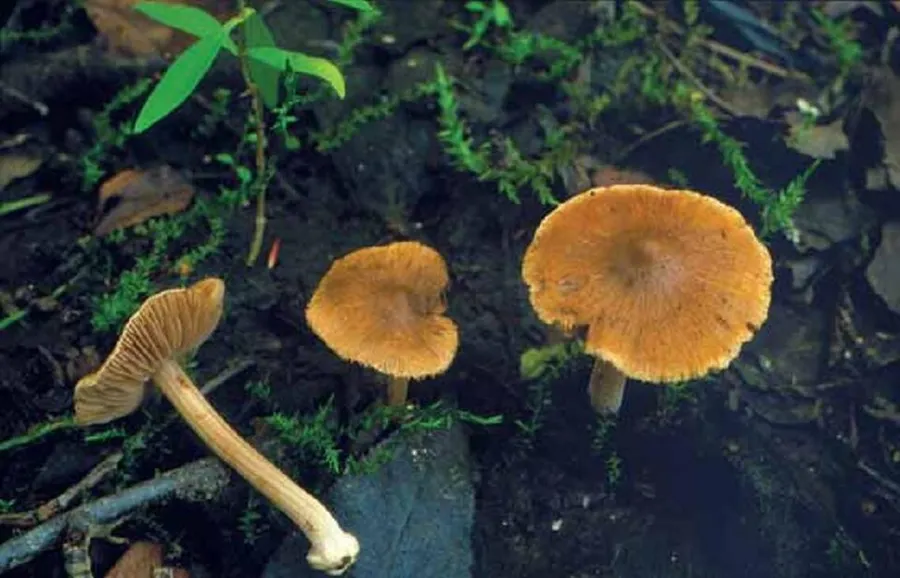
Incoybe saliceticola produces mushrooms with caps of between 7 and 40 mm in diameter. The shape of the cap varies, depending on the age of the mushroom. In younger specimens, they are conical or nearly so, but as the mushroom matures, the caps flatten into a more convex or flat shape. As such, the height of the cap varies from 4 to 11 mm. The cap features an umbo that is usually very prominent. Around the umbo, the cap surface is smooth, but towards the cap margin, the surface is defined by fibrils running from the margin towards the umbo. The cap sometimes splits along these. The cap's colour varies from yellow-brown to pale brown, and is palest at the margins. The umbo contrasts to this somewhat, being a grey-brown or red-brown. The slender stem measures from 0.7 to 6.2 cm long by 1.5 to 6.5 mm thick. It thickens slightly towards the base, where it joins a large, well-defined "bulb" that can be up to 11 mm across. Shallow grooves run up the surface of the stem, which is covered in a fine white powder. The fairly crowded gills are adnate, meaning that they attach to the stem through their entire depth. They are a pale grey to pale grey-brown when young, darkening to grey-brown as they mature. The gill edges, which are slightly fimbriate, are the same colour or paler. The flesh lacks any strong or distinctive smell or taste, and is described in the original description as "fungoid". In the cap, the flesh varies in colour from whitish to a pale brown-grey or pale yellow, while in the stem, it is the same colour as the stem surface or slightly paler. The irregularly shaped spores measure from 7.2 to 11.6 by 5.1 to 7.9 micrometres (μm), each featuring a few thick protrusions.
Habitat dan peran ekologis
Inocybe saliceticola grows in a mycorrhizal association with willow (Salix). Precise favoured species are unclear; at least one of the tea-leaved willow (Salix phylicifolia) or the dark-leaved willow (S. myrsinifolia) is a possible symbiont, while other trees that the species has been found near include the bay willow (S. pentandra), the grey willow (S. cinnerea), the grey alder (Alnus incana) and species of birch (Betula). I. saliceticola is found most typically in moist thickets or woodland close to shores, but recordings have also been made in other moist habitats. Mushrooms are encountered on the ground, growing from detritus or amongst moss, such as the heart-leaved spear-moss (Calliergon cordifolium), the spiky-bog moss (Sphagnum squarrosum) and species of Mnium. They are typically near plants such as the tufted loosestrife (Lysimachia thyrsiflora), the creeping buttercup (Ranunculus repens), the common marsh-bedstraw (Galium palustre), the purple marshlocks (Comarum palustre) and the purple small-reed (Calamagrostis canescens), and share the habitat with other Inocybe, including I. acuta and I. lacera var. helobia. At least in North Karelia, Finland, it is relatively common in the right habitats.
- Habitat atau konteks temuan
- hutan
- Substrat
- tanah
- Peran atau konteks
- Mitra tumbuhan
Reproduksi
The irregularly shaped spores measure from 7.2 to 11.6 by 5.1 to 7.9 micrometres (μm), each featuring a few thick protrusions. The longer caulocystidia (cystidia on the stem) occur all the way down the stem and measure up to 99 μm in length with a more variable shape. The mushrooms also feature "paracystidia", club-shaped cystidia-like structures on the gills lacking crystals, as well as "cauloparacystidia" on the stem. In Inocybe saliceticola, the paracystidia are fairly abundant, with thin cell-walls, while the abundant cauloparacystidia can have slightly thicker walls and are often arranged in clusters.
Catatan identitas dan cakupan
- Nama diterima mengikuti Catalogue of Life Base2026-09-11; uraian mempertahankan konsep dan nama sumber aslinya.
- Original geographic, specimen and life-cycle scope retained; source import awaits individual editorial review.
- Impor dan terjemahan otomatis belum diperiksa editorial per profil. Struktur reproduktif yang disebutkan tidak membuktikan seluruh siklus hidup diketahui.
- Pengukuran pada uraian mengikuti spesimen, kultur, dan metode sumber; angka tidak diperluas ke semua populasi.
Catatan distribusi dalam narasi mengikuti sumbernya. Dokumentasi spesimen atau foto mengikuti catatan sumber. Bukti wilayah Indonesia dan penilaian konservasi tidak disimpulkan dari gambar.
Melihat dengan konteks
Dokumentasi Inocybe saliceticola dari Wikimedia Commons. The holotype of the species Inocybe saliceticola . The specimen was collected from the shore of lake Pahakala, near Salmi. Identifikasi mengikuti record berkas sumber.
- Jenis
- Fotografi
- Kredit
- Photograph taken by Jukka Vauras
- Lisensi
- CC BY-SA 3.0
- Sumber media
- Buka entri sumber
Sumber profil
- [1] Inocybe saliceticola — Wikipedia (en)
- [2] Catalogue of Life Base2026-09-11 — Inocybe saliceticola
- [3] Dokumentasi visual — Inocybe saliceticola
Rujukan halaman ini
Fungi. Inocybe saliceticola. Rilis data fungi-2026-10-12-expansion-2. https://fungi-atlas.mgadib.chatgpt.site/jamur/inocybe-saliceticola/.
Status: impor sumber; pemeriksaan editorial per profil belum selesai. Untuk klaim biologis, gunakan rujukan pada bagian terkait dan periksa konteks sumber aslinya.