01 / Morfologi

Ciri dan struktur

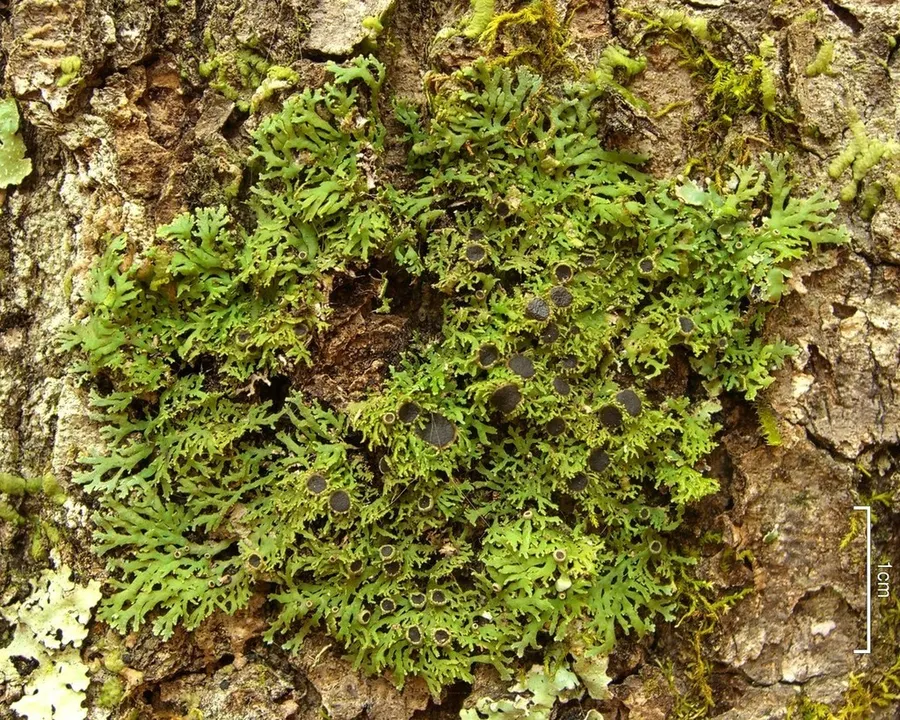
Kurokawia palmulata is recognisable by its foliose thallus, which is typically and can grow up to 9 – 10 cm in diameter. The colour varies from brownish-grey to tan-brown. Its are elongated and linear, branching irregularly, and they remain mostly flat at the ends. Unlike some other lichens, Kurokawia palmulata does not possess soredia or isidia. However, it often develops lateral secondary . The lichen's lower surface starts off white or off-white and gradually darkens to a tawny or light brown shade. A noticeable feature is the superimposed layer of hyphae, which does not carry rhizines. Commonly, Kurokawia palmulata will present with apothecia, which are laminal and can grow up to 4 mm in diameter. The chemical spot test reactions of the lichen often reveal a K+ (yellow) reaction on the upper surface, making it distinctive. The presence of variolaric acid has also been observed. However, the strength and prominence of these reactions can vary between specimens.

Sebagian uraian ditampilkan dalam bahasa sumber; terjemahannya belum tersedia atau belum lolos pemeriksaan.

Rujukan: [1]

Pengukuran mengikuti objek, spesimen atau kultur, dan metode yang disebutkan sumber. Baca uraian asli untuk konteks lengkap.

02 / Kehidupan

Habitat dan peran ekologis

Endemic to eastern North America and eastern Asia, Kurokawia palmulata has been found to have a strong affinity for the bark of hardwood trees. However, it can also establish itself on rock surfaces, either directly or overlying mosses. The species is particularly prevalent in areas corresponding to the eastern deciduous forest. Additionally, a correlation has been noted between the geographical distribution of the lichen and the of its rhizines – specimens from the southern range tend to have less squarrose rhizines compared to those from the north. Its North America range was extended considerably when it was recorded from Ohio–the first report from western North America. Its range extends north to southern Ontario, and the coniferous old-growth forests of southwestern Nova Scotia in Canada.

Sebagian uraian ditampilkan dalam bahasa sumber; terjemahannya belum tersedia atau belum lolos pemeriksaan.

Rujukan: [1]

Habitat atau konteks temuan
hutan
Substrat
Informasi belum tersedia pada sumber rilis ini.
Peran atau konteks
Pembentuk liken
Temukan hubungan serupa
03 / Siklus hidup

Reproduksi

Kurokawia palmulata is recognisable by its foliose thallus, which is typically and can grow up to 9 – 10 cm in diameter. The colour varies from brownish-grey to tan-brown. Its are elongated and linear, branching irregularly, and they remain mostly flat at the ends. Unlike some other lichens, Kurokawia palmulata does not possess soredia or isidia. However, it often develops lateral secondary . The lichen's lower surface starts off white or off-white and gradually darkens to a tawny or light brown shade. A noticeable feature is the superimposed layer of hyphae, which does not carry rhizines. Commonly, Kurokawia palmulata will present with apothecia, which are laminal and can grow up to 4 mm in diameter.

Sebagian uraian ditampilkan dalam bahasa sumber; terjemahannya belum tersedia atau belum lolos pemeriksaan.

Rujukan: [1]

Sinonim menurut acuan taksonomi rilis: Anaptychia palmulata; Lecanora palmulata; Lichen peltatus palmulata; Parmelia palmulata; Physcia palmulata; Pseudophyscia aquila var. palmulata; Psoroma palmulatum
04 / Batas informasi

Catatan identitas dan cakupan

  • Nama diterima mengikuti Catalogue of Life Base2026-09-11; uraian mempertahankan konsep dan nama sumber aslinya.
  • Original geographic, specimen and life-cycle scope retained; source import awaits individual editorial review.
  • Impor dan terjemahan otomatis belum diperiksa editorial per profil. Struktur reproduktif yang disebutkan tidak membuktikan seluruh siklus hidup diketahui.
  • Pengukuran pada uraian mengikuti spesimen, kultur, dan metode sumber; angka tidak diperluas ke semua populasi.

Catatan distribusi dalam narasi mengikuti sumbernya. Dokumentasi spesimen atau foto mengikuti catatan sumber. Bukti wilayah Indonesia dan penilaian konservasi tidak disimpulkan dari gambar.

05 / Dokumentasi

Melihat dengan konteks

Dokumentasi Anaptychia palmulata menurut asosiasi foto pada record takson iNaturalist. Kredit: Jason Hollinger. Identitas mengikuti sumber; bukan penentuan spesimen independen.

Jenis
Fotografi
Kredit
(c) Jason Hollinger, some rights reserved (CC BY)
Lisensi
CC BY 4.0
Sumber media
Buka entri sumber

Gambar menunjukkan objek menurut identifikasi sumber, bukan verifikasi independen spesimen oleh Fungi. Tidak ada skala baru yang ditambahkan.

06 / Rujukan

Sumber profil

  1. [1] Kurokawia palmulata — Wikipedia (en)Bagian sumber: Frozen revision 1252681174
    Tanggal penghimpunan sumber: 2026-10-12
    Teks sumber: CC BY-SA4.0 · Wikipedia contributors
  2. [2] Catalogue of Life Base2026-09-11 — Kurokawia palmulataBagian sumber: ColDP NameUsage.tsv ID B33JM; accepted species; source 2073
    Tanggal penghimpunan sumber: 2026-10-12
  3. [3] Dokumentasi visual — Anaptychia palmulataBagian sumber: Individual media record; identification follows the source, not independent determination
    Tanggal penghimpunan sumber: 2026-10-12
    Media sumber: CC BY 4.0 · (c) Jason Hollinger, some rights reserved (CC BY)

Adaptasi teks: CC BY-SA 4.0. Wikipedia contributors — Kurokawia palmulata — Wikipedia (en)

Uraian asli dan riwayat sumber

Riwayat atau halaman sumber

Ringkasan sumber

Kurokawia palmulata, the shaggy fringe lichen, is a species of corticolous (bark-dwelling), foliose lichen in the family Physciaceae.

Revisi sumber

Morfologi sumber

Kurokawia palmulata is recognisable by its foliose thallus, which is typically and can grow up to 9 – 10 cm in diameter. The colour varies from brownish-grey to tan-brown. Its are elongated and linear, branching irregularly, and they remain mostly flat at the ends. Unlike some other lichens, Kurokawia palmulata does not possess soredia or isidia. However, it often develops lateral secondary . The lichen's lower surface starts off white or off-white and gradually darkens to a tawny or light brown shade. A noticeable feature is the superimposed layer of hyphae, which does not carry rhizines. Commonly, Kurokawia palmulata will present with apothecia, which are laminal and can grow up to 4 mm in diameter. The chemical spot test reactions of the lichen often reveal a K+ (yellow) reaction on the upper surface, making it distinctive. The presence of variolaric acid has also been observed. However, the strength and prominence of these reactions can vary between specimens.

Revisi sumber

Ekologi sumber

Endemic to eastern North America and eastern Asia, Kurokawia palmulata has been found to have a strong affinity for the bark of hardwood trees. However, it can also establish itself on rock surfaces, either directly or overlying mosses. The species is particularly prevalent in areas corresponding to the eastern deciduous forest. Additionally, a correlation has been noted between the geographical distribution of the lichen and the of its rhizines – specimens from the southern range tend to have less squarrose rhizines compared to those from the north. Its North America range was extended considerably when it was recorded from Ohio–the first report from western North America. Its range extends north to southern Ontario, and the coniferous old-growth forests of southwestern Nova Scotia in Canada.

Revisi sumber

Struktur reproduksi sumber

Kurokawia palmulata is recognisable by its foliose thallus, which is typically and can grow up to 9 – 10 cm in diameter. The colour varies from brownish-grey to tan-brown. Its are elongated and linear, branching irregularly, and they remain mostly flat at the ends. Unlike some other lichens, Kurokawia palmulata does not possess soredia or isidia. However, it often develops lateral secondary . The lichen's lower surface starts off white or off-white and gradually darkens to a tawny or light brown shade. A noticeable feature is the superimposed layer of hyphae, which does not carry rhizines. Commonly, Kurokawia palmulata will present with apothecia, which are laminal and can grow up to 4 mm in diameter.

Revisi sumber

Rujukan halaman ini

Fungi. Kurokawia palmulata. Rilis data fungi-2026-10-12-expansion-2. https://fungi-atlas.mgadib.chatgpt.site/jamur/kurokawia-palmulata/.

Status: impor sumber; pemeriksaan editorial per profil belum selesai. Untuk klaim biologis, gunakan rujukan pada bagian terkait dan periksa konteks sumber aslinya.