01 / Morfologi

Ciri dan struktur

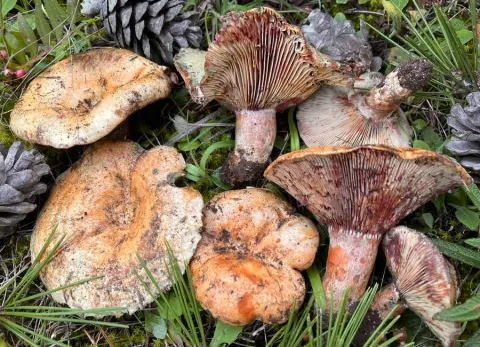
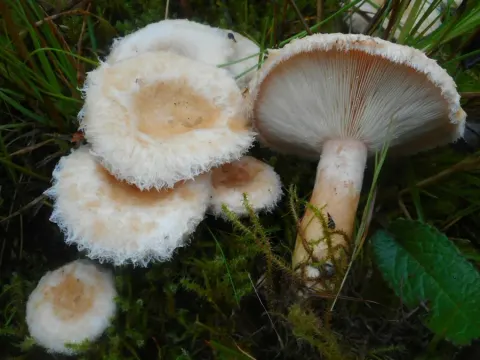
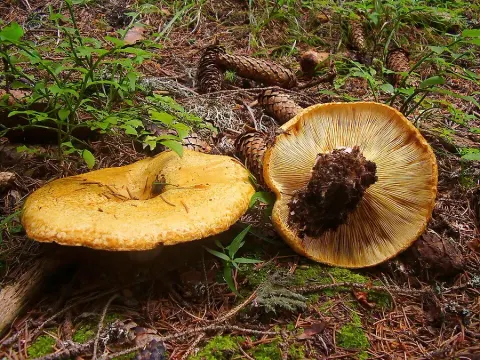
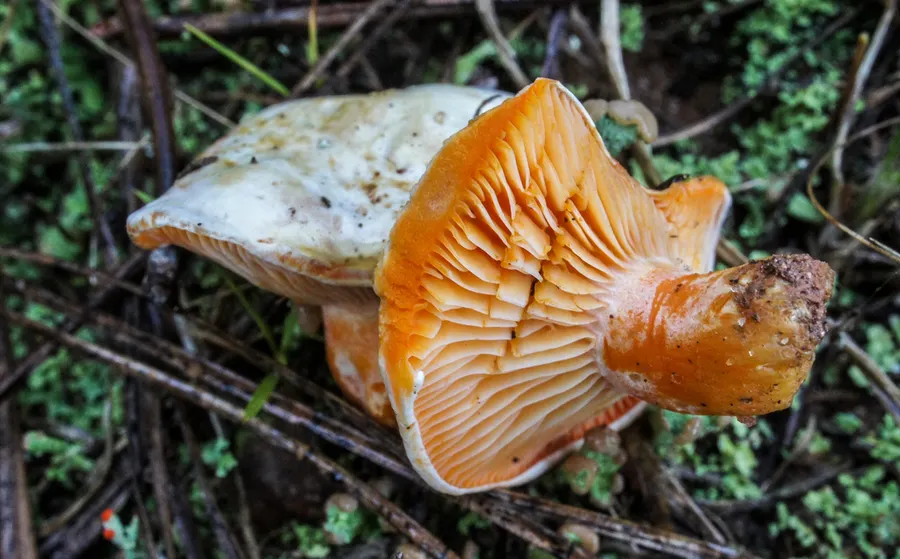
Lactarius salmonicolor can be found throughout most of Europe from September to November, the species' growing season. The fungus grows primarily near to the roots of fir trees, where it receives nutrients for its growth, participating in ectomycorrhiza with the roots of its host plant. The top of the pileus is an orange-reddish color, with rare spots of green in older decaying specimens. The cap is also slightly depressed in the center after an initial convexity, and irregularly shaped, sometimes with lobes. The surface of the cap is also smooth and viscid. On the underside of the cap, the lamellas are evenly spaced, with gills occasionally splitting as they become decurrent on the beginning of the stipe. They are salmon-orange and usually slightly lighter than the top of the cap; however they turn red after bruising. The stipe is cylindrical and more often long and slender, but rarely it can be found as short and thick. L. salmonicolor has a mild and slightly acrid flavor but becomes bitter after time. The spore deposit is pale yellow to orange in color, and spores have variations such as ridges and warts on the surface up to 0.5 μm high. File:Lactarius salmonicolor - panoramio.jpg|L. salmonicolor File:Salève 01.08.2017 Lactarius salmonicolor (37079660781).jpg|Closeup of lamella File:2010-09-18 Lactarius salmonicolor R. Heim & Leclair 107918.jpg|Lamella and flesh File:Lactarius salmonicolor1.jpg|Flesh

Sebagian uraian ditampilkan dalam bahasa sumber; terjemahannya belum tersedia atau belum lolos pemeriksaan.

Rujukan: [1]

Pengukuran mengikuti objek, spesimen atau kultur, dan metode yang disebutkan sumber. Baca uraian asli untuk konteks lengkap.

02 / Kehidupan

Habitat dan peran ekologis

The species is native to most of Europe as well as in bogs and conifer forests of Canada, the Great Lakes region and the northeastern United States.

Sebagian uraian ditampilkan dalam bahasa sumber; terjemahannya belum tersedia atau belum lolos pemeriksaan.

Rujukan: [1]

Habitat atau konteks temuan
hutan
Substrat
Informasi belum tersedia pada sumber rilis ini.
Peran atau konteks
Belum dikategorikan pada rilis ini.
Temukan hubungan serupa
03 / Siklus hidup

Reproduksi

The stipe is cylindrical and more often long and slender, but rarely it can be found as short and thick. L. salmonicolor has a mild and slightly acrid flavor but becomes bitter after time. The spore deposit is pale yellow to orange in color, and spores have variations such as ridges and warts on the surface up to 0.5 μm high.

Sebagian uraian ditampilkan dalam bahasa sumber; terjemahannya belum tersedia atau belum lolos pemeriksaan.

Rujukan: [1]

Sinonim menurut acuan taksonomi rilis: Lactarius subsalmoneus; Lactarius thyinos
04 / Batas informasi

Catatan identitas dan cakupan

  • Nama diterima mengikuti Catalogue of Life Base2026-09-11; uraian mempertahankan konsep dan nama sumber aslinya.
  • Original geographic, specimen and life-cycle scope retained; source import awaits individual editorial review.
  • Impor dan terjemahan otomatis belum diperiksa editorial per profil. Struktur reproduktif yang disebutkan tidak membuktikan seluruh siklus hidup diketahui.
  • Pengukuran pada uraian mengikuti spesimen, kultur, dan metode sumber; angka tidak diperluas ke semua populasi.

Catatan distribusi dalam narasi mengikuti sumbernya. Dokumentasi spesimen atau foto mengikuti catatan sumber. Bukti wilayah Indonesia dan penilaian konservasi tidak disimpulkan dari gambar.

05 / Dokumentasi

Melihat dengan konteks

Dokumentasi Lactarius salmonicolor menurut asosiasi foto pada record takson iNaturalist. Kredit: Bill Sheehan. Identitas mengikuti sumber; bukan penentuan spesimen independen.

Jenis
Fotografi
Kredit
(c) Bill Sheehan, some rights reserved (CC BY-SA), uploaded by Bill Sheehan
Sumber media
Buka entri sumber

Gambar menunjukkan objek menurut identifikasi sumber, bukan verifikasi independen spesimen oleh Fungi. Tidak ada skala baru yang ditambahkan.

06 / Rujukan

Sumber profil

  1. [1] Lactarius salmonicolor — Wikipedia (en)Bagian sumber: Frozen revision 1316565433
    Tanggal penghimpunan sumber: 2026-10-12
    Teks sumber: CC BY-SA4.0 · Wikipedia contributors
  2. [2] Catalogue of Life Base2026-09-11 — Lactarius salmonicolorBagian sumber: ColDP NameUsage.tsv ID 3RS8B; accepted species; source 2073
    Tanggal penghimpunan sumber: 2026-10-12
  3. [3] Dokumentasi visual — Lactarius salmonicolorBagian sumber: Individual media record; identification follows the source, not independent determination
    Tanggal penghimpunan sumber: 2026-10-12
    Media sumber: CC BY-SA 4.0 · (c) Bill Sheehan, some rights reserved (CC BY-SA), uploaded by Bill Sheehan

Adaptasi teks: CC BY-SA 4.0. Wikipedia contributors — Lactarius salmonicolor — Wikipedia (en)

Uraian asli dan riwayat sumber

Riwayat atau halaman sumber

Ringkasan sumber

Lactarius salmonicolor can be found throughout most of Europe from September to November, the species' growing season. The fungus grows primarily near to the roots of fir trees, where it receives nutrients for its growth, participating in ectomycorrhiza with the roots of its host plant. The top of the pileus is an orange-reddish color, with rare spots of green in older decaying specimens. The cap is also slightly depressed in the center after an initial convexity, and irregularly shaped, sometimes with lobes.

Revisi sumber

Morfologi sumber

Lactarius salmonicolor can be found throughout most of Europe from September to November, the species' growing season. The fungus grows primarily near to the roots of fir trees, where it receives nutrients for its growth, participating in ectomycorrhiza with the roots of its host plant. The top of the pileus is an orange-reddish color, with rare spots of green in older decaying specimens. The cap is also slightly depressed in the center after an initial convexity, and irregularly shaped, sometimes with lobes. The surface of the cap is also smooth and viscid. On the underside of the cap, the lamellas are evenly spaced, with gills occasionally splitting as they become decurrent on the beginning of the stipe. They are salmon-orange and usually slightly lighter than the top of the cap; however they turn red after bruising. The stipe is cylindrical and more often long and slender, but rarely it can be found as short and thick. L. salmonicolor has a mild and slightly acrid flavor but becomes bitter after time. The spore deposit is pale yellow to orange in color, and spores have variations such as ridges and warts on the surface up to 0.5 μm high. File:Lactarius salmonicolor - panoramio.jpg|L. salmonicolor File:Salève 01.08.2017 Lactarius salmonicolor (37079660781).jpg|Closeup of lamella File:2010-09-18 Lactarius salmonicolor R. Heim & Leclair 107918.jpg|Lamella and flesh File:Lactarius salmonicolor1.jpg|Flesh

Revisi sumber

Ekologi sumber

The species is native to most of Europe as well as in bogs and conifer forests of Canada, the Great Lakes region and the northeastern United States.

Revisi sumber

Struktur reproduksi sumber

The stipe is cylindrical and more often long and slender, but rarely it can be found as short and thick. L. salmonicolor has a mild and slightly acrid flavor but becomes bitter after time. The spore deposit is pale yellow to orange in color, and spores have variations such as ridges and warts on the surface up to 0.5 μm high.

Revisi sumber

Rujukan halaman ini

Fungi. Lactarius salmonicolor. Rilis data fungi-2026-10-12-expansion-2. https://fungi-atlas.mgadib.chatgpt.site/jamur/lactarius-salmonicolor/.

Status: impor sumber; pemeriksaan editorial per profil belum selesai. Untuk klaim biologis, gunakan rujukan pada bagian terkait dan periksa konteks sumber aslinya.