01 / Morfologi

Ciri dan struktur

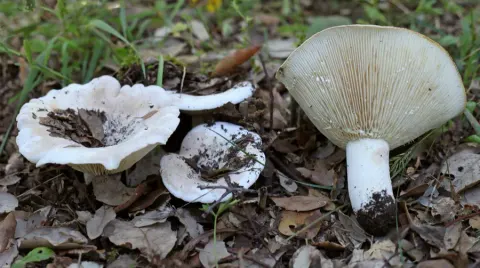
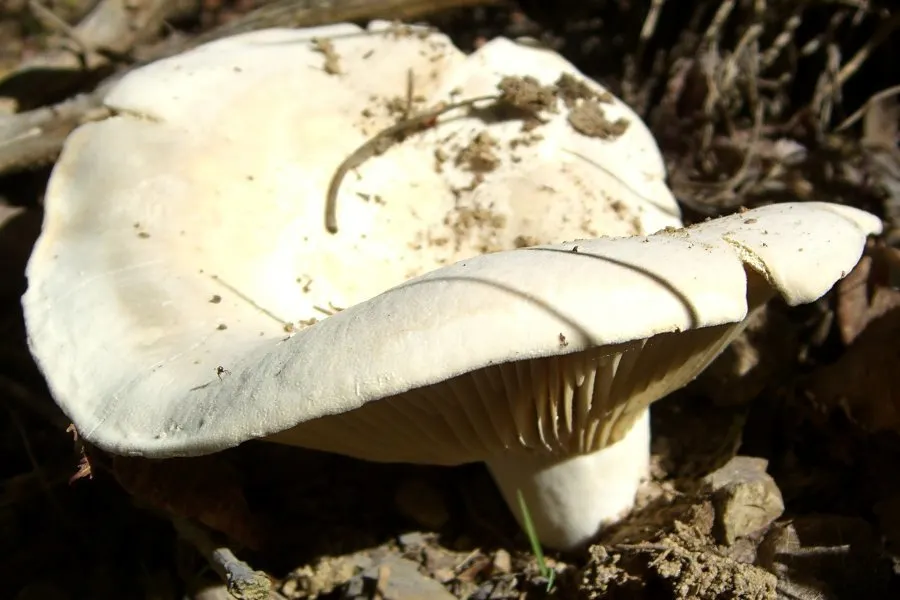
The cap is 6-16 cm across, convex, and depressed in the center; it is creamy-white (staining tannish in age), glabrous but not glossy; it may crack in dry areas. The stipe is white in colour, smooth, 2-8 cm long and 1-3 cm thick, and cylindrical, sometimes tapering towards the base. There is a thick layer of firm white flesh, and the decurrent gills are particularly crowded and narrow, sharing the white colouration of the stem but becoming creamy with age. As with other species of Lactarius, there is abundant milk (latex), which is white, and dries olive-green. It has a white spore print with elongate, elliptic or amyloid spores which are ornamented, as with L. vellereus. The spores measure from 4.5–9.5 by 5–8 μm, are roundish to elliptical, and have tiny warts.

Sebagian uraian ditampilkan dalam bahasa sumber; terjemahannya belum tersedia atau belum lolos pemeriksaan.

Rujukan: [1]

Pengukuran mengikuti objek, spesimen atau kultur, dan metode yang disebutkan sumber. Baca uraian asli untuk konteks lengkap.

02 / Kehidupan

Habitat dan peran ekologis

Lactifluus piperatus dalam arti luas, yaitu termasuk mungkin beberapa spesies, ditemukan di Eropa, Black Sea region di timur laut Turki, dan timur dan tengah Utara America east Minnesota. Hal ini telah disebarkan secara tidak sengaja ke Australasia, di mana hal ini ditemukan di bawah pohon-pohon yang diperkenalkan dan asli. Ini ditemukan di lantai di hutan berdaun, terutama di bawah beech (Fagus), dan dapat ditemukan sepanjang musim panas dan musim gugur dan ke awal musim dingin. Hal ini relatif umum, meskipun tidak sebanding dengan yang serupa L. vellereus. L. piperatus ditemukan secara solitaris atau dalam kelompok terpencil. Kadang-kadang ditemukan tumbuh bersama dengan Russula cyanoxantha. Ini adalah sumber makanan umum untuk tupai merah. Yang penting, L.piperatus adalah salah satu dari beberapa spesies yang terparasit oleh Hypomyces lactifluorum (serangga hummer), yang mengambil alih metabolisme inangnya, dan dalam kasus L.piperatus dengan demikian menghentikan produksi senyawa beracun bagi manusia, yang secara signifikan meningkatkan kemampuan makannya.

Rujukan: [1]

Habitat atau konteks temuan
hutan
Substrat
Informasi belum tersedia pada sumber rilis ini.
Peran atau konteks
Belum dikategorikan pada rilis ini.
Temukan hubungan serupa
03 / Siklus hidup

Reproduksi

The cap is 6-16 cm across, convex, and depressed in the center; it is creamy-white (staining tannish in age), glabrous but not glossy; it may crack in dry areas. The stipe is white in colour, smooth, 2-8 cm long and 1-3 cm thick, and cylindrical, sometimes tapering towards the base. There is a thick layer of firm white flesh, and the decurrent gills are particularly crowded and narrow, sharing the white colouration of the stem but becoming creamy with age. As with other species of Lactarius, there is abundant milk (latex), which is white, and dries olive-green. It has a white spore print with elongate, elliptic or amyloid spores which are ornamented, as with L. vellereus. The spores measure from 4.5–9.5 by 5–8 μm, are roundish to elliptical, and have tiny warts.

Sebagian uraian ditampilkan dalam bahasa sumber; terjemahannya belum tersedia atau belum lolos pemeriksaan.

Rujukan: [1]

Sinonim menurut acuan taksonomi rilis: Agaricus piperatus; Agaricus piperatus var. lactescens; Galorrheus piperatus; Lactarius piperatus; Lactarius piperatus var. amarus
04 / Batas informasi

Catatan identitas dan cakupan

  • Nama diterima mengikuti Catalogue of Life Base2026-09-11; uraian mempertahankan konsep dan nama sumber aslinya.
  • Original geographic, specimen and life-cycle scope retained; source import awaits individual editorial review.
  • Impor dan terjemahan otomatis belum diperiksa editorial per profil. Struktur reproduktif yang disebutkan tidak membuktikan seluruh siklus hidup diketahui.
  • Pengukuran pada uraian mengikuti spesimen, kultur, dan metode sumber; angka tidak diperluas ke semua populasi.

Catatan distribusi dalam narasi mengikuti sumbernya. Dokumentasi spesimen atau foto mengikuti catatan sumber. Bukti wilayah Indonesia dan penilaian konservasi tidak disimpulkan dari gambar.

05 / Dokumentasi

Melihat dengan konteks

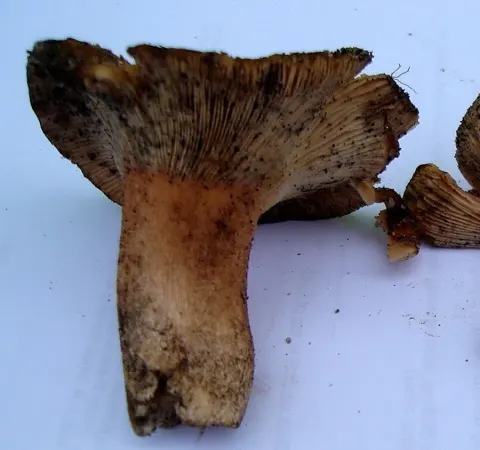
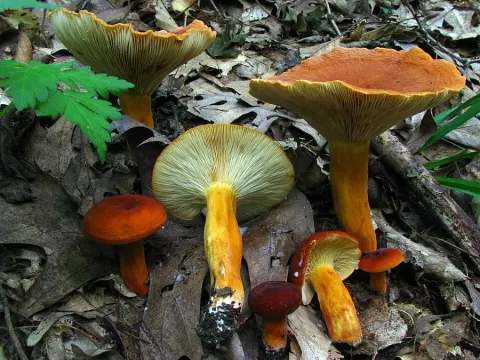
Dokumentasi Lactifluus piperatus menurut asosiasi foto pada record takson iNaturalist. Kredit: Jason Hollinger. Identitas mengikuti sumber; bukan penentuan spesimen independen.

Jenis
Fotografi
Kredit
(c) Jason Hollinger, some rights reserved (CC BY)
Lisensi
CC BY 4.0
Sumber media
Buka entri sumber

Gambar menunjukkan objek menurut identifikasi sumber, bukan verifikasi independen spesimen oleh Fungi. Tidak ada skala baru yang ditambahkan.

06 / Rujukan

Sumber profil

  1. [1] Lactifluus piperatus — Wikipedia (en)Bagian sumber: Frozen revision 1363038282
    Tanggal penghimpunan sumber: 2026-10-12
    Teks sumber: CC BY-SA4.0 · Wikipedia contributors
  2. [2] Catalogue of Life Base2026-09-11 — Lactifluus piperatusBagian sumber: ColDP NameUsage.tsv ID 9XZKZ; accepted species; source 2073
    Tanggal penghimpunan sumber: 2026-10-12
  3. [3] Dokumentasi visual — Lactifluus piperatusBagian sumber: Individual media record; identification follows the source, not independent determination
    Tanggal penghimpunan sumber: 2026-10-12
    Media sumber: CC BY 4.0 · (c) Jason Hollinger, some rights reserved (CC BY)

Adaptasi teks: CC BY-SA 4.0. Wikipedia contributors — Lactifluus piperatus — Wikipedia (en)

Uraian asli dan riwayat sumber

Riwayat atau halaman sumber

Ringkasan sumber

Lactifluus piperatus (synonym Lactarius piperatus), commonly known as the blancaccio, is a basidiomycete fungus of the genus Lactifluus. It was the original type species of the genus Lactarius, before being moved to Lactifluus. The fruiting body is a creamy-white mushroom which is funnel-shaped when mature, with exceptionally crowded gills. It bleeds a whitish peppery-tasting milk when cut. Widely distributed across Europe and eastern North America, L. piperatus has been accidentally introduced to Australia.

Revisi sumber

Morfologi sumber

The cap is 6-16 cm across, convex, and depressed in the center; it is creamy-white (staining tannish in age), glabrous but not glossy; it may crack in dry areas. The stipe is white in colour, smooth, 2-8 cm long and 1-3 cm thick, and cylindrical, sometimes tapering towards the base. There is a thick layer of firm white flesh, and the decurrent gills are particularly crowded and narrow, sharing the white colouration of the stem but becoming creamy with age. As with other species of Lactarius, there is abundant milk (latex), which is white, and dries olive-green. It has a white spore print with elongate, elliptic or amyloid spores which are ornamented, as with L. vellereus. The spores measure from 4.5–9.5 by 5–8 μm, are roundish to elliptical, and have tiny warts.

Revisi sumber

Ekologi sumber

Lactifluus piperatus in the wide sense, i.e. including probably several species, is found in Europe, the Black Sea region in northeastern Turkey, and eastern and central North America east of Minnesota. It has been accidentally introduced into Australasia, where it is found under introduced and native trees. It is found on the floor in deciduous woodland, particularly under beech (Fagus), and can be found throughout summer and autumn and into early winter. It is relatively common, though not as common as the similar L. vellereus. L. piperatus is found solitarily or in scattered groups. It is sometimes found growing together with Russula cyanoxantha. It is a common food source for red squirrels. Significantly, L.piperatus is one of several species parasitized by Hypomyces lactifluorum (the lobster mushroom), which takes over the metabolism of its hosts, and in the case of L.piperatus thus stops the production of compounds toxic to humans, vastly increasing its edibility.

Revisi sumber

Struktur reproduksi sumber

The cap is 6-16 cm across, convex, and depressed in the center; it is creamy-white (staining tannish in age), glabrous but not glossy; it may crack in dry areas. The stipe is white in colour, smooth, 2-8 cm long and 1-3 cm thick, and cylindrical, sometimes tapering towards the base. There is a thick layer of firm white flesh, and the decurrent gills are particularly crowded and narrow, sharing the white colouration of the stem but becoming creamy with age. As with other species of Lactarius, there is abundant milk (latex), which is white, and dries olive-green. It has a white spore print with elongate, elliptic or amyloid spores which are ornamented, as with L. vellereus. The spores measure from 4.5–9.5 by 5–8 μm, are roundish to elliptical, and have tiny warts.

Revisi sumber

Rujukan halaman ini

Fungi. Lactifluus piperatus. Rilis data fungi-2026-10-12-expansion-2. https://fungi-atlas.mgadib.chatgpt.site/jamur/lactifluus-piperatus/.

Status: impor sumber; pemeriksaan editorial per profil belum selesai. Untuk klaim biologis, gunakan rujukan pada bagian terkait dan periksa konteks sumber aslinya.