01 / Morfologi

Ciri dan struktur

The cap of L. rupestris is 60 – 70 mm, concave to somewhat funnel-shaped, with a central depression. Its color is orange at the center to brownish-orange towards the margin. The cap surface is somewhat sticky, and the texture is either smooth to slightly cracked. It has an indistinct layer of matted mycelial "hairs". The margin lacks striations and grooves, and is curled inward slightly. The gills are slightly decurrent (running slightly down the length of the stem), cream-salmon in color, and crowded closely together. They are up to 3 mm broad and are frequently branched. The gill edges are smooth, and the same color as the gill face. There are several tiers of lamellulae (short gills that do not extend fully from the cap margin to the stem) interspersed between the gills. The stem is 35 – 45 mm long by 18 – 21 mm thick, centrally attached to the stem, cylindrical, and tapers slightly near the base. It is pale ochraceous-salmon, and slight longitudinal ribs can be seen with a magnifying glass. The flesh is spongy, pale yellow-ochre in the cap, and cream-yellow in the stem. The latex is cream-colored to roughly the same color as the gills, and not abundant. The spores are roughly ellipsoid to roughly spherical, and typically measure 7–8.5 by 6–7 μm. The ornamentation on the spore surface is amyloid (staining blue to blue-black in Melzer's reagent) and finely wart-like, with each wart ranging to 0.5–0.7 μm high. The warts are interconnected by thin ridges, but the ridges do not form a complete reticulum. The hilar appendage (the part of a spore once attached to the basidium via the sterigma) ranges in shape from narrowly obtuse to somewhat conical; the plage is not very distinct, but has an amyloid spot.

Sebagian uraian ditampilkan dalam bahasa sumber; terjemahannya belum tersedia atau belum lolos pemeriksaan.

Rujukan: [1]

Pengukuran mengikuti objek, spesimen atau kultur, dan metode yang disebutkan sumber. Baca uraian asli untuk konteks lengkap.

02 / Kehidupan

Habitat dan peran ekologis

Jamur ditemukan terkubur dengan hingga dua pertiga batangnya di tanah berpasir di dekat beberapa semak (Fabaceae, subfamili Mimosoideae and lainnya) di daerah semi kering, setelah hujan deras. Spesies ini hanya dikenal dari lokasinya tipe di Vale do Catimbau National Park in Brasil, di negara bagian Pernambuco. Buah-buahan ini berupa bunga yang berketinggian 900 sampai 1000 m. Ini adalah bagian dari ekosistem cerrado bermacam-macam, di daerah yang dikenal sebagai campos rupestres. Although the fungus is suspected to be mycorrhizal (like all Lactarius), there was a wide diversity of plant species growing in the open, dry forest where the mushroom was found (including members of the tree families Euphorbiaceae, Fabaceae, Myrtaceae, Nyctaginaceae, and Polygonaceae—all known to form mycorrhizal associations), so the authors did not speculate on any specific interactions.

Sebagian uraian ditampilkan dalam bahasa sumber; terjemahannya belum tersedia atau belum lolos pemeriksaan.

Rujukan: [1]

Habitat atau konteks temuan
Informasi belum tersedia pada sumber rilis ini.
Substrat
Informasi belum tersedia pada sumber rilis ini.
Peran atau konteks
Belum dikategorikan pada rilis ini.
Temukan hubungan serupa
03 / Siklus hidup

Reproduksi

The spores are roughly ellipsoid to roughly spherical, and typically measure 7–8.5 by 6–7 μm. The ornamentation on the spore surface is amyloid (staining blue to blue-black in Melzer's reagent) and finely wart-like, with each wart ranging to 0.5–0.7 μm high. The warts are interconnected by thin ridges, but the ridges do not form a complete reticulum. The hilar appendage (the part of a spore once attached to the basidium via the sterigma) ranges in shape from narrowly obtuse to somewhat conical; the plage is not very distinct, but has an amyloid spot. The basidia (spore-bearing cells in the hymenium) are 35–50 by 8–11 μm, club-shaped, and bear mainly four, but sometimes two long (6–10 μm) sterigmata.

Sebagian uraian ditampilkan dalam bahasa sumber; terjemahannya belum tersedia atau belum lolos pemeriksaan.

Rujukan: [1]

Sinonim menurut acuan taksonomi rilis: Lactarius rupestris
04 / Batas informasi

Catatan identitas dan cakupan

  • Nama diterima mengikuti Catalogue of Life Base2026-09-11; uraian mempertahankan konsep dan nama sumber aslinya.
  • Original geographic, specimen and life-cycle scope retained; source import awaits individual editorial review.
  • Impor dan terjemahan otomatis belum diperiksa editorial per profil. Struktur reproduktif yang disebutkan tidak membuktikan seluruh siklus hidup diketahui.
  • Pengukuran pada uraian mengikuti spesimen, kultur, dan metode sumber; angka tidak diperluas ke semua populasi.

Catatan distribusi dalam narasi mengikuti sumbernya. Dokumentasi spesimen atau foto mengikuti catatan sumber. Bukti wilayah Indonesia dan penilaian konservasi tidak disimpulkan dari gambar.

05 / Dokumentasi

Melihat dengan konteks

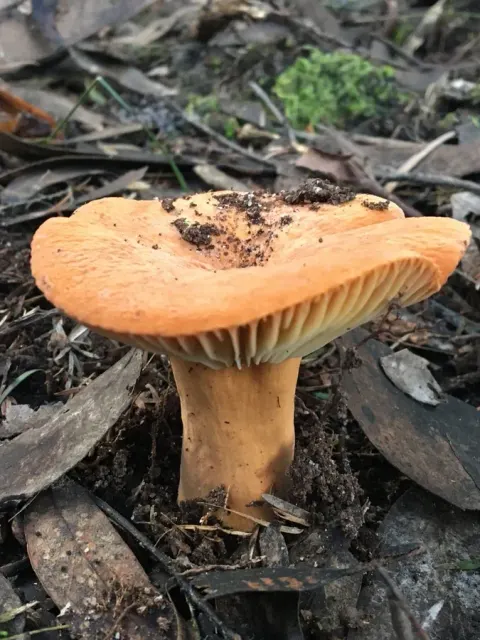
Dokumentasi Lactifluus rupestris dari Wikimedia Commons. Imagem de um espécime do fungo Lactarius rupestris , coletado em 2007 no Parque Nacional do Catimbau, estado de Pernambuco, Brasil. A foto foi tirada por E. Ricardo Drechsler-Santos. Identifikasi mengikuti record berkas sumber.

Jenis
Fotografi
Kredit
E. Ricardo Drechsler-Santos
Sumber media
Buka entri sumber

Gambar menunjukkan objek menurut identifikasi sumber, bukan verifikasi independen spesimen oleh Fungi. Tidak ada skala baru yang ditambahkan.

06 / Rujukan

Sumber profil

  1. [1] Lactifluus rupestris — Wikipedia (en)Bagian sumber: Frozen revision 1293513978
    Tanggal penghimpunan sumber: 2026-10-12
    Teks sumber: CC BY-SA4.0 · Wikipedia contributors
  2. [2] Catalogue of Life Base2026-09-11 — Lactifluus rupestrisBagian sumber: ColDP NameUsage.tsv ID B2SFK; accepted species; source 2073
    Tanggal penghimpunan sumber: 2026-10-12
  3. [3] Dokumentasi visual — Lactifluus rupestrisBagian sumber: Individual media record; identification follows the source, not independent determination
    Tanggal penghimpunan sumber: 2026-10-12
    Media sumber: CC BY-SA 3.0 · E. Ricardo Drechsler-Santos

Adaptasi teks: CC BY-SA 4.0. Wikipedia contributors — Lactifluus rupestris — Wikipedia (en)

Uraian asli dan riwayat sumber

Riwayat atau halaman sumber

Ringkasan sumber

Lactifluus rupestris is a species of mushroom in the family Russulaceae. Described as a new species in 2010, it is known only from the semi-arid region in the National Park of Catimbau of Brazil. The mushroom is characterized by a stout fruit body with a smooth and sticky orange cap up to 7 cm in diameter. The gills on the underside of the cap are closely spaced and frequently anastomosed. The stem is 35 – 45 mm long by 18 – 21 mm thick. The mushrooms exude a sparse cream-colored latex when cut or injured.

Revisi sumber

Morfologi sumber

The cap of L. rupestris is 60 – 70 mm, concave to somewhat funnel-shaped, with a central depression. Its color is orange at the center to brownish-orange towards the margin. The cap surface is somewhat sticky, and the texture is either smooth to slightly cracked. It has an indistinct layer of matted mycelial "hairs". The margin lacks striations and grooves, and is curled inward slightly. The gills are slightly decurrent (running slightly down the length of the stem), cream-salmon in color, and crowded closely together. They are up to 3 mm broad and are frequently branched. The gill edges are smooth, and the same color as the gill face. There are several tiers of lamellulae (short gills that do not extend fully from the cap margin to the stem) interspersed between the gills. The stem is 35 – 45 mm long by 18 – 21 mm thick, centrally attached to the stem, cylindrical, and tapers slightly near the base. It is pale ochraceous-salmon, and slight longitudinal ribs can be seen with a magnifying glass. The flesh is spongy, pale yellow-ochre in the cap, and cream-yellow in the stem. The latex is cream-colored to roughly the same color as the gills, and not abundant. The spores are roughly ellipsoid to roughly spherical, and typically measure 7–8.5 by 6–7 μm. The ornamentation on the spore surface is amyloid (staining blue to blue-black in Melzer's reagent) and finely wart-like, with each wart ranging to 0.5–0.7 μm high. The warts are interconnected by thin ridges, but the ridges do not form a complete reticulum. The hilar appendage (the part of a spore once attached to the basidium via the sterigma) ranges in shape from narrowly obtuse to somewhat conical; the plage is not very distinct, but has an amyloid spot.

Revisi sumber

Ekologi sumber

The mushroom was found buried with up to two-thirds of the stem in sandy soil near several shrubs (Fabaceae, subfamily Mimosoideae and others) in a semi-arid region, after heavy precipitation. The species is known only from the type locality in Vale do Catimbau National Park in Brazil, in the state of Pernambuco. It fruits at an elevation of 900 to 1000 m. This is part of the biodiverse cerrado ecoregion, in an area known as the campos rupestres. Although the fungus is suspected to be mycorrhizal (like all Lactarius), there was a wide diversity of plant species growing in the open, dry forest where the mushroom was found (including members of the tree families Euphorbiaceae, Fabaceae, Myrtaceae, Nyctaginaceae, and Polygonaceae—all known to form mycorrhizal associations), so the authors did not speculate on any specific interactions.

Revisi sumber

Struktur reproduksi sumber

The spores are roughly ellipsoid to roughly spherical, and typically measure 7–8.5 by 6–7 μm. The ornamentation on the spore surface is amyloid (staining blue to blue-black in Melzer's reagent) and finely wart-like, with each wart ranging to 0.5–0.7 μm high. The warts are interconnected by thin ridges, but the ridges do not form a complete reticulum. The hilar appendage (the part of a spore once attached to the basidium via the sterigma) ranges in shape from narrowly obtuse to somewhat conical; the plage is not very distinct, but has an amyloid spot. The basidia (spore-bearing cells in the hymenium) are 35–50 by 8–11 μm, club-shaped, and bear mainly four, but sometimes two long (6–10 μm) sterigmata.

Revisi sumber

Rujukan halaman ini

Fungi. Lactifluus rupestris. Rilis data fungi-2026-10-12-expansion-2. https://fungi-atlas.mgadib.chatgpt.site/jamur/lactifluus-rupestris/.

Status: impor sumber; pemeriksaan editorial per profil belum selesai. Untuk klaim biologis, gunakan rujukan pada bagian terkait dan periksa konteks sumber aslinya.