01 / Morfologi

Ciri dan struktur

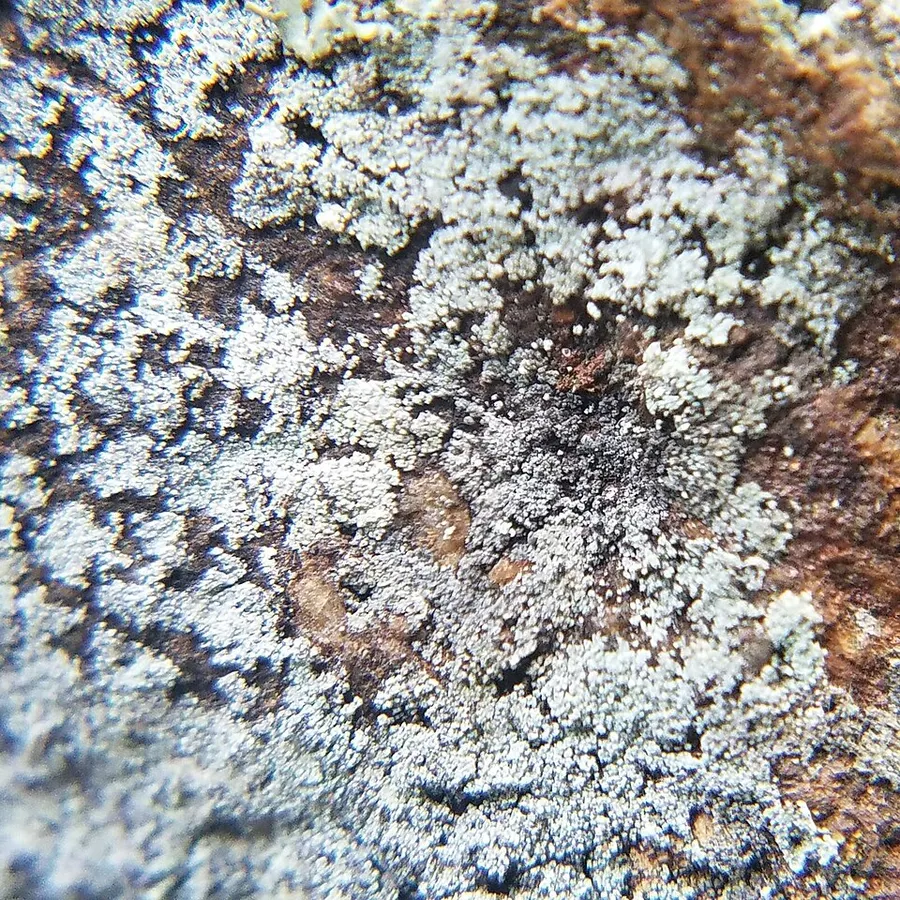
The lichen forms a granular, crust-like growth without defined edges or . While it lacks a true medulla, older specimens develop a lower of gelatinised . A distinctive feature of this species is the presence of small attaching hyphae that act as anchors or rhizines, causing the granules (soredia) to adhere to one another and to the surface they grow on. The soredia are abundant, measuring 40–100 μm in diameter, and tend to clump together. While Leprocaulon adhaerens is rarely found with apothecia (fruiting bodies), a fertile specimen was documented in San Benito County, California. The apothecia range from blackish-brown to reddish-brown, sometimes with a light , and have a distinct, raised margin. As they mature, they become strongly convex, with the margin turning under. The is absent or reduced to fragments of thallus adhering to the . The asci, which are of the Halecania-type, react I+ blue, with a thickened I+ blue dome. The ellipsoid, 1-septate ascospores measure 10–13 by 3.5–5 μm. The main secondary metabolites in L. adhaerens are pannarin and zeorin, though zeorin may occasionally be absent or present only in trace amounts. Additional minor compounds include norpannarin, dechloropannarin, hypopannarin and atranorin. Chemical spot tests results are K−, C−, KC−, and Pd+ (orange).

Sebagian uraian ditampilkan dalam bahasa sumber; terjemahannya belum tersedia atau belum lolos pemeriksaan.

Rujukan: [1]

Pengukuran mengikuti objek, spesimen atau kultur, dan metode yang disebutkan sumber. Baca uraian asli untuk konteks lengkap.

02 / Kehidupan

Habitat dan peran ekologis

Leprocaulon adhaerens typically grows on rocks, usually over mosses and lichens, and rarely on soil. It is found in open habitats exposed to rain and sunlight, though in snowy areas it occurs in more sheltered locations. The species is known to occur only in North America. It has been recorded in coastal southern California, from the Santa Monica Mountains south to San Diego, as well as in scattered locations in Pennsylvania and Missouri. Its known distribution may be influenced by collection efforts rather than its actual range. Due to its frequent association with bryophytes, L. adhaerens may often be overlooked or undercollected, and is likely to be more widespread across North America than records indicate.

Sebagian uraian ditampilkan dalam bahasa sumber; terjemahannya belum tersedia atau belum lolos pemeriksaan.

Rujukan: [1]

Habitat atau konteks temuan
Informasi belum tersedia pada sumber rilis ini.
Substrat
tanah
Peran atau konteks
Pembentuk liken
Temukan hubungan serupa
03 / Siklus hidup

Reproduksi

The lichen forms a granular, crust-like growth without defined edges or . While it lacks a true medulla, older specimens develop a lower of gelatinised . A distinctive feature of this species is the presence of small attaching hyphae that act as anchors or rhizines, causing the granules (soredia) to adhere to one another and to the surface they grow on. The soredia are abundant, measuring 40–100 μm in diameter, and tend to clump together. While Leprocaulon adhaerens is rarely found with apothecia (fruiting bodies), a fertile specimen was documented in San Benito County, California. The apothecia range from blackish-brown to reddish-brown, sometimes with a light , and have a distinct, raised margin.

Sebagian uraian ditampilkan dalam bahasa sumber; terjemahannya belum tersedia atau belum lolos pemeriksaan.

Rujukan: [1]

Sinonim menurut acuan taksonomi rilis: Lepraria adhaerens
04 / Batas informasi

Catatan identitas dan cakupan

  • Nama diterima mengikuti Catalogue of Life Base2026-09-11; uraian mempertahankan konsep dan nama sumber aslinya.
  • Original geographic, specimen and life-cycle scope retained; source import awaits individual editorial review.
  • Impor dan terjemahan otomatis belum diperiksa editorial per profil. Struktur reproduktif yang disebutkan tidak membuktikan seluruh siklus hidup diketahui.
  • Pengukuran pada uraian mengikuti spesimen, kultur, dan metode sumber; angka tidak diperluas ke semua populasi.

Catatan distribusi dalam narasi mengikuti sumbernya. Dokumentasi spesimen atau foto mengikuti catatan sumber. Bukti wilayah Indonesia dan penilaian konservasi tidak disimpulkan dari gambar.

05 / Dokumentasi

Melihat dengan konteks

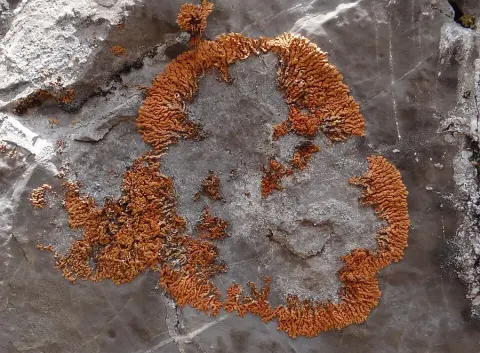
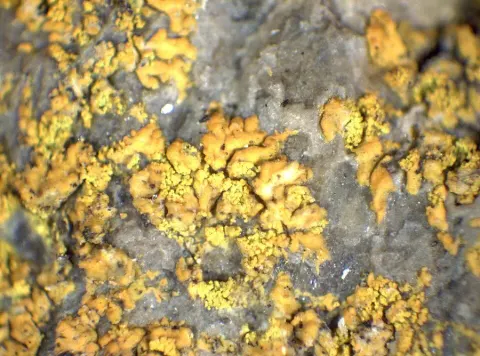
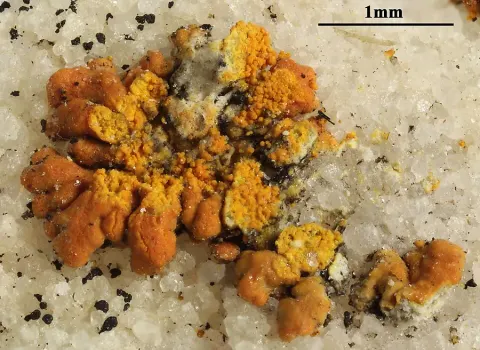
Dokumentasi Leprocaulon adhaerens dari Wikimedia Commons. Leprocaulon adhaerens Identifikasi mengikuti record berkas sumber.

Jenis
Fotografi
Kredit
Leila Dasher
Lisensi
CC BY 4.0
Sumber media
Buka entri sumber

Gambar menunjukkan objek menurut identifikasi sumber, bukan verifikasi independen spesimen oleh Fungi. Tidak ada skala baru yang ditambahkan.

06 / Rujukan

Sumber profil

  1. [1] Leprocaulon adhaerens — Wikipedia (en)Bagian sumber: Frozen revision 1330035932
    Tanggal penghimpunan sumber: 2026-10-12
    Teks sumber: CC BY-SA4.0 · Wikipedia contributors
  2. [2] Catalogue of Life Base2026-09-11 — Leprocaulon adhaerensBagian sumber: ColDP NameUsage.tsv ID 3TGL6; accepted species; source 2073
    Tanggal penghimpunan sumber: 2026-10-12
  3. [3] Dokumentasi visual — Leprocaulon adhaerensBagian sumber: Individual media record; identification follows the source, not independent determination
    Tanggal penghimpunan sumber: 2026-10-12
    Media sumber: CC BY 4.0 · Leila Dasher

Adaptasi teks: CC BY-SA 4.0. Wikipedia contributors — Leprocaulon adhaerens — Wikipedia (en)

Uraian asli dan riwayat sumber

Riwayat atau halaman sumber

Ringkasan sumber

Leprocaulon adhaerens is a species of leprose lichen in the family Leprocaulaceae, found in North America. It was originally described in 2007 as Lepraria adhaerens and later transferred to the genus Leprocaulon in 2013 based on molecular and morphological studies. The lichen forms a granular crust that adheres tightly to both the substrate (usually rocks) and itself, often growing over mosses and other lichens. It is chemically distinct due to its production of pannarin, zeorin, and several minor secondary metabolites.

Revisi sumber

Morfologi sumber

The lichen forms a granular, crust-like growth without defined edges or . While it lacks a true medulla, older specimens develop a lower of gelatinised . A distinctive feature of this species is the presence of small attaching hyphae that act as anchors or rhizines, causing the granules (soredia) to adhere to one another and to the surface they grow on. The soredia are abundant, measuring 40–100 μm in diameter, and tend to clump together. While Leprocaulon adhaerens is rarely found with apothecia (fruiting bodies), a fertile specimen was documented in San Benito County, California. The apothecia range from blackish-brown to reddish-brown, sometimes with a light , and have a distinct, raised margin. As they mature, they become strongly convex, with the margin turning under. The is absent or reduced to fragments of thallus adhering to the . The asci, which are of the Halecania-type, react I+ blue, with a thickened I+ blue dome. The ellipsoid, 1-septate ascospores measure 10–13 by 3.5–5 μm. The main secondary metabolites in L. adhaerens are pannarin and zeorin, though zeorin may occasionally be absent or present only in trace amounts. Additional minor compounds include norpannarin, dechloropannarin, hypopannarin and atranorin. Chemical spot tests results are K−, C−, KC−, and Pd+ (orange).

Revisi sumber

Ekologi sumber

Leprocaulon adhaerens typically grows on rocks, usually over mosses and lichens, and rarely on soil. It is found in open habitats exposed to rain and sunlight, though in snowy areas it occurs in more sheltered locations. The species is known to occur only in North America. It has been recorded in coastal southern California, from the Santa Monica Mountains south to San Diego, as well as in scattered locations in Pennsylvania and Missouri. Its known distribution may be influenced by collection efforts rather than its actual range. Due to its frequent association with bryophytes, L. adhaerens may often be overlooked or undercollected, and is likely to be more widespread across North America than records indicate.

Revisi sumber

Struktur reproduksi sumber

The lichen forms a granular, crust-like growth without defined edges or . While it lacks a true medulla, older specimens develop a lower of gelatinised . A distinctive feature of this species is the presence of small attaching hyphae that act as anchors or rhizines, causing the granules (soredia) to adhere to one another and to the surface they grow on. The soredia are abundant, measuring 40–100 μm in diameter, and tend to clump together. While Leprocaulon adhaerens is rarely found with apothecia (fruiting bodies), a fertile specimen was documented in San Benito County, California. The apothecia range from blackish-brown to reddish-brown, sometimes with a light , and have a distinct, raised margin.

Revisi sumber

Rujukan halaman ini

Fungi. Leprocaulon adhaerens. Rilis data fungi-2026-10-12-expansion-2. https://fungi-atlas.mgadib.chatgpt.site/jamur/leprocaulon-adhaerens/.

Status: impor sumber; pemeriksaan editorial per profil belum selesai. Untuk klaim biologis, gunakan rujukan pada bagian terkait dan periksa konteks sumber aslinya.