01 / Morfologi

Ciri dan struktur

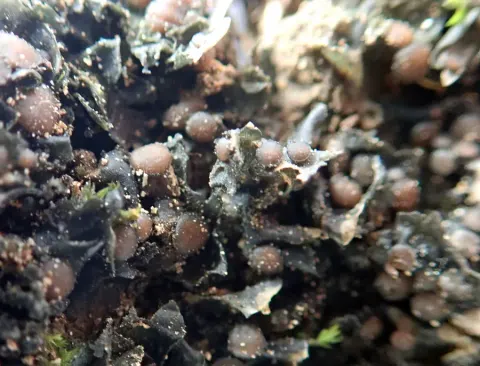
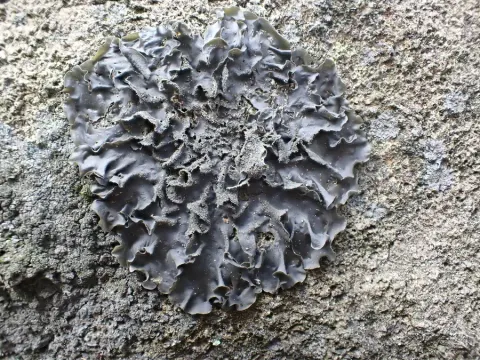
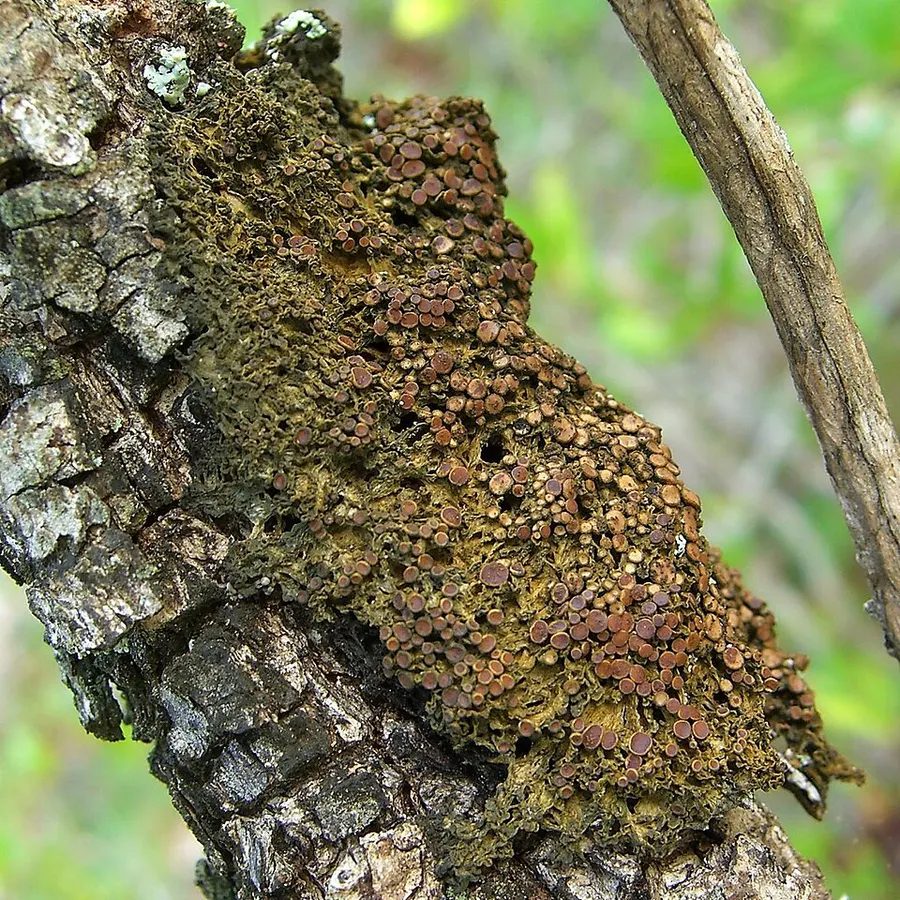
The species is characterized by its distinctive ridged thallus structure and reproductive bodies positioned near the margins, features that align it with a group of related Leptogium species. Leptogium chloromelum forms patches 2–7 cm across with a lead gray to greenish upper surface and paler underside. The body of the lichen consists of numerous radiating that branch and reconnect with each other. These lobes are elongated and 1–4 mm wide, with thickened margins and tips that remain unbroken. The surface has a distinctly wrinkled appearance, with the most prominent wrinkles running lengthwise along the lobes rather than across them. The lobes are quite thick (125–500 μm) and have a simple internal structure consisting of a single layer of irregularly rounded cells about 4–9 μm in diameter. A second cortical layer develops only beneath the reproductive structures. The fungal threads (hyphae) are 2–4 μm in diameter and loosely interwoven, while the algal partner forms spherical cells 3–5 μm across arranged in long chains throughout the lichen body (thallus), though they are most abundant near the upper and lower surfaces. The spore-producing structures (apothecia) are common and sit directly on the thickened lobe margins without stalks. These -shaped structures are 0.5–2.5 mm wide with concave to nearly flat, red-brown surfaces. The rim around each disc matches the wrinkled texture of the main thallus. The spore-containing sacs (asci) are club-shaped to cylindrical and measure 80–120 × 12–23 μm. Each sac contains eight colorless ascospores that are elliptical with pointed ends, measuring 20–30 × 9–12 μm, and divided by 3–5 cross-walls and 0–1 lengthwise divisions.

Sebagian uraian ditampilkan dalam bahasa sumber; terjemahannya belum tersedia atau belum lolos pemeriksaan.

Rujukan: [1]

Pengukuran mengikuti objek, spesimen atau kultur, dan metode yang disebutkan sumber. Baca uraian asli untuk konteks lengkap.

02 / Kehidupan

Habitat dan peran ekologis

Leptogium chloromelum is found throughout the American tropics, with its range extending across the southeastern United States and reaching north to New England, and west to Arkansas and Texas. This bark-dwelling lichen grows on various tree species including several types of hardwoods and oak, and has occasionally been found growing on cedar and, in rare instances, on rock surfaces. The species is relatively common in parts of Brazil, particularly in the state of Mato Grosso do Sul, where it has been found growing on tree bark in various municipalities. The species has a broader distribution within Brazil, having been recorded from several states including Mato Grosso and Rio Grande do Sul. Leptogium chloromelum has also been documented in Peru.

Sebagian uraian ditampilkan dalam bahasa sumber; terjemahannya belum tersedia atau belum lolos pemeriksaan.

Rujukan: [1]

Habitat atau konteks temuan
Informasi belum tersedia pada sumber rilis ini.
Substrat
Informasi belum tersedia pada sumber rilis ini.
Peran atau konteks
Pembentuk liken
Temukan hubungan serupa
03 / Siklus hidup

Reproduksi

The species is characterized by its distinctive ridged thallus structure and reproductive bodies positioned near the margins, features that align it with a group of related Leptogium species. Leptogium chloromelum forms patches 2–7 cm across with a lead gray to greenish upper surface and paler underside. The body of the lichen consists of numerous radiating that branch and reconnect with each other. These lobes are elongated and 1–4 mm wide, with thickened margins and tips that remain unbroken. The surface has a distinctly wrinkled appearance, with the most prominent wrinkles running lengthwise along the lobes rather than across them. The lobes are quite thick (125–500 μm) and have a simple internal structure consisting of a single layer of irregularly rounded cells about 4–9 μm in diameter.

Sebagian uraian ditampilkan dalam bahasa sumber; terjemahannya belum tersedia atau belum lolos pemeriksaan.

Rujukan: [1]

Sinonim menurut acuan taksonomi rilis: Collema chloromelum; Lichen chloromelus; Parmelia chloromela
04 / Batas informasi

Catatan identitas dan cakupan

  • Nama diterima mengikuti Catalogue of Life Base2026-09-11; uraian mempertahankan konsep dan nama sumber aslinya.
  • Original geographic, specimen and life-cycle scope retained; source import awaits individual editorial review.
  • Impor dan terjemahan otomatis belum diperiksa editorial per profil. Struktur reproduktif yang disebutkan tidak membuktikan seluruh siklus hidup diketahui.
  • Pengukuran pada uraian mengikuti spesimen, kultur, dan metode sumber; angka tidak diperluas ke semua populasi.

Catatan distribusi dalam narasi mengikuti sumbernya. Dokumentasi spesimen atau foto mengikuti catatan sumber. Bukti wilayah Indonesia dan penilaian konservasi tidak disimpulkan dari gambar.

05 / Dokumentasi

Melihat dengan konteks

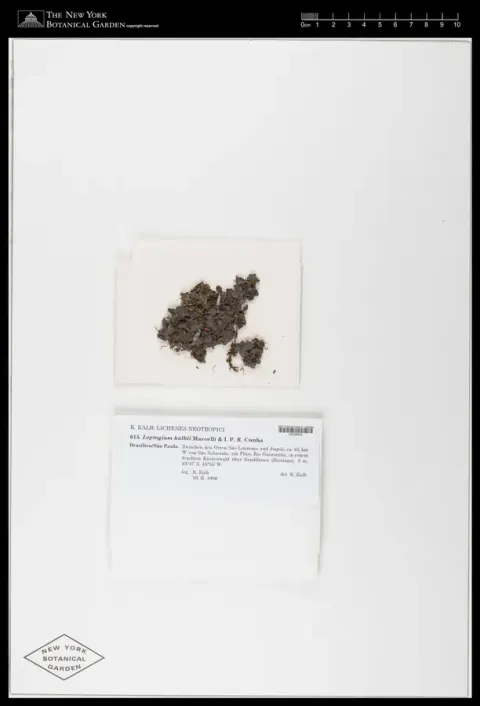
Dokumentasi Leptogium chloromelum dari Wikimedia Commons. Scientific Name: Leptogium chloromelum (Sw. ex Ach.) Nyl. Common Name: Ruffled Jellyskin Certainty: not sure ( notes ) Location: Florida Keys; Upper Keys; Dove Creek Hammock Date: 20070102 Identifikasi mengikuti record berkas sumber.

Jenis
Fotografi
Kredit
Jason Hollinger
Lisensi
CC BY 2.0
Sumber media
Buka entri sumber

Gambar menunjukkan objek menurut identifikasi sumber, bukan verifikasi independen spesimen oleh Fungi. Tidak ada skala baru yang ditambahkan.

06 / Rujukan

Sumber profil

  1. [1] Leptogium chloromelum — Wikipedia (en)Bagian sumber: Frozen revision 1326907880
    Tanggal penghimpunan sumber: 2026-10-12
    Teks sumber: CC BY-SA4.0 · Wikipedia contributors
  2. [2] Catalogue of Life Base2026-09-11 — Leptogium chloromelumBagian sumber: ColDP NameUsage.tsv ID 3TPKV; accepted species; source 2073
    Tanggal penghimpunan sumber: 2026-10-12
  3. [3] Dokumentasi visual — Leptogium chloromelumBagian sumber: Individual media record; identification follows the source, not independent determination
    Tanggal penghimpunan sumber: 2026-10-12
    Media sumber: CC BY 2.0 · Jason Hollinger

Adaptasi teks: CC BY-SA 4.0. Wikipedia contributors — Leptogium chloromelum — Wikipedia (en)

Uraian asli dan riwayat sumber

Riwayat atau halaman sumber

Ringkasan sumber

Leptogium chloromelum, the ruffled jellyskin, is a species of foliose (leafy) lichen in the family Collemataceae. Originally described in 1803 from specimens collected in the mountains of Jamaica, this bark-dwelling lichen is characterized by its distinctively wrinkled, lead-gray to greenish surface with radiating . The species has a wide distribution across the American tropics, ranging from the southeastern United States south to Brazil and Peru, where it commonly grows on the bark of various hardwood trees.

Revisi sumber

Morfologi sumber

The species is characterized by its distinctive ridged thallus structure and reproductive bodies positioned near the margins, features that align it with a group of related Leptogium species. Leptogium chloromelum forms patches 2–7 cm across with a lead gray to greenish upper surface and paler underside. The body of the lichen consists of numerous radiating that branch and reconnect with each other. These lobes are elongated and 1–4 mm wide, with thickened margins and tips that remain unbroken. The surface has a distinctly wrinkled appearance, with the most prominent wrinkles running lengthwise along the lobes rather than across them. The lobes are quite thick (125–500 μm) and have a simple internal structure consisting of a single layer of irregularly rounded cells about 4–9 μm in diameter. A second cortical layer develops only beneath the reproductive structures. The fungal threads (hyphae) are 2–4 μm in diameter and loosely interwoven, while the algal partner forms spherical cells 3–5 μm across arranged in long chains throughout the lichen body (thallus), though they are most abundant near the upper and lower surfaces. The spore-producing structures (apothecia) are common and sit directly on the thickened lobe margins without stalks. These -shaped structures are 0.5–2.5 mm wide with concave to nearly flat, red-brown surfaces. The rim around each disc matches the wrinkled texture of the main thallus. The spore-containing sacs (asci) are club-shaped to cylindrical and measure 80–120 × 12–23 μm. Each sac contains eight colorless ascospores that are elliptical with pointed ends, measuring 20–30 × 9–12 μm, and divided by 3–5 cross-walls and 0–1 lengthwise divisions.

Revisi sumber

Ekologi sumber

Leptogium chloromelum is found throughout the American tropics, with its range extending across the southeastern United States and reaching north to New England, and west to Arkansas and Texas. This bark-dwelling lichen grows on various tree species including several types of hardwoods and oak, and has occasionally been found growing on cedar and, in rare instances, on rock surfaces. The species is relatively common in parts of Brazil, particularly in the state of Mato Grosso do Sul, where it has been found growing on tree bark in various municipalities. The species has a broader distribution within Brazil, having been recorded from several states including Mato Grosso and Rio Grande do Sul. Leptogium chloromelum has also been documented in Peru.

Revisi sumber

Struktur reproduksi sumber

The species is characterized by its distinctive ridged thallus structure and reproductive bodies positioned near the margins, features that align it with a group of related Leptogium species. Leptogium chloromelum forms patches 2–7 cm across with a lead gray to greenish upper surface and paler underside. The body of the lichen consists of numerous radiating that branch and reconnect with each other. These lobes are elongated and 1–4 mm wide, with thickened margins and tips that remain unbroken. The surface has a distinctly wrinkled appearance, with the most prominent wrinkles running lengthwise along the lobes rather than across them. The lobes are quite thick (125–500 μm) and have a simple internal structure consisting of a single layer of irregularly rounded cells about 4–9 μm in diameter.

Revisi sumber

Rujukan halaman ini

Fungi. Leptogium chloromelum. Rilis data fungi-2026-10-12-expansion-2. https://fungi-atlas.mgadib.chatgpt.site/jamur/leptogium-chloromelum/.

Status: impor sumber; pemeriksaan editorial per profil belum selesai. Untuk klaim biologis, gunakan rujukan pada bagian terkait dan periksa konteks sumber aslinya.