Ciri dan struktur
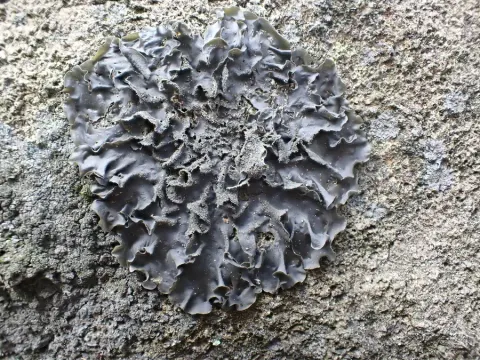
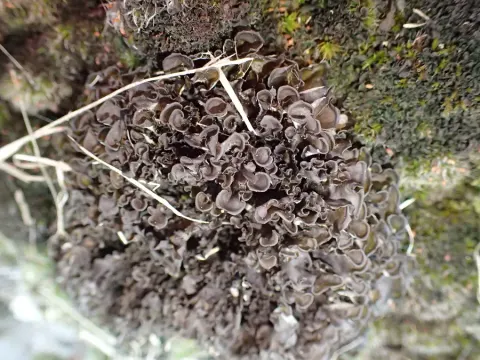
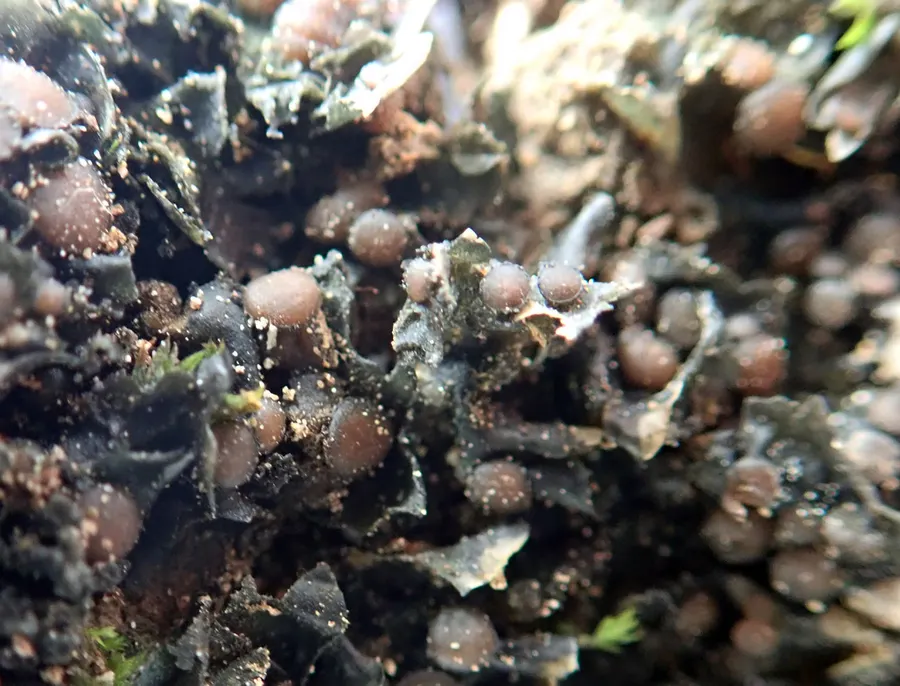
The thallus is foliose (leaf-like), typically to about 2.5 cm across and 55–70 micrometres (μm) thick, grey to bluish grey and opaque. Lobes are about 2 mm wide, tightly crowded and often rolled back or ascending at the edges, giving a slightly "crisped" appearance. The margins are thin, and smooth to finely crenulate (scalloped); pale (faint spots) may be present. The upper and lower cortices each comprise a single layer of small, isodiametric cells. No hairs occur on either surface; instead the lichen attaches by short hapters, which are minute pegs that act as anchors. Vegetative propagation is by abundant isidia (tiny, detachable outgrowths that contain both partners of the lichen) and by small, round to oval lobules. The isidia begin granular and may flatten with age (c. 0.05–0.15 × 0.04–0.10 mm), while lobules are usually to and densely aggregated (c. 0.05–0.10 × 0.10–0.20 mm). Internally, the medulla contains cyanobacteria (the photosynthetic partner) embedded in a gelatinous matrix, with the fungal threads locally organised as short "columns" inclined 70–80° to the surface—a micro-feature useful to separate lookalikes. Sexual structures (apothecia) and pycnidia were not observed in the material examined for the revision.
Habitat dan peran ekologis
The type specimen was corticolous at Greymouth, New Zealand, and the species is otherwise recorded from New Zealand, Australia, Tasmania, and the subantarctic Marion and Heard Islands. Older literature also listed the South Shetland Islands (maritime Antarctica), but the 2018 study found that the Antarctic material cited as L. crispatellum had hairs on the lower side and did not match the hairless type; those collections may represent different species. Until new, matching collections are made, the authors suggest that occurrence in Antarctica should be treated as unconfirmed. Within New Zealand, it has been recorded on Great Island in the Three Kings Islands, where it occurs on bark and soil at exposed cliff-tops, on soil in coastal forest, and on bark in Leptospermum forest.
- Habitat atau konteks temuan
- hutan
- Substrat
- kulit kayu; tanah
- Peran atau konteks
- Pembentuk liken
Reproduksi
Vegetative propagation is by abundant isidia (tiny, detachable outgrowths that contain both partners of the lichen) and by small, round to oval lobules. The isidia begin granular and may flatten with age (c. 0.05–0.15 × 0.04–0.10 mm), while lobules are usually to and densely aggregated (c. 0.05–0.10 × 0.10–0.20 mm). Internally, the medulla contains cyanobacteria (the photosynthetic partner) embedded in a gelatinous matrix, with the fungal threads locally organised as short "columns" inclined 70–80° to the surface—a micro-feature useful to separate lookalikes. Sexual structures (apothecia) and pycnidia were not observed in the material examined for the revision.
Catatan identitas dan cakupan
- Nama diterima mengikuti Catalogue of Life Base2026-09-11; uraian mempertahankan konsep dan nama sumber aslinya.
- Original geographic, specimen and life-cycle scope retained; source import awaits individual editorial review.
- Impor dan terjemahan otomatis belum diperiksa editorial per profil. Struktur reproduktif yang disebutkan tidak membuktikan seluruh siklus hidup diketahui.
- Pengukuran pada uraian mengikuti spesimen, kultur, dan metode sumber; angka tidak diperluas ke semua populasi.
Catatan distribusi dalam narasi mengikuti sumbernya. Dokumentasi spesimen atau foto mengikuti catatan sumber. Bukti wilayah Indonesia dan penilaian konservasi tidak disimpulkan dari gambar.
Melihat dengan konteks
Dokumentasi Leptogium crispatellum menurut asosiasi foto pada record takson iNaturalist. Kredit: Peter de Lange. Identitas mengikuti sumber; bukan penentuan spesimen independen.
- Jenis
- Fotografi
- Kredit
- no rights reserved, uploaded by Peter de Lange
- Lisensi
- CC0 1.0
- Sumber media
- Buka entri sumber
Dokumentasi tambahan
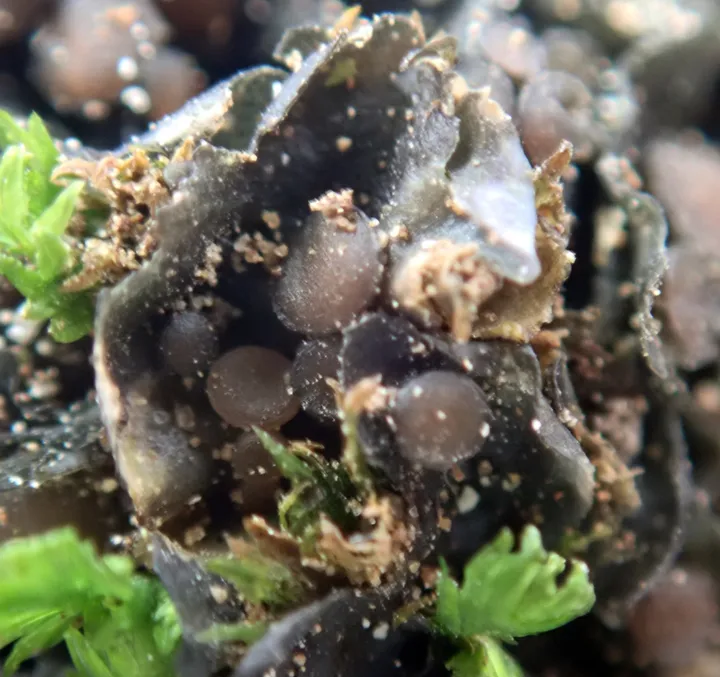
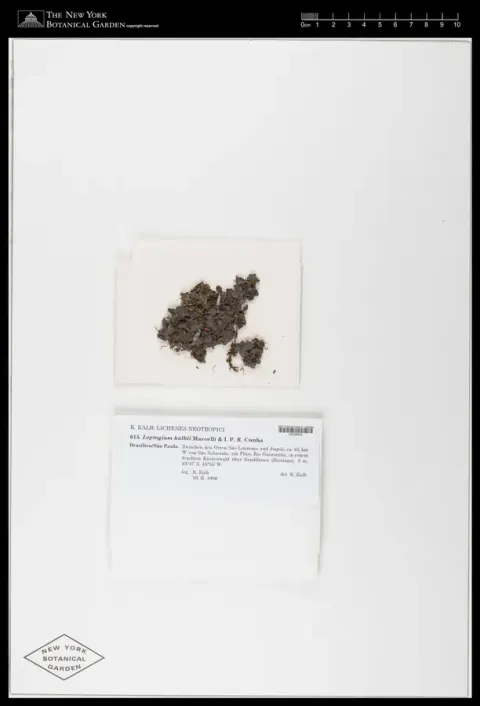
Foto yang diasosiasikan dengan Leptogium crispatellum pada iNaturalist. Identifikasi mengikuti sumber; bukan penentuan spesimen independen.
Kredit dan penggunaan
no rights reserved, uploaded by Peter de Lange
Ukuran dan format gambar disesuaikan tanpa pemotongan, retus, atau penambahan skala. Lisensi sumber dipertahankan.
Sumber profil
- [1] Leptogium crispatellum — Wikipedia (en)
- [2] Catalogue of Life Base2026-09-11 — Leptogium crispatellum
- [3] Dokumentasi visual — Leptogium crispatellum
- [4] Dokumentasi visual — Leptogium crispatellum
Rujukan halaman ini
Fungi. Leptogium crispatellum. Rilis data fungi-2026-10-12-expansion-2. https://fungi-atlas.mgadib.chatgpt.site/jamur/leptogium-crispatellum/.
Status: impor sumber; pemeriksaan editorial per profil belum selesai. Untuk klaim biologis, gunakan rujukan pada bagian terkait dan periksa konteks sumber aslinya.