01 / Morfologi

Ciri dan struktur

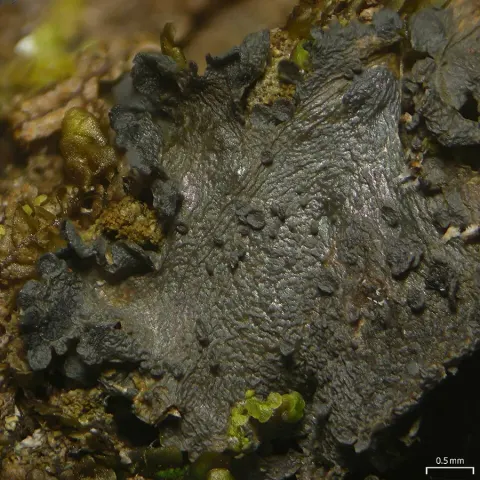
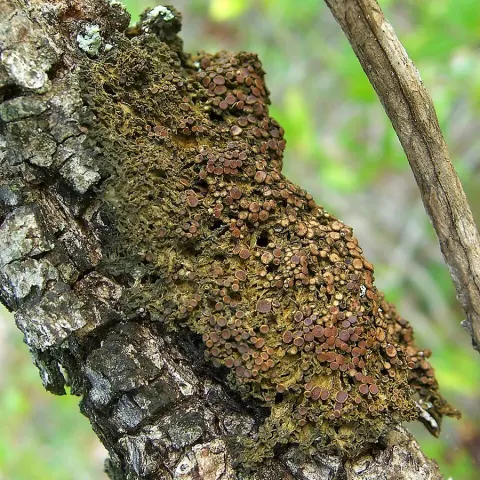
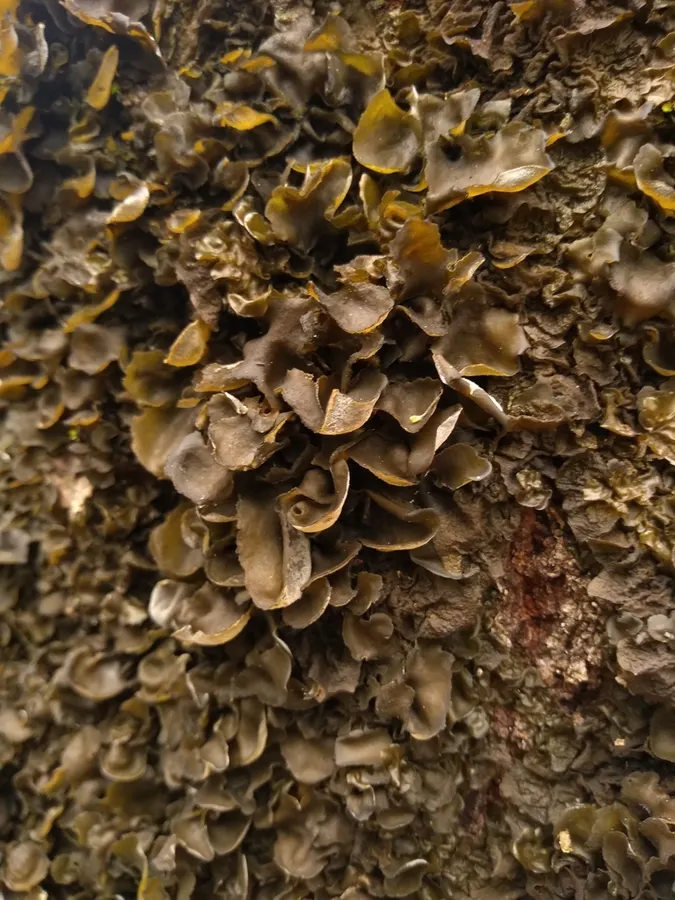
The thallus, or body, of Leptogium acadiense is foliose, meaning it is leaf-like and loosely attached, and ranges in size from 2 to 9 cm in diameter. The lobes of the thallus are flat to concave, often with downturned margins, and resemble rose petals. They can be separated, contiguous, or overlapping, and are usually 3 – 12 mm wide. The upper surface of the thallus is usually dull, with a color ranging from light bluish grey to dark brownish grey, often with olivaceous overtones, while the lower surface is medium grey and covered in short, white to tan . The lichen's internal anatomy consists of loosely interwoven hyphae, with long chains of Nostoc between them. The upper and lower cortices, or outer layers of cells, are composed of rounded-rectangular cells, with the upper cortex soon interrupted by isidia formation and disintegrating. Apothecia, the reproductive structures of the lichen, are rare, usually stipitate, and range in size from 0.2 to 1.2 mm in diameter. They have a reddish-brown and a thalline margin, sometimes covered with variable amounts of granular isidia. No lichen products occur in this species and all chemical spot tests are negative.

Sebagian uraian ditampilkan dalam bahasa sumber; terjemahannya belum tersedia atau belum lolos pemeriksaan.

Rujukan: [1]

Pengukuran mengikuti objek, spesimen atau kultur, dan metode yang disebutkan sumber. Baca uraian asli untuk konteks lengkap.

02 / Kehidupan

Habitat dan peran ekologis

Leptogium acadiense has a wide distribution across boreal and northern temperate regions in eastern North America. This species can be found in various habitats, from the tundra and taiga of northern Quebec to Atlantic Canada and northern Great Lakes region. The lichen prefers deciduous trees like Acer, Aesculus, Fraxinus, and Populus in mixed hardwood-conifer forests but it has also been observed on the bark of conifers like Thuja and on mossy logs or rocks. Some isolated populations have also been reported in middle to high elevation northern hardwood forests in the southern Appalachian Mountains, which are known to share similar lichen species as those found in boreal forests. Leptogium acadiense is considered to be native to eastern North America.

Sebagian uraian ditampilkan dalam bahasa sumber; terjemahannya belum tersedia atau belum lolos pemeriksaan.

Rujukan: [1]

Habitat atau konteks temuan
hutan
Substrat
Informasi belum tersedia pada sumber rilis ini.
Peran atau konteks
Pembentuk liken
Temukan hubungan serupa
03 / Siklus hidup

Reproduksi

The lichen's internal anatomy consists of loosely interwoven hyphae, with long chains of Nostoc between them. The upper and lower cortices, or outer layers of cells, are composed of rounded-rectangular cells, with the upper cortex soon interrupted by isidia formation and disintegrating. Apothecia, the reproductive structures of the lichen, are rare, usually stipitate, and range in size from 0.2 to 1.2 mm in diameter. They have a reddish-brown and a thalline margin, sometimes covered with variable amounts of granular isidia. No lichen products occur in this species and all chemical spot tests are negative.

Sebagian uraian ditampilkan dalam bahasa sumber; terjemahannya belum tersedia atau belum lolos pemeriksaan.

Rujukan: [1]

04 / Batas informasi

Catatan identitas dan cakupan

  • Nama diterima mengikuti Catalogue of Life Base2026-09-11; uraian mempertahankan konsep dan nama sumber aslinya.
  • Original geographic, specimen and life-cycle scope retained; source import awaits individual editorial review.
  • Impor dan terjemahan otomatis belum diperiksa editorial per profil. Struktur reproduktif yang disebutkan tidak membuktikan seluruh siklus hidup diketahui.
  • Pengukuran pada uraian mengikuti spesimen, kultur, dan metode sumber; angka tidak diperluas ke semua populasi.

Catatan distribusi dalam narasi mengikuti sumbernya. Dokumentasi spesimen atau foto mengikuti catatan sumber. Bukti wilayah Indonesia dan penilaian konservasi tidak disimpulkan dari gambar.

05 / Dokumentasi

Melihat dengan konteks

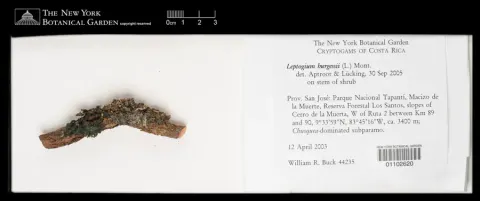
Dokumentasi Leptogium acadiense menurut asosiasi foto pada record takson iNaturalist. Kredit: Fotografer tidak dicantumkan. Sumber observasi iNaturalist; pengunggah: agbelliveau. Identitas mengikuti sumber; bukan penentuan spesimen independen.

Jenis
Fotografi
Kredit
Fotografer tidak dicantumkan. Sumber observasi iNaturalist; pengunggah: agbelliveau
Lisensi
CC0 1.0
Sumber media
Buka entri sumber

Gambar menunjukkan objek menurut identifikasi sumber, bukan verifikasi independen spesimen oleh Fungi. Tidak ada skala baru yang ditambahkan.

06 / Rujukan

Sumber profil

  1. [1] Leptogium acadiense — Wikipedia (en)Bagian sumber: Frozen revision 1147901416
    Tanggal penghimpunan sumber: 2026-10-12
    Teks sumber: CC BY-SA4.0 · Wikipedia contributors
  2. [2] Catalogue of Life Base2026-09-11 — Leptogium acadienseBagian sumber: ColDP NameUsage.tsv ID 3TPJZ; accepted species; source 2073
    Tanggal penghimpunan sumber: 2026-10-12
  3. [3] Dokumentasi visual — Leptogium acadienseBagian sumber: Individual media record; identification follows the source, not independent determination
    Tanggal penghimpunan sumber: 2026-10-12
    Media sumber: CC0 1.0 · Fotografer tidak dicantumkan. Sumber observasi iNaturalist; pengunggah: agbelliveau

Adaptasi teks: CC BY-SA 4.0. Wikipedia contributors — Leptogium acadiense — Wikipedia (en)

Uraian asli dan riwayat sumber

Riwayat atau halaman sumber

Ringkasan sumber

Leptogium acadiense is a species of corticolous (bark-dwelling), foliose lichen in the family Collemataceae. Found in northeastern North America, it was formally described as a new species in 2016 by James Hinds, Frances Anderson, and James Lendemer. The species epithet refers to the Acadian region of eastern North America, where the lichen seems to be most common.

Revisi sumber

Morfologi sumber

The thallus, or body, of Leptogium acadiense is foliose, meaning it is leaf-like and loosely attached, and ranges in size from 2 to 9 cm in diameter. The lobes of the thallus are flat to concave, often with downturned margins, and resemble rose petals. They can be separated, contiguous, or overlapping, and are usually 3 – 12 mm wide. The upper surface of the thallus is usually dull, with a color ranging from light bluish grey to dark brownish grey, often with olivaceous overtones, while the lower surface is medium grey and covered in short, white to tan . The lichen's internal anatomy consists of loosely interwoven hyphae, with long chains of Nostoc between them. The upper and lower cortices, or outer layers of cells, are composed of rounded-rectangular cells, with the upper cortex soon interrupted by isidia formation and disintegrating. Apothecia, the reproductive structures of the lichen, are rare, usually stipitate, and range in size from 0.2 to 1.2 mm in diameter. They have a reddish-brown and a thalline margin, sometimes covered with variable amounts of granular isidia. No lichen products occur in this species and all chemical spot tests are negative.

Revisi sumber

Ekologi sumber

Leptogium acadiense has a wide distribution across boreal and northern temperate regions in eastern North America. This species can be found in various habitats, from the tundra and taiga of northern Quebec to Atlantic Canada and northern Great Lakes region. The lichen prefers deciduous trees like Acer, Aesculus, Fraxinus, and Populus in mixed hardwood-conifer forests but it has also been observed on the bark of conifers like Thuja and on mossy logs or rocks. Some isolated populations have also been reported in middle to high elevation northern hardwood forests in the southern Appalachian Mountains, which are known to share similar lichen species as those found in boreal forests. Leptogium acadiense is considered to be native to eastern North America.

Revisi sumber

Struktur reproduksi sumber

The lichen's internal anatomy consists of loosely interwoven hyphae, with long chains of Nostoc between them. The upper and lower cortices, or outer layers of cells, are composed of rounded-rectangular cells, with the upper cortex soon interrupted by isidia formation and disintegrating. Apothecia, the reproductive structures of the lichen, are rare, usually stipitate, and range in size from 0.2 to 1.2 mm in diameter. They have a reddish-brown and a thalline margin, sometimes covered with variable amounts of granular isidia. No lichen products occur in this species and all chemical spot tests are negative.

Revisi sumber

Rujukan halaman ini

Fungi. Leptogium acadiense. Rilis data fungi-2026-10-12-expansion-2. https://fungi-atlas.mgadib.chatgpt.site/jamur/leptogium-acadiense/.

Status: impor sumber; pemeriksaan editorial per profil belum selesai. Untuk klaim biologis, gunakan rujukan pada bagian terkait dan periksa konteks sumber aslinya.