Ciri dan struktur
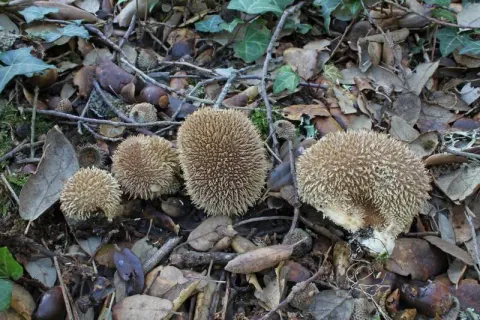
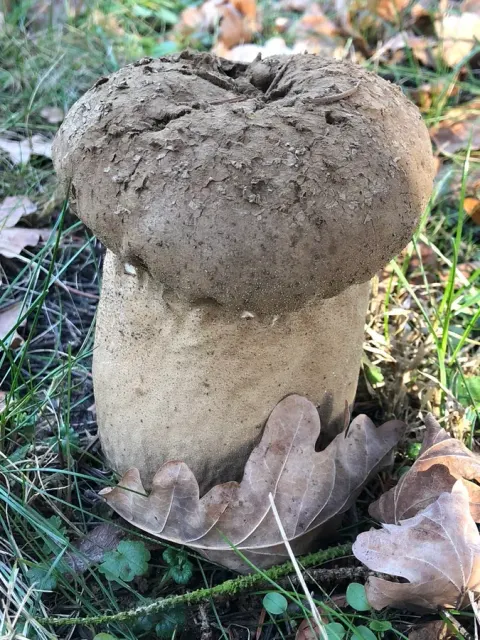
Description: Gasterocarps subglobose, (2) 4–4.5 cm in width, (2) 2.5 (3) cm in height. Color 52 (Buff) at the base, tending to become 17 (Snuff brown) to 18 (Umber) towards the top with a reddish tint. Mature gleba olivaceous-yellow. Under light microscopy, spores globose to slightly subglobose, (4) 4.9–6.1 (6.5) µm in diam. (n = 35) including ornamentation, finely warted, hyaline to light green or light yellow, with a thick wall (≈0.7–1 µm), and a central oil droplet. Some spores with a short apiculus. Capillitium hyphae (2.5) 3–5 (up to 6) µm in diam. (walls ≈ 0.7–1 µm), yellow to hyaline, with pores. Description: Gasterocarps commonly pestle-shaped with well-developed pseudostipe, sometimes subglobose-turbinate, tapering towards the base with wrinkles and folds. Young fruit bodies almost subglobose-sessile, with underdeveloped pseudostipe; during maturation, pseudostipe becomes larger and comprises up to 2/3 of gasterocarps’ length, with white branching mycelium (1) 2–2.5 cm long at the base, binding soil particles. Pestle-shaped specimens have the following dimensions: “cap” from 4–4.5 to 6.5–7 cm diam., 2.5–3 cm in height, pseudostipe (2.5) 3–3.5 (4) cm in diam., (3) 3.5–4 (4.5) in length, with full length of gasterocarp 5.5–7.5 cm. Subglobose-turbinate and depressed sessile specimens from 2.5–3 × 2.5–3 cm to (6) 7– 7.5 (8.5) cm in width, (5) 5.5–6.5 (7) cm in height. Color of pseudostipe from 3C, 6F to 52 (Buff), upper part 52 (Buff), 28 (Milky coffee), 27 Hazel, 17 (Snuff brown) to 12 (Fulvous). Exoperidium ornamented with fine dense spines (sometimes almost smooth), usually with a more abundant pattern of fine spines (often with connected tips) towards the base of the gasterocarp.
Habitat dan peran ekologis
Habitat: Xerothermophilous species, preferring dry continental regions, can be found in forest edges, grasslands and even sand steppe communities. Habitat: Terricolous in meadows, parks and gardens, cultivated fields, on compost heaps, in rich deciduous forests and open woodland; in boreal to subtropical climates. Habitat: Terricolous, thermophilous species found in xeric habitats, in temperate to subtropical climates. Habitat: Thermophilous species, prefers woodlands, and is a characteristic species for the Mediterranean–sub-Mediterranean oakwoods. Habitat: Thermophilous species, can be found in dry, mostly calcareous, grasslands of the forest steppe and light deciduous forests. Habitat: Terricolous and found on weakly acid to calcareous humus or soil in dry grassland sites, steppes, pastures, meadows, dry lawns, also on sandy soils, dunes, limestone, and gypsum; in subarctic to subtropical climates. Habitat: Terricolous on neutral to calcareous soils in deciduous, or mixed coniferous and deciduous woodland, in subarctic to subtropical climates. Habitat: Occurs in deciduous and coniferous woods, cosmopolitan species present in all continents, except Antarctica. Habitat: Terricolous in grassland including fields, meadows, pastures, garden lawns, roadsides, open woodland, also amongst short turf on heathland and downland, nitrophilous; temperate to subtropical (probably introduced in tropical and southern subtropical climates).
- Habitat atau konteks temuan
- hutan; padang rumput
- Substrat
- Informasi belum tersedia pada sumber rilis ini.
- Peran atau konteks
- Belum dikategorikan pada rilis ini.
Reproduksi
Description: Gasterocarps subglobose, (2) 4–4.5 cm in width, (2) 2.5 (3) cm in height. Color 52 (Buff) at the base, tending to become 17 (Snuff brown) to 18 (Umber) towards the top with a reddish tint. Mature gleba olivaceous-yellow. Under light microscopy, spores globose to slightly subglobose, (4) 4.9–6.1 (6.5) µm in diam. (n = 35) including ornamentation, finely warted, hyaline to light green or light yellow, with a thick wall (≈0.7–1 µm), and a central oil droplet. Some spores with a short apiculus. Capillitium hyphae (2.5) 3–5 (up to 6) µm in diam. (walls ≈ 0.7–1 µm), yellow to hyaline, with pores. Description: Gasterocarps subglobose to subglobose-turbinate, subglobose-sessile, compressed vertically, usually wider than high, ranging from 2 cm in width and 2–2.5 cm in height, to 5–6 cm in width and 3–3.5 in height, tapering towards the base with folds and wrinkles, without pseudostipe and with poorly developed subgleba, with 0.5–1 (up to 1.5) cm basal turf of mycelium binding substratum.
Catatan identitas dan cakupan
- Nama diterima mengikuti Catalogue of Life Base2026-09-11; uraian mempertahankan konsep dan nama sumber aslinya.
- Preserve original treatment localities, hosts and substrate scope. Materials examined describe documented specimens, not the full global range.
- Impor dan terjemahan otomatis belum diperiksa editorial per profil. Struktur reproduktif yang disebutkan tidak membuktikan seluruh siklus hidup diketahui.
- Pengukuran pada uraian mengikuti spesimen, kultur, dan metode sumber; angka tidak diperluas ke semua populasi.
Catatan distribusi dalam narasi mengikuti sumbernya. Dokumentasi spesimen atau foto mengikuti catatan sumber. Bukti wilayah Indonesia dan penilaian konservasi tidak disimpulkan dari gambar.
Melihat dengan konteks
Dokumentasi Lycoperdon dermoxanthum menurut asosiasi foto pada record takson iNaturalist. Kredit: Lucian Clanet. Identitas mengikuti sumber; bukan penentuan spesimen independen.
- Jenis
- Fotografi
- Kredit
- (c) Lucian Clanet, some rights reserved (CC BY)
- Lisensi
- CC BY 4.0
- Sumber media
- Buka entri sumber
Dokumentasi tambahan
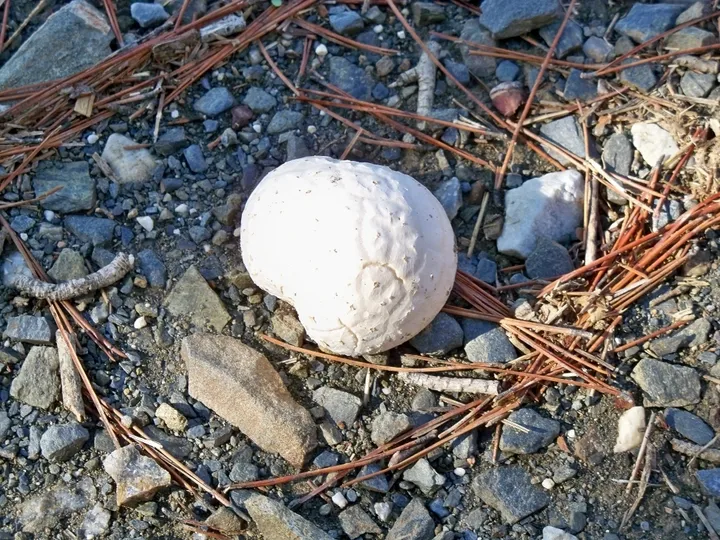
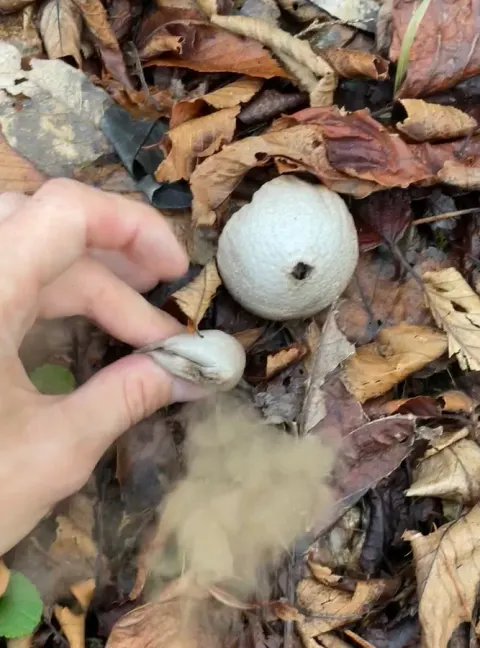
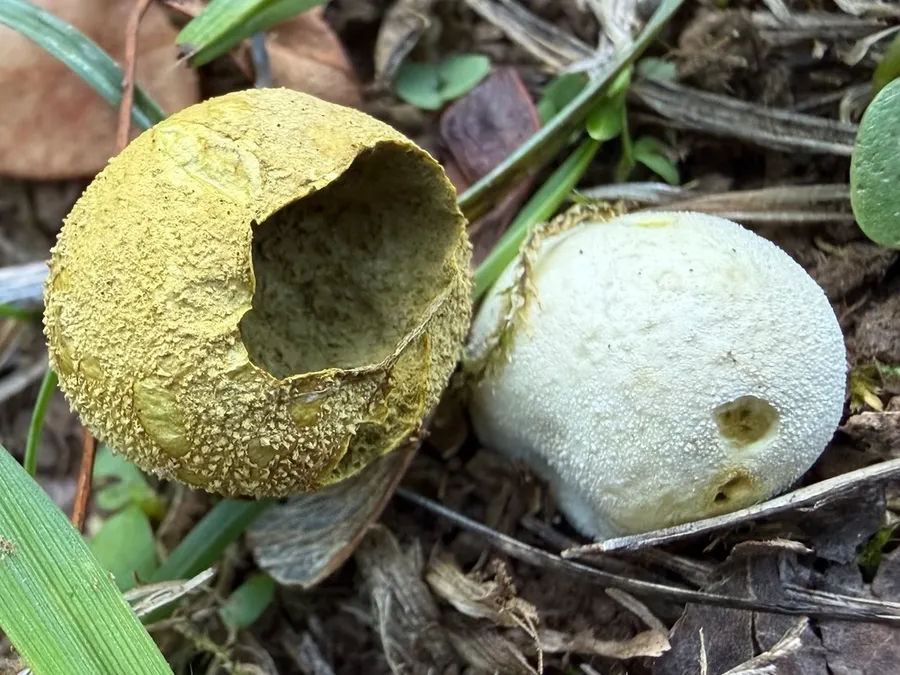
Foto yang diasosiasikan dengan Lycoperdon dermoxanthum pada iNaturalist. Identifikasi mengikuti sumber; bukan penentuan spesimen independen.
Kredit dan penggunaan
(c) Daniel Capilla, some rights reserved (CC BY-SA), uploaded by Daniel Capilla
Ukuran dan format gambar disesuaikan tanpa pemotongan, retus, atau penambahan skala. Lisensi sumber dipertahankan.
Sumber profil
- [1] Species Diversity of Lycoperdaceae (Agaricales) in Israel, with Some Insights into the Phylogenetic Structure of the Family — Lycoperdon dermoxanthum
- [2] Catalogue of Life Base2026-09-11 — Lycoperdon dermoxanthum
- [3] Dokumentasi visual — Lycoperdon dermoxanthum
- [4] Dokumentasi visual — Lycoperdon dermoxanthum
Rujukan halaman ini
Fungi. Lycoperdon dermoxanthum. Rilis data fungi-2026-10-12-expansion-2. https://fungi-atlas.mgadib.chatgpt.site/jamur/lycoperdon-dermoxanthum/.
Status: impor sumber; pemeriksaan editorial per profil belum selesai. Untuk klaim biologis, gunakan rujukan pada bagian terkait dan periksa konteks sumber aslinya.