01 / Morfologi

Ciri dan struktur

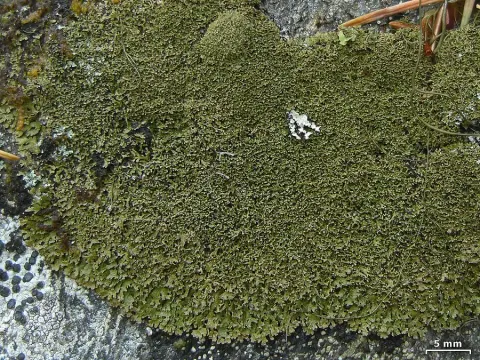
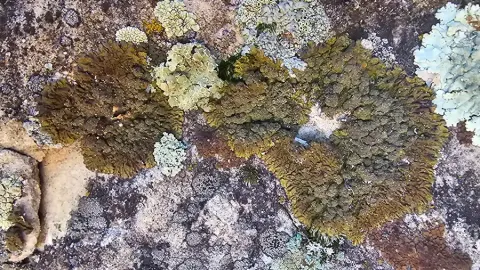
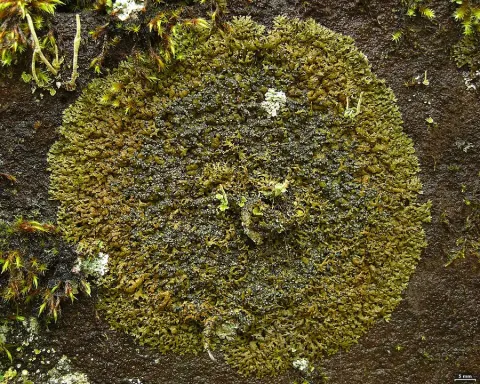
M. disjuncta possess foliose thallus composed of 0.6–1.2 mm broad, flat to slightly convex and glossy lobes (Szczepańska et al. 2015). Its upper surface is smooth, olive-brown to dark brown. Pseudocyphellae are small, rather indistinct and submarginal. Its characteristic feature is the presence of the soralia (0.2–0.5 mm in diameter), which are punctiform, irregular, usually capitate and arise on the surface or at the margins of the lobes. Soredia are granular to isidioid, dark, but appearing white when abraded. Pycnidia are rare, conidia are 6–7 × 1 μm. Apothecia are not seen in the examined material.

Sebagian uraian ditampilkan dalam bahasa sumber; terjemahannya belum tersedia atau belum lolos pemeriksaan.

Rujukan: [1]

Pengukuran mengikuti objek, spesimen atau kultur, dan metode yang disebutkan sumber. Baca uraian asli untuk konteks lengkap.

02 / Kehidupan

Habitat dan peran ekologis

M. disjuncta is a circumpolar species growing mainly on siliceous rocks. The geographical range of this species consists of both continental and oceanic areas of Europe and North America (Esslinger 1977; Otte et al. 2005; Hansen 2013). Available molecular data concern samples collected in North America (Canada, Greenland, USA), North (Iceland, Norway, Sweden, United Kingdom) and Central (Austria) Europe, as well as Asia (India).

Sebagian uraian ditampilkan dalam bahasa sumber; terjemahannya belum tersedia atau belum lolos pemeriksaan.

Rujukan: [1]

Habitat atau konteks temuan
Informasi belum tersedia pada sumber rilis ini.
Substrat
Informasi belum tersedia pada sumber rilis ini.
Peran atau konteks
Pembentuk liken
Temukan hubungan serupa
03 / Siklus hidup

Reproduksi

M. disjuncta possess foliose thallus composed of 0.6–1.2 mm broad, flat to slightly convex and glossy lobes (Szczepańska et al. 2015). Its upper surface is smooth, olive-brown to dark brown. Pseudocyphellae are small, rather indistinct and submarginal. Its characteristic feature is the presence of the soralia (0.2–0.5 mm in diameter), which are punctiform, irregular, usually capitate and arise on the surface or at the margins of the lobes. Soredia are granular to isidioid, dark, but appearing white when abraded. Pycnidia are rare, conidia are 6–7 × 1 μm. Apothecia are not seen in the examined material.

Sebagian uraian ditampilkan dalam bahasa sumber; terjemahannya belum tersedia atau belum lolos pemeriksaan.

Rujukan: [1]

Sinonim menurut acuan taksonomi rilis: Melanelia disjuncta; Melanelia granulosa; Parmelia disjuncta
04 / Batas informasi

Catatan identitas dan cakupan

  • Nama diterima mengikuti Catalogue of Life Base2026-09-11; uraian mempertahankan konsep dan nama sumber aslinya.
  • Preserve original treatment localities, hosts and substrate scope. Materials examined describe documented specimens, not the full global range.
  • Impor dan terjemahan otomatis belum diperiksa editorial per profil. Struktur reproduktif yang disebutkan tidak membuktikan seluruh siklus hidup diketahui.
  • Pengukuran pada uraian mengikuti spesimen, kultur, dan metode sumber; angka tidak diperluas ke semua populasi.

Catatan distribusi dalam narasi mengikuti sumbernya. Dokumentasi spesimen atau foto mengikuti catatan sumber. Bukti wilayah Indonesia dan penilaian konservasi tidak disimpulkan dari gambar.

05 / Dokumentasi

Melihat dengan konteks

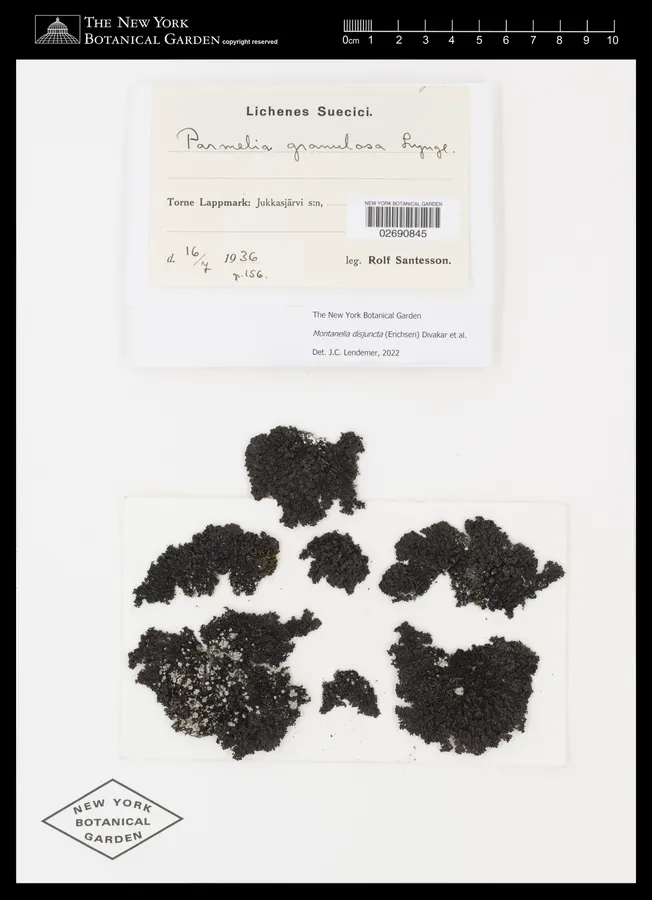
Voucher herbarium Montanelia disjuncta (02690845), The New York Botanical Garden. Identifikasi mengikuti record spesimen sumber. Foto bahan, kemasan, atau label herbarium sebagaimana tersedia pada record institusi; bukan foto lapangan atau penentuan spesimen independen.

Jenis
Voucher herbarium
Kredit
The New York Botanical Garden
Lisensi
CC BY 4.0
Sumber media
Buka entri sumber

Gambar menunjukkan objek menurut identifikasi sumber, bukan verifikasi independen spesimen oleh Fungi. Tidak ada skala baru yang ditambahkan.

06 / Rujukan

Sumber profil

  1. [1] Infraspecific variation of some brown Parmeliae (in Poland) – a comparison of ITS rDNA and non-molecular characters — Montanelia disjunctaBagian sumber: PMC8716509_section_30
    Tanggal penghimpunan sumber: 2026-10-12
    Teks sumber: CC BY 4.0 · Szczepańska K, Guzow-Krzemińska B, Urbaniak J.
  2. [2] Catalogue of Life Base2026-09-11 — Montanelia disjunctaBagian sumber: ColDP NameUsage.tsv ID 6RQ5B; accepted species; source 2073
    Tanggal penghimpunan sumber: 2026-10-12
  3. [3] Dokumentasi visual — Montanelia disjunctaBagian sumber: Individual media record; identification follows the source, not independent determination
    Tanggal penghimpunan sumber: 2026-10-12
    Media sumber: CC BY 4.0 · The New York Botanical Garden

Adaptasi teks: CC BY 4.0. Szczepańska K, Guzow-Krzemińska B, Urbaniak J. — Infraspecific variation of some brown Parmeliae (in Poland) – a comparison of ITS rDNA and non-molecular characters — Montanelia disjuncta

Uraian asli dan riwayat sumber

Riwayat atau halaman sumber

Ringkasan sumber

M. disjuncta possess foliose thallus composed of 0.6–1.2 mm broad, flat to slightly convex and glossy lobes (Szczepańska et al. 2015). Its upper surface is smooth, olive-brown to dark brown. Pseudocyphellae are small, rather indistinct and submarginal. Its characteristic feature is the presence of the soralia (0.2–0.5 mm in diameter), which are punctiform, irregular, usually capitate and arise on the surface or at the margins of the lobes. Soredia are granular to isidioid, dark, but appearing white when abraded.

Revisi sumber

Morfologi sumber

M. disjuncta possess foliose thallus composed of 0.6–1.2 mm broad, flat to slightly convex and glossy lobes (Szczepańska et al. 2015). Its upper surface is smooth, olive-brown to dark brown. Pseudocyphellae are small, rather indistinct and submarginal. Its characteristic feature is the presence of the soralia (0.2–0.5 mm in diameter), which are punctiform, irregular, usually capitate and arise on the surface or at the margins of the lobes. Soredia are granular to isidioid, dark, but appearing white when abraded. Pycnidia are rare, conidia are 6–7 × 1 μm. Apothecia are not seen in the examined material.

Revisi sumber

Ekologi sumber

M. disjuncta is a circumpolar species growing mainly on siliceous rocks. The geographical range of this species consists of both continental and oceanic areas of Europe and North America (Esslinger 1977; Otte et al. 2005; Hansen 2013). Available molecular data concern samples collected in North America (Canada, Greenland, USA), North (Iceland, Norway, Sweden, United Kingdom) and Central (Austria) Europe, as well as Asia (India).

Revisi sumber

Struktur reproduksi sumber

M. disjuncta possess foliose thallus composed of 0.6–1.2 mm broad, flat to slightly convex and glossy lobes (Szczepańska et al. 2015). Its upper surface is smooth, olive-brown to dark brown. Pseudocyphellae are small, rather indistinct and submarginal. Its characteristic feature is the presence of the soralia (0.2–0.5 mm in diameter), which are punctiform, irregular, usually capitate and arise on the surface or at the margins of the lobes. Soredia are granular to isidioid, dark, but appearing white when abraded. Pycnidia are rare, conidia are 6–7 × 1 μm. Apothecia are not seen in the examined material.

Revisi sumber

Rujukan halaman ini

Fungi. Montanelia disjuncta. Rilis data fungi-2026-10-12-expansion-2. https://fungi-atlas.mgadib.chatgpt.site/jamur/montanelia-disjuncta/.

Status: impor sumber; pemeriksaan editorial per profil belum selesai. Untuk klaim biologis, gunakan rujukan pada bagian terkait dan periksa konteks sumber aslinya.