Ciri dan struktur
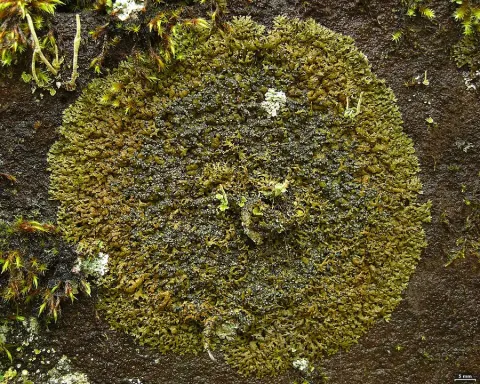
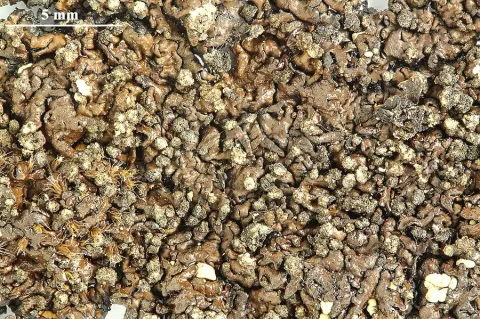
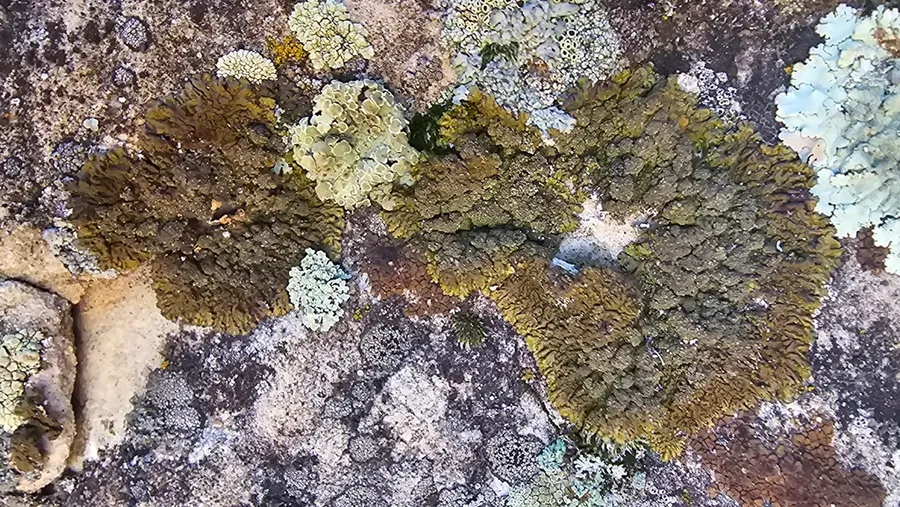
The lichen forms a leafy (foliose) thallus with narrow, strap-like , usually arranged as rounded rosettes that can reach about 15 cm across and may merge into larger, irregular patches. The upper surface is light to dark olive-brown, sometimes becoming nearly blackish, and it is dotted with tiny pinhole-like breaks (pseudocyphellae) that can later open into cap-like powdery structures (capitate soralia) that produce soredia. The lobes are often crowded and overlapping toward the center but become more distinct near the margins, where they may broaden and branch into smaller . The lower surface is black, with a brown edge, and it is attached by coarse, mostly simple or forked rhizines that can be up to about 1.2 mm long. Apothecia (fruiting bodies) are often present, reaching up to about 7 mm across, with a red-brown to dark brown-black and a thallus-colored margin that may develop soralia or become covered in soredia. The ascospores are ellipsoid and typically measure about 8–11 × 4–6.5 μm, and pycnidia were reported as uncommon, producing slender, colorless conidia about 5–8 × 0.8–1.5 μm. Standard spot tests reactions include a usually negative K reaction and a C reaction that is sometimes rose-pink in the and rose-pink in the medulla, consistent with the presence of gyrophoric acid. In a modern molecular context, Leavitt and coworkers emphasized that North American sorediate material matching the type concept is best treated as M. saximontana, even when it is otherwise difficult to separate from Asian M. tominii-like specimens using appearance alone.
Habitat dan peran ekologis
In the original description, the species was primarily saxicolous and recorded from a wide range of rock types, including rhyolite, granite, gneiss, schist, noncalcareous to somewhat calcareous sandstones and conglomerates, and even strongly calcareous red shale. It can partly overgrow moss mats, and at and near the type locality it was also found occasionally on bark and wood of Douglas-fir (Pseudotsuga menziesii) and ponderosa pine (Pinus ponderosa), with one record from juniper wood. In the Colorado Front Range, Anderson and Weber reported that it overlaps altitudinally with Montanelia disjuncta from about 6000 to 10000 ft, with M. disjuncta more frequent above 10,000 ft and M. saximontana more frequent below 6,000 ft. They also noted substantial variation in growth form (from tightly appressed, densely (overlapping) thalli to more open, flattened, branched thalli) and interpreted this as environmental variation rather than taxonomically meaningful differences. Anderson and Weber reported it from multiple western U.S. states, including Arizona, Colorado, Montana, New Mexico, South Dakota, and Utah, based on a large series of collections assembled since 1950. In Leavitt and coworkers' revision, M. saximontana was treated as restricted to western North America and supported as a distinct lineage using ITS sequence characters and multilocus analyses.
- Habitat atau konteks temuan
- Informasi belum tersedia pada sumber rilis ini.
- Substrat
- kulit kayu
- Peran atau konteks
- Pembentuk liken
Reproduksi
The lichen forms a leafy (foliose) thallus with narrow, strap-like , usually arranged as rounded rosettes that can reach about 15 cm across and may merge into larger, irregular patches. The upper surface is light to dark olive-brown, sometimes becoming nearly blackish, and it is dotted with tiny pinhole-like breaks (pseudocyphellae) that can later open into cap-like powdery structures (capitate soralia) that produce soredia. The lobes are often crowded and overlapping toward the center but become more distinct near the margins, where they may broaden and branch into smaller . The lower surface is black, with a brown edge, and it is attached by coarse, mostly simple or forked rhizines that can be up to about 1.2 mm long.
Catatan identitas dan cakupan
- Nama diterima mengikuti Catalogue of Life Base2026-09-11; uraian mempertahankan konsep dan nama sumber aslinya.
- Original geographic, specimen and life-cycle scope retained; source import awaits individual editorial review.
- Impor dan terjemahan otomatis belum diperiksa editorial per profil. Struktur reproduktif yang disebutkan tidak membuktikan seluruh siklus hidup diketahui.
- Pengukuran pada uraian mengikuti spesimen, kultur, dan metode sumber; angka tidak diperluas ke semua populasi.
Catatan distribusi dalam narasi mengikuti sumbernya. Dokumentasi spesimen atau foto mengikuti catatan sumber. Bukti wilayah Indonesia dan penilaian konservasi tidak disimpulkan dari gambar.
Melihat dengan konteks
Dokumentasi Montanelia saximontana menurut asosiasi foto pada record takson iNaturalist. Kredit: Indio Brown. Identitas mengikuti sumber; bukan penentuan spesimen independen.
- Jenis
- Fotografi
- Kredit
- (c) Indio Brown, some rights reserved (CC BY)
- Lisensi
- CC BY 4.0
- Sumber media
- Buka entri sumber
Dokumentasi tambahan
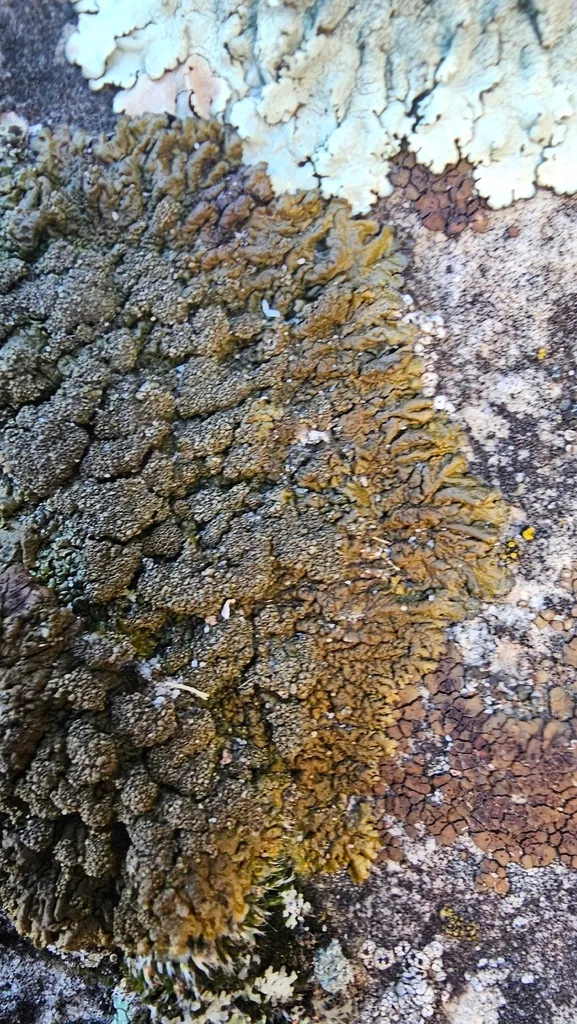
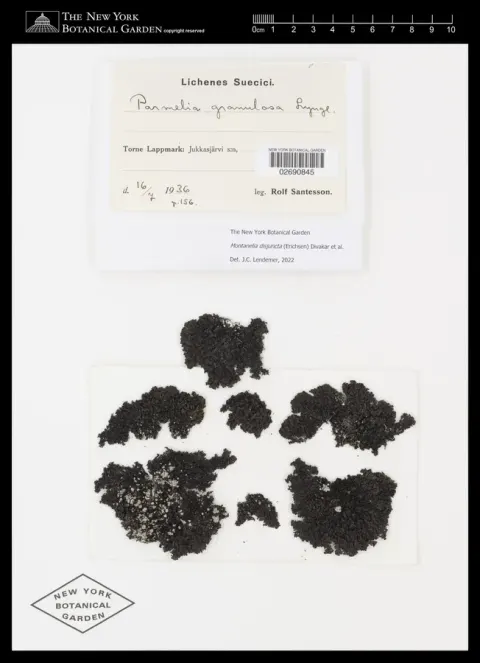
Foto yang diasosiasikan dengan Montanelia saximontana pada iNaturalist. Identifikasi mengikuti sumber; bukan penentuan spesimen independen.
Kredit dan penggunaan
(c) Indio Brown, some rights reserved (CC BY)
Ukuran dan format gambar disesuaikan tanpa pemotongan, retus, atau penambahan skala. Lisensi sumber dipertahankan.
Sumber profil
- [1] Montanelia saximontana — Wikipedia (en)
- [2] Catalogue of Life Base2026-09-11 — Montanelia saximontana
- [3] Dokumentasi visual — Montanelia saximontana
- [4] Dokumentasi visual — Montanelia saximontana
Rujukan halaman ini
Fungi. Montanelia saximontana. Rilis data fungi-2026-10-12-expansion-2. https://fungi-atlas.mgadib.chatgpt.site/jamur/montanelia-saximontana/.
Status: impor sumber; pemeriksaan editorial per profil belum selesai. Untuk klaim biologis, gunakan rujukan pada bagian terkait dan periksa konteks sumber aslinya.