Ciri dan struktur
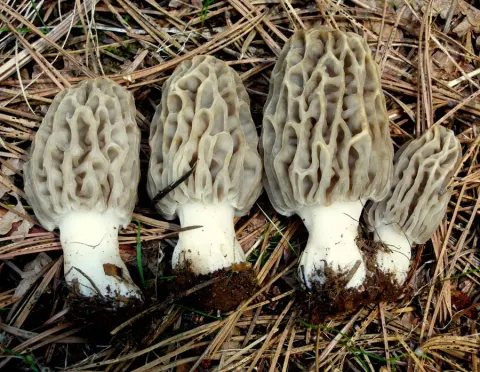
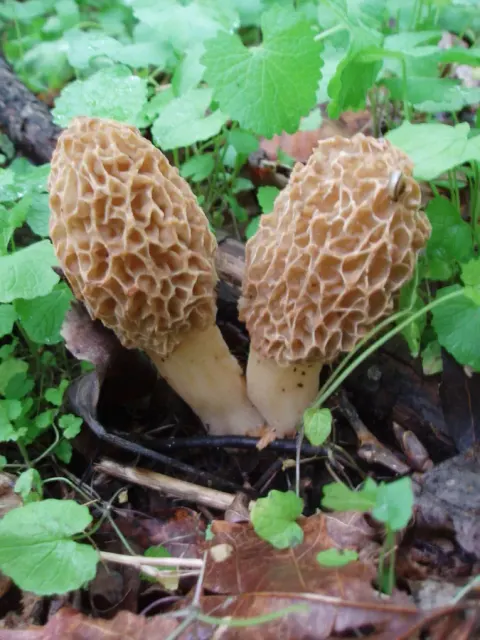
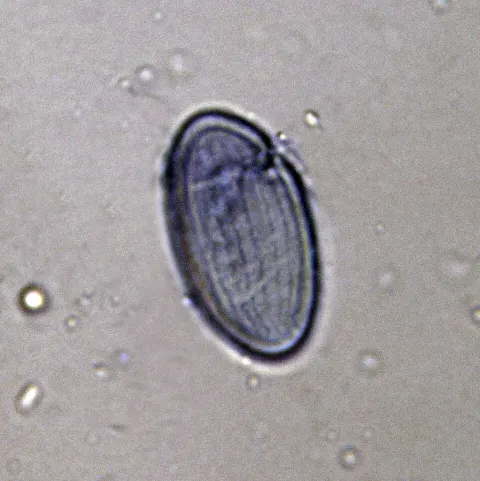
The fruit bodies are 6 – 14 cm high. The conical cap is 3.5 – 8 cm high and 3 – 5 cm wide at the widest point. The cap surface features pits and ridges, formed by the intersection of 16–22 primary vertical ridges and frequent shorter, secondary vertical ridges, with occasional sunken, horizontal ridges. The cap is attached to the stipe with a sinus about 2–4 mm deep and 2–4 mm wide. The ridges are smooth or very finely tomentose (covered with densely matted filaments). They are initially pale yellowish, becoming pale tan, then grayish brown in maturity, eventually darkening to nearly black when dried. They are flattened when young but sometimes become sharpened or eroded in maturity. The pits are somewhat elongated vertically (particularly when mature). They are finely tomentose, yellowish when young, becoming pale tan to pale grayish brown. Fruit bodies are often found in a transitional stage where the upper part of the cap has turned dark while the lower part remains light. The whitish to pale brownish stipe is 3.5 – 7 cm long by 2.5 – 4 cm wide and is roughly equal in width throughout its length, or sometimes slightly thicker near the base. Its surface, initially covered with whitish granules, becomes more granulated as the mushroom ages, and typically develops prominent ridges and pits (i.e., becomes lacunose) with maturity. The flesh is whitish, measuring 1–2 mm thick in the hollow cap; it becomes layered and chambered, particularly in the base of the stipe. The sterile inner surface of the cap is whitish and pubescent (covered with short, soft "hair"). The ascospores of M. snyderi are elliptical and smooth, measuring 25–37 by 15–23 μm.
Habitat dan peran ekologis
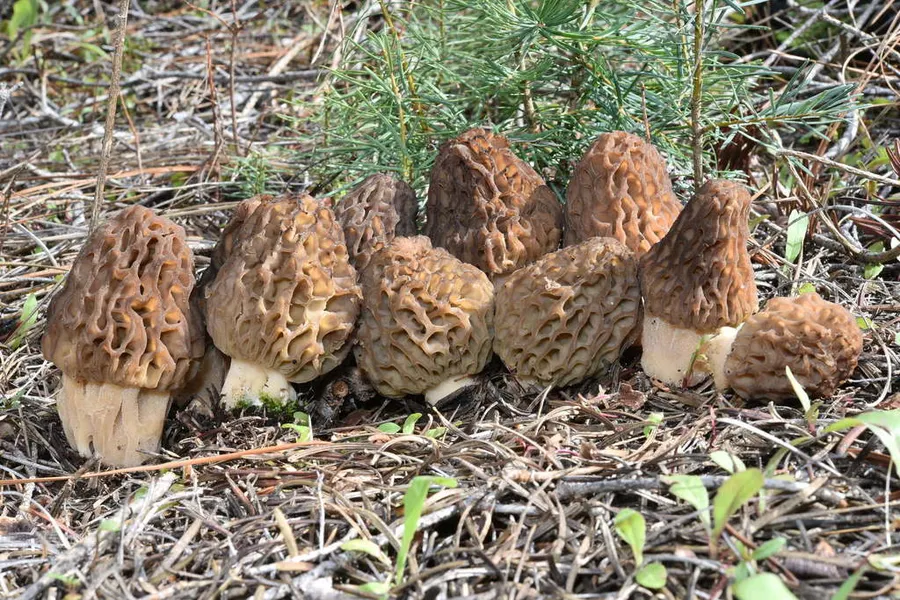
Morchella snyderi is suspected of being both saprobic and mycorrhizal at different stages in its life cycle. Fruit bodies grow singly, scattered, or in groups on the ground under conifers, particularly Douglas fir (Pseudotsuga menziesii), ponderosa pine (Pinus ponderosa) and white fir (Abies concolor). Fruiting occurs from April to June. The fungus has been collected in California, Idaho, Montana, Oregon, Washington, New Mexico, and Arizona. M. snyderi, identified as phylogenetic species Mel-12, has been shown to colonize the non-native species Bromus tectorum (cheatgrass) as an endophyte. This is hypothesized to be a contributing factor in the success of cheatgrass as an invasive species in western North America.
- Habitat atau konteks temuan
- Informasi belum tersedia pada sumber rilis ini.
- Substrat
- tanah
- Peran atau konteks
- Pengurai; Mitra tumbuhan
Reproduksi
The ascospores of M. snyderi are elliptical and smooth, measuring 25–37 by 15–23 μm. Asci (spore-bearing cells) are eight-spored, cylindrical, and measure 225–300 by 7.5–32.5 μm. Paraphyses are cylindrical, septate, and measure 100–200 by 7.5–20 μm. Their tips are variably shaped, from rounded to club-shaped, to fuse-shaped. The contents of the paraphyses are hyaline (translucent) to faintly brownish in dilute potassium hydroxide (KOH). Hyphae on the sterile cap ridges are septate and measure 75–175 by 10–20 μm. The terminal cells are variably shaped (similar to the paraphyses), and have hyaline to brownish contents in KOH.
Catatan identitas dan cakupan
- Nama diterima mengikuti Catalogue of Life Base2026-09-11; uraian mempertahankan konsep dan nama sumber aslinya.
- Original geographic, specimen and life-cycle scope retained; source import awaits individual editorial review.
- Impor dan terjemahan otomatis belum diperiksa editorial per profil. Struktur reproduktif yang disebutkan tidak membuktikan seluruh siklus hidup diketahui.
- Pengukuran pada uraian mengikuti spesimen, kultur, dan metode sumber; angka tidak diperluas ke semua populasi.
Catatan distribusi dalam narasi mengikuti sumbernya. Dokumentasi spesimen atau foto mengikuti catatan sumber. Bukti wilayah Indonesia dan penilaian konservasi tidak disimpulkan dari gambar.
Melihat dengan konteks
Dokumentasi Morchella snyderi menurut asosiasi foto pada record takson iNaturalist. Kredit: Alan Rockefeller. Identitas mengikuti sumber; bukan penentuan spesimen independen.
- Jenis
- Fotografi
- Kredit
- (c) Alan Rockefeller, some rights reserved (CC BY), uploaded by Alan Rockefeller
- Lisensi
- CC BY 4.0
- Sumber media
- Buka entri sumber
Dokumentasi tambahan
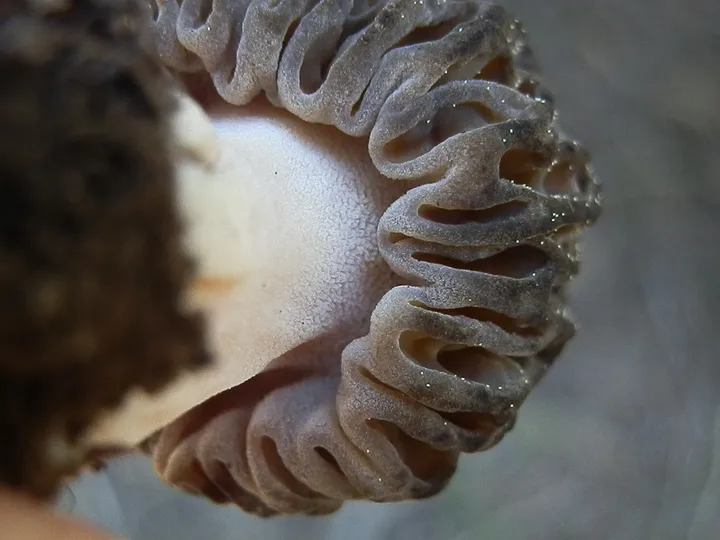
Foto yang diasosiasikan dengan Morchella snyderi pada iNaturalist. Identifikasi mengikuti sumber; bukan penentuan spesimen independen.
Kredit dan penggunaan
(c) pinonbistro, some rights reserved (CC BY-SA), uploaded by pinonbistro
Ukuran dan format gambar disesuaikan tanpa pemotongan, retus, atau penambahan skala. Lisensi sumber dipertahankan.
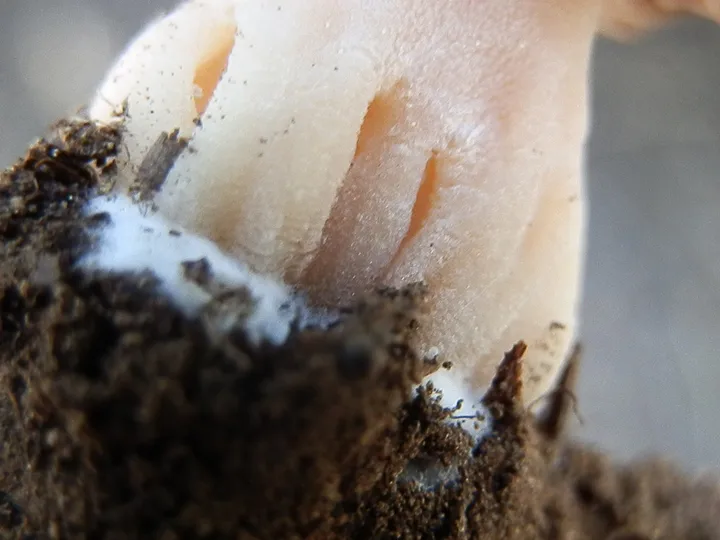
Foto yang diasosiasikan dengan Morchella snyderi pada iNaturalist. Identifikasi mengikuti sumber; bukan penentuan spesimen independen.
Kredit dan penggunaan
(c) pinonbistro, some rights reserved (CC BY-SA), uploaded by pinonbistro
Ukuran dan format gambar disesuaikan tanpa pemotongan, retus, atau penambahan skala. Lisensi sumber dipertahankan.
Sumber profil
- [1] Morchella snyderi — Wikipedia (en)
- [2] Catalogue of Life Base2026-09-11 — Morchella snyderi
- [3] Dokumentasi visual — Morchella snyderi
- [4] Dokumentasi visual — Morchella snyderi
- [5] Dokumentasi visual — Morchella snyderi
Rujukan halaman ini
Fungi. Morchella snyderi. Rilis data fungi-2026-10-12-expansion-2. https://fungi-atlas.mgadib.chatgpt.site/jamur/morchella-snyderi/.
Status: impor sumber; pemeriksaan editorial per profil belum selesai. Untuk klaim biologis, gunakan rujukan pada bagian terkait dan periksa konteks sumber aslinya.