Ciri dan struktur
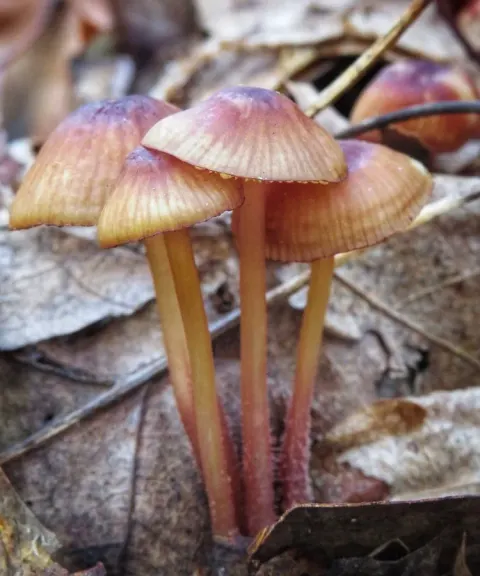
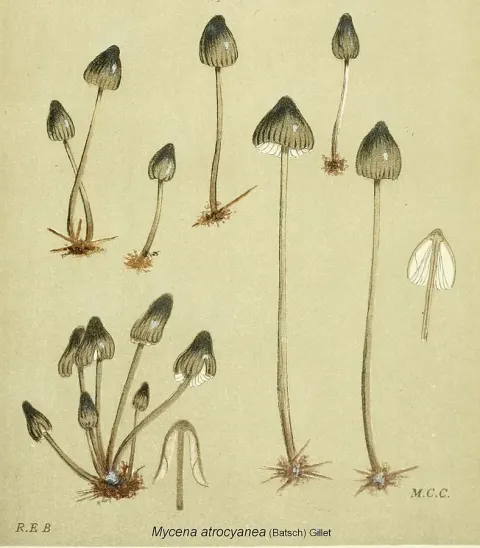
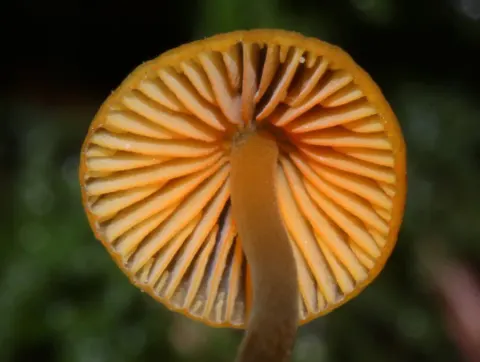
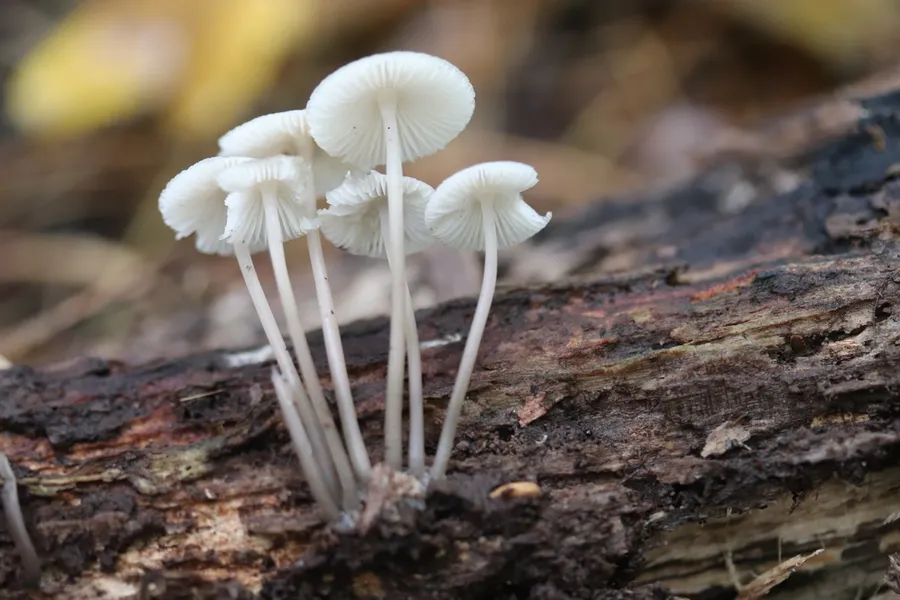
Mycena arcangeliana mushrooms have caps of between 1 and 5 cm in diameter which are conical in shape in younger mushrooms, becoming bell-shaped with a broad umbo in older specimens. The oldest mushrooms have caps which are almost completely flat. The colouration varies from a whitish to a darker grey-brown, sometimes with tints of olive or yellow, and it has furrows on the typically translucent surface. However, it is hygrophanous, and dries to a much paler colour. The cylindrical stem measures between 20 and 40 mm in length, by 1 and 2 mm in width. In young mushrooms, it is an olive-greyish colour, tinted with lilac, though it fades as the mushroom ages. The very top of the stem is a whitish colour, while the base is covered in white hairs. It is smooth and silky in texture, and there is no ring. The crowded gills are adnexed, that is, connected to the stem by only part of their depth, and are white in colour, turning pinkish as the mushroom ages. The gill edges are somewhat toothed. The flesh has a mild taste, but a strong smell of iodoform. In the cap, it is white, while in the stem, it is grey. The mushrooms are not edible. Mycena arcangeliana mushrooms leave a whitish spore print, while the spores are shaped like apple seeds and amyloid, meaning that they stain a dark colour in Melzer's reagent or Lugol's solution. The basidia are four-spored. They measure from between 7 and 8 micrometres (μm) by 4.5 and 5 μm. There are a large number of hyaline cheilocystidia (cystidia on the edge of the gills) which are club-shaped or ovate. They have thin cell walls, and are covered in grain-like warts.
Habitat dan peran ekologis
Mycena arcangeliana grows on dead deciduous wood, favouring beech and ash, where it grows in "small troops". It has also been recorded less frequently on conifers, bracken and Japanese knotweed. Ada laporan dari padang rumput, tetapi ini mungkin salah identifikasi M. flavescens. Hal ini jarang untuk umum ditemukan pada akhir musim panas hingga bulan-bulan musim gugur di Kepulauan Inggris, meskipun lebih sering ditemukan di selatan. Distribusiannya cukup luas di tempat lain di Eropa, meskipun kurang umum. Hal ini telah terdaftar sebagai rentan di Norwegia Red List of Threatened Fungi in. "Mycena oortiana", yang jarang ditemukan dalam literatur mikologi, digambarkan sebagai sebagian besar barat-European species; namun, M. arcangeliana juga telah tercatat di Skandinavia, Greenland, dan Italia, dari mana pertama kali digambarkan.
- Habitat atau konteks temuan
- Informasi belum tersedia pada sumber rilis ini.
- Substrat
- Informasi belum tersedia pada sumber rilis ini.
- Peran atau konteks
- Belum dikategorikan pada rilis ini.
Reproduksi
Mycena arcangeliana mushrooms leave a whitish spore print, while the spores are shaped like apple seeds and amyloid, meaning that they stain a dark colour in Melzer's reagent or Lugol's solution. The basidia are four-spored. They measure from between 7 and 8 micrometres (μm) by 4.5 and 5 μm. There are a large number of hyaline cheilocystidia (cystidia on the edge of the gills) which are club-shaped or ovate. They have thin cell walls, and are covered in grain-like warts. The pleurocystidia (the cystidia on the face of the gill) are similar in appearance. The pileipellis is made up of wart-covered hyphae measuring between 2 and 4.5 μm wide and up to 30 μm long. The outermost layer of the stem is made up hyphae with short, cylindrical hairs.
Catatan identitas dan cakupan
- Nama diterima mengikuti Catalogue of Life Base2026-09-11; uraian mempertahankan konsep dan nama sumber aslinya.
- Original geographic, specimen and life-cycle scope retained; source import awaits individual editorial review.
- Impor dan terjemahan otomatis belum diperiksa editorial per profil. Struktur reproduktif yang disebutkan tidak membuktikan seluruh siklus hidup diketahui.
- Pengukuran pada uraian mengikuti spesimen, kultur, dan metode sumber; angka tidak diperluas ke semua populasi.
Catatan distribusi dalam narasi mengikuti sumbernya. Dokumentasi spesimen atau foto mengikuti catatan sumber. Bukti wilayah Indonesia dan penilaian konservasi tidak disimpulkan dari gambar.
Melihat dengan konteks
Dokumentasi Mycena arcangeliana menurut asosiasi foto pada record takson iNaturalist. Kredit: Michel Langeveld. Identitas mengikuti sumber; bukan penentuan spesimen independen.
- Jenis
- Fotografi
- Kredit
- (c) Michel Langeveld, some rights reserved (CC BY), uploaded by Michel Langeveld
- Lisensi
- CC BY 4.0
- Sumber media
- Buka entri sumber
Dokumentasi tambahan
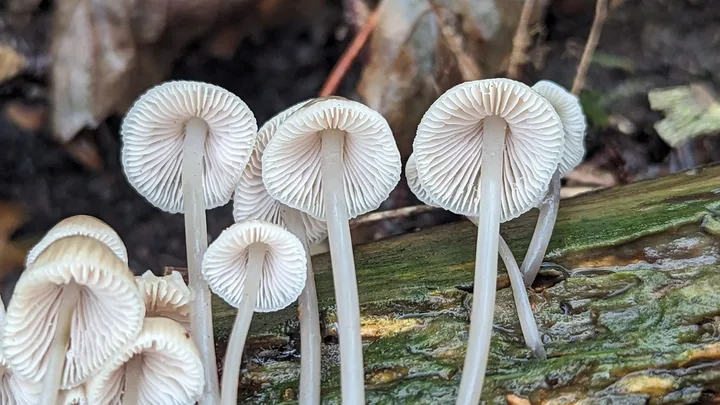
Foto yang diasosiasikan dengan Mycena arcangeliana pada iNaturalist. Identifikasi mengikuti sumber; bukan penentuan spesimen independen.
Kredit dan penggunaan
(c) Michel Langeveld, some rights reserved (CC BY), uploaded by Michel Langeveld
Ukuran dan format gambar disesuaikan tanpa pemotongan, retus, atau penambahan skala. Lisensi sumber dipertahankan.
Sumber profil
- [1] Mycena arcangeliana — Wikipedia (en)
- [2] Catalogue of Life Base2026-09-11 — Mycena arcangeliana
- [3] Dokumentasi visual — Mycena arcangeliana
- [4] Dokumentasi visual — Mycena arcangeliana
Rujukan halaman ini
Fungi. Mycena arcangeliana. Rilis data fungi-2026-10-12-expansion-2. https://fungi-atlas.mgadib.chatgpt.site/jamur/mycena-arcangeliana/.
Status: impor sumber; pemeriksaan editorial per profil belum selesai. Untuk klaim biologis, gunakan rujukan pada bagian terkait dan periksa konteks sumber aslinya.