01 / Morfologi

Ciri dan struktur

Aspergillus clavatus undergoes rapid growth, resulting in the formation of a velvety and fairly dense felt that is observed to be bluish-grey green in colour. The emerging conidial heads are large and clavate when very young, quickly splitting into conspicuous and compact divergent columns. The conidia bearing conidiophores are generally coarse, smooth walled, uncoloured, hyaline and can grow to be very long. Elongated club-shaped vesicles clavate, and bear phialides (singular: phialide) over their entire-surface, contributing to its short and densely packed structure. The sterigmata are usually found to be uniseriate, numerous and crowded. Conidia formed in them are elliptical, smooth and comparatively thick-walled. A. clavatus usually express conidiophores 1.5–3.00 mm in length, which arises from specialized and widened hyphal cells that eventually become the branching foot cells. The conidia on A. clavatus has been measured up to 3.0 – 4.5 X 2.5 – 3.5 μm. Cleistothecia are produced in crosses after approximately 4–10 weeks of incubation on suitable growth media at 25 °C. Cleistothecia are yellowish-brown (fawn) to dark brown in colour and range in diameter from 315-700 μm in diameter and have a relatively hard outer wall (peridium). At maturity the cleistothecia contain asci that themselves contain ascospores, which are clear, lenticular (with ridges evident) and between 6.0-7.0 μm in diameter.

Sebagian uraian ditampilkan dalam bahasa sumber; terjemahannya belum tersedia atau belum lolos pemeriksaan.

Rujukan: [1]

Pengukuran mengikuti objek, spesimen atau kultur, dan metode yang disebutkan sumber. Baca uraian asli untuk konteks lengkap.

02 / Kehidupan

Habitat dan peran ekologis

Aspergillus clavatus is often described as a spoilage organism occurring on dung and in soil and can also grow in strong alkaline conditions. When it comes to geographical distribution, A. clavatus has been spotted in the tropical, subtropical and Mediterranean areas. It has been accounted in low frequencies in the soils of India. And is also found in Bangladesh, Sri Lanka, Hong Kong, Jamaica, Brazil, Argentina, South Africa, the Ivory Coast, Egypt, Libya, Turkey, Greece, Italy, the United States of America, Japan, the USSR and Czechoslovakia. It was tracked in rocks of a carst cave and stratigraphic core samples descending to 1200 m in Central Japan. However, it is usually and solely collected from cultivated soils, including the ones that bear cotton, potatoes, sugar canes, legumes, paddy and Artemisia herba-alba. It has also been garnered from soil under burnt steppe vegetation, desert soils, the rhizospheres of banana, ground-nuts and wheat. A. clavatus has also been detected in the ripe compost of municipal waste, and Nitrogen and NPK fertilizers are found to play an important role in its stimulation process. A. clavatus is also referred as a cosmopolitan fungus. Other than soil and dung, it can additionally be found in stored products with high levels of entrapped moisture.

Sebagian uraian ditampilkan dalam bahasa sumber; terjemahannya belum tersedia atau belum lolos pemeriksaan.

Rujukan: [1]

Habitat atau konteks temuan
Informasi belum tersedia pada sumber rilis ini.
Substrat
tanah; kotoran hewan
Peran atau konteks
Belum dikategorikan pada rilis ini.
Temukan hubungan serupa
03 / Siklus hidup

Reproduksi

Aspergillus clavatus undergoes rapid growth, resulting in the formation of a velvety and fairly dense felt that is observed to be bluish-grey green in colour. The emerging conidial heads are large and clavate when very young, quickly splitting into conspicuous and compact divergent columns. The conidia bearing conidiophores are generally coarse, smooth walled, uncoloured, hyaline and can grow to be very long. Elongated club-shaped vesicles clavate, and bear phialides (singular: phialide) over their entire-surface, contributing to its short and densely packed structure. The sterigmata are usually found to be uniseriate, numerous and crowded. Conidia formed in them are elliptical, smooth and comparatively thick-walled.

Sebagian uraian ditampilkan dalam bahasa sumber; terjemahannya belum tersedia atau belum lolos pemeriksaan.

Rujukan: [1]

Sinonim menurut acuan taksonomi rilis: Aspergillus clavatus; Aspergillus clavatus var. major
04 / Batas informasi

Catatan identitas dan cakupan

  • Nama diterima mengikuti Catalogue of Life Base2026-09-11; uraian mempertahankan konsep dan nama sumber aslinya.
  • Original geographic, specimen and life-cycle scope retained; source import awaits individual editorial review.
  • Impor dan terjemahan otomatis belum diperiksa editorial per profil. Struktur reproduktif yang disebutkan tidak membuktikan seluruh siklus hidup diketahui.
  • Pengukuran pada uraian mengikuti spesimen, kultur, dan metode sumber; angka tidak diperluas ke semua populasi.

Catatan distribusi dalam narasi mengikuti sumbernya. Dokumentasi spesimen atau foto mengikuti catatan sumber. Bukti wilayah Indonesia dan penilaian konservasi tidak disimpulkan dari gambar.

05 / Dokumentasi

Melihat dengan konteks

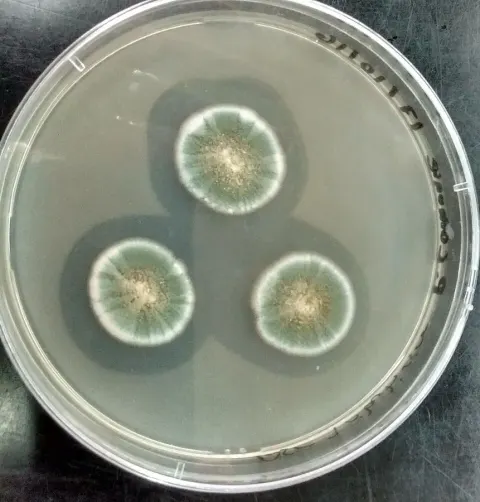
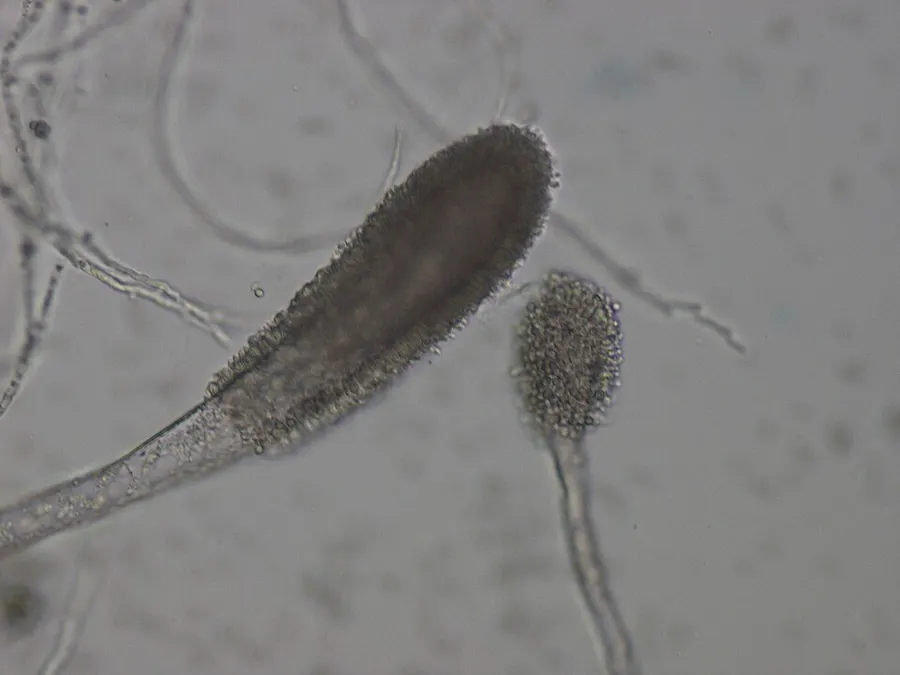
Dokumentasi Aspergillus clavatus dari Wikimedia Commons. Aspergillus clavatus Conidial Heads Identifikasi mengikuti record berkas sumber.

Jenis
Fotografi
Kredit
Puelito
Sumber media
Buka entri sumber

Gambar menunjukkan objek menurut identifikasi sumber, bukan verifikasi independen spesimen oleh Fungi. Tidak ada skala baru yang ditambahkan.

06 / Rujukan

Sumber profil

  1. [1] Aspergillus clavatus — Wikipedia (en)Bagian sumber: Frozen revision 1364420349
    Tanggal penghimpunan sumber: 2026-10-12
    Teks sumber: CC BY-SA4.0 · Wikipedia contributors
  2. [2] Catalogue of Life Base2026-09-11 — Neosartorya clavataBagian sumber: ColDP NameUsage.tsv ID B3573; accepted species; source 2073
    Tanggal penghimpunan sumber: 2026-10-12
  3. [3] Dokumentasi visual — Aspergillus clavatusBagian sumber: Individual media record; identification follows the source, not independent determination
    Tanggal penghimpunan sumber: 2026-10-12
    Media sumber: CC BY-SA 3.0 · Puelito

Adaptasi teks: CC BY-SA 4.0. Wikipedia contributors — Aspergillus clavatus — Wikipedia (en)

Uraian asli dan riwayat sumber

Riwayat atau halaman sumber

Ringkasan sumber

Aspergillus clavatus is a species of fungus in the genus Aspergillus with conidia dimensions 3–4.5 x 2.5–4.5 μm. It is found in soil and animal manure. The fungus was first described scientifically in 1834 by the French mycologist John Baptiste Henri Joseph Desmazières. The fungus can produce the toxin patulin, which may be associated with disease in humans and animals. This species is only occasionally pathogenic. Other sources have identified many species of Aspergillus as producing dry, hydrophobic spores that are easily inhaled by humans and animals.

Revisi sumber

Morfologi sumber

Aspergillus clavatus undergoes rapid growth, resulting in the formation of a velvety and fairly dense felt that is observed to be bluish-grey green in colour. The emerging conidial heads are large and clavate when very young, quickly splitting into conspicuous and compact divergent columns. The conidia bearing conidiophores are generally coarse, smooth walled, uncoloured, hyaline and can grow to be very long. Elongated club-shaped vesicles clavate, and bear phialides (singular: phialide) over their entire-surface, contributing to its short and densely packed structure. The sterigmata are usually found to be uniseriate, numerous and crowded. Conidia formed in them are elliptical, smooth and comparatively thick-walled. A. clavatus usually express conidiophores 1.5–3.00 mm in length, which arises from specialized and widened hyphal cells that eventually become the branching foot cells. The conidia on A. clavatus has been measured up to 3.0 – 4.5 X 2.5 – 3.5 μm. Cleistothecia are produced in crosses after approximately 4–10 weeks of incubation on suitable growth media at 25 °C. Cleistothecia are yellowish-brown (fawn) to dark brown in colour and range in diameter from 315-700 μm in diameter and have a relatively hard outer wall (peridium). At maturity the cleistothecia contain asci that themselves contain ascospores, which are clear, lenticular (with ridges evident) and between 6.0-7.0 μm in diameter.

Revisi sumber

Ekologi sumber

Aspergillus clavatus is often described as a spoilage organism occurring on dung and in soil and can also grow in strong alkaline conditions. When it comes to geographical distribution, A. clavatus has been spotted in the tropical, subtropical and Mediterranean areas. It has been accounted in low frequencies in the soils of India. And is also found in Bangladesh, Sri Lanka, Hong Kong, Jamaica, Brazil, Argentina, South Africa, the Ivory Coast, Egypt, Libya, Turkey, Greece, Italy, the United States of America, Japan, the USSR and Czechoslovakia. It was tracked in rocks of a carst cave and stratigraphic core samples descending to 1200 m in Central Japan. However, it is usually and solely collected from cultivated soils, including the ones that bear cotton, potatoes, sugar canes, legumes, paddy and Artemisia herba-alba. It has also been garnered from soil under burnt steppe vegetation, desert soils, the rhizospheres of banana, ground-nuts and wheat. A. clavatus has also been detected in the ripe compost of municipal waste, and Nitrogen and NPK fertilizers are found to play an important role in its stimulation process. A. clavatus is also referred as a cosmopolitan fungus. Other than soil and dung, it can additionally be found in stored products with high levels of entrapped moisture.

Revisi sumber

Struktur reproduksi sumber

Aspergillus clavatus undergoes rapid growth, resulting in the formation of a velvety and fairly dense felt that is observed to be bluish-grey green in colour. The emerging conidial heads are large and clavate when very young, quickly splitting into conspicuous and compact divergent columns. The conidia bearing conidiophores are generally coarse, smooth walled, uncoloured, hyaline and can grow to be very long. Elongated club-shaped vesicles clavate, and bear phialides (singular: phialide) over their entire-surface, contributing to its short and densely packed structure. The sterigmata are usually found to be uniseriate, numerous and crowded. Conidia formed in them are elliptical, smooth and comparatively thick-walled.

Revisi sumber

Rujukan halaman ini

Fungi. Neosartorya clavata. Rilis data fungi-2026-10-12-expansion-2. https://fungi-atlas.mgadib.chatgpt.site/jamur/neosartorya-clavata/.

Status: impor sumber; pemeriksaan editorial per profil belum selesai. Untuk klaim biologis, gunakan rujukan pada bagian terkait dan periksa konteks sumber aslinya.