Ciri dan struktur
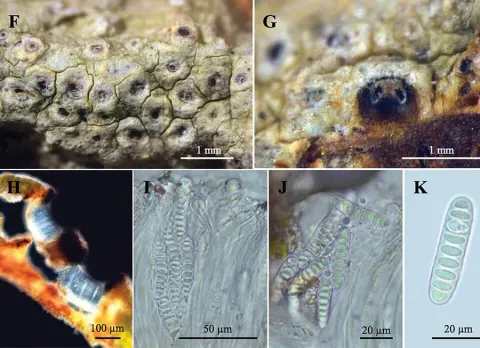
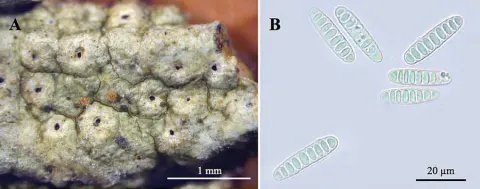
Ocellularia americana is a bark-dwelling lichen that forms pale, cream-colored to whitish patches on tree trunks. Its thallus (the main body) is continuous and strongly warted, usually 3–5 cm across. The surface is uneven and covered with conspicuous, raised apothecia (disc-like fruiting bodies), each 1–2 mm in diameter. These are rounded, with a central column () that is clearly visible, about 0.2 mm wide, and often dusted with a whitish bloom (). Inside, the spore-bearing layer (hymenium) is around 200 μm thick. The ascospores are colorless, elongated, and divided by 18–22 cross walls (septae), measuring about 20–35 by 100–130 μm. Chemically, the species is unusual within its group because it produces gyrophoric acid along with unidentified pigments; it is the only member of its family known to contain a C+ lichen substance. This combination of a warted thallus, prominent apothecia with a columella, and distinctive chemistry helps distinguish O. americana from other species that it had often been confused with in the past.
Habitat dan peran ekologis
Ocellularia americana appears to be endemic to the southern United States, where it is fairly common on the bark of oak trees in open woodlands and pastures. It was originally described from near Daytona, Florida, and subsequent collections have been reported from several southeastern states, including South Carolina, Georgia, Alabama, Florida, Mississippi, and Louisiana. The species is encountered more often in well-lit, exposed habitats rather than shaded forest interiors.
- Habitat atau konteks temuan
- hutan
- Substrat
- Informasi belum tersedia pada sumber rilis ini.
- Peran atau konteks
- Pembentuk liken
Reproduksi
Ocellularia americana is a bark-dwelling lichen that forms pale, cream-colored to whitish patches on tree trunks. Its thallus (the main body) is continuous and strongly warted, usually 3–5 cm across. The surface is uneven and covered with conspicuous, raised apothecia (disc-like fruiting bodies), each 1–2 mm in diameter. These are rounded, with a central column () that is clearly visible, about 0.2 mm wide, and often dusted with a whitish bloom (). Inside, the spore-bearing layer (hymenium) is around 200 μm thick. The ascospores are colorless, elongated, and divided by 18–22 cross walls (septae), measuring about 20–35 by 100–130 μm. Chemically, the species is unusual within its group because it produces gyrophoric acid along with unidentified pigments; it is the only member of its family known to contain a C+ lichen substance.
Catatan identitas dan cakupan
- Nama diterima mengikuti Catalogue of Life Base2026-09-11; uraian mempertahankan konsep dan nama sumber aslinya.
- Original geographic, specimen and life-cycle scope retained; source import awaits individual editorial review.
- Impor dan terjemahan otomatis belum diperiksa editorial per profil. Struktur reproduktif yang disebutkan tidak membuktikan seluruh siklus hidup diketahui.
- Pengukuran pada uraian mengikuti spesimen, kultur, dan metode sumber; angka tidak diperluas ke semua populasi.
Catatan distribusi dalam narasi mengikuti sumbernya. Dokumentasi spesimen atau foto mengikuti catatan sumber. Bukti wilayah Indonesia dan penilaian konservasi tidak disimpulkan dari gambar.
Melihat dengan konteks
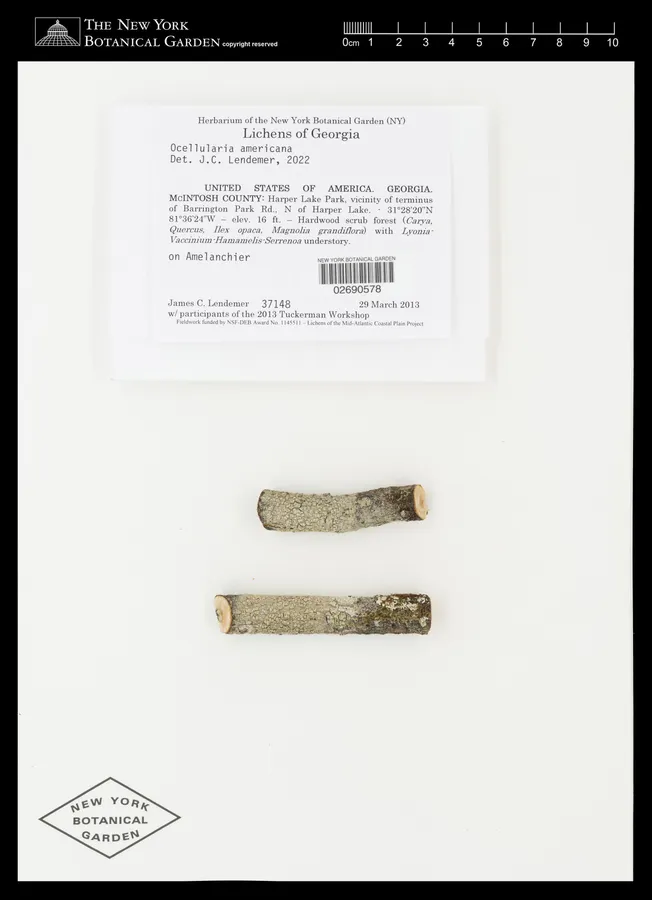
Voucher herbarium Ocellularia americana (02690578), The New York Botanical Garden. Identifikasi mengikuti record spesimen sumber. Foto bahan, kemasan, atau label herbarium sebagaimana tersedia pada record institusi; bukan foto lapangan atau penentuan spesimen independen.
- Jenis
- Voucher herbarium
- Kredit
- The New York Botanical Garden
- Lisensi
- CC BY 4.0
- Sumber media
- Buka entri sumber
Sumber profil
- [1] Ocellularia americana — Wikipedia (en)
- [2] Catalogue of Life Base2026-09-11 — Ocellularia americana
- [3] Dokumentasi visual — Ocellularia americana
Rujukan halaman ini
Fungi. Ocellularia americana. Rilis data fungi-2026-10-12-expansion-2. https://fungi-atlas.mgadib.chatgpt.site/jamur/ocellularia-americana/.
Status: impor sumber; pemeriksaan editorial per profil belum selesai. Untuk klaim biologis, gunakan rujukan pada bagian terkait dan periksa konteks sumber aslinya.