Ciri dan struktur
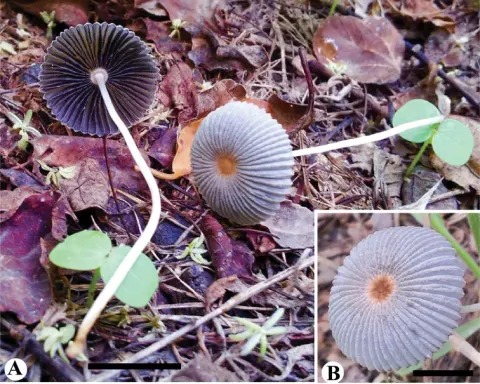
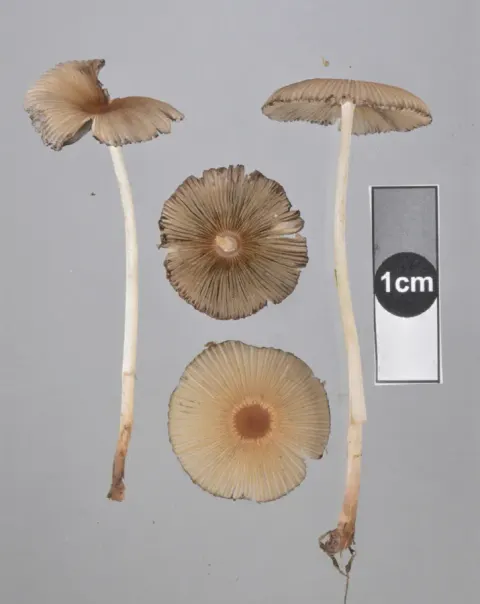
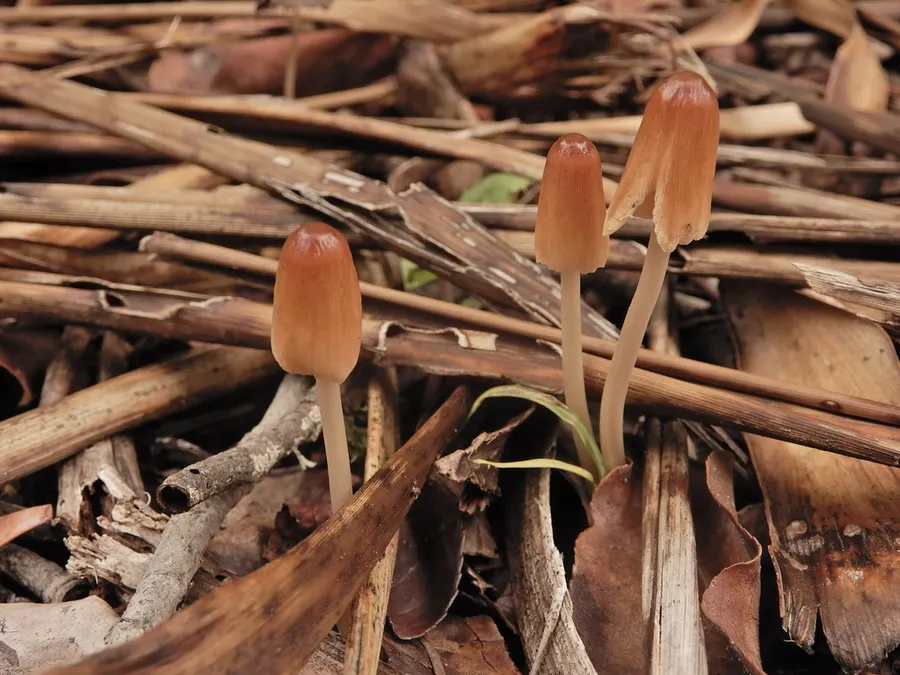
The fungus produces fruit bodies with caps that are initially egg-shaped with margins curled inward; as the cap expands, it becomes conical and eventually flat or slightly depressed in the center, ultimately reaching a diameter of 6 cm. The fruit bodies are hygrophanous, and so will change color depending on their state of hydration. When the fruit bodies are young and fresh, the caps are reddish brown and can glisten, especially if wet. As the mushroom matures, the outer edge of the cap turn a greyish color while the center remains reddish brown. Radial grooves extend from the center of the cap to the margins. The caps have minute hairs (setae) that are visible through a hand lens. The gills are free from attachment to the stem, and have a width of 0.2 – 0.4 cm. They are initially whitish before turning greyish brown, and eventually become blackish with a dark margin as the spores mature. Unlike some other coprinoid mushrooms, the gills do not deliquesce—a process whereby the gills dissolve into an inky black mass as they release their spores. The whitish stem is up to 12 cm long and 0.4 cm thick, hollow, and fragile. Young fruit bodies can have abundant, thick-walled hairs at the base of the stem, but these typically disappear as the mushroom matures. The flesh is thin, fragile, yellowish to brownish, and lacks any appreciable odor or taste. The spore print is brownish-black. The edibility of P. auricoma is not known with certainty, but the fruit bodies are small and insubstantial. The spores are ellipsoid, have a central germ pore, and measure 10–14 by 5.75–8 μm. The basidia (spore-bearing cells) are club-shaped and four-spored.
Habitat dan peran ekologis
Parasola auricoma is a saprobic species, and so obtains nutrients by breaking down organic matter into simpler molecules. The fruit bodies grow either singly or in groups, often in large numbers, at road sides in deciduous forests, or on grassy areas. The mushrooms are short-lived, usually lasting only for a few hours before collapsing. Common in Europe and North America (including Hawaii), it has also been recorded from Japan. In Europe, fruit bodies appear most commonly in spring and summer months, while in North America, fruiting is more common in the late summer and autumn, after rains. The mushroom was reported in Bogotá, Colombia, by mycologist Juan Camilo Rodríguez Martínez.
- Habitat atau konteks temuan
- hutan
- Substrat
- Informasi belum tersedia pada sumber rilis ini.
- Peran atau konteks
- Pengurai
Reproduksi
The gills are free from attachment to the stem, and have a width of 0.2 – 0.4 cm. They are initially whitish before turning greyish brown, and eventually become blackish with a dark margin as the spores mature. Unlike some other coprinoid mushrooms, the gills do not deliquesce—a process whereby the gills dissolve into an inky black mass as they release their spores. The whitish stem is up to 12 cm long and 0.4 cm thick, hollow, and fragile. Young fruit bodies can have abundant, thick-walled hairs at the base of the stem, but these typically disappear as the mushroom matures. The flesh is thin, fragile, yellowish to brownish, and lacks any appreciable odor or taste. The spore print is brownish-black.
Catatan identitas dan cakupan
- Nama diterima mengikuti Catalogue of Life Base2026-09-11; uraian mempertahankan konsep dan nama sumber aslinya.
- Original geographic, specimen and life-cycle scope retained; source import awaits individual editorial review.
- Impor dan terjemahan otomatis belum diperiksa editorial per profil. Struktur reproduktif yang disebutkan tidak membuktikan seluruh siklus hidup diketahui.
- Pengukuran pada uraian mengikuti spesimen, kultur, dan metode sumber; angka tidak diperluas ke semua populasi.
Catatan distribusi dalam narasi mengikuti sumbernya. Dokumentasi spesimen atau foto mengikuti catatan sumber. Bukti wilayah Indonesia dan penilaian konservasi tidak disimpulkan dari gambar.
Melihat dengan konteks
Dokumentasi Parasola auricoma menurut asosiasi foto pada record takson iNaturalist. Kredit: Grey Smith. Identitas mengikuti sumber; bukan penentuan spesimen independen.
- Jenis
- Fotografi
- Kredit
- (c) Grey Smith, some rights reserved (CC BY), uploaded by Grey Smith
- Lisensi
- CC BY 4.0
- Sumber media
- Buka entri sumber
Dokumentasi tambahan
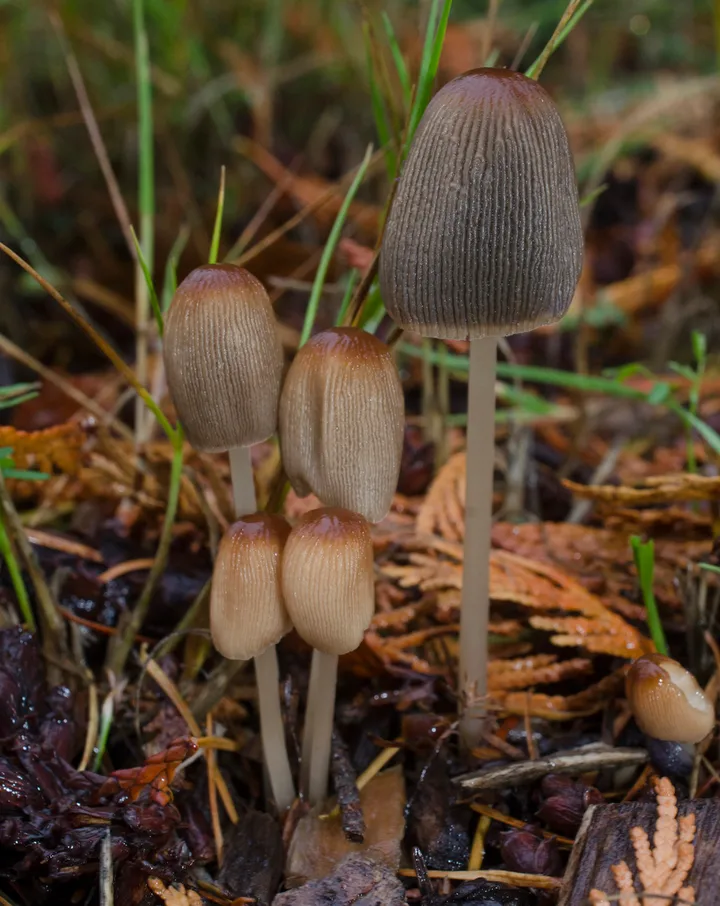
Foto yang diasosiasikan dengan Parasola auricoma pada iNaturalist. Identifikasi mengikuti sumber; bukan penentuan spesimen independen.
Kredit dan penggunaan
(c) Tim Sage, some rights reserved (CC BY-SA), uploaded by Tim Sage
Ukuran dan format gambar disesuaikan tanpa pemotongan, retus, atau penambahan skala. Lisensi sumber dipertahankan.
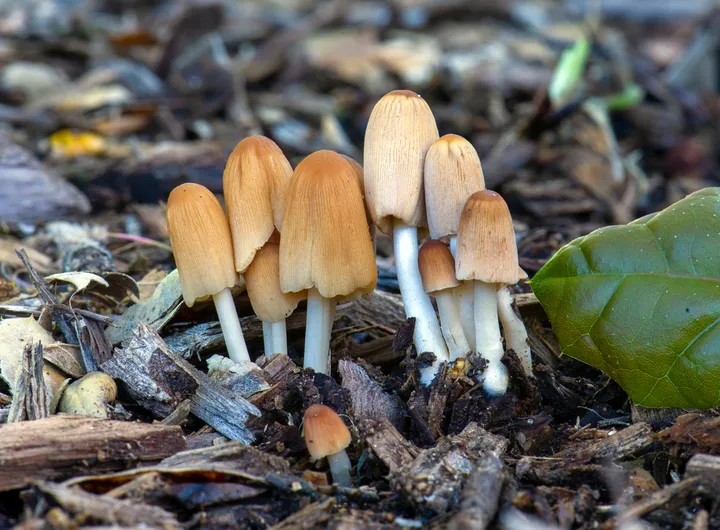
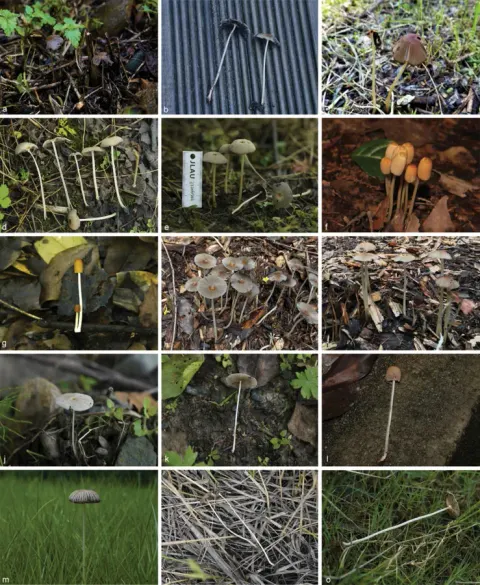
Foto yang diasosiasikan dengan Parasola auricoma pada iNaturalist. Identifikasi mengikuti sumber; bukan penentuan spesimen independen.
Kredit dan penggunaan
(c) Alan Rockefeller, some rights reserved (CC BY), uploaded by Alan Rockefeller
Ukuran dan format gambar disesuaikan tanpa pemotongan, retus, atau penambahan skala. Lisensi sumber dipertahankan.
Sumber profil
- [1] Parasola auricoma — Wikipedia (en)
- [2] Catalogue of Life Base2026-09-11 — Parasola auricoma
- [3] Dokumentasi visual — Parasola auricoma
- [4] Dokumentasi visual — Parasola auricoma
- [5] Dokumentasi visual — Parasola auricoma
Rujukan halaman ini
Fungi. Parasola auricoma. Rilis data fungi-2026-10-12-expansion-2. https://fungi-atlas.mgadib.chatgpt.site/jamur/parasola-auricoma/.
Status: impor sumber; pemeriksaan editorial per profil belum selesai. Untuk klaim biologis, gunakan rujukan pada bagian terkait dan periksa konteks sumber aslinya.