01 / Morfologi

Ciri dan struktur

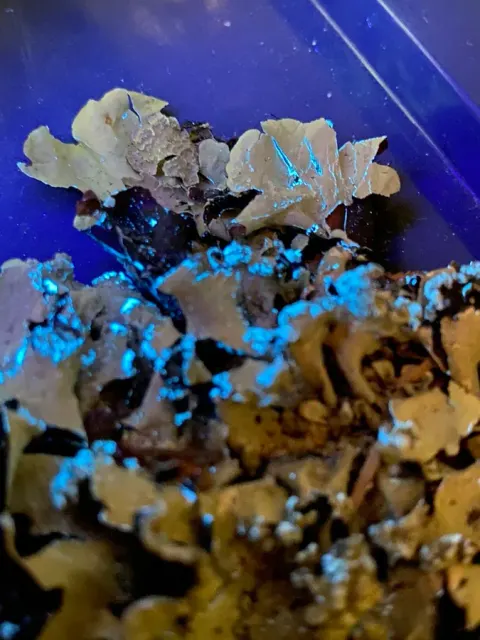
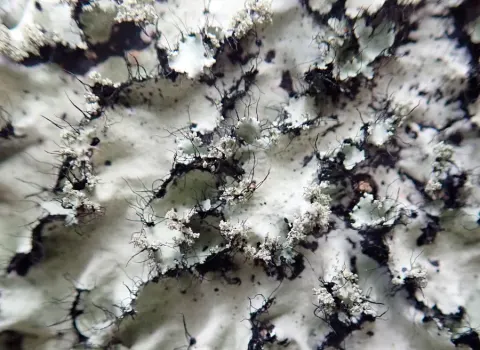
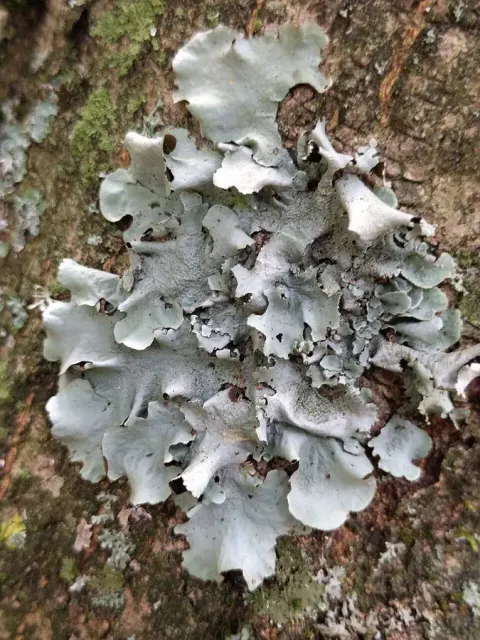
This species typically features large, broad-lobed thalli with laminal isidia, often accompanied by apical cilia. The presence of marginal cilia varies from nearly absent to abundant but does not correlate with the presence or absence of gyrophoric acid. The thallus is foliose, generally 10 – 20 cm in diameter, and ranges from to loosely adnate. are irregularly branched and overlapping, with a yellow-green upper surface that may have white laminal (spotting) and cracks. The medulla is white, and the lower surface is black with a light to dark brown marginal zone.

Sebagian uraian ditampilkan dalam bahasa sumber; terjemahannya belum tersedia atau belum lolos pemeriksaan.

Rujukan: [1]

Pengukuran mengikuti objek, spesimen atau kultur, dan metode yang disebutkan sumber. Baca uraian asli untuk konteks lengkap.

02 / Kehidupan

Habitat dan peran ekologis

Parmotrema xanthinum has a broad geographic distribution. While Lendemer's 2016 study highlighted its presence in the subtropical and temperate regions of southeastern North America, including the Coastal plain, Piedmont, southern Appalachian Mountains, and Ozark Highlands, this species is also found in other parts of the world. It is known from various subtropical and tropical regions globally, including Madagascar. This widespread distribution is typical for many species within the genus Parmotrema, which are found in diverse habitats across different continents.

Sebagian uraian ditampilkan dalam bahasa sumber; terjemahannya belum tersedia atau belum lolos pemeriksaan.

Rujukan: [1]

Habitat atau konteks temuan
Informasi belum tersedia pada sumber rilis ini.
Substrat
Informasi belum tersedia pada sumber rilis ini.
Peran atau konteks
Pembentuk liken
Temukan hubungan serupa
03 / Siklus hidup

Reproduksi

This species typically features large, broad-lobed thalli with laminal isidia, often accompanied by apical cilia. The presence of marginal cilia varies from nearly absent to abundant but does not correlate with the presence or absence of gyrophoric acid. The thallus is foliose, generally 10 – 20 cm in diameter, and ranges from to loosely adnate. are irregularly branched and overlapping, with a yellow-green upper surface that may have white laminal (spotting) and cracks. The medulla is white, and the lower surface is black with a light to dark brown marginal zone.

Sebagian uraian ditampilkan dalam bahasa sumber; terjemahannya belum tersedia atau belum lolos pemeriksaan.

Rujukan: [1]

Sinonim menurut acuan taksonomi rilis: Parmelia perlata var. xanthina; Parmelia xanthina; Parmelia xanthina f. isidiosa
04 / Batas informasi

Catatan identitas dan cakupan

  • Nama diterima mengikuti Catalogue of Life Base2026-09-11; uraian mempertahankan konsep dan nama sumber aslinya.
  • Original geographic, specimen and life-cycle scope retained; source import awaits individual editorial review.
  • Impor dan terjemahan otomatis belum diperiksa editorial per profil. Struktur reproduktif yang disebutkan tidak membuktikan seluruh siklus hidup diketahui.
  • Pengukuran pada uraian mengikuti spesimen, kultur, dan metode sumber; angka tidak diperluas ke semua populasi.

Catatan distribusi dalam narasi mengikuti sumbernya. Dokumentasi spesimen atau foto mengikuti catatan sumber. Bukti wilayah Indonesia dan penilaian konservasi tidak disimpulkan dari gambar.

05 / Dokumentasi

Melihat dengan konteks

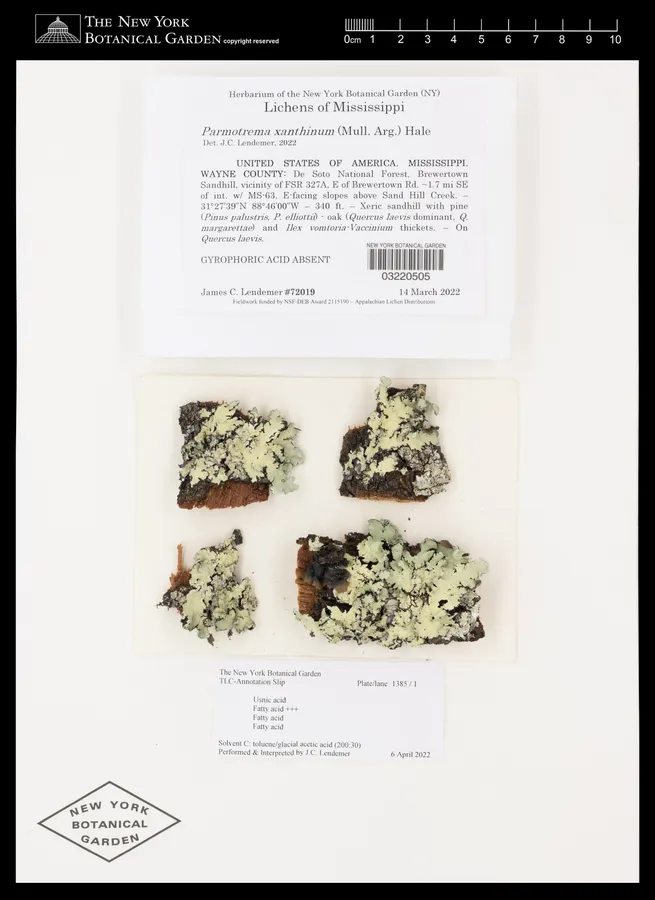
Voucher herbarium Parmotrema xanthinum (03220505), The New York Botanical Garden. Identifikasi mengikuti record spesimen sumber. Foto bahan, kemasan, atau label herbarium sebagaimana tersedia pada record institusi; bukan foto lapangan atau penentuan spesimen independen.

Jenis
Voucher herbarium
Kredit
The New York Botanical Garden
Lisensi
CC BY 4.0
Sumber media
Buka entri sumber

Gambar menunjukkan objek menurut identifikasi sumber, bukan verifikasi independen spesimen oleh Fungi. Tidak ada skala baru yang ditambahkan.

06 / Rujukan

Sumber profil

  1. [1] Parmotrema xanthinum — Wikipedia (en)Bagian sumber: Frozen revision 1318496219
    Tanggal penghimpunan sumber: 2026-10-12
    Teks sumber: CC BY-SA4.0 · Wikipedia contributors
  2. [2] Catalogue of Life Base2026-09-11 — Parmotrema xanthinumBagian sumber: ColDP NameUsage.tsv ID 9Y9B2; accepted species; source 2073
    Tanggal penghimpunan sumber: 2026-10-12
  3. [3] Dokumentasi visual — Parmotrema xanthinumBagian sumber: Individual media record; identification follows the source, not independent determination
    Tanggal penghimpunan sumber: 2026-10-12
    Media sumber: CC BY 4.0 · The New York Botanical Garden

Adaptasi teks: CC BY-SA 4.0. Wikipedia contributors — Parmotrema xanthinum — Wikipedia (en)

Uraian asli dan riwayat sumber

Riwayat atau halaman sumber

Ringkasan sumber

Parmotrema xanthinum is a species of corticolous (bark-dwelling), foliose lichen in the family Parmeliaceae. It has a pale yellowish to greenish-grey body (thallus) that attaches loosely to its bark surface. First described in 1884, it was the subject of recent taxonomic studies that showed it to be the same species as the previously distinct Parmotrema madagascariaceum. The lichen can be identified by its broad , 10 – 20 cm across, with small finger-like projections (isidia) on its surface and hair-like projections () along its edges.

Revisi sumber

Morfologi sumber

This species typically features large, broad-lobed thalli with laminal isidia, often accompanied by apical cilia. The presence of marginal cilia varies from nearly absent to abundant but does not correlate with the presence or absence of gyrophoric acid. The thallus is foliose, generally 10 – 20 cm in diameter, and ranges from to loosely adnate. are irregularly branched and overlapping, with a yellow-green upper surface that may have white laminal (spotting) and cracks. The medulla is white, and the lower surface is black with a light to dark brown marginal zone.

Revisi sumber

Ekologi sumber

Parmotrema xanthinum has a broad geographic distribution. While Lendemer's 2016 study highlighted its presence in the subtropical and temperate regions of southeastern North America, including the Coastal plain, Piedmont, southern Appalachian Mountains, and Ozark Highlands, this species is also found in other parts of the world. It is known from various subtropical and tropical regions globally, including Madagascar. This widespread distribution is typical for many species within the genus Parmotrema, which are found in diverse habitats across different continents.

Revisi sumber

Struktur reproduksi sumber

This species typically features large, broad-lobed thalli with laminal isidia, often accompanied by apical cilia. The presence of marginal cilia varies from nearly absent to abundant but does not correlate with the presence or absence of gyrophoric acid. The thallus is foliose, generally 10 – 20 cm in diameter, and ranges from to loosely adnate. are irregularly branched and overlapping, with a yellow-green upper surface that may have white laminal (spotting) and cracks. The medulla is white, and the lower surface is black with a light to dark brown marginal zone.

Revisi sumber

Rujukan halaman ini

Fungi. Parmotrema xanthinum. Rilis data fungi-2026-10-12-expansion-2. https://fungi-atlas.mgadib.chatgpt.site/jamur/parmotrema-xanthinum/.

Status: impor sumber; pemeriksaan editorial per profil belum selesai. Untuk klaim biologis, gunakan rujukan pada bagian terkait dan periksa konteks sumber aslinya.