Ciri dan struktur
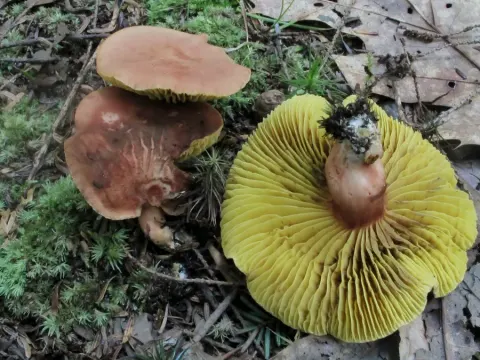
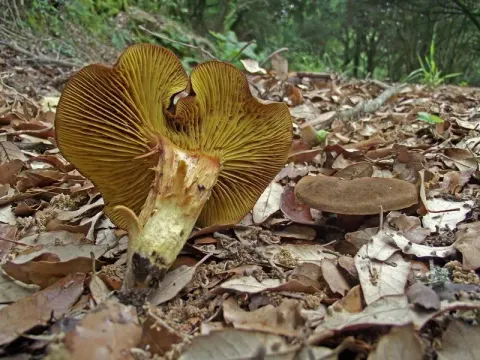
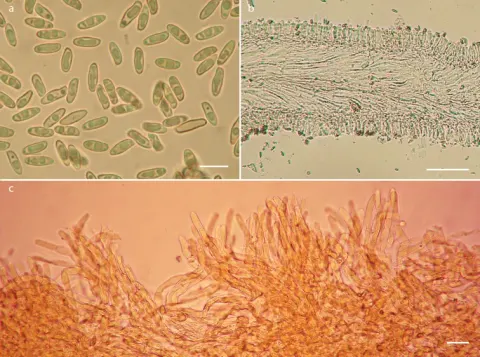
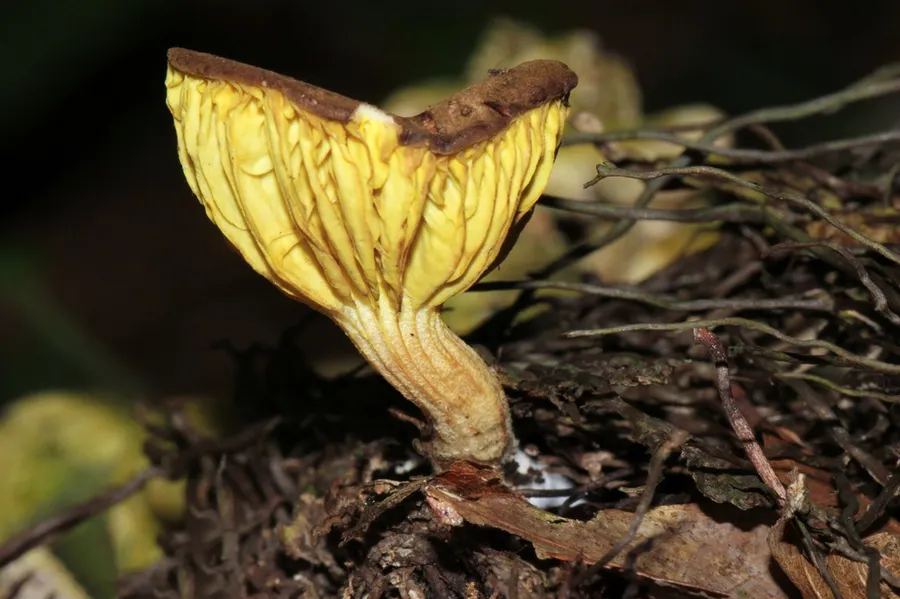
Recognized by the combination of pileus vinaceous to grayish-vinaceous, surface becoming rimose-areolate with development, the stipe apex with ribbed appearance and scabrous or even with tiny rigid scales and gills staining blue. Its stature (pileus 27–80 mm diam., stipe 27–80 × 7–12 mm), basidiospores and pleurocystidia size and shape, prevents confusion with P. purpurellus Singer or with P. scabripes B. Ortiz & M.A. Neves. Pileus 27–80 mm diam, convex to plane-convex, at times faintly depressed at center or even infundibuliform; surface velvety, uniform but frequently rimose-areolate, or fracturing and forming rivulose patches, cracked when seen under lens, vinaceous to grayish-vinaceous (7D4–D5, 7C4; 5YR 3/4, 4/3, 4/4–25Y 6/6), darker in some areas especially towards the margin, or yellowish, reddish-yellow, reddish-brown or even yellowish-beige (10YR 5/4, 6/6) in other parts especially towards the center, some specimens even reddish-vinaceous (7E8–E7) with brownish tinges (7D6–6E8), mature specimens fading to brownish when exposed to the sun; margin slightly incurved, edge entire, at times undulate. Lamellae subdecurrent to decurrent, 9–15 mm broad, close, bright yellow (3A7, 5A6–A7; 5Y8/8; 4A16), mustard yellow with age (4A6–A7; 4B7–B8), staining blue or greenish-blue when handled, stains becoming reddish or brownish-vinaceous after several minutes, old specimens or specimens long exposed to the sun developing reddish spots at lamellae sides or even dark brownish red or brown at edge; somewhat sinuous when the hymenophore is seen frontally, veined or anastomosed mostly in the area below the pileus and intervenose or even somewhat labyrinthiform, especially when young; lamellullae of different sizes, edge entire.
Habitat dan peran ekologis
In soil, solitary or gregarious, in tropical oak forest, under Quercus oleoides and Q. sapotifolia.
- Habitat atau konteks temuan
- hutan
- Substrat
- tanah
- Peran atau konteks
- Belum dikategorikan pada rilis ini.
Reproduksi
Recognized by the combination of pileus vinaceous to grayish-vinaceous, surface becoming rimose-areolate with development, the stipe apex with ribbed appearance and scabrous or even with tiny rigid scales and gills staining blue. Its stature (pileus 27–80 mm diam., stipe 27–80 × 7–12 mm), basidiospores and pleurocystidia size and shape, prevents confusion with P. purpurellus Singer or with P. scabripes B. Ortiz & M.A. Neves. Pileus 27–80 mm diam, convex to plane-convex, at times faintly depressed at center or even infundibuliform; surface velvety, uniform but frequently rimose-areolate, or fracturing and forming rivulose patches, cracked when seen under lens, vinaceous to grayish-vinaceous (7D4–D5, 7C4; 5YR 3/4, 4/3, 4/4–25Y 6/6), darker in some areas especially towards the margin, or yellowish, reddish-yellow, reddish-brown or even yellowish-beige (10YR 5/4, 6/6) in other parts especially towards the center, some specimens even reddish-vinaceous (7E8–E7) with brownish tinges (7D6–6E8), mature specimens fading to brownish when exposed to the sun; margin slightly incurved, edge entire, at times undulate.
Catatan identitas dan cakupan
- Nama diterima mengikuti Catalogue of Life Base2026-09-11; uraian mempertahankan konsep dan nama sumber aslinya.
- Preserve original treatment localities, hosts and substrate scope. Materials examined describe documented specimens, not the full global range.
- Impor dan terjemahan otomatis belum diperiksa editorial per profil. Struktur reproduktif yang disebutkan tidak membuktikan seluruh siklus hidup diketahui.
- Pengukuran pada uraian mengikuti spesimen, kultur, dan metode sumber; angka tidak diperluas ke semua populasi.
Catatan distribusi dalam narasi mengikuti sumbernya. Dokumentasi spesimen atau foto mengikuti catatan sumber. Bukti wilayah Indonesia dan penilaian konservasi tidak disimpulkan dari gambar.
Melihat dengan konteks
Dokumentasi Phylloporus rimosus menurut asosiasi foto pada record takson iNaturalist. Kredit: Alan Rockefeller. Identitas mengikuti sumber; bukan penentuan spesimen independen.
- Jenis
- Fotografi
- Kredit
- (c) Alan Rockefeller, some rights reserved (CC BY), uploaded by Alan Rockefeller
- Lisensi
- CC BY 4.0
- Sumber media
- Buka entri sumber
Dokumentasi tambahan
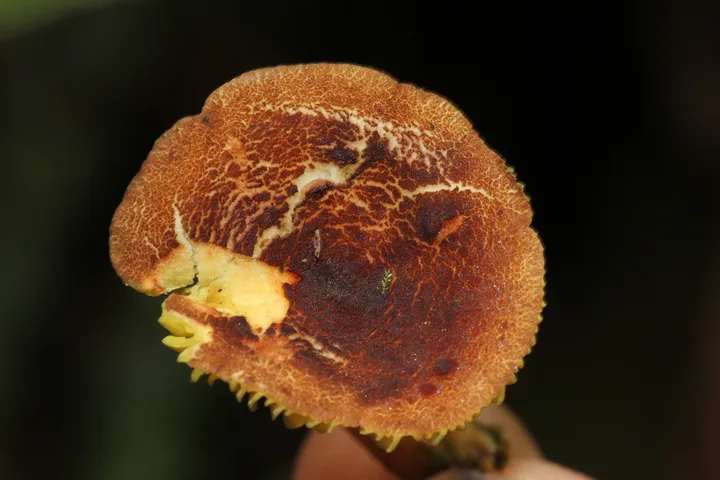
Foto yang diasosiasikan dengan Phylloporus rimosus pada iNaturalist. Identifikasi mengikuti sumber; bukan penentuan spesimen independen.
Kredit dan penggunaan
(c) Alan Rockefeller, some rights reserved (CC BY), uploaded by Alan Rockefeller
Ukuran dan format gambar disesuaikan tanpa pemotongan, retus, atau penambahan skala. Lisensi sumber dipertahankan.
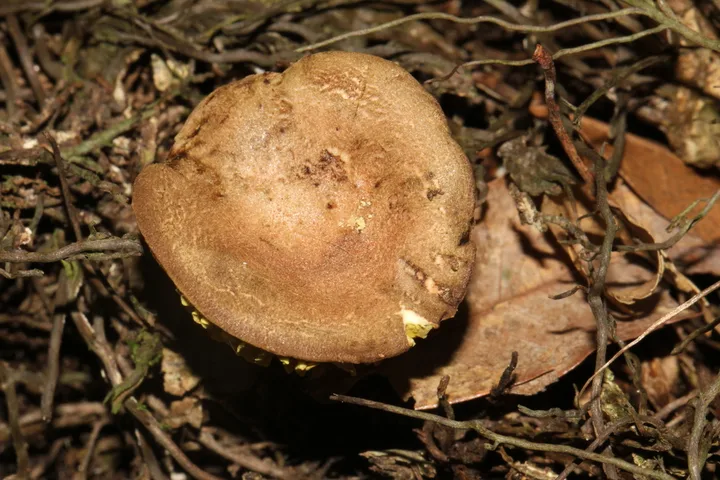
Foto yang diasosiasikan dengan Phylloporus rimosus pada iNaturalist. Identifikasi mengikuti sumber; bukan penentuan spesimen independen.
Kredit dan penggunaan
(c) Alan Rockefeller, some rights reserved (CC BY), uploaded by Alan Rockefeller
Ukuran dan format gambar disesuaikan tanpa pemotongan, retus, atau penambahan skala. Lisensi sumber dipertahankan.
Sumber profil
- [1] Two new species of Phylloporus (Fungi, Boletales) from tropical Quercus forests in eastern Mexico — Phylloporus rimosus
- [2] Catalogue of Life Base2026-09-11 — Phylloporus rimosus
- [3] Dokumentasi visual — Phylloporus rimosus
- [4] Dokumentasi visual — Phylloporus rimosus
- [5] Dokumentasi visual — Phylloporus rimosus
Rujukan halaman ini
Fungi. Phylloporus rimosus. Rilis data fungi-2026-10-12-expansion-2. https://fungi-atlas.mgadib.chatgpt.site/jamur/phylloporus-rimosus/.
Status: impor sumber; pemeriksaan editorial per profil belum selesai. Untuk klaim biologis, gunakan rujukan pada bagian terkait dan periksa konteks sumber aslinya.