Ciri dan struktur
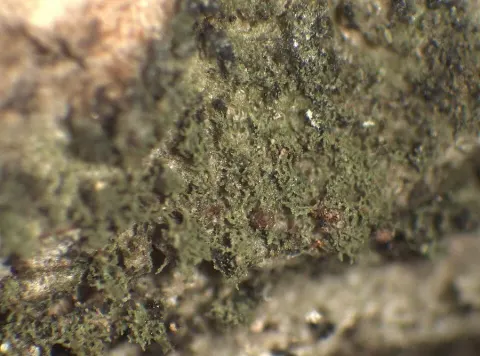
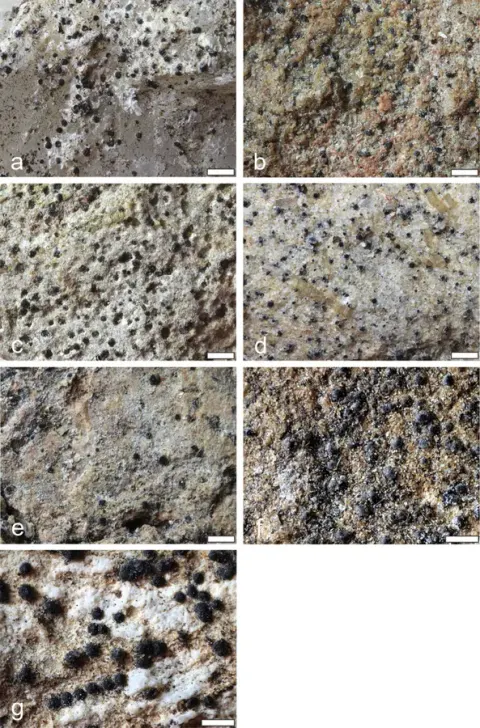
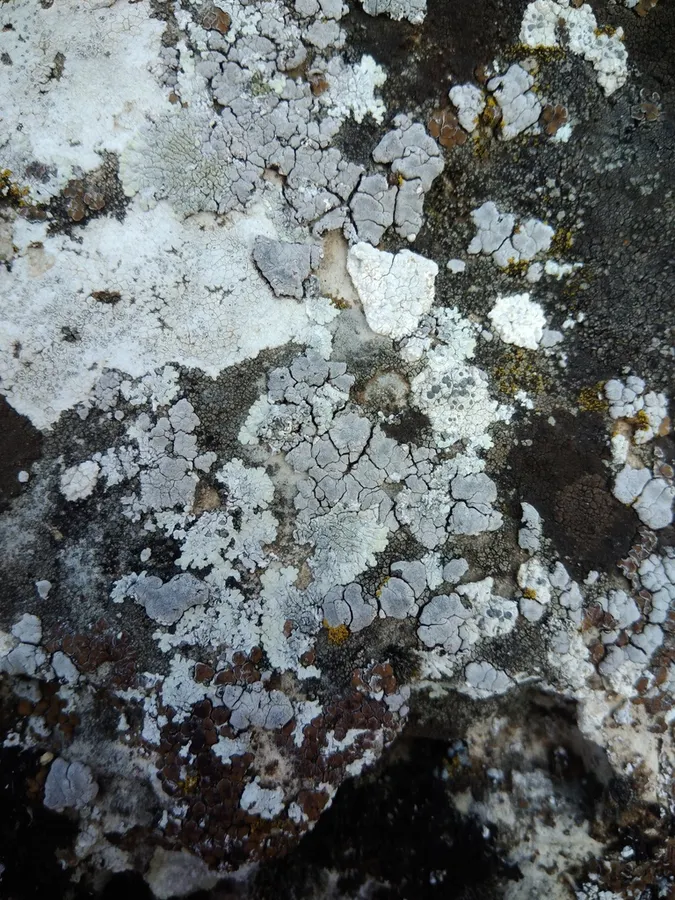
While superficially resembling species in the genus Verrucaria, P. schaereri is distinguished by its larger size and several taxonomically significant characteristics in its anatomy and reproductive structures. The thallus (main body of the lichen) is thick, reaching up to 2.5 mm due to an extensively developed medulla (inner layer). The central portions of the thallus display a cracked, pattern, while the outer edges show a more or less distinctly (outward-spreading) form. The areolae (small, island-like segments of the thallus) are attached to the substrate by short stalks composed of densely packed, perpendicularly arranged fungal filaments (hyphae) that extend from the medulla. The outer have a significant portion of their undersides free from the substrate, with a blackening (cellular) lower cortex, giving well-developed specimens an almost lobate appearance. The thick medulla consists of interwoven hyphae densely filled with minute colourless crystals or (comparable to the medulla in the Lecanoralean genus Squamarina) and slowly turns blue when treated with iodine. The spores typically measure 20–28 by 8–10 μm and are (surrounded by a gelatinous sheath), with this gelatinous layer being most prominent in premature spores, reaching approximately 2.5 μm in thickness. As this feature appears only during a relatively brief period of spore development, it had been overlooked by earlier researchers. Beyond its anatomy and spores, P. schaereri is further distinguished from the genus Catapyrenium by its areolate appearance, which develops from the cracking of what was initially a continuous crust.
Habitat dan peran ekologis
Placocarpus schaereri is typically found in dry, open habitats on calcareous substrates, particularly favouring limestone and dolomite rocks. In Austria, the lichen has been recorded from sunny, south-exposed rock surfaces, often in hot and dry (xerothermic) conditions. The species tends to occur in areas characterised by sparse vegetation, frequently co-occurring with other lichens adapted to similar arid conditions. Austrian populations of Placocarpus schaereri are primarily concentrated in the southern Alps. In Slovenia, it has been reported from dry, vertical to inclined rock faces near Črni Kal, where it grows alongside lichens such as Caloplaca inconnexa, Rinodina lecanorina, and Candelariella medians. In Ukraine, it was reported from the Medobory Nature Reserve. Placocarpus schaereri is also known to occur in Turkey, and Iraq.
- Habitat atau konteks temuan
- Informasi belum tersedia pada sumber rilis ini.
- Substrat
- Informasi belum tersedia pada sumber rilis ini.
- Peran atau konteks
- Pembentuk liken
Reproduksi
While superficially resembling species in the genus Verrucaria, P. schaereri is distinguished by its larger size and several taxonomically significant characteristics in its anatomy and reproductive structures. The thallus (main body of the lichen) is thick, reaching up to 2.5 mm due to an extensively developed medulla (inner layer). The central portions of the thallus display a cracked, pattern, while the outer edges show a more or less distinctly (outward-spreading) form. The thick medulla consists of interwoven hyphae densely filled with minute colourless crystals or (comparable to the medulla in the Lecanoralean genus Squamarina) and slowly turns blue when treated with iodine. The spores typically measure 20–28 by 8–10 μm and are (surrounded by a gelatinous sheath), with this gelatinous layer being most prominent in premature spores, reaching approximately 2.5 μm in thickness.
Catatan identitas dan cakupan
- Nama diterima mengikuti Catalogue of Life Base2026-09-11; uraian mempertahankan konsep dan nama sumber aslinya.
- Original geographic, specimen and life-cycle scope retained; source import awaits individual editorial review.
- Impor dan terjemahan otomatis belum diperiksa editorial per profil. Struktur reproduktif yang disebutkan tidak membuktikan seluruh siklus hidup diketahui.
- Pengukuran pada uraian mengikuti spesimen, kultur, dan metode sumber; angka tidak diperluas ke semua populasi.
Catatan distribusi dalam narasi mengikuti sumbernya. Dokumentasi spesimen atau foto mengikuti catatan sumber. Bukti wilayah Indonesia dan penilaian konservasi tidak disimpulkan dari gambar.
Melihat dengan konteks
Dokumentasi Placocarpus schaereri menurut asosiasi foto pada record takson iNaturalist. Kredit: Valerii Darmostuk. Identitas mengikuti sumber; bukan penentuan spesimen independen.
- Jenis
- Fotografi
- Kredit
- (c) Valerii Darmostuk, some rights reserved (CC BY), uploaded by Valerii Darmostuk
- Lisensi
- CC BY 4.0
- Sumber media
- Buka entri sumber
Sumber profil
- [1] Placocarpus schaereri — Wikipedia (en)
- [2] Catalogue of Life Base2026-09-11 — Placocarpus schaereri
- [3] Dokumentasi visual — Placocarpus schaereri
Rujukan halaman ini
Fungi. Placocarpus schaereri. Rilis data fungi-2026-10-12-expansion-2. https://fungi-atlas.mgadib.chatgpt.site/jamur/placocarpus-schaereri/.
Status: impor sumber; pemeriksaan editorial per profil belum selesai. Untuk klaim biologis, gunakan rujukan pada bagian terkait dan periksa konteks sumber aslinya.