01 / Morfologi

Ciri dan struktur

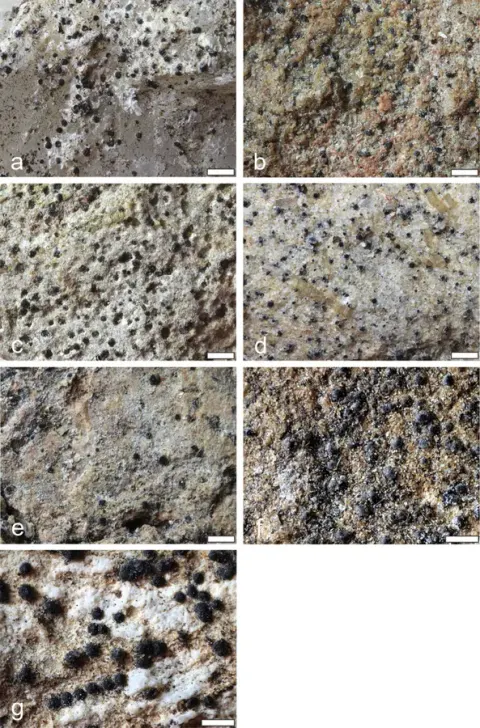
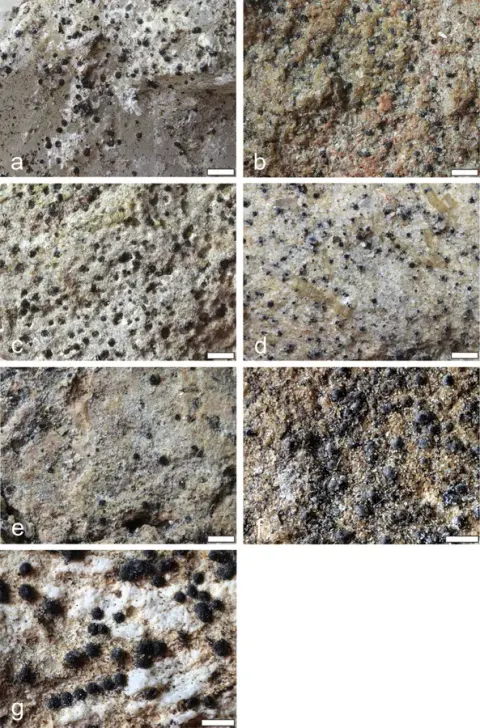
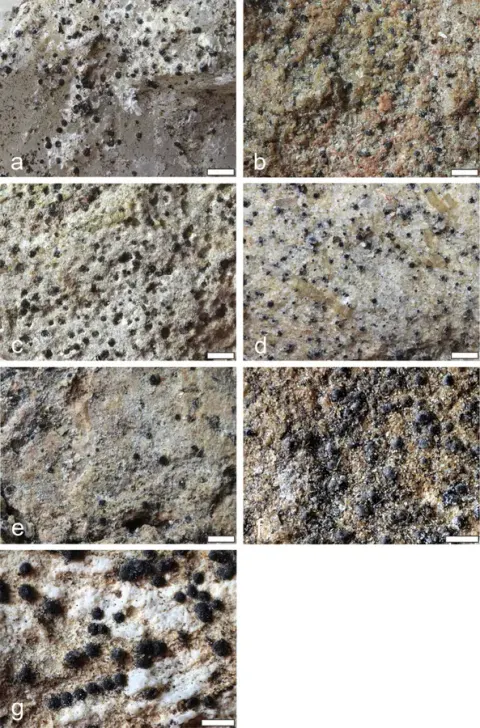
Prothallus not visible. Thallus white to grey, endolithic, in two specimens partly epilithic, slightly rimose, up to 0.1–0.15 mm thick, algal cells c. 4–6 μm. Perithecia 0.06–0.36 mm in diam., (1/2–)3/4–1-immersed, often thalline covered except apex, leaving deep pits; c. 20–160 perithecia / cm 2. Ostiole pale to dark, plane, c. 20–40 μm wide. Involucrellum absent or apical, c. 30–60(–90) μm thick. Exciple 0.16–0.39 mm, wall dark brown to black, c. 15–25 μm thick, often with ostiolar neck, often pear-shaped. Periphysoids c. 40–50 × 1.5–2 μm. Asci c. 93–122 × 33–52 μm, 8-spored. Ascospores 3-septate, few spores submuriform with 5–7 cells, (32.3–)37.5–40.9–44.3(–49.4) × (12.2–)13.7–14.9–16.2(–18.1) μm (n = 78), rarely with a perispore c. 1 μm thick.

Sebagian uraian ditampilkan dalam bahasa sumber; terjemahannya belum tersedia atau belum lolos pemeriksaan.

Rujukan: [1]

Pengukuran mengikuti objek, spesimen atau kultur, dan metode yang disebutkan sumber. Baca uraian asli untuk konteks lengkap.

02 / Kehidupan

Habitat dan peran ekologis

The species occurs in many localities in SW Finland on calcareous rocks and in lime quarries. It occurs on south- as well as on north-facing walls and on gentle slopes. More rarely, it grows on boulders, stones and pebbles. At present, more than 50 localities are known. Most localities are in the hemiboreal vegetation zone, a few in the southern boreal vegetation zone, only some tens of kilometres north of the limit of the hemiboreal zone. However, one separate locality occurs in Kuopio (former Juankoski) in eastern central Finland. Thelidium incavatum may be the most common species of Thelidium in SW Finland, together with T. minutulum Körb.

Sebagian uraian ditampilkan dalam bahasa sumber; terjemahannya belum tersedia atau belum lolos pemeriksaan.

Rujukan: [1]

Habitat atau konteks temuan
Informasi belum tersedia pada sumber rilis ini.
Substrat
Informasi belum tersedia pada sumber rilis ini.
Peran atau konteks
Pembentuk liken
Temukan hubungan serupa
03 / Siklus hidup

Reproduksi

Prothallus not visible. Thallus white to grey, endolithic, in two specimens partly epilithic, slightly rimose, up to 0.1–0.15 mm thick, algal cells c. 4–6 μm. Perithecia 0.06–0.36 mm in diam., (1/2–)3/4–1-immersed, often thalline covered except apex, leaving deep pits; c. 20–160 perithecia / cm 2. Ostiole pale to dark, plane, c. 20–40 μm wide. Involucrellum absent or apical, c. 30–60(–90) μm thick. Exciple 0.16–0.39 mm, wall dark brown to black, c. 15–25 μm thick, often with ostiolar neck, often pear-shaped. Periphysoids c. 40–50 × 1.5–2 μm. Asci c. 93–122 × 33–52 μm, 8-spored. Ascospores 3-septate, few spores submuriform with 5–7 cells, (32.3–)37.5–40.9–44.3(–49.4) × (12.2–)13.7–14.9–16.2(–18.1) μm (n = 78), rarely with a perispore c. 1 μm thick.

Sebagian uraian ditampilkan dalam bahasa sumber; terjemahannya belum tersedia atau belum lolos pemeriksaan.

Rujukan: [1]

Sinonim menurut acuan taksonomi rilis: Amphoroblastia calcivora; Amphoroblastia incavata; Arthopyrenia forana var. calcivora; Biatora immersa var. calcivora; Polyblastia calcivora; Verrucaria incavata; Verrucaria pyrenophora f. calcivora; Verrucaria pyrenophora incavata; Verrucaria pyrenophora var. incavata
04 / Batas informasi

Catatan identitas dan cakupan

  • Nama diterima mengikuti Catalogue of Life Base2026-09-11; uraian mempertahankan konsep dan nama sumber aslinya.
  • Preserve original treatment localities, hosts and substrate scope. Materials examined describe documented specimens, not the full global range.
  • Impor dan terjemahan otomatis belum diperiksa editorial per profil. Struktur reproduktif yang disebutkan tidak membuktikan seluruh siklus hidup diketahui.
  • Pengukuran pada uraian mengikuti spesimen, kultur, dan metode sumber; angka tidak diperluas ke semua populasi.

Catatan distribusi dalam narasi mengikuti sumbernya. Dokumentasi spesimen atau foto mengikuti catatan sumber. Bukti wilayah Indonesia dan penilaian konservasi tidak disimpulkan dari gambar.

05 / Dokumentasi

Melihat dengan konteks

Dokumentasi visual yang memenuhi pemeriksaan subjek dan hak penggunaan belum tersedia. Foto gejala, label, dan gambar yang meragukan tidak dihitung.

06 / Rujukan

Sumber profil

  1. [1] Taxonomy of Thelidium auruntii and T. incavatum complexes (lichenized Ascomycota, Verrucariales) in Finland — Thelidium incavatumBagian sumber: PMC10210258_section_30
    Tanggal penghimpunan sumber: 2026-10-12
    Teks sumber: CC BY 4.0 · Pykälä J, Kantelinen A, Myllys L.
  2. [2] Catalogue of Life Base2026-09-11 — Thelidium incavatumBagian sumber: ColDP NameUsage.tsv ID 7C6KQ; accepted species; source 2073
    Tanggal penghimpunan sumber: 2026-10-12

Adaptasi teks: CC BY 4.0. Pykälä J, Kantelinen A, Myllys L. — Taxonomy of Thelidium auruntii and T. incavatum complexes (lichenized Ascomycota, Verrucariales) in Finland — Thelidium incavatum

Uraian asli dan riwayat sumber

Riwayat atau halaman sumber

Ringkasan sumber

Prothallus not visible. Thallus white to grey, endolithic, in two specimens partly epilithic, slightly rimose, up to 0.1–0.15 mm thick, algal cells c. 4–6 μm. Perithecia 0.06–0.36 mm in diam., (1/2–)3/4–1-immersed, often thalline covered except apex, leaving deep pits; c. 20–160 perithecia / cm 2. Ostiole pale to dark, plane, c. 20–40 μm wide. Involucrellum absent or apical, c. 30–60(–90) μm thick. Exciple 0.16–0.39 mm, wall dark brown to black, c. 15–25 μm thick, often with ostiolar neck, often pear-shaped.

Revisi sumber

Morfologi sumber

Prothallus not visible. Thallus white to grey, endolithic, in two specimens partly epilithic, slightly rimose, up to 0.1–0.15 mm thick, algal cells c. 4–6 μm. Perithecia 0.06–0.36 mm in diam., (1/2–)3/4–1-immersed, often thalline covered except apex, leaving deep pits; c. 20–160 perithecia / cm 2. Ostiole pale to dark, plane, c. 20–40 μm wide. Involucrellum absent or apical, c. 30–60(–90) μm thick. Exciple 0.16–0.39 mm, wall dark brown to black, c. 15–25 μm thick, often with ostiolar neck, often pear-shaped. Periphysoids c. 40–50 × 1.5–2 μm. Asci c. 93–122 × 33–52 μm, 8-spored. Ascospores 3-septate, few spores submuriform with 5–7 cells, (32.3–)37.5–40.9–44.3(–49.4) × (12.2–)13.7–14.9–16.2(–18.1) μm (n = 78), rarely with a perispore c. 1 μm thick.

Revisi sumber

Ekologi sumber

The species occurs in many localities in SW Finland on calcareous rocks and in lime quarries. It occurs on south- as well as on north-facing walls and on gentle slopes. More rarely, it grows on boulders, stones and pebbles. At present, more than 50 localities are known. Most localities are in the hemiboreal vegetation zone, a few in the southern boreal vegetation zone, only some tens of kilometres north of the limit of the hemiboreal zone. However, one separate locality occurs in Kuopio (former Juankoski) in eastern central Finland. Thelidium incavatum may be the most common species of Thelidium in SW Finland, together with T. minutulum Körb.

Revisi sumber

Struktur reproduksi sumber

Prothallus not visible. Thallus white to grey, endolithic, in two specimens partly epilithic, slightly rimose, up to 0.1–0.15 mm thick, algal cells c. 4–6 μm. Perithecia 0.06–0.36 mm in diam., (1/2–)3/4–1-immersed, often thalline covered except apex, leaving deep pits; c. 20–160 perithecia / cm 2. Ostiole pale to dark, plane, c. 20–40 μm wide. Involucrellum absent or apical, c. 30–60(–90) μm thick. Exciple 0.16–0.39 mm, wall dark brown to black, c. 15–25 μm thick, often with ostiolar neck, often pear-shaped. Periphysoids c. 40–50 × 1.5–2 μm. Asci c. 93–122 × 33–52 μm, 8-spored. Ascospores 3-septate, few spores submuriform with 5–7 cells, (32.3–)37.5–40.9–44.3(–49.4) × (12.2–)13.7–14.9–16.2(–18.1) μm (n = 78), rarely with a perispore c. 1 μm thick.

Revisi sumber

Rujukan halaman ini

Fungi. Thelidium incavatum. Rilis data fungi-2026-10-12-expansion-2. https://fungi-atlas.mgadib.chatgpt.site/jamur/thelidium-incavatum/.

Status: impor sumber; pemeriksaan editorial per profil belum selesai. Untuk klaim biologis, gunakan rujukan pada bagian terkait dan periksa konteks sumber aslinya.