01 / Morfologi

Ciri dan struktur

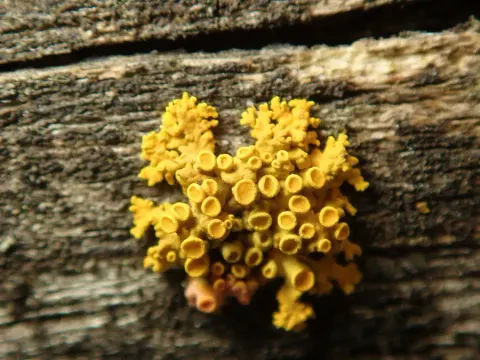
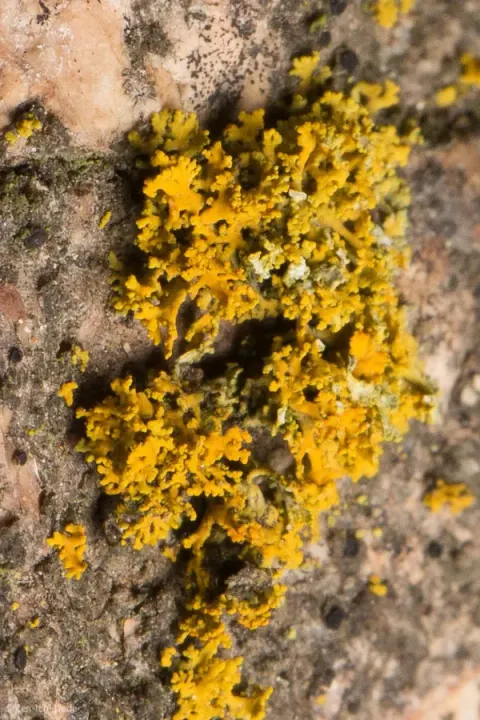
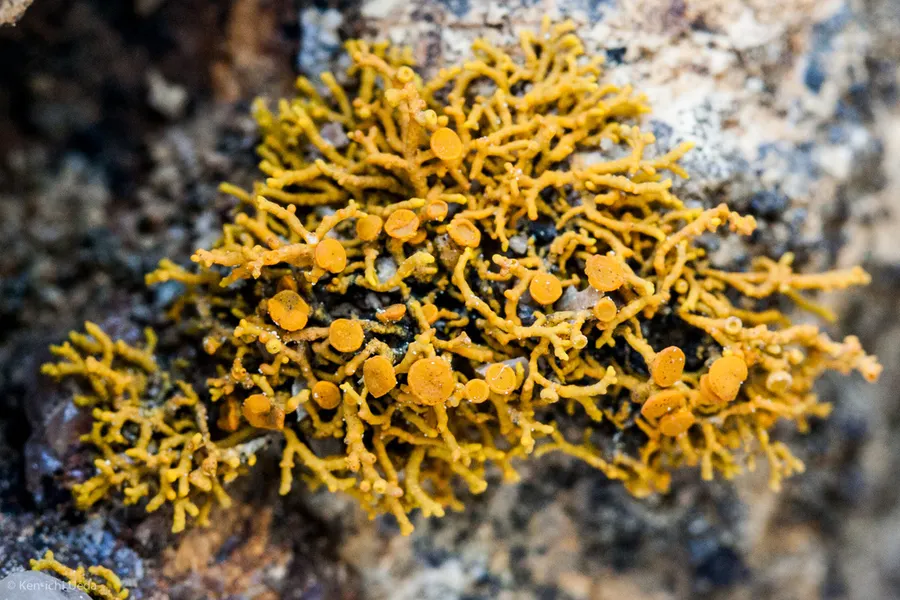
Polycauliona coralloides is a dwarf-fruticose lichen that forms dense to loose cushions up to 2 cm in diameter and 8 mm in height. Its branches are , (or at least somewhat so) and can be erect, arched, or almost prostrate; they measure about 0.4 mm in diameter and are round and bumpy. The thallus is yellow to orange-yellow and may have pseudocyphellae in small depressions. Initially, P. coralloides forms elongated thallus that adhere closely to the , but over time, it evolves into a distinctly subfruticose thallus. Apothecia are fairly common, , and can be at the ends of branches or long them. Their color is slightly darker than that of the thallus. The spores are and ellipsoid, with a very thin septum. Chemically, the species is characterized by the presence of parietin as the major pigment, along with small amounts of emodin, teloschistin, parietinic acid, and fallacinal. The thallus and apothecia react K+ (purple), while the medulla shows negative reactions to standard chemical spot tests.

Sebagian uraian ditampilkan dalam bahasa sumber; terjemahannya belum tersedia atau belum lolos pemeriksaan.

Rujukan: [1]

Pengukuran mengikuti objek, spesimen atau kultur, dan metode yang disebutkan sumber. Baca uraian asli untuk konteks lengkap.

02 / Kehidupan

Habitat dan peran ekologis

Polycauliona coralloides is a strictly littoral species, found close to the seashore, predominantly on hard rocks and mainly on vertical surfaces. It typically grows in the lower part of the supralittoral zone within a narrow vertical range. The species often occupies locations closer to the shore than Caloplaca rosei and Caloplaca brattiae and avoids sites exposed to bird manuring. As might be expected for a littoral species, it is quite tolerant to sea salt. The distribution of P. coralloides extends from northern Baja California, Mexico, to northern Oregon. Its presence further south is possible, but not likely further north due to unsuitable habitats in these regions. It has also been documented in Channel Islands National Park. Stigmidium hesperium is a lichenicolous fungus, first described in 2009, that parasitises Polycauliona coralloides. Infection by the fungus results in erosion and bleaching of the thallus and apothecia.

Sebagian uraian ditampilkan dalam bahasa sumber; terjemahannya belum tersedia atau belum lolos pemeriksaan.

Rujukan: [1]

Habitat atau konteks temuan
Informasi belum tersedia pada sumber rilis ini.
Substrat
Informasi belum tersedia pada sumber rilis ini.
Peran atau konteks
Pembentuk liken
Temukan hubungan serupa
03 / Siklus hidup

Reproduksi

Polycauliona coralloides is a dwarf-fruticose lichen that forms dense to loose cushions up to 2 cm in diameter and 8 mm in height. Its branches are , (or at least somewhat so) and can be erect, arched, or almost prostrate; they measure about 0.4 mm in diameter and are round and bumpy. The thallus is yellow to orange-yellow and may have pseudocyphellae in small depressions. Initially, P. coralloides forms elongated thallus that adhere closely to the , but over time, it evolves into a distinctly subfruticose thallus. Apothecia are fairly common, , and can be at the ends of branches or long them. Their color is slightly darker than that of the thallus. The spores are and ellipsoid, with a very thin septum.

Sebagian uraian ditampilkan dalam bahasa sumber; terjemahannya belum tersedia atau belum lolos pemeriksaan.

Rujukan: [1]

Sinonim menurut acuan taksonomi rilis: Caloplaca coralloides; Lecanora coralloides; Placodium coralloides; Thamnolia coralloides; Thamnonoma coralloides
04 / Batas informasi

Catatan identitas dan cakupan

  • Nama diterima mengikuti Catalogue of Life Base2026-09-11; uraian mempertahankan konsep dan nama sumber aslinya.
  • Original geographic, specimen and life-cycle scope retained; source import awaits individual editorial review.
  • Impor dan terjemahan otomatis belum diperiksa editorial per profil. Struktur reproduktif yang disebutkan tidak membuktikan seluruh siklus hidup diketahui.
  • Pengukuran pada uraian mengikuti spesimen, kultur, dan metode sumber; angka tidak diperluas ke semua populasi.

Catatan distribusi dalam narasi mengikuti sumbernya. Dokumentasi spesimen atau foto mengikuti catatan sumber. Bukti wilayah Indonesia dan penilaian konservasi tidak disimpulkan dari gambar.

05 / Dokumentasi

Melihat dengan konteks

Dokumentasi Polycauliona coralloides menurut asosiasi foto pada record takson iNaturalist. Kredit: Ken-ichi Ueda. Identitas mengikuti sumber; bukan penentuan spesimen independen.

Jenis
Fotografi
Kredit
(c) Ken-ichi Ueda, some rights reserved (CC BY)
Lisensi
CC BY 4.0
Sumber media
Buka entri sumber

Gambar menunjukkan objek menurut identifikasi sumber, bukan verifikasi independen spesimen oleh Fungi. Tidak ada skala baru yang ditambahkan.

06 / Rujukan

Sumber profil

  1. [1] Polycauliona coralloides — Wikipedia (en)Bagian sumber: Frozen revision 1331244259
    Tanggal penghimpunan sumber: 2026-10-12
    Teks sumber: CC BY-SA4.0 · Wikipedia contributors
  2. [2] Catalogue of Life Base2026-09-11 — Polycauliona coralloidesBagian sumber: ColDP NameUsage.tsv ID 4L3GV; accepted species; source 2073
    Tanggal penghimpunan sumber: 2026-10-12
  3. [3] Dokumentasi visual — Polycauliona coralloidesBagian sumber: Individual media record; identification follows the source, not independent determination
    Tanggal penghimpunan sumber: 2026-10-12
    Media sumber: CC BY 4.0 · (c) Ken-ichi Ueda, some rights reserved (CC BY)

Adaptasi teks: CC BY-SA 4.0. Wikipedia contributors — Polycauliona coralloides — Wikipedia (en)

Uraian asli dan riwayat sumber

Riwayat atau halaman sumber

Ringkasan sumber

Polycauliona coralloides, the coral firedot lichen, is a species of small fruticose (bushy), saxicolous (rock-dwelling) lichen in the family Teloschistaceae. First formally described in 1866, it was later shuffled to a few different genera in its taxonomic history before ending up in Polycauliona, a genus resurrected from taxonomic obscurity in the molecular phylogenetics era. The lichen occurs on seaside rocks in the intertidal spray zone of California and northwestern Mexico. The species is readily recognized due to its distinctive coral-like form–its thallus grows as a tangle of orange, filamentous branches.

Revisi sumber

Morfologi sumber

Polycauliona coralloides is a dwarf-fruticose lichen that forms dense to loose cushions up to 2 cm in diameter and 8 mm in height. Its branches are , (or at least somewhat so) and can be erect, arched, or almost prostrate; they measure about 0.4 mm in diameter and are round and bumpy. The thallus is yellow to orange-yellow and may have pseudocyphellae in small depressions. Initially, P. coralloides forms elongated thallus that adhere closely to the , but over time, it evolves into a distinctly subfruticose thallus. Apothecia are fairly common, , and can be at the ends of branches or long them. Their color is slightly darker than that of the thallus. The spores are and ellipsoid, with a very thin septum. Chemically, the species is characterized by the presence of parietin as the major pigment, along with small amounts of emodin, teloschistin, parietinic acid, and fallacinal. The thallus and apothecia react K+ (purple), while the medulla shows negative reactions to standard chemical spot tests.

Revisi sumber

Ekologi sumber

Polycauliona coralloides is a strictly littoral species, found close to the seashore, predominantly on hard rocks and mainly on vertical surfaces. It typically grows in the lower part of the supralittoral zone within a narrow vertical range. The species often occupies locations closer to the shore than Caloplaca rosei and Caloplaca brattiae and avoids sites exposed to bird manuring. As might be expected for a littoral species, it is quite tolerant to sea salt. The distribution of P. coralloides extends from northern Baja California, Mexico, to northern Oregon. Its presence further south is possible, but not likely further north due to unsuitable habitats in these regions. It has also been documented in Channel Islands National Park. Stigmidium hesperium is a lichenicolous fungus, first described in 2009, that parasitises Polycauliona coralloides. Infection by the fungus results in erosion and bleaching of the thallus and apothecia.

Revisi sumber

Struktur reproduksi sumber

Polycauliona coralloides is a dwarf-fruticose lichen that forms dense to loose cushions up to 2 cm in diameter and 8 mm in height. Its branches are , (or at least somewhat so) and can be erect, arched, or almost prostrate; they measure about 0.4 mm in diameter and are round and bumpy. The thallus is yellow to orange-yellow and may have pseudocyphellae in small depressions. Initially, P. coralloides forms elongated thallus that adhere closely to the , but over time, it evolves into a distinctly subfruticose thallus. Apothecia are fairly common, , and can be at the ends of branches or long them. Their color is slightly darker than that of the thallus. The spores are and ellipsoid, with a very thin septum.

Revisi sumber

Rujukan halaman ini

Fungi. Polycauliona coralloides. Rilis data fungi-2026-10-12-expansion-2. https://fungi-atlas.mgadib.chatgpt.site/jamur/polycauliona-coralloides/.

Status: impor sumber; pemeriksaan editorial per profil belum selesai. Untuk klaim biologis, gunakan rujukan pada bagian terkait dan periksa konteks sumber aslinya.