01 / Morfologi

Ciri dan struktur

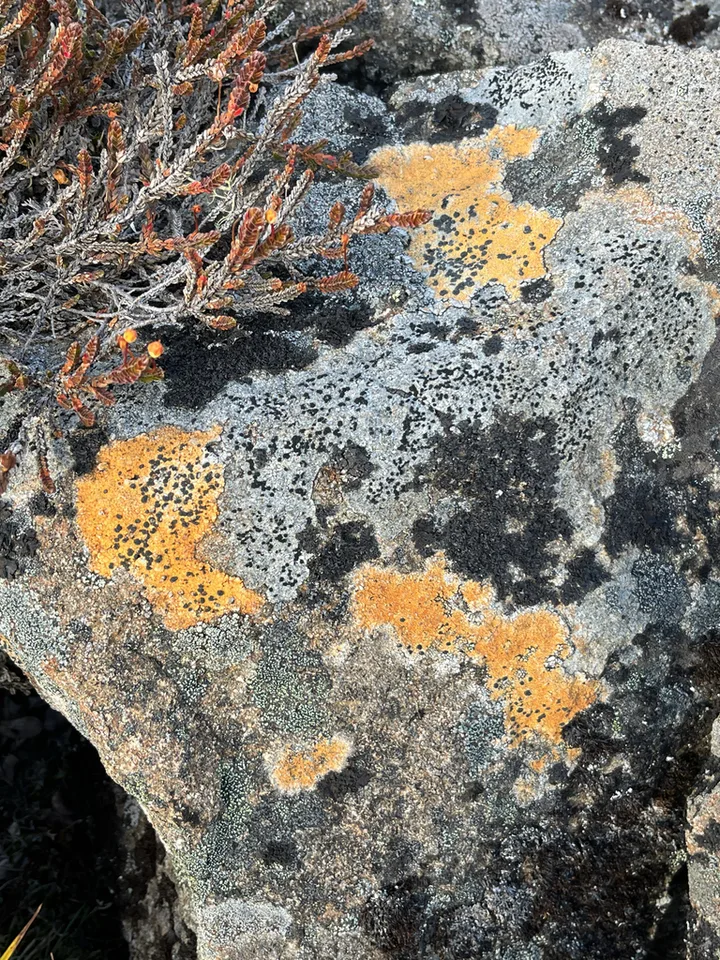
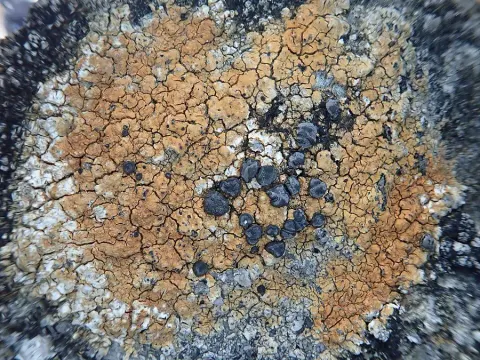
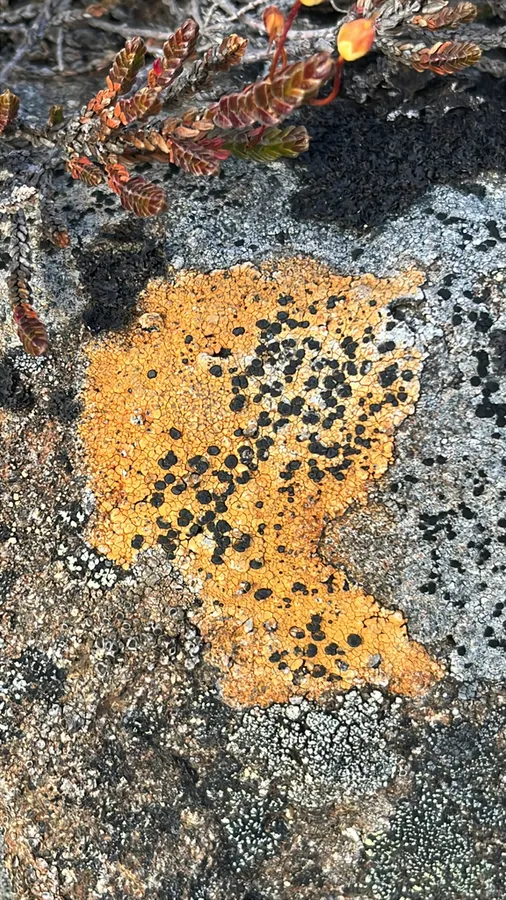
Porpidia flavicunda spreads as a bright yellow-orange crust on siliceous rock, each colony neatly bounded by a narrow, black, felt-like line of fungal threads (the prothallus) that keeps neighbouring thalli apart. The surface is usually even, but a hand lens reveals a mosaic of minute that coalesce into a continuous coating. Black fruiting discs (apothecia) commonly pepper the thallus, either singly or gathered in small clusters of up to ten. They begin sunk within the thallus but soon sit on top as shallow bowls, later becoming almost level and finally domed. Crowding causes the outlines to turn from round to irregular. A conspicuous, raised rim made purely of fungal tissue (the ) encircles each disc and persists even on old specimens. The itself is matt to slightly glossy and often dusted with a fine, whitish bloom; in very mature apothecia the centre may split into wrinkled, sterile islands. Microscopically, the clear hymenium stands 85–150 micrometres (μm) tall beneath a thin, olive-tinged brown cap (). Supporting layers grade from pale yellow-brown just below the hymenium to a dark reddish-brown base (). The asci produce smooth, single-celled ascospores measuring 15–19 × 8.5–10 μm that are released to start new colonies. Spot-test chemistry shows confluentic acid as the dominant substance in European material; North American populations sometimes contain stictic and/or norstictic acids instead. No other lichen products are consistently reported.

Sebagian uraian ditampilkan dalam bahasa sumber; terjemahannya belum tersedia atau belum lolos pemeriksaan.

Rujukan: [1]

Pengukuran mengikuti objek, spesimen atau kultur, dan metode yang disebutkan sumber. Baca uraian asli untuk konteks lengkap.

02 / Kehidupan

Habitat dan peran ekologis

Porpidia flavicunda has a circumpolar arctic and boreal distribution. There are indications P. flavicunda populations frequently spread their propagules to other populations, even on different continents, resulting in low amounts of genetic drift in isolated populations and a higher than expected genetic uniformity between continents. Porpidia flavicunda is among the most common and widely seen lichens in Iceland where it grows on rocks.

Sebagian uraian ditampilkan dalam bahasa sumber; terjemahannya belum tersedia atau belum lolos pemeriksaan.

Rujukan: [1]

Habitat atau konteks temuan
Informasi belum tersedia pada sumber rilis ini.
Substrat
Informasi belum tersedia pada sumber rilis ini.
Peran atau konteks
Pembentuk liken
Temukan hubungan serupa
03 / Siklus hidup

Reproduksi

Black fruiting discs (apothecia) commonly pepper the thallus, either singly or gathered in small clusters of up to ten. They begin sunk within the thallus but soon sit on top as shallow bowls, later becoming almost level and finally domed. Crowding causes the outlines to turn from round to irregular. A conspicuous, raised rim made purely of fungal tissue (the ) encircles each disc and persists even on old specimens. The itself is matt to slightly glossy and often dusted with a fine, whitish bloom; in very mature apothecia the centre may split into wrinkled, sterile islands. Microscopically, the clear hymenium stands 85–150 micrometres (μm) tall beneath a thin, olive-tinged brown cap (). Supporting layers grade from pale yellow-brown just below the hymenium to a dark reddish-brown base ().

Sebagian uraian ditampilkan dalam bahasa sumber; terjemahannya belum tersedia atau belum lolos pemeriksaan.

Rujukan: [1]

Sinonim menurut acuan taksonomi rilis: Biatora flavocoerulescens; Haplocarpon contiguum var. flavicundum; Haplocarpon flavocoerulescens; Huilia flavicunda; Huilia flavocoerulescens; Lecidea albocaerulescens f. flavicunda; Lecidea albocaerulescens f. flavocoerulescens; Lecidea albocaerulescens f. oxydata; Lecidea albocaerulescens var. flavicunda; Lecidea albocaerulescens var. flavocoerulescens; Lecidea contigua f. flavicunda; Lecidea contigua f. flavocoerulescens; Lecidea contigua flavocoerulescens; Lecidea contigua subsp. flavocoerulescens; Lecidea contigua var. flavicunda; Lecidea contigua var. flavocoerulescens; Lecidea flavicunda; Lecidea flavocoerulescens; Lecidea flavocoerulescens f. oxydata; Lecidea macrocarpa f. flavicunda; Lecidea macrocarpa f. flavocoerulescens; Lecidea steriza f. flavicunda; Lichen peltatus flavicunda; Porpidia flavocoerulescens
04 / Batas informasi

Catatan identitas dan cakupan

  • Nama diterima mengikuti Catalogue of Life Base2026-09-11; uraian mempertahankan konsep dan nama sumber aslinya.
  • Original geographic, specimen and life-cycle scope retained; source import awaits individual editorial review.
  • Impor dan terjemahan otomatis belum diperiksa editorial per profil. Struktur reproduktif yang disebutkan tidak membuktikan seluruh siklus hidup diketahui.
  • Pengukuran pada uraian mengikuti spesimen, kultur, dan metode sumber; angka tidak diperluas ke semua populasi.

Catatan distribusi dalam narasi mengikuti sumbernya. Dokumentasi spesimen atau foto mengikuti catatan sumber. Bukti wilayah Indonesia dan penilaian konservasi tidak disimpulkan dari gambar.

05 / Dokumentasi

Melihat dengan konteks

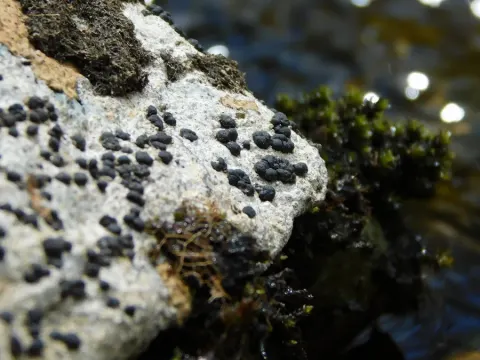
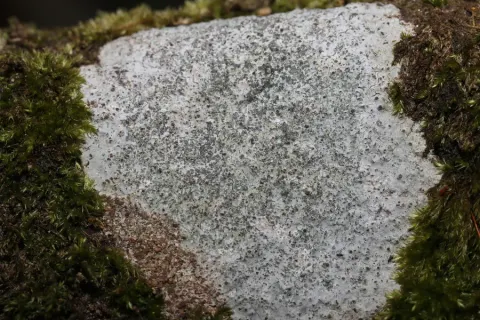
Dokumentasi Porpidia flavicunda menurut asosiasi foto pada record takson iNaturalist. Kredit: Fotografer tidak dicantumkan. Sumber observasi iNaturalist; pengunggah: Alwyn Short. Identitas mengikuti sumber; bukan penentuan spesimen independen.

Jenis
Fotografi
Kredit
Fotografer tidak dicantumkan. Sumber observasi iNaturalist; pengunggah: Alwyn Short
Lisensi
CC0 1.0
Sumber media
Buka entri sumber

Gambar menunjukkan objek menurut identifikasi sumber, bukan verifikasi independen spesimen oleh Fungi. Tidak ada skala baru yang ditambahkan.

Dokumentasi tambahan

06 / Rujukan

Sumber profil

  1. [1] Porpidia flavicunda — Wikipedia (en)Bagian sumber: Frozen revision 1340123867
    Tanggal penghimpunan sumber: 2026-10-12
    Teks sumber: CC BY-SA4.0 · Wikipedia contributors
  2. [2] Catalogue of Life Base2026-09-11 — Porpidia flavicundaBagian sumber: ColDP NameUsage.tsv ID 4LZDV; accepted species; source 2073
    Tanggal penghimpunan sumber: 2026-10-12
  3. [3] Dokumentasi visual — Porpidia flavicundaBagian sumber: Identitas mengikuti sumber dokumentasi; bukan penentuan spesimen independen.
    Tanggal penghimpunan sumber: 2026-10-17
    Media sumber: CC0 1.0 · Fotografer tidak dicantumkan. Sumber observasi iNaturalist; pengunggah: Alwyn Short
  4. [4] Dokumentasi visual — Porpidia flavicundaBagian sumber: Identitas mengikuti sumber dokumentasi; bukan penentuan spesimen independen.
    Tanggal penghimpunan sumber: 2026-10-17
    Teks sumber: CC0 1.0 · no rights reserved

Adaptasi teks: CC BY-SA 4.0. Wikipedia contributors — Porpidia flavicunda — Wikipedia (en)

Uraian asli dan riwayat sumber

Riwayat atau halaman sumber

Ringkasan sumber

Porpidia flavicunda is a species of saxicolous (rock-dwelling) crustose lichen in the family Lecideaceae. This bright yellow-orange lichen forms crusty patches on siliceous rocks, bordered by distinctive narrow black lines, and is dotted with small black disc-shaped fruiting bodies. It has a circumpolar distribution across arctic and boreal regions and is among the most common lichens found growing on rocks in Iceland.

Revisi sumber

Morfologi sumber

Porpidia flavicunda spreads as a bright yellow-orange crust on siliceous rock, each colony neatly bounded by a narrow, black, felt-like line of fungal threads (the prothallus) that keeps neighbouring thalli apart. The surface is usually even, but a hand lens reveals a mosaic of minute that coalesce into a continuous coating. Black fruiting discs (apothecia) commonly pepper the thallus, either singly or gathered in small clusters of up to ten. They begin sunk within the thallus but soon sit on top as shallow bowls, later becoming almost level and finally domed. Crowding causes the outlines to turn from round to irregular. A conspicuous, raised rim made purely of fungal tissue (the ) encircles each disc and persists even on old specimens. The itself is matt to slightly glossy and often dusted with a fine, whitish bloom; in very mature apothecia the centre may split into wrinkled, sterile islands. Microscopically, the clear hymenium stands 85–150 micrometres (μm) tall beneath a thin, olive-tinged brown cap (). Supporting layers grade from pale yellow-brown just below the hymenium to a dark reddish-brown base (). The asci produce smooth, single-celled ascospores measuring 15–19 × 8.5–10 μm that are released to start new colonies. Spot-test chemistry shows confluentic acid as the dominant substance in European material; North American populations sometimes contain stictic and/or norstictic acids instead. No other lichen products are consistently reported.

Revisi sumber

Ekologi sumber

Porpidia flavicunda has a circumpolar arctic and boreal distribution. There are indications P. flavicunda populations frequently spread their propagules to other populations, even on different continents, resulting in low amounts of genetic drift in isolated populations and a higher than expected genetic uniformity between continents. Porpidia flavicunda is among the most common and widely seen lichens in Iceland where it grows on rocks.

Revisi sumber

Struktur reproduksi sumber

Black fruiting discs (apothecia) commonly pepper the thallus, either singly or gathered in small clusters of up to ten. They begin sunk within the thallus but soon sit on top as shallow bowls, later becoming almost level and finally domed. Crowding causes the outlines to turn from round to irregular. A conspicuous, raised rim made purely of fungal tissue (the ) encircles each disc and persists even on old specimens. The itself is matt to slightly glossy and often dusted with a fine, whitish bloom; in very mature apothecia the centre may split into wrinkled, sterile islands. Microscopically, the clear hymenium stands 85–150 micrometres (μm) tall beneath a thin, olive-tinged brown cap (). Supporting layers grade from pale yellow-brown just below the hymenium to a dark reddish-brown base ().

Revisi sumber

Rujukan halaman ini

Fungi. Porpidia flavicunda. Rilis data fungi-2026-10-12-expansion-2. https://fungi-atlas.mgadib.chatgpt.site/jamur/porpidia-flavicunda/.

Status: impor sumber; pemeriksaan editorial per profil belum selesai. Untuk klaim biologis, gunakan rujukan pada bagian terkait dan periksa konteks sumber aslinya.