Ciri dan struktur
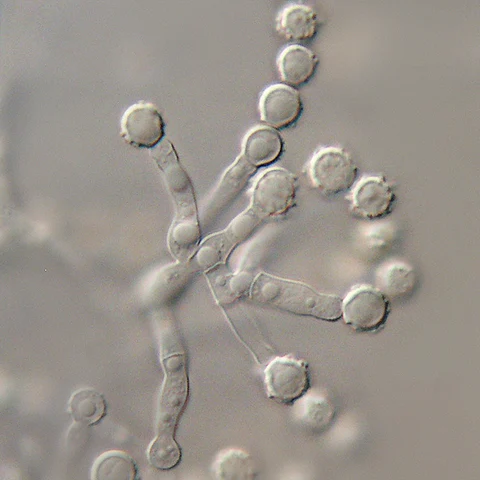
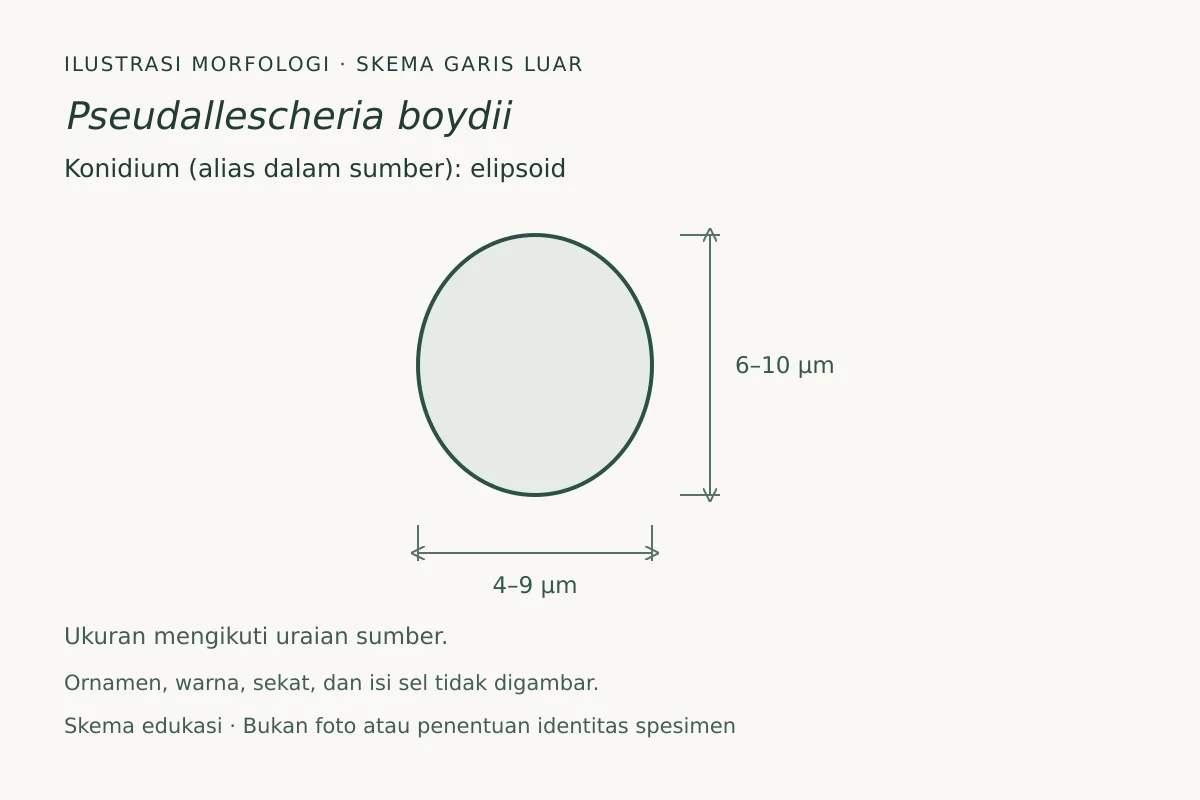
Pseudallescheria boydii is a saprotrophic fungus with broad hyphae growing up to 2–5 μm in width. Colonies change in colour from white to pale brown and develop a cottony texture with maturity. After a 2–3 week incubation period, cleistothecia may form containing asci filled with eight fusiform, one-celled ascospores measuring 12–18 × 9–13 μm in diameter. This fungus grows on most standard media, maturing in 7 days. Its primary nutrients are the sugars xylose, arabinose, glucose, sucrose, ribitol, xylitol and L-arabinitol. It cannot assimilate maltose or lactose; however, it is able to assimilate urea, asparagine, potassium nitrate and ammonium nitrate. The optimal temperature for growth is 25 C and the fungus is generally considered to be mesophilic, although it can grow at higher temperatures (up to 37 C) as well. Asexual reproduction manifests in one of two forms: the Scedosporium type (the most common type) and the Graphium type. Scedosporium apiospermum forms greyish-white colonies with a grey-black reverse. The conidia are single-celled, pale brown and oval in form. Their size ranges from 4–9 x 6–10 μm and their development is annellidic. Detection and diagnosis of S. apiospermum is possible through isolation of the fungus in culture or through cytology and histopathology in the tissues of diseased individuals. In mycetoma-type infections, a confluence of symptoms is necessary for diagnosis, including tumefaction, draining sinuses and extrusion of grains. Furthermore, P. boydii grains and hyphae should be cultured and observed microscopically after staining with H&E, periodic acid–Schiff stain, Tissue Gram or Grocott's methenamine silver stain.
Habitat dan peran ekologis
An ability untuk mentolerir aerasi minimal dan tekanan osmotik tinggi memungkinkan P. boydii untuk tumbuh di tanah, air dan pupuk tercemar dan stagnasi. Although this fungus is commonly found in temperate climates, it is thermotolerant and can survive in tropical climates and in environments with low oxygen pressure. Growth of P. boydii dapat dilihat di lingkungan di mana senyawa yang mengandung nitrogen umum, biasanya karena polusi manusia. Kemampuan untuk menggunakan gas alam dan senyawa organik volatile lainnya menunjukkan kemampuan untuk bioremediasi.
- Habitat atau konteks temuan
- Informasi belum tersedia pada sumber rilis ini.
- Substrat
- tanah
- Peran atau konteks
- Belum dikategorikan pada rilis ini.
Reproduksi
Pseudallescheria boydii is a saprotrophic fungus with broad hyphae growing up to 2–5 μm in width. Colonies change in colour from white to pale brown and develop a cottony texture with maturity. After a 2–3 week incubation period, cleistothecia may form containing asci filled with eight fusiform, one-celled ascospores measuring 12–18 × 9–13 μm in diameter. This fungus grows on most standard media, maturing in 7 days. Its primary nutrients are the sugars xylose, arabinose, glucose, sucrose, ribitol, xylitol and L-arabinitol. It cannot assimilate maltose or lactose; however, it is able to assimilate urea, asparagine, potassium nitrate and ammonium nitrate. The optimal temperature for growth is 25 C and the fungus is generally considered to be mesophilic, although it can grow at higher temperatures (up to 37 C) as well.
Catatan identitas dan cakupan
- Nama diterima mengikuti Catalogue of Life Base2026-09-11; uraian mempertahankan konsep dan nama sumber aslinya.
- Original geographic, specimen and life-cycle scope retained; source import awaits individual editorial review.
- Impor dan terjemahan otomatis belum diperiksa editorial per profil. Struktur reproduktif yang disebutkan tidak membuktikan seluruh siklus hidup diketahui.
- Pengukuran pada uraian mengikuti spesimen, kultur, dan metode sumber; angka tidak diperluas ke semua populasi.
Catatan distribusi dalam narasi mengikuti sumbernya. Dokumentasi spesimen atau foto mengikuti catatan sumber. Bukti wilayah Indonesia dan penilaian konservasi tidak disimpulkan dari gambar.
Melihat dengan konteks
Ilustrasi skematis garis luar konidium (alias dalam sumber) Pseudallescheria boydii, berdasarkan uraian sumber; ukuran yang dilaporkan 4–9 × 6–10 µm dalam urutan sumber. Proporsi disederhanakan, bukan salinan satu spesimen. Ornamen permukaan, warna, sekat, dan isi sel tidak direkonstruksi. Konidium oval pada alias Scedosporium apiospermum yang tercatat untuk profil ini. Ukuran dipertahankan dalam urutan sumber: sumbu pertama 4–9 µm, sumbu kedua 6–10 µm; keduanya tidak dinamai ulang sebagai panjang dan lebar. Ornamen, warna, sekat, dan isi sel tidak digambar. Skema edukasi, bukan alat identifikasi.
- Jenis
- Ilustrasi skematis
- Kredit
- Fungi, ilustrasi orisinal (2026); fakta morfologi berdasarkan Wikipedia contributors
- Lisensi
- CC BY-SA 4.0
- Sumber media
- Buka entri sumber
Sumber profil
- [1] Pseudallescheria boydii — Wikipedia (en)
- [2] Catalogue of Life Base2026-09-11 — Pseudallescheria boydii
Rujukan halaman ini
Fungi. Pseudallescheria boydii. Rilis data fungi-2026-10-12-expansion-2. https://fungi-atlas.mgadib.chatgpt.site/jamur/pseudallescheria-boydii/.
Status: impor sumber; pemeriksaan editorial per profil belum selesai. Untuk klaim biologis, gunakan rujukan pada bagian terkait dan periksa konteks sumber aslinya.