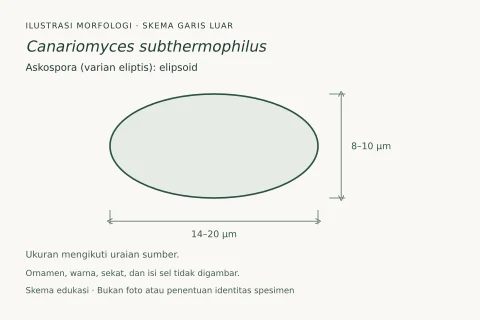
Ciri dan struktur
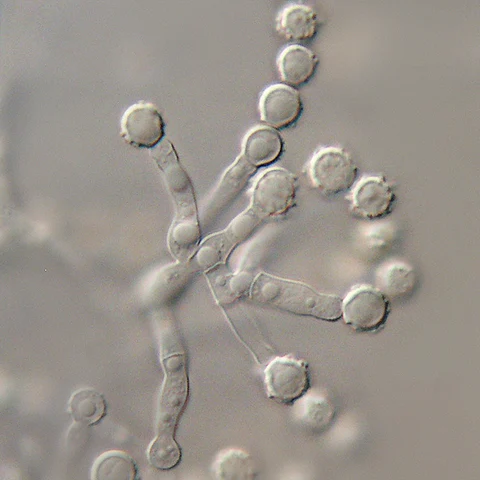
Lomentospora prolificans produces small, delicate annellides with a distinct basal swelling peculiar to this species and absent in the closely related species, Scedosporium apiospermum. Annellides necks become long and distinctly annellated with age. Annellides occur individually or in clusters irregularly along undifferentiated hyphae, frequently exhibiting a pronounced penicillate arrangement in older cultures. Conidia are smooth-walled, light to dark brown, 3–7 x 2–3 μm, accumulating in slime droplets at annelide apices. Colonies of Lomentospora prolificans are grey to brownish, spreading, with scant, cobweb-like aerial mycelium recalling a moth-eaten woolen garment. This species is sensitive to cycloheximide. As this species may be slow to emerge from clinical materials, specimens in which this agent is suspected often require an extended period of culture incubation (e.g., up to 4 weeks).
Habitat dan peran ekologis
Lomentospora prolificans adalah jamur tanah, dan telah ditemukan di tanah tanaman hiasan dan tanaman rumah kaca. Along with jamur lain, Lomentospora prolificans telah diisolasi dari tanah penanaman Ficus benjamina dan Heptapleurum actinophyllum di rumah sakit, menunjukkan bahwa bahan-bahan ini berpotensi berfungsi sebagai gudang dari patogen jamur nosocomial.
- Habitat atau konteks temuan
- Informasi belum tersedia pada sumber rilis ini.
- Substrat
- Informasi belum tersedia pada sumber rilis ini.
- Peran atau konteks
- Belum dikategorikan pada rilis ini.
Reproduksi
Lomentospora prolificans produces small, delicate annellides with a distinct basal swelling peculiar to this species and absent in the closely related species, Scedosporium apiospermum. Annellides necks become long and distinctly annellated with age. Annellides occur individually or in clusters irregularly along undifferentiated hyphae, frequently exhibiting a pronounced penicillate arrangement in older cultures. Conidia are smooth-walled, light to dark brown, 3–7 x 2–3 μm, accumulating in slime droplets at annelide apices. Colonies of Lomentospora prolificans are grey to brownish, spreading, with scant, cobweb-like aerial mycelium recalling a moth-eaten woolen garment. This species is sensitive to cycloheximide.
Catatan identitas dan cakupan
- Nama diterima mengikuti Catalogue of Life Base2026-09-11; uraian mempertahankan konsep dan nama sumber aslinya.
- Original geographic, specimen and life-cycle scope retained; source import awaits individual editorial review.
- Impor dan terjemahan otomatis belum diperiksa editorial per profil. Struktur reproduktif yang disebutkan tidak membuktikan seluruh siklus hidup diketahui.
- Pengukuran pada uraian mengikuti spesimen, kultur, dan metode sumber; angka tidak diperluas ke semua populasi.
Catatan distribusi dalam narasi mengikuti sumbernya. Dokumentasi spesimen atau foto mengikuti catatan sumber. Bukti wilayah Indonesia dan penilaian konservasi tidak disimpulkan dari gambar.
Melihat dengan konteks
Dokumentasi visual yang memenuhi pemeriksaan subjek dan hak penggunaan belum tersedia. Foto gejala, label, dan gambar yang meragukan tidak dihitung.
Sumber profil
- [1] Lomentospora prolificans — Wikipedia (en)
- [2] Catalogue of Life Base2026-09-11 — Scedosporium prolificans
Rujukan halaman ini
Fungi. Scedosporium prolificans. Rilis data fungi-2026-10-12-expansion-2. https://fungi-atlas.mgadib.chatgpt.site/jamur/scedosporium-prolificans/.
Status: impor sumber; pemeriksaan editorial per profil belum selesai. Untuk klaim biologis, gunakan rujukan pada bagian terkait dan periksa konteks sumber aslinya.