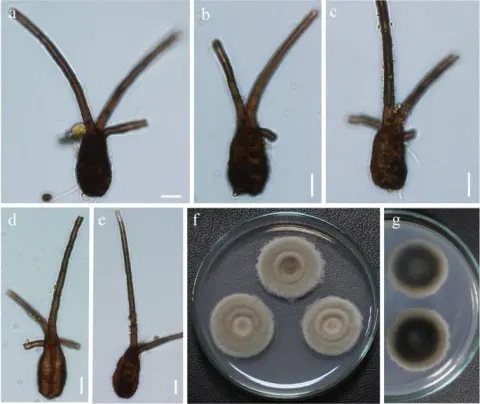
Ciri dan struktur
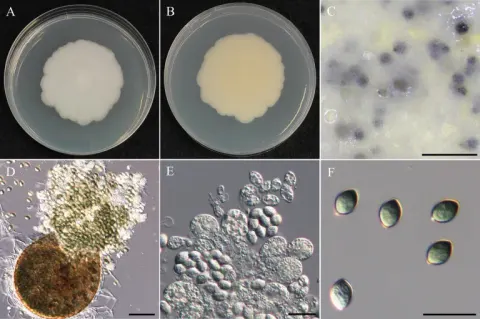
Most of the disease cycle for Pyrenochaeta lycopersici is not completely understood. P. lycopersici is an ascomycete that has not been observed to have a teleomorph stage. It has been discovered that the pathogen is capable of producing pycnidia that produce conidia on conidiophores within the pycnidia. Once the environment becomes favorable for the pathogen growth, germination will occur in microsclerotia that leads to the production of hyphae. The hyphae will penetrate and infect host roots through the epidermal cells. Approximately 48 hours after the primary infection, the infected cells begin to die, causing symptoms including necrosis. P. lycopersici keeps infecting neighboring cells until the roots are completely colonized, and corky root lesions can be observed upon its completion.
Habitat dan peran ekologis
Tuan rumah yang paling rentan terhadap Pyrenochaeta lycopersici adalah tomat, tetapi patogen juga dapat menginfeksi dan menyebabkan kerusakan pada anggota keluarga Solanaceae and Cucurbitaceae such seperti lada, terong, mentimun dan melon. Keinginan, terlambat dan kurangnya kekuatan dapat diamati sebagai gejala utama, dan daun yang terinfeksi mungkin menunjukkan kloroid interveinal yang menyebabkan pelepasan prematur. Karakteristik khas P. lycopersici adalah bahwa ia menyebabkan lesi cokelat di permukaan akar medium yang dikenal sebagai kutu akar cokelat. Hasil ini sering diikuti oleh kegagalan akar yang menyebabkan penurunan hasil tomat.
- Habitat atau konteks temuan
- Informasi belum tersedia pada sumber rilis ini.
- Substrat
- Informasi belum tersedia pada sumber rilis ini.
- Peran atau konteks
- Belum dikategorikan pada rilis ini.
Reproduksi
Most of the disease cycle for Pyrenochaeta lycopersici is not completely understood. P. lycopersici is an ascomycete that has not been observed to have a teleomorph stage. It has been discovered that the pathogen is capable of producing pycnidia that produce conidia on conidiophores within the pycnidia. Once the environment becomes favorable for the pathogen growth, germination will occur in microsclerotia that leads to the production of hyphae. The hyphae will penetrate and infect host roots through the epidermal cells. Approximately 48 hours after the primary infection, the infected cells begin to die, causing symptoms including necrosis. P. lycopersici keeps infecting neighboring cells until the roots are completely colonized, and corky root lesions can be observed upon its completion.
Catatan identitas dan cakupan
- Nama diterima mengikuti Catalogue of Life Base2026-09-11; uraian mempertahankan konsep dan nama sumber aslinya.
- Original geographic, specimen and life-cycle scope retained; source import awaits individual editorial review.
- Impor dan terjemahan otomatis belum diperiksa editorial per profil. Struktur reproduktif yang disebutkan tidak membuktikan seluruh siklus hidup diketahui.
- Pengukuran pada uraian mengikuti spesimen, kultur, dan metode sumber; angka tidak diperluas ke semua populasi.
Catatan distribusi dalam narasi mengikuti sumbernya. Dokumentasi spesimen atau foto mengikuti catatan sumber. Bukti wilayah Indonesia dan penilaian konservasi tidak disimpulkan dari gambar.
Melihat dengan konteks
Dokumentasi visual yang memenuhi pemeriksaan subjek dan hak penggunaan belum tersedia. Foto gejala, label, dan gambar yang meragukan tidak dihitung.
Sumber profil
- [1] Pyrenochaeta lycopersici — Wikipedia (en)
- [2] Catalogue of Life Base2026-09-11 — Pseudopyrenochaeta lycopersici
Rujukan halaman ini
Fungi. Pseudopyrenochaeta lycopersici. Rilis data fungi-2026-10-12-expansion-2. https://fungi-atlas.mgadib.chatgpt.site/jamur/pseudopyrenochaeta-lycopersici/.
Status: impor sumber; pemeriksaan editorial per profil belum selesai. Untuk klaim biologis, gunakan rujukan pada bagian terkait dan periksa konteks sumber aslinya.