Ciri dan struktur
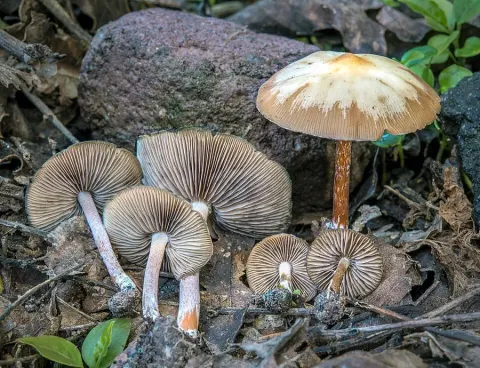
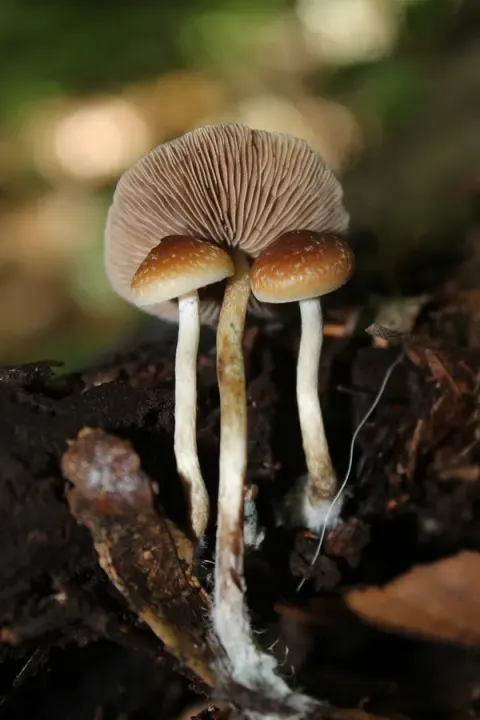
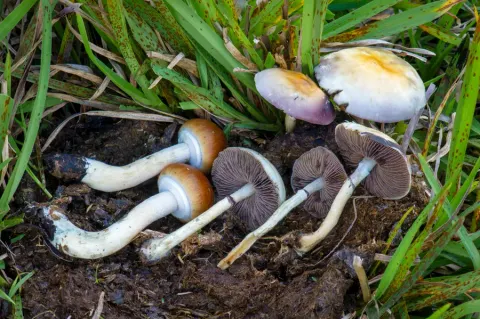
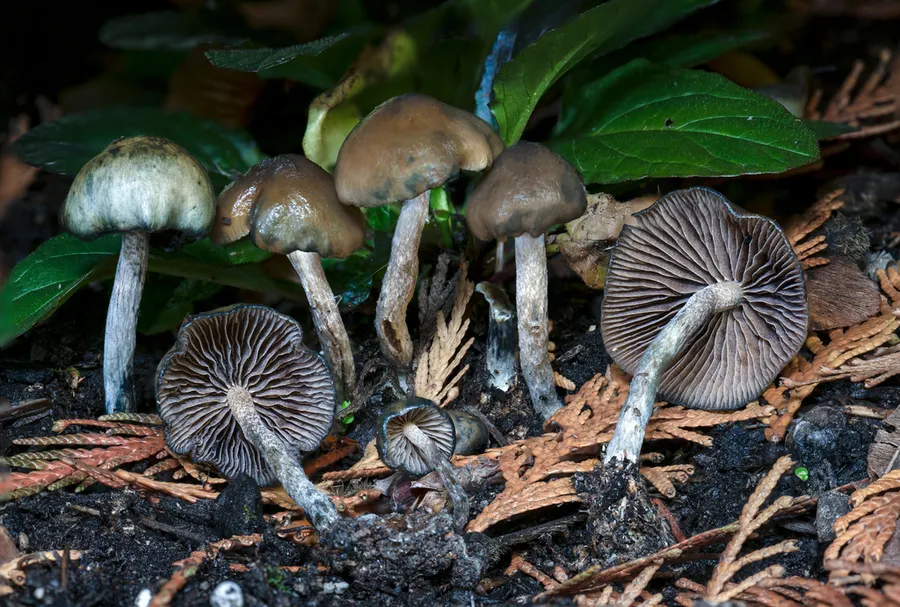
Pileas: The cap is 15 - 55 mm in diameter and conic to obtusely conic to convex. The cap margin is turned inwards when young, rarely becoming plane in age, often distinctly rippled, translucent-striate and bruising and aging greenish-bluish about the margin. It is dark olive brown to buff brown in color, occasionally steel blue; when dried it tends toward copper brown in the center. It is hygrophanous, fading to milk white, and viscid when moist from a gelatinous pellicle, usually separable. The flesh is thin and bruises blue easily. Gills: The gills are close with adnate to sinuate attachment and are grayish to cinnamon brown, with the edges remaining pallid. Spore Print: dark purplish brown Stipe: The stipe is 5 - 7 cm long, 2 - 3 mm thick, and equal to subequal. The color is pallid to brownish with white filaments, while often more yellowish towards the apex. Distinct rhizomorphs are found at the base. The stipe is brittle, stuffed with loose fibers, and the partial veil is evanescent and rapidly becomes indistinguishable. Taste: farinaceous Odor: farinaceous Stain: It stains blue easily where damaged. Psilocybe baeocystis spores are dark purplish brown in deposit, oblong in face view or asymmetric ellipsoid (mango form) in side view, and are (8.5) 9.5–13.7(17) x (5) 5.5–6.6(7.1) μm. The basidia are 4-spored, and pleurocystidia are absent. The cheilocystidia are 20–30(40) x 4.5–6(9) μm and fusiod with a narrow neck. This species closely resembles subtropical Psilocybe aztecorum and Psilocybe quebecensis, which also have caps that bleach in color to white when dry.
Habitat dan peran ekologis
Psilocybe baeocystis is solitary to cespitose, and scattered to numerous on ground bark, wood chips, peat moss, decaying conifer mulch, occasionally on lawns, pastures, and rarely in coniferous forests. Often found growing under plants like rhododendrons and rose bushes in mulched garden beds, sometimes growing amongst other Psilocybe species such as Psilocybe stuntzii and Psilocybe cyanescens. Psilocybe baeocystis grows from August through December, and rarely as early as the end of June. Psilocybe baeocystis is a hemiboreal mushroom, common throughout the Pacific Northwest.
- Habitat atau konteks temuan
- hutan
- Substrat
- Informasi belum tersedia pada sumber rilis ini.
- Peran atau konteks
- Belum dikategorikan pada rilis ini.
Reproduksi
Pileas: The cap is 15 - 55 mm in diameter and conic to obtusely conic to convex. The cap margin is turned inwards when young, rarely becoming plane in age, often distinctly rippled, translucent-striate and bruising and aging greenish-bluish about the margin. It is dark olive brown to buff brown in color, occasionally steel blue; when dried it tends toward copper brown in the center. It is hygrophanous, fading to milk white, and viscid when moist from a gelatinous pellicle, usually separable. The flesh is thin and bruises blue easily. Gills: The gills are close with adnate to sinuate attachment and are grayish to cinnamon brown, with the edges remaining pallid. Spore Print: dark purplish brown Stipe: The stipe is 5 - 7 cm long, 2 - 3 mm thick, and equal to subequal.
Catatan identitas dan cakupan
- Nama diterima mengikuti Catalogue of Life Base2026-09-11; uraian mempertahankan konsep dan nama sumber aslinya.
- Original geographic, specimen and life-cycle scope retained; source import awaits individual editorial review.
- Impor dan terjemahan otomatis belum diperiksa editorial per profil. Struktur reproduktif yang disebutkan tidak membuktikan seluruh siklus hidup diketahui.
- Pengukuran pada uraian mengikuti spesimen, kultur, dan metode sumber; angka tidak diperluas ke semua populasi.
Catatan distribusi dalam narasi mengikuti sumbernya. Dokumentasi spesimen atau foto mengikuti catatan sumber. Bukti wilayah Indonesia dan penilaian konservasi tidak disimpulkan dari gambar.
Melihat dengan konteks
Dokumentasi Psilocybe baeocystis menurut asosiasi foto pada record takson iNaturalist. Kredit: Alan Rockefeller. Identitas mengikuti sumber; bukan penentuan spesimen independen.
- Jenis
- Fotografi
- Kredit
- (c) Alan Rockefeller, some rights reserved (CC BY), uploaded by Alan Rockefeller
- Lisensi
- CC BY 4.0
- Sumber media
- Buka entri sumber
Dokumentasi tambahan
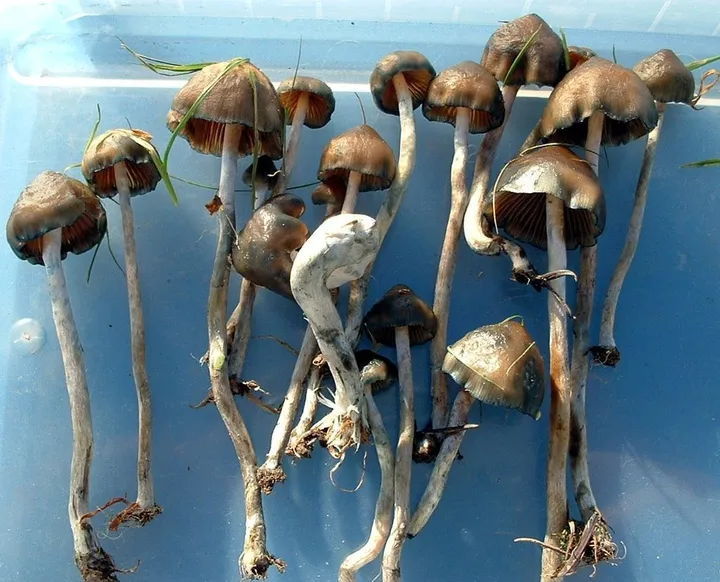
Foto yang diasosiasikan dengan Psilocybe baeocystis pada iNaturalist. Identifikasi mengikuti sumber; bukan penentuan spesimen independen.
Kredit dan penggunaan
(c) Alan Rockefeller, some rights reserved (CC BY), uploaded by Alan Rockefeller
Ukuran dan format gambar disesuaikan tanpa pemotongan, retus, atau penambahan skala. Lisensi sumber dipertahankan.
Sumber profil
- [1] Psilocybe baeocystis — Wikipedia (en)
- [2] Catalogue of Life Base2026-09-11 — Psilocybe baeocystis
- [3] Dokumentasi visual — Psilocybe baeocystis
- [4] Dokumentasi visual — Psilocybe baeocystis
Rujukan halaman ini
Fungi. Psilocybe baeocystis. Rilis data fungi-2026-10-12-expansion-2. https://fungi-atlas.mgadib.chatgpt.site/jamur/psilocybe-baeocystis/.
Status: impor sumber; pemeriksaan editorial per profil belum selesai. Untuk klaim biologis, gunakan rujukan pada bagian terkait dan periksa konteks sumber aslinya.