Ciri dan struktur
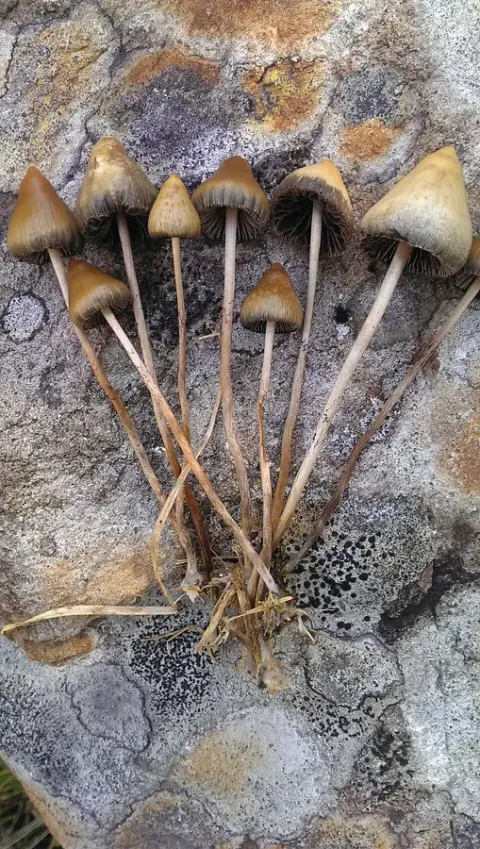
The cap of P. pelliculosa is initially sharply cone-shaped, and expands slightly over time to become broadly bell-shaped, but it never expands to become completely flat. The cap margin is pressed against the stem initially, and for a short time is appendiculate (has partial veil fragments hanging from the margin). The caps of mature specimens are smooth, sticky, and have translucent radial striations that reach dimensions of 0.8 to 2 cm in diameter. The color ranges from umber to isabella (dark dingy yellow-brown) when the mushroom is moist, and changes to pinkish-buff when dry. The cap margin can have a greenish-gray tinge. The cap cuticle is a thin gelatinous covering that can be peeled off. The gills have an adnate attachment to the cap, are narrow to moderately broad, closely spaced, and eventually separate from the stem. Young gills are cinnamon-brown in color, with lighter edges, but darken in maturity because they become covered with the dark spores. The stem is 6 to 8 cm long by 1.5 to 2 mm thick, and roughly equal in width throughout except for a slightly enlarged base; rather pliant but rigid. The lower region of the stem is brownish in color and has silky fibrils pressed against the stem; the upper region is grayish and pruinose (lightly dusted with powdery white granules). The flesh turns slightly bluish or greenish where it has been injured. The application of a drop of dilute potassium hydroxide solution on the cap or flesh will cause a color change to pale to dark yellowish to reddish brown; a drop on the stem produces a less intense or no color change. The spore print is purplish brown.
Habitat dan peran ekologis
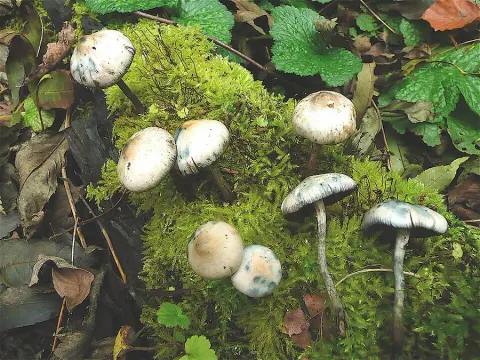
The fruit bodies of P. pelliculosa grow in groups or clusters on moss, forest debris, and humus in coniferous forests. it is not commonly found in grasslands. Hal ini diketahui dari Pasifik Northwest region dari Utara America where telah dikumpulkan di California, Idaho, Oregon, Washington, dan ia didistribusikan secara luas di British Columbia, Kanada. Ia juga ditemukan di Eropa utara, koleksi tunggal dari Finlandia. Jamur ini sering menghasilkan buah di sepanjang jalur hutan dan jalan-jalan pemanenan kayu yang ditinggalkan di mana pohon alders dan pohon fir tumbuh. Fruit bodies cenderung muncul pada akhir musim panas hingga awal musim dingin setelah cuaca dingin dan basah.
- Habitat atau konteks temuan
- hutan
- Substrat
- Informasi belum tersedia pada sumber rilis ini.
- Peran atau konteks
- Belum dikategorikan pada rilis ini.
Reproduksi
The gills have an adnate attachment to the cap, are narrow to moderately broad, closely spaced, and eventually separate from the stem. Young gills are cinnamon-brown in color, with lighter edges, but darken in maturity because they become covered with the dark spores. The stem is 6 to 8 cm long by 1.5 to 2 mm thick, and roughly equal in width throughout except for a slightly enlarged base; rather pliant but rigid. The lower region of the stem is brownish in color and has silky fibrils pressed against the stem; the upper region is grayish and pruinose (lightly dusted with powdery white granules). The flesh turns slightly bluish or greenish where it has been injured. The application of a drop of dilute potassium hydroxide solution on the cap or flesh will cause a color change to pale to dark yellowish to reddish brown; a drop on the stem produces a less intense or no color change.
Catatan identitas dan cakupan
- Nama diterima mengikuti Catalogue of Life Base2026-09-11; uraian mempertahankan konsep dan nama sumber aslinya.
- Original geographic, specimen and life-cycle scope retained; source import awaits individual editorial review.
- Impor dan terjemahan otomatis belum diperiksa editorial per profil. Struktur reproduktif yang disebutkan tidak membuktikan seluruh siklus hidup diketahui.
- Pengukuran pada uraian mengikuti spesimen, kultur, dan metode sumber; angka tidak diperluas ke semua populasi.
Catatan distribusi dalam narasi mengikuti sumbernya. Dokumentasi spesimen atau foto mengikuti catatan sumber. Bukti wilayah Indonesia dan penilaian konservasi tidak disimpulkan dari gambar.
Melihat dengan konteks
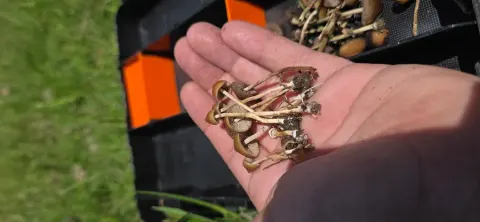
Dokumentasi Psilocybe pelliculosa menurut asosiasi foto pada record takson iNaturalist. Kredit: Alan Rockefeller. Identitas mengikuti sumber; bukan penentuan spesimen independen.
- Jenis
- Fotografi
- Kredit
- (c) Alan Rockefeller, some rights reserved (CC BY), uploaded by Alan Rockefeller
- Lisensi
- CC BY 4.0
- Sumber media
- Buka entri sumber
Dokumentasi tambahan
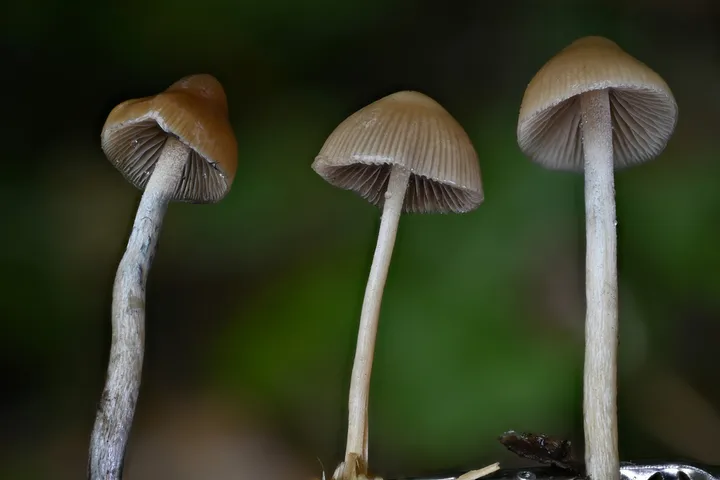
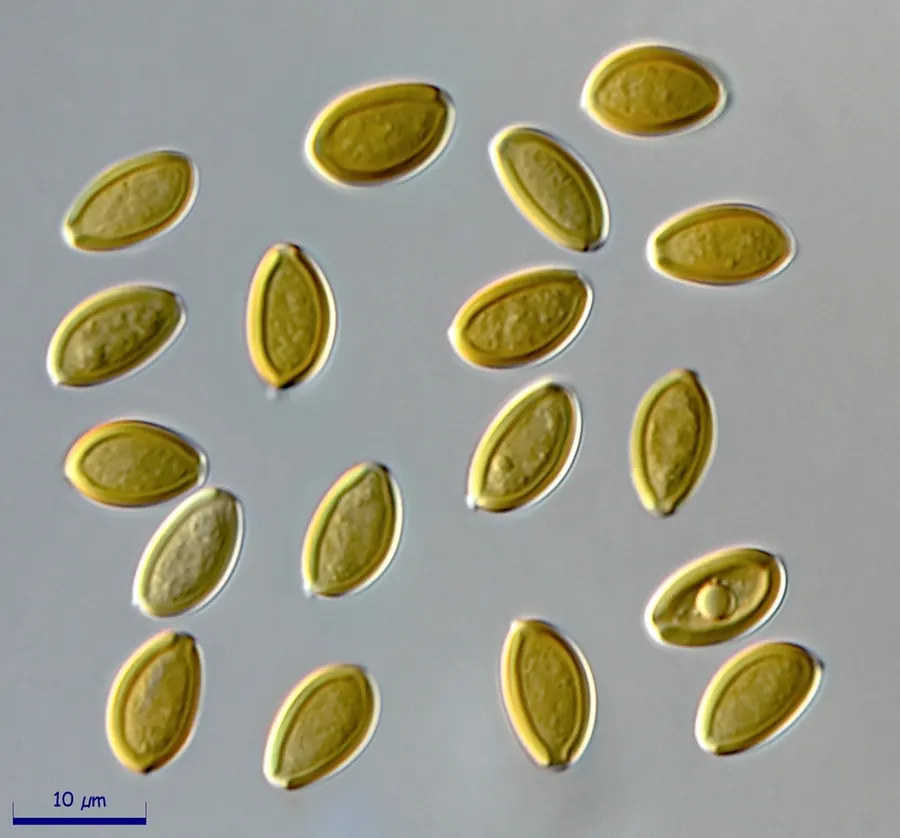
Foto yang diasosiasikan dengan Psilocybe pelliculosa pada iNaturalist. Identifikasi mengikuti sumber; bukan penentuan spesimen independen.
Kredit dan penggunaan
(c) Alan Rockefeller, some rights reserved (CC BY), uploaded by Alan Rockefeller
Ukuran dan format gambar disesuaikan tanpa pemotongan, retus, atau penambahan skala. Lisensi sumber dipertahankan.
Sumber profil
- [1] Psilocybe pelliculosa — Wikipedia (en)
- [2] Catalogue of Life Base2026-09-11 — Psilocybe pelliculosa
- [3] Dokumentasi visual — Psilocybe pelliculosa
- [4] Dokumentasi visual — Psilocybe pelliculosa
Rujukan halaman ini
Fungi. Psilocybe pelliculosa. Rilis data fungi-2026-10-12-expansion-2. https://fungi-atlas.mgadib.chatgpt.site/jamur/psilocybe-pelliculosa/.
Status: impor sumber; pemeriksaan editorial per profil belum selesai. Untuk klaim biologis, gunakan rujukan pada bagian terkait dan periksa konteks sumber aslinya.