01 / Morfologi

Ciri dan struktur

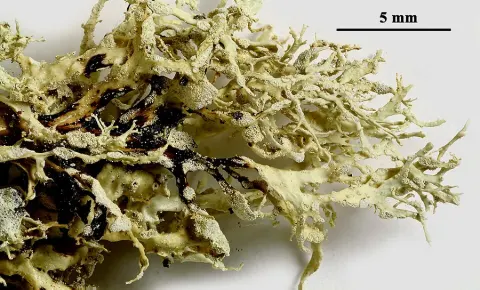
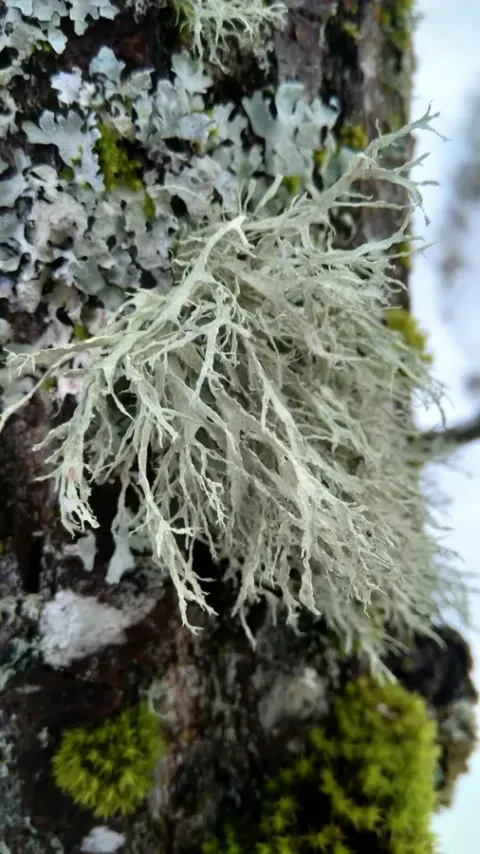
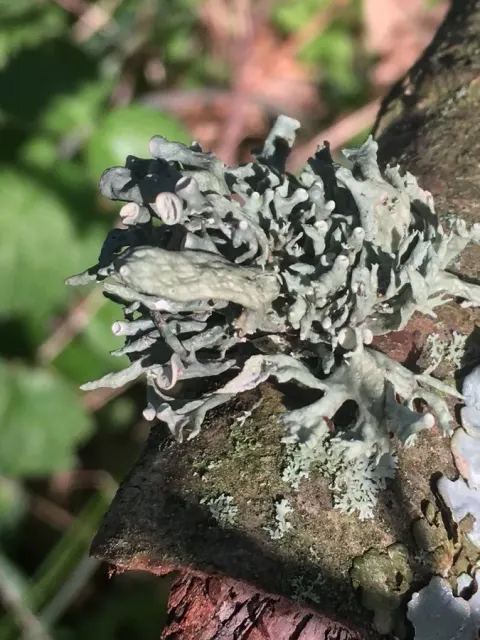
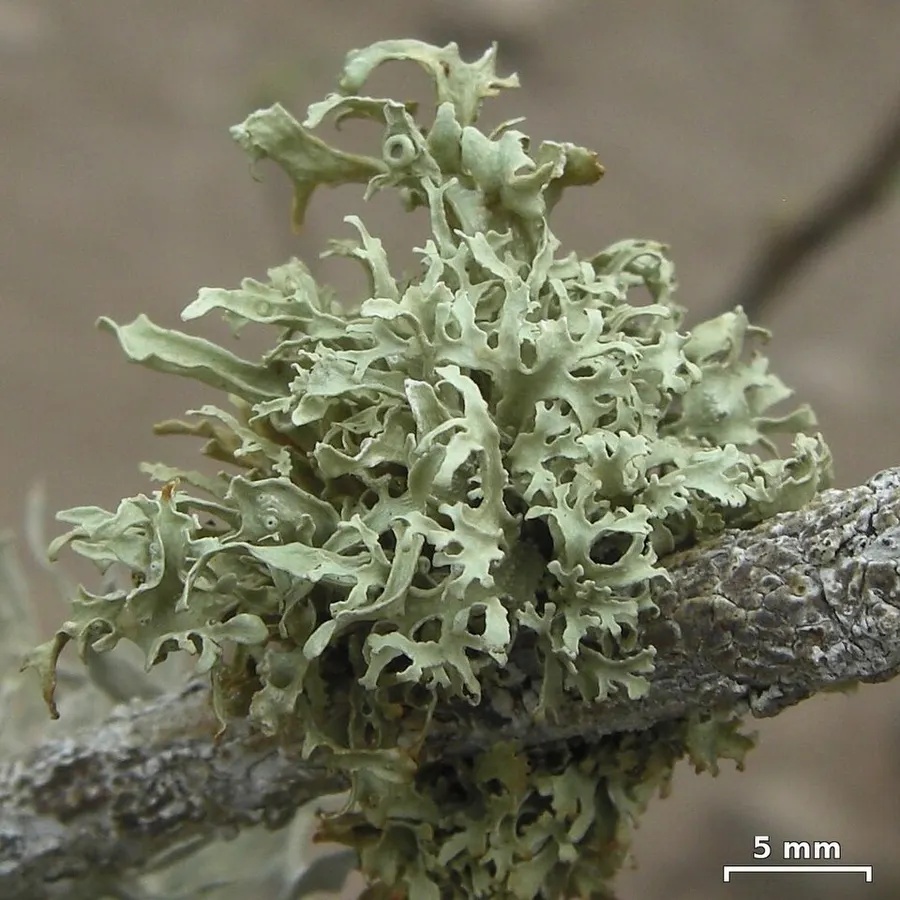
Ramalina darwiniana has a shrubby, greenish-grey thallus that can grow up to 15 cm in diameter, although most individuals are typically smaller, ranging between 3 and 7 cm. Its branches start off erect but become pendulous as the lichen ages. These branches are distinctly grooved and can vary from broadly crescent-shaped to somewhat flattened in cross-section. In some cases, the branches curve along their length, with their tips curling backward in a characteristic "shepherd's crook" appearance. The margins of the are adorned with irregular warts, from which small, dot-like structures called pseudocyphellae may develop. Unlike some other Ramalina species, R. darwiniana lacks soralia (specialised structures that produce powdery reproductive propagules). The species is known for its distinctive lobes, which can occasionally fuse (anastomose), forming small, oval holes within the thallus. Apothecia (fruiting bodies) are quite common in this species. These structures measure between 2 and 7 mm in diameter and are often cup-shaped, located either along the edges or at the ends of the branches. The apothecia are generally pinkish-grey to yellowish in colour. The , produced within the apothecia, are elongated and slightly curved, measuring around 10–12 by 4–5 μm. In addition to apothecia, R. darwiniana has small, spherical pycnidia (structures that produce asexual spores), which are found along the margins of the branches. In terms of chemical properties, the medulla (inner layer) of the lichen reacts positively to potassium hydroxide solution (K+), turning orange-yellow and then red, indicating the presence of salazinic acid.

Sebagian uraian ditampilkan dalam bahasa sumber; terjemahannya belum tersedia atau belum lolos pemeriksaan.

Rujukan: [1]

Pengukuran mengikuti objek, spesimen atau kultur, dan metode yang disebutkan sumber. Baca uraian asli untuk konteks lengkap.

02 / Kehidupan

Habitat dan peran ekologis

Ramalina darwiniana is endemic to the Galápagos Islands, where it is found primarily in the coastal and arid zones. It typically grows on the bark and twigs of shrubs and trees, particularly in dry forests and open shrublands that are characteristic of the scrubland mosaic ecosystem. The lichen is corticolous (growing on bark) or lignicolous (growing on wood), though it has occasionally been observed on rocks (saxicolous) in some areas. The species thrives in exposed, sunny environments, often subjected to wind and rain. It can be found at low elevations, typically between 1 and 250 metres above sea level, across various islands, including Santa Cruz, Santiago, Isabela, and Española. Common host trees for R. darwiniana include Bursera graveolens, Castela galapageia, and Acacia rorudiana. R. darwiniana is well adapted to the harsh conditions of the Galápagos, particularly in areas with sparse vegetation, basalt outcrops, and dry conditions. It is often abundant in these habitats, covering twigs and branches in areas where other lichen species are also found.

Sebagian uraian ditampilkan dalam bahasa sumber; terjemahannya belum tersedia atau belum lolos pemeriksaan.

Rujukan: [1]

Habitat atau konteks temuan
hutan
Substrat
kayu; kulit kayu
Peran atau konteks
Pembentuk liken
Temukan hubungan serupa
03 / Siklus hidup

Reproduksi

The margins of the are adorned with irregular warts, from which small, dot-like structures called pseudocyphellae may develop. Unlike some other Ramalina species, R. darwiniana lacks soralia (specialised structures that produce powdery reproductive propagules). The species is known for its distinctive lobes, which can occasionally fuse (anastomose), forming small, oval holes within the thallus. Apothecia (fruiting bodies) are quite common in this species. These structures measure between 2 and 7 mm in diameter and are often cup-shaped, located either along the edges or at the ends of the branches. The apothecia are generally pinkish-grey to yellowish in colour. The , produced within the apothecia, are elongated and slightly curved, measuring around 10–12 by 4–5 μm.

Sebagian uraian ditampilkan dalam bahasa sumber; terjemahannya belum tersedia atau belum lolos pemeriksaan.

Rujukan: [1]

Sinonim menurut acuan taksonomi rilis: Ramalina darwiniana var. curvida
04 / Batas informasi

Catatan identitas dan cakupan

  • Nama diterima mengikuti Catalogue of Life Base2026-09-11; uraian mempertahankan konsep dan nama sumber aslinya.
  • Original geographic, specimen and life-cycle scope retained; source import awaits individual editorial review.
  • Impor dan terjemahan otomatis belum diperiksa editorial per profil. Struktur reproduktif yang disebutkan tidak membuktikan seluruh siklus hidup diketahui.
  • Pengukuran pada uraian mengikuti spesimen, kultur, dan metode sumber; angka tidak diperluas ke semua populasi.

Catatan distribusi dalam narasi mengikuti sumbernya. Dokumentasi spesimen atau foto mengikuti catatan sumber. Bukti wilayah Indonesia dan penilaian konservasi tidak disimpulkan dari gambar.

05 / Dokumentasi

Melihat dengan konteks

Dokumentasi Ramalina darwiniana dari Wikimedia Commons. (endemic species) on branches, Fondeadero, Santa Fe Island, Galápagos, 20130131-18 Identifikasi mengikuti record berkas sumber.

Jenis
Fotografi
Kredit
Jason Hollinger
Lisensi
CC BY 2.0
Sumber media
Buka entri sumber

Gambar menunjukkan objek menurut identifikasi sumber, bukan verifikasi independen spesimen oleh Fungi. Tidak ada skala baru yang ditambahkan.

06 / Rujukan

Sumber profil

  1. [1] Ramalina darwiniana — Wikipedia (en)Bagian sumber: Frozen revision 1338939204
    Tanggal penghimpunan sumber: 2026-10-12
    Teks sumber: CC BY-SA4.0 · Wikipedia contributors
  2. [2] Catalogue of Life Base2026-09-11 — Ramalina darwinianaBagian sumber: ColDP NameUsage.tsv ID 4RBFD; accepted species; source 2073
    Tanggal penghimpunan sumber: 2026-10-12
  3. [3] Dokumentasi visual — Ramalina darwinianaBagian sumber: Individual media record; identification follows the source, not independent determination
    Tanggal penghimpunan sumber: 2026-10-12
    Media sumber: CC BY 2.0 · Jason Hollinger

Adaptasi teks: CC BY-SA 4.0. Wikipedia contributors — Ramalina darwiniana — Wikipedia (en)

Uraian asli dan riwayat sumber

Riwayat atau halaman sumber

Ringkasan sumber

Ramalina darwiniana is a species of strap lichen in the family Ramalinaceae. Found only in the Galápagos Islands, it was first described in 2007 and named in honour of Charles Darwin's work on the archipelago's biodiversity. This shrub-like lichen grows up to 15 centimetres wide and is typically found on tree bark or wood in coastal and arid areas of the islands. It is characterised by its greenish-grey colour, grooved branches that often curl at the tips, and the occasional presence of small holes where branches fuse together.

Revisi sumber

Morfologi sumber

Ramalina darwiniana has a shrubby, greenish-grey thallus that can grow up to 15 cm in diameter, although most individuals are typically smaller, ranging between 3 and 7 cm. Its branches start off erect but become pendulous as the lichen ages. These branches are distinctly grooved and can vary from broadly crescent-shaped to somewhat flattened in cross-section. In some cases, the branches curve along their length, with their tips curling backward in a characteristic "shepherd's crook" appearance. The margins of the are adorned with irregular warts, from which small, dot-like structures called pseudocyphellae may develop. Unlike some other Ramalina species, R. darwiniana lacks soralia (specialised structures that produce powdery reproductive propagules). The species is known for its distinctive lobes, which can occasionally fuse (anastomose), forming small, oval holes within the thallus. Apothecia (fruiting bodies) are quite common in this species. These structures measure between 2 and 7 mm in diameter and are often cup-shaped, located either along the edges or at the ends of the branches. The apothecia are generally pinkish-grey to yellowish in colour. The , produced within the apothecia, are elongated and slightly curved, measuring around 10–12 by 4–5 μm. In addition to apothecia, R. darwiniana has small, spherical pycnidia (structures that produce asexual spores), which are found along the margins of the branches. In terms of chemical properties, the medulla (inner layer) of the lichen reacts positively to potassium hydroxide solution (K+), turning orange-yellow and then red, indicating the presence of salazinic acid.

Revisi sumber

Ekologi sumber

Ramalina darwiniana is endemic to the Galápagos Islands, where it is found primarily in the coastal and arid zones. It typically grows on the bark and twigs of shrubs and trees, particularly in dry forests and open shrublands that are characteristic of the scrubland mosaic ecosystem. The lichen is corticolous (growing on bark) or lignicolous (growing on wood), though it has occasionally been observed on rocks (saxicolous) in some areas. The species thrives in exposed, sunny environments, often subjected to wind and rain. It can be found at low elevations, typically between 1 and 250 metres above sea level, across various islands, including Santa Cruz, Santiago, Isabela, and Española. Common host trees for R. darwiniana include Bursera graveolens, Castela galapageia, and Acacia rorudiana. R. darwiniana is well adapted to the harsh conditions of the Galápagos, particularly in areas with sparse vegetation, basalt outcrops, and dry conditions. It is often abundant in these habitats, covering twigs and branches in areas where other lichen species are also found.

Revisi sumber

Struktur reproduksi sumber

The margins of the are adorned with irregular warts, from which small, dot-like structures called pseudocyphellae may develop. Unlike some other Ramalina species, R. darwiniana lacks soralia (specialised structures that produce powdery reproductive propagules). The species is known for its distinctive lobes, which can occasionally fuse (anastomose), forming small, oval holes within the thallus. Apothecia (fruiting bodies) are quite common in this species. These structures measure between 2 and 7 mm in diameter and are often cup-shaped, located either along the edges or at the ends of the branches. The apothecia are generally pinkish-grey to yellowish in colour. The , produced within the apothecia, are elongated and slightly curved, measuring around 10–12 by 4–5 μm.

Revisi sumber

Rujukan halaman ini

Fungi. Ramalina darwiniana. Rilis data fungi-2026-10-12-expansion-2. https://fungi-atlas.mgadib.chatgpt.site/jamur/ramalina-darwiniana/.

Status: impor sumber; pemeriksaan editorial per profil belum selesai. Untuk klaim biologis, gunakan rujukan pada bagian terkait dan periksa konteks sumber aslinya.