Ciri dan struktur
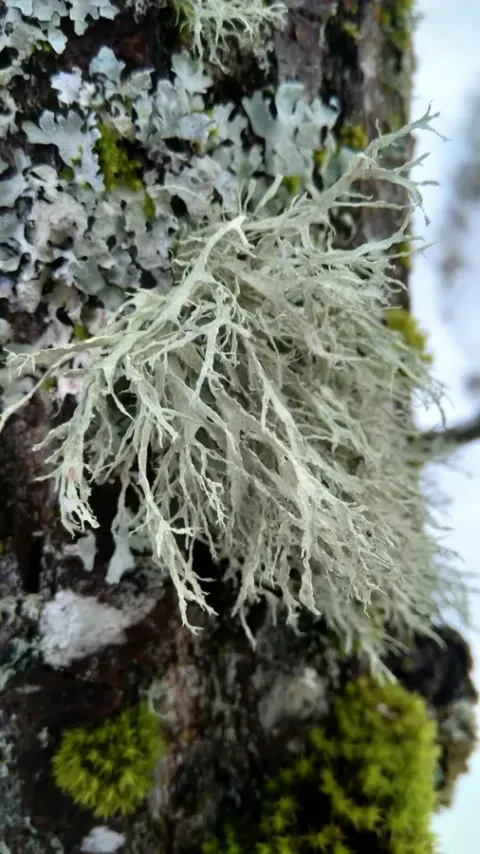
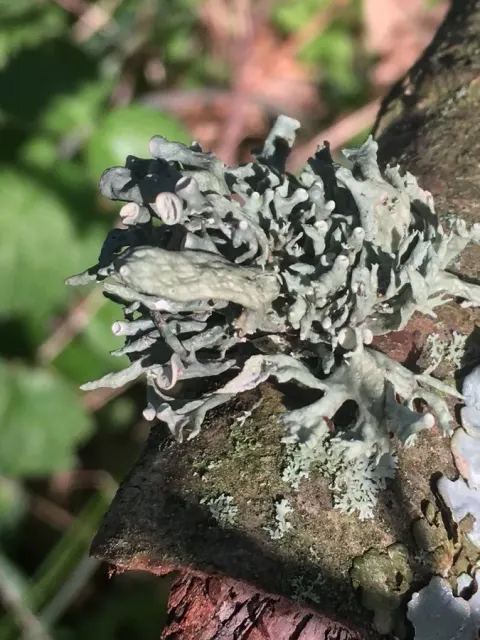
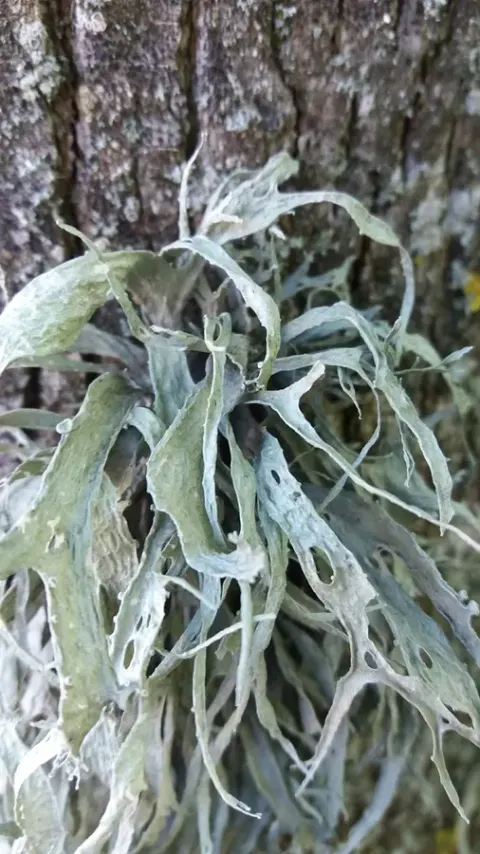
Ramalina europaea is a fruticose (bushy or shrubby) lichen with a pale yellow-green thallus, which can grow up to 4–6 cm tall. The branches are narrow, angular to flattened, and are typically 1–2 mm wide. These branches lack a central cord, a feature that distinguishes species in the genus Ramalina from similar lichens in genera such as Usnea and Evernia. A key identifying feature of Ramalina europaea is its soralia, which are the reproductive structures that produce soredia—a powdery mix of fungal and algal cells used for asexual reproduction. The soralia are small and (dot-like), often appearing at the ends of spine-like branchlets. They are typically 0.1–0.5 mm in diameter and can develop both terminally (at the tips of the branches) and subterminally (just below the tips). The soralia start off granular, eventually becoming more extensive as they spread over the branch surface. R. europaea typically develops ovoid excavate depressions on its lower surface, which are a key identifying feature. When the species grows on rocks (saxicolous), these depressions are much smaller than those observed in specimens growing on trees (epiphytic), though they remain present and identifiable. This species contains two main secondary metabolites: usnic acid, responsible for its light green colour, and evernic acid. These compounds can be identified using thin-layer chromatography, a technique often used to analyse lichen chemistry. Unlike many other lichens, Ramalina europaea does not form apothecia, which are the sexual fruiting bodies responsible for releasing spores. Instead, this species reproduces entirely through its soredia, which are dispersed by wind or rain to new surfaces, where they can establish and grow.
Habitat dan peran ekologis
Ramalina europaea is widely distributed in temperate regions across Europe, including Armenia, France, Germany, Greece, Italy, Poland, Russia, Spain, Sweden, and Ukraine. More recent research has expanded its known range to include Belgium, Iran, Norway, Romania, Lithuania, and Dagestan in the North Caucasus. The species has been found in both lowland and upland areas, with specimens collected at elevations ranging from as low as 125 m in Norway to 1800 m in the French Alps. This lichen typically grows on the bark of trees and sometimes on wood. It has been observed on various tree species, including Quercus (oak) and Tilia (linden), as well as in disturbed deciduous forests and open forest environments. R. europaea is not limited to arboreal habitats; it has also been found growing on volcanic breccia, demonstrating its ability to colonise rocky substrates.
- Habitat atau konteks temuan
- hutan
- Substrat
- kayu
- Peran atau konteks
- Pembentuk liken
Reproduksi
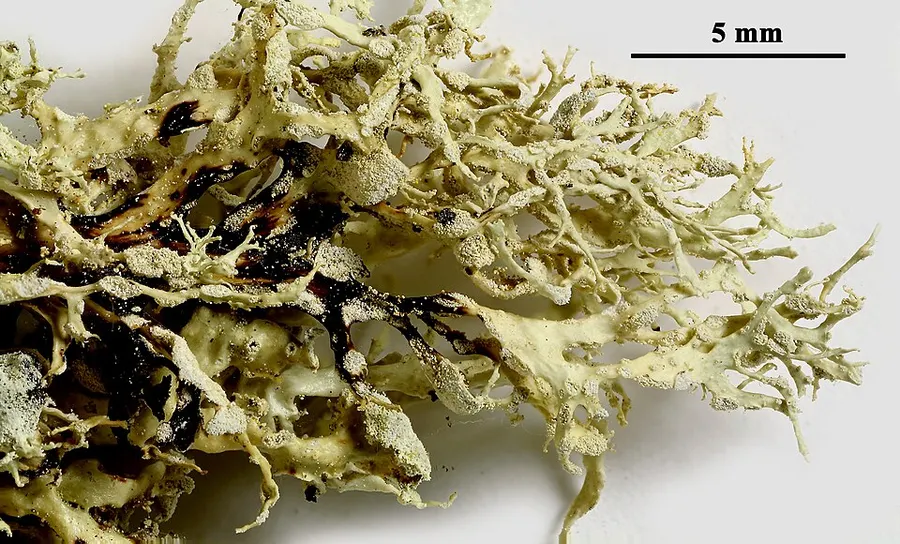
A key identifying feature of Ramalina europaea is its soralia, which are the reproductive structures that produce soredia—a powdery mix of fungal and algal cells used for asexual reproduction. The soralia are small and (dot-like), often appearing at the ends of spine-like branchlets. They are typically 0.1–0.5 mm in diameter and can develop both terminally (at the tips of the branches) and subterminally (just below the tips). The soralia start off granular, eventually becoming more extensive as they spread over the branch surface. R. europaea typically develops ovoid excavate depressions on its lower surface, which are a key identifying feature. When the species grows on rocks (saxicolous), these depressions are much smaller than those observed in specimens growing on trees (epiphytic), though they remain present and identifiable.
Catatan identitas dan cakupan
- Nama diterima mengikuti Catalogue of Life Base2026-09-11; uraian mempertahankan konsep dan nama sumber aslinya.
- Original geographic, specimen and life-cycle scope retained; source import awaits individual editorial review.
- Impor dan terjemahan otomatis belum diperiksa editorial per profil. Struktur reproduktif yang disebutkan tidak membuktikan seluruh siklus hidup diketahui.
- Pengukuran pada uraian mengikuti spesimen, kultur, dan metode sumber; angka tidak diperluas ke semua populasi.
Catatan distribusi dalam narasi mengikuti sumbernya. Dokumentasi spesimen atau foto mengikuti catatan sumber. Bukti wilayah Indonesia dan penilaian konservasi tidak disimpulkan dari gambar.
Melihat dengan konteks
Dokumentasi Ramalina europaea dari Wikimedia Commons. Notes: "[WB8174], Germany, Bayern, Oberbayern, Kreis Garmisch-Partenkirchen, Ammergebirge, Elmanbachtal, an Bergahorn, 1200 m, TK 8431/4. Leg. W.v. Brackel (no 8174), 17.07.2018. With obtusatic/evernic acid Identification confirmed by A. Gasparyan" Identifikasi mengikuti record berkas sumber.
- Jenis
- Fotografi
- Kredit
- Felix Schumm
- Lisensi
- CC BY 4.0
- Sumber media
- Buka entri sumber
Sumber profil
- [1] Ramalina europaea — Wikipedia (en)
- [2] Catalogue of Life Base2026-09-11 — Ramalina europaea
- [3] Dokumentasi visual — Ramalina europaea
Rujukan halaman ini
Fungi. Ramalina europaea. Rilis data fungi-2026-10-12-expansion-2. https://fungi-atlas.mgadib.chatgpt.site/jamur/ramalina-europaea/.
Status: impor sumber; pemeriksaan editorial per profil belum selesai. Untuk klaim biologis, gunakan rujukan pada bagian terkait dan periksa konteks sumber aslinya.