Ciri dan struktur
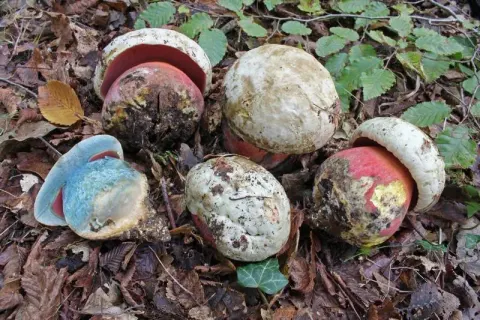
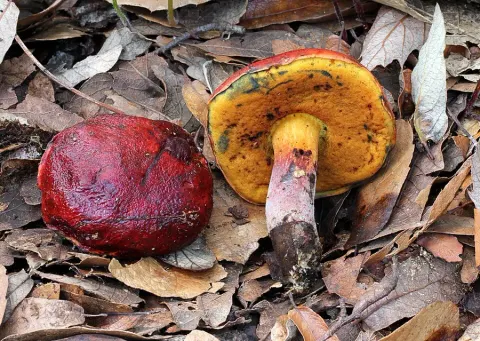
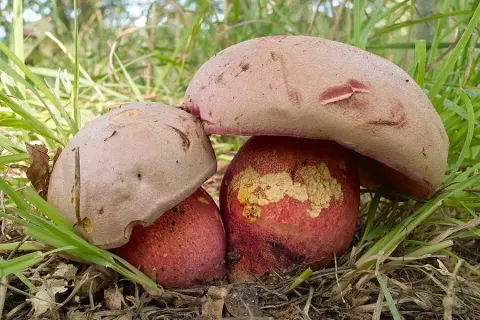
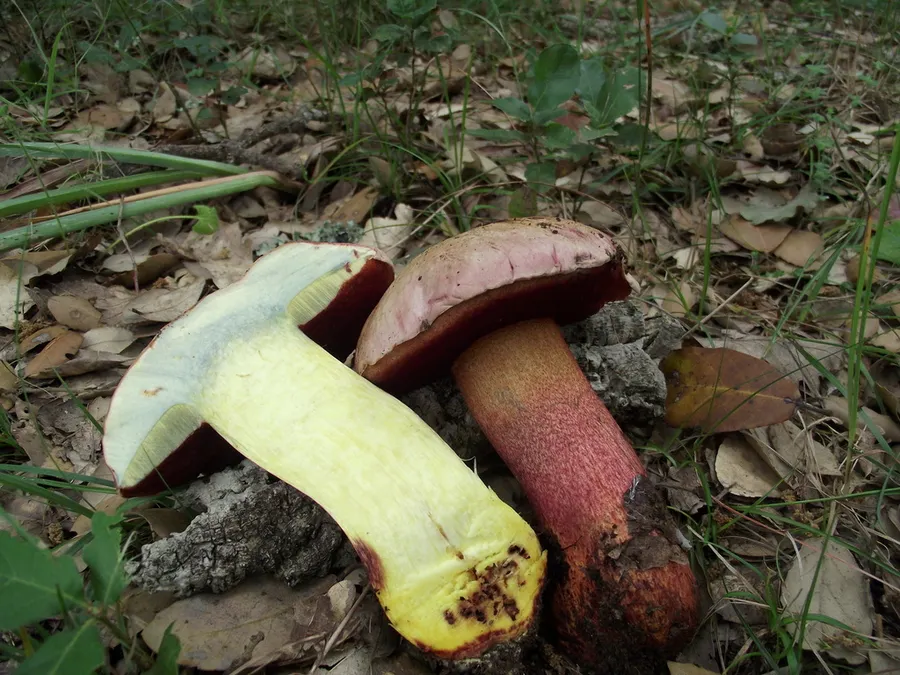
The cap is at first hemispherical, gradually becoming convex to almost flat as the fungus expands, with a diameter of 10 to 20 cm, but can sometimes grow up to 30 cm. It is at first slightly velvety and coloured mostly whitish-grey, but soon becomes smooth, pinkish-grey, pinkish-beige or pinkish-red, especially towards the margin or when handled. The tubes are adnate to emarginate, 0.5 to 1.5 cm long and initially yellow, becoming somewhat olivaceous-yellow in very mature fruit bodies and staining blue when cut. The pores (tube mouths) are orange to deep red and instantly bluing when handled. The stem is 8 to 12 cm long by 3 to 6 cm wide, bulbous or clavate when young, becoming more elongated and cylindrical at maturity. It is orange or orange-yellow at the top (apex), gradually becoming orange-red to carmine-red in the lower part and bears a dense, orange-red to carmine-red reticulation (network pattern). The flesh is distinctly bright yellow and unchanging in the stem, but paler and turning blue when cut only in the cap. It has a mild taste. The spores are olive-brown in mass. When viewed under the microscope they are ellipsoid to fusiform (spindle-shaped), measuring 10–15.5 by 4–5.5 μm. The cap cuticle is a trichodermium of septate cylindrical hyphae, sometimes finely incrusted.
Habitat dan peran ekologis
Regarded as spesies langka di Eropa utara, Rubroboletus rhodoxanthus lebih sering ditemukan di daerah-daerah yang hangat dan selatan. It forms ectomycorrhizal associations with members of the Fagaceae, particularly oak (Quercus) and beech (Fagus), but sometimes also with chestnut (Castanea). Molecular phylogenetic pengujian telah mengkonfirmasi kehadirannya di Prancis, Italia, Portugal and pulau-pulau Cyprus and Sardinia, tetapi kemungkinan besar tersebar di sebagian besar Mediterranean region. Hal ini telah dilaporkan sebagai lokal sering di pulau Siprus, di mana ia muncul di musim dengan curah hujan awal, tumbuh di tanah ular di bawah ek emas endemik (Quercus alnifolia). Sebaliknya, dianggap sangat terancam punah di Ceko Republic and yang dilaporkan punah di Inggris. Dalam bahasa Inggris Islands it hanya dikenal dari Irlandia Utara.
- Habitat atau konteks temuan
- Informasi belum tersedia pada sumber rilis ini.
- Substrat
- Informasi belum tersedia pada sumber rilis ini.
- Peran atau konteks
- Mitra tumbuhan
Reproduksi
The spores are olive-brown in mass. When viewed under the microscope they are ellipsoid to fusiform (spindle-shaped), measuring 10–15.5 by 4–5.5 μm. The cap cuticle is a trichodermium of septate cylindrical hyphae, sometimes finely incrusted.
Catatan identitas dan cakupan
- Nama diterima mengikuti Catalogue of Life Base2026-09-11; uraian mempertahankan konsep dan nama sumber aslinya.
- Original geographic, specimen and life-cycle scope retained; source import awaits individual editorial review.
- Impor dan terjemahan otomatis belum diperiksa editorial per profil. Struktur reproduktif yang disebutkan tidak membuktikan seluruh siklus hidup diketahui.
- Pengukuran pada uraian mengikuti spesimen, kultur, dan metode sumber; angka tidak diperluas ke semua populasi.
Catatan distribusi dalam narasi mengikuti sumbernya. Dokumentasi spesimen atau foto mengikuti catatan sumber. Bukti wilayah Indonesia dan penilaian konservasi tidak disimpulkan dari gambar.
Melihat dengan konteks
Dokumentasi Rubroboletus rhodoxanthus menurut asosiasi foto pada record takson iNaturalist. Kredit: Davide Puddu. Identitas mengikuti sumber; bukan penentuan spesimen independen.
- Jenis
- Fotografi
- Kredit
- (c) Davide Puddu, some rights reserved (CC BY), uploaded by Davide Puddu
- Lisensi
- CC BY 4.0
- Sumber media
- Buka entri sumber
Dokumentasi tambahan
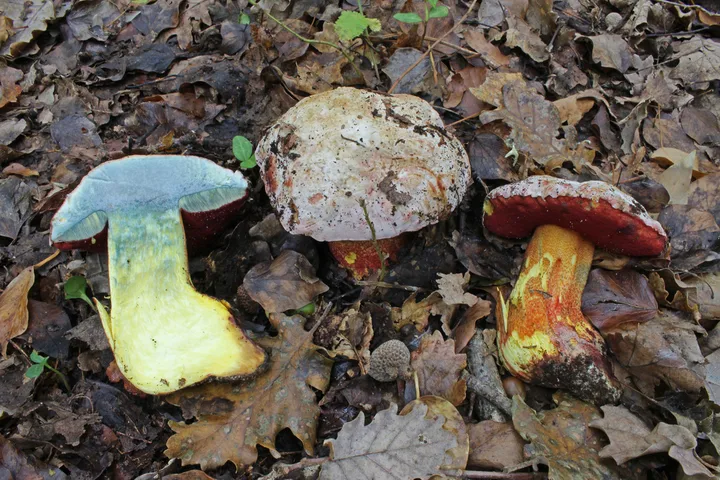
Foto yang diasosiasikan dengan Rubroboletus rhodoxanthus pada iNaturalist. Identifikasi mengikuti sumber; bukan penentuan spesimen independen.
Kredit dan penggunaan
(c) Davide Puddu, some rights reserved (CC BY), uploaded by Davide Puddu
Ukuran dan format gambar disesuaikan tanpa pemotongan, retus, atau penambahan skala. Lisensi sumber dipertahankan.
Sumber profil
- [1] Rubroboletus rhodoxanthus — Wikipedia (en)
- [2] Catalogue of Life Base2026-09-11 — Rubroboletus rhodoxanthus
- [3] Dokumentasi visual — Rubroboletus rhodoxanthus
- [4] Dokumentasi visual — Rubroboletus rhodoxanthus
Rujukan halaman ini
Fungi. Rubroboletus rhodoxanthus. Rilis data fungi-2026-10-12-expansion-2. https://fungi-atlas.mgadib.chatgpt.site/jamur/rubroboletus-rhodoxanthus/.
Status: impor sumber; pemeriksaan editorial per profil belum selesai. Untuk klaim biologis, gunakan rujukan pada bagian terkait dan periksa konteks sumber aslinya.