Ciri dan struktur
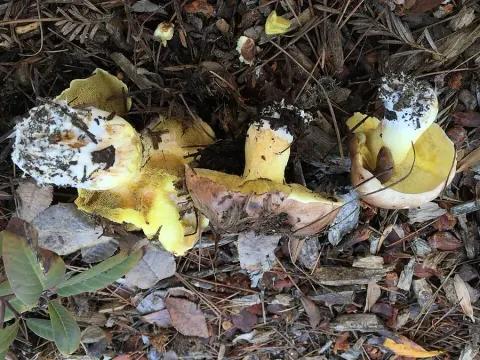
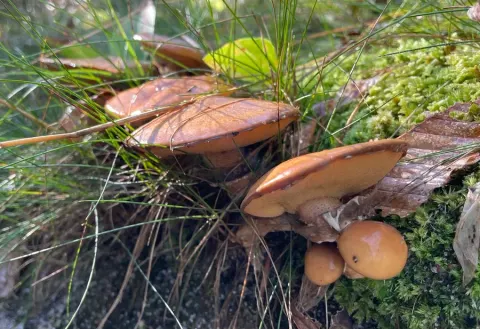
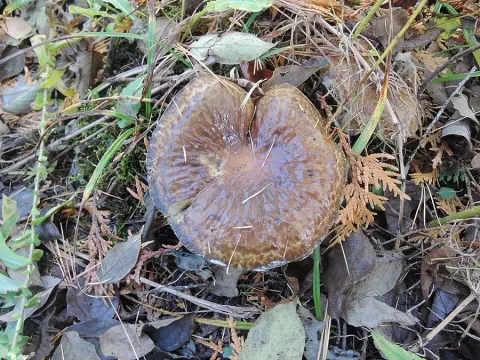
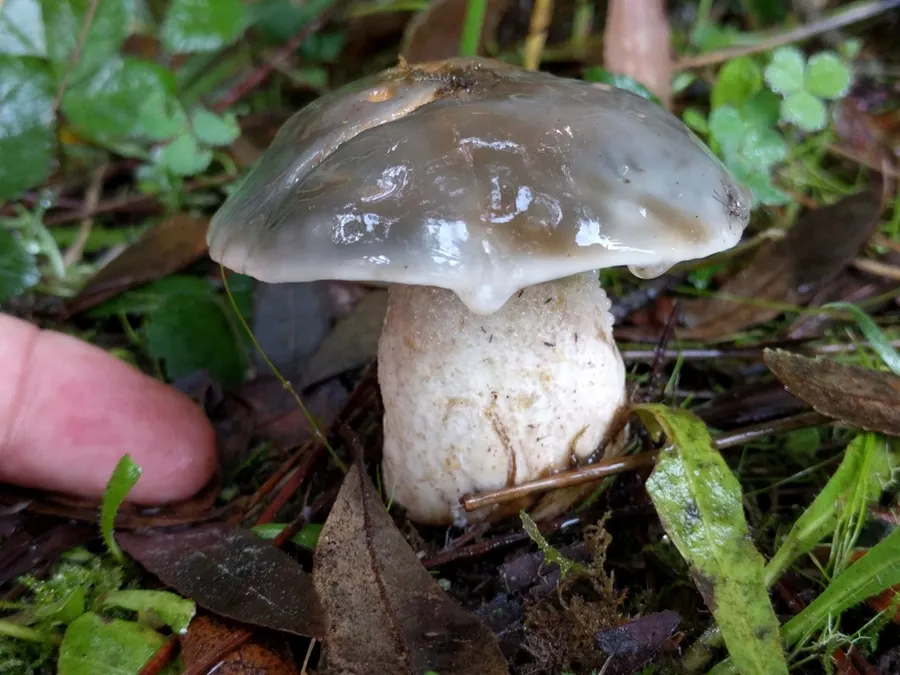
The cap of S. pungens is roughly convex when young, becoming plano-convex (flat on one side and rounded on the other) to somewhat flat with age, and reaches diameters of 4–14 cm. The cap surface is sticky to slimy when moist, becoming shiny when dried. The surface is smooth but is sometimes streaked with the sticky glue-like cap slime when older. The cap color is highly variable in this species, and the cap is often variegated with a mixture of light and dark colors. When young it is dirty-white to olive with pale olive splotches. Maturing caps can retain the color they had when young, or become tawny to orange-yellow to reddish-brown, or a combination of these colors. The cap margin is initially rolled inward and has a cottony roll of white tissue, but becomes naked and curves downward with age. The flesh is 1–2 cm thick, white and unchanging in young fruit bodies, frequently changing to yellow when older. The tubes that comprise the hymenium (spore-bearing tissue) on the underside of the cap are up to 1 cm long, adnate when young, becoming decurrent or nearly so with age. In young specimens, they are whitish to pale buff, and are covered with milky droplets that become brown to ochraceous when dried. As specimens mature the color of the pore surface changes to yellowish, and finally to dark yellow. The angular pores, which are 1–1.5 mm in diameter, are not radially arranged, and do not change color when bruised. The stipe is solid (rather than hollow), 3–7 cm long, and 1–2 cm thick near the top. Its shape is variable: either roughly equal in width throughout, thicker at the base, or somewhat thicker in the middle.
Habitat dan peran ekologis
Suillus pungens adalah basidiomycete ektomikoriza yang membentuk hubungan simbiotik hampir eksklusif dengan Monterey pine (Pinus radiata) dan bishop pine (Pinus muricata); beberapa koleksi telah dibuat di bawah knobcone pine (Pinus attenuata) dan ponderosa pine (Pinus ponderosa), tetapi hanya dalam kisaran Monterey pine. IUCN Red List assessment melaporkan bahwa, di California, ia juga ditemukan di tempat yang ditanam dan diper naturalized dari tuan rumah asli, dan dengan pinus diperkenalkan termasuk P. pinea, P. pinaster, dan P. halepensis, terutama di daerah perkotaan. The IUCN assessment also reports introduced records from New Zealand (where it is common with introduced P. radiata) and Australia, apparently via imported pine stock. Tuan rumah asli utama, Monterey pine dan bishop pine, memiliki kisaran alam yang kecil dan tersebar yang sebagian besar terbatas pada pantai California. The fruit bodies of S. pungens grow solitarily, scattered or in groups in humus. They are sering ditemukan tumbuh di dekat tubuh buah Chroogomphus vinicolor dan Helvella lacunosa. Suillus pungens seringkali paling banyak Suillus in di San Francisco Bay Area. Koleksi tipe dibuat di kampus Universitas Negeri San Francisco, di mana terjadi secara berlimpah selama musim gugur dan musim dingin.
- Habitat atau konteks temuan
- Informasi belum tersedia pada sumber rilis ini.
- Substrat
- Informasi belum tersedia pada sumber rilis ini.
- Peran atau konteks
- Mitra tumbuhan
Reproduksi
The tubes that comprise the hymenium (spore-bearing tissue) on the underside of the cap are up to 1 cm long, adnate when young, becoming decurrent or nearly so with age. In young specimens, they are whitish to pale buff, and are covered with milky droplets that become brown to ochraceous when dried. As specimens mature the color of the pore surface changes to yellowish, and finally to dark yellow. The angular pores, which are 1–1.5 mm in diameter, are not radially arranged, and do not change color when bruised. The stipe is solid (rather than hollow), 3–7 cm long, and 1–2 cm thick near the top. Its shape is variable: either roughly equal in width throughout, thicker at the base, or somewhat thicker in the middle.
Catatan identitas dan cakupan
- Nama diterima mengikuti Catalogue of Life Base2026-09-11; uraian mempertahankan konsep dan nama sumber aslinya.
- Original geographic, specimen and life-cycle scope retained; source import awaits individual editorial review.
- Impor dan terjemahan otomatis belum diperiksa editorial per profil. Struktur reproduktif yang disebutkan tidak membuktikan seluruh siklus hidup diketahui.
- Pengukuran pada uraian mengikuti spesimen, kultur, dan metode sumber; angka tidak diperluas ke semua populasi.
Catatan distribusi dalam narasi mengikuti sumbernya. Dokumentasi spesimen atau foto mengikuti catatan sumber. Bukti wilayah Indonesia dan penilaian konservasi tidak disimpulkan dari gambar.
Melihat dengan konteks
Dokumentasi Suillus pungens menurut asosiasi foto pada record takson iNaturalist. Kredit: Ken-ichi Ueda. Identitas mengikuti sumber; bukan penentuan spesimen independen.
- Jenis
- Fotografi
- Kredit
- (c) Ken-ichi Ueda, some rights reserved (CC BY), uploaded by Ken-ichi Ueda
- Lisensi
- CC BY 4.0
- Sumber media
- Buka entri sumber
Dokumentasi tambahan
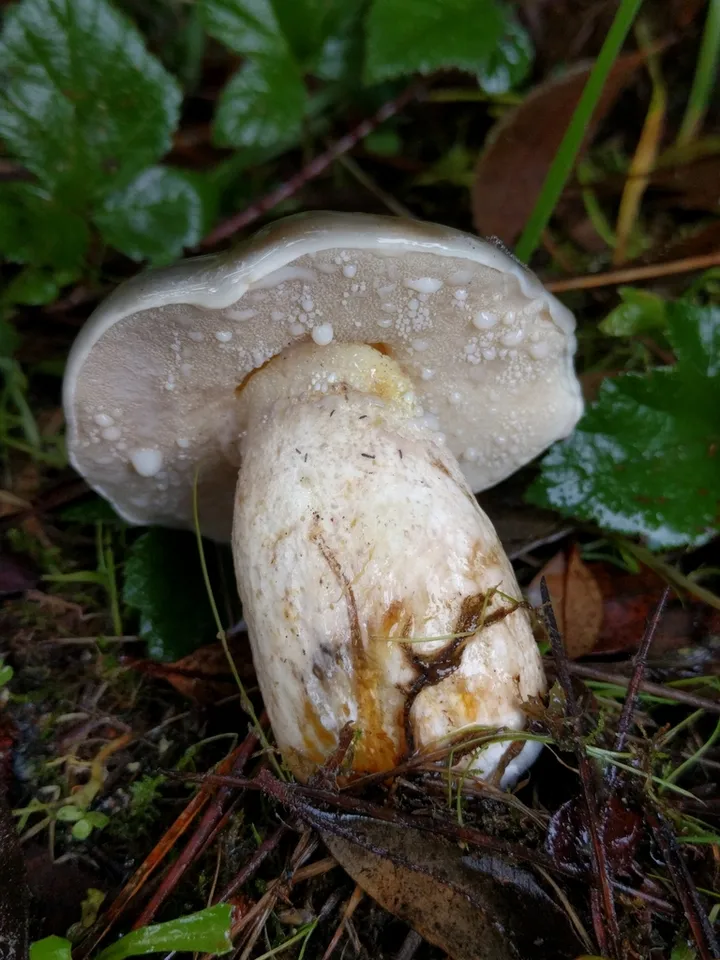
Foto yang diasosiasikan dengan Suillus pungens pada iNaturalist. Identifikasi mengikuti sumber; bukan penentuan spesimen independen.
Kredit dan penggunaan
(c) Ken-ichi Ueda, some rights reserved (CC BY), uploaded by Ken-ichi Ueda
Ukuran dan format gambar disesuaikan tanpa pemotongan, retus, atau penambahan skala. Lisensi sumber dipertahankan.
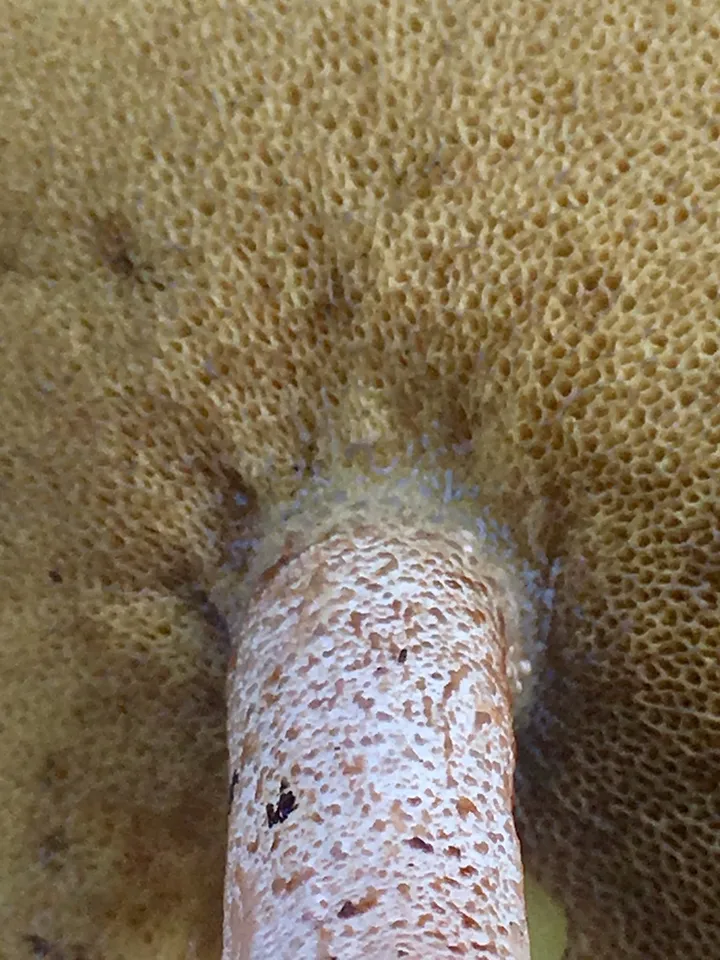
Foto yang diasosiasikan dengan Suillus pungens pada iNaturalist. Identifikasi mengikuti sumber; bukan penentuan spesimen independen.
Kredit dan penggunaan
no rights reserved, uploaded by Alex Heyman
Ukuran dan format gambar disesuaikan tanpa pemotongan, retus, atau penambahan skala. Lisensi sumber dipertahankan.
Sumber profil
- [1] Suillus pungens — Wikipedia (en)
- [2] Catalogue of Life Base2026-09-11 — Suillus pungens
- [3] Dokumentasi visual — Suillus pungens
- [4] Dokumentasi visual — Suillus pungens
- [5] Dokumentasi visual — Suillus pungens
Rujukan halaman ini
Fungi. Suillus pungens. Rilis data fungi-2026-10-12-expansion-2. https://fungi-atlas.mgadib.chatgpt.site/jamur/suillus-pungens/.
Status: impor sumber; pemeriksaan editorial per profil belum selesai. Untuk klaim biologis, gunakan rujukan pada bagian terkait dan periksa konteks sumber aslinya.