Ciri dan struktur
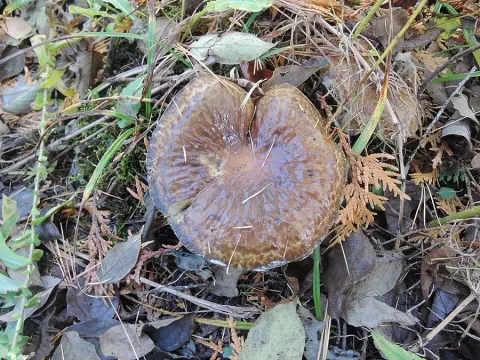
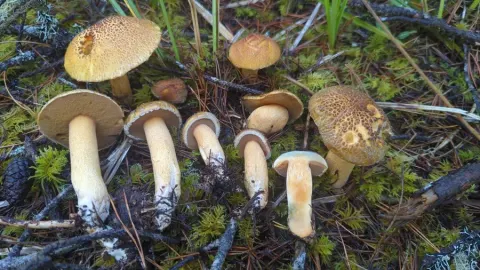
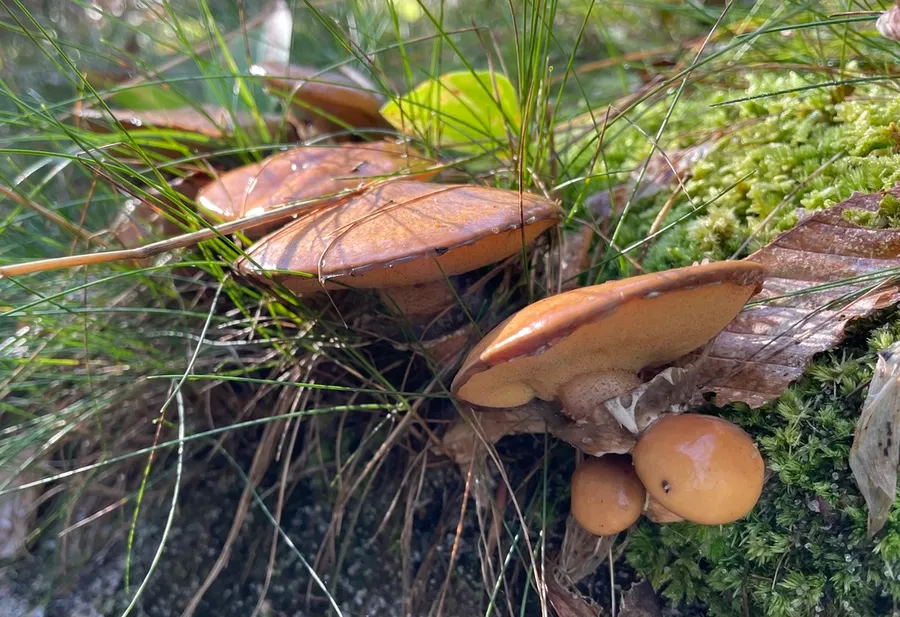
The cap of S. salmonicolor is bluntly rounded or convex to nearly flattened, reaching a diameter of 3-8 cm. The cap surface is sticky to slimy when moist, but becomes shiny when dry. The cap color is variable, ranging from dingy yellow to yellowish-orange to ochraceous-salmon, cinnamon-brown or olive-brown to yellow-brown. The flesh is pale orange-yellow to orange-buff or orange, and does not stain when exposed to air. The odor and taste are not distinctive. The pore surface on the underside of the cap is yellow to dingy yellow, or yellowish orange to salmon, darkening to brownish with age; it also does not stain when bruised. The pores are circular to angular and 8 – 10 mm deep, with 1–2 found per mm. The stem is 2.5 – 10 cm long, 6 – 16 mm thick, and either equal in width throughout or slightly enlarged in the lower portion. It is whitish to yellowish or pinkish-ochre, and has reddish-brown to dark brown glandular dots and smears on the surface. Glandular dots are made of clumps of pigmented cells, and, unlike reticulation or scabers (small visible tufts of fibers that occur on the stems of other Suillus species), can be rubbed off with handling. The flesh is ochraceous to yellowish, often salmon-orange at the base of the stem. The partial veil that protects the developing gills is initially thick, baggy, and rubbery. It often has a conspicuously thickened cottony roll of tissue at its base, and sometimes flares outward from the stem on the lower portion. It forms a gelatinous ring on the upper to middle part of the stem. The spore print is cinnamon-brown to brown. The surface of the cap, when applied with a drop of dilute potassium hydroxide (KOH) or ammonia solution (chemical reagents commonly used for mushroom identification), will first turn a fleeting pink color, then dark red as the flesh collapses.
Habitat dan peran ekologis
Suillus salmonicolor terjadi dalam hubungan mikoriza dengan berbagai spesies Pinus. This is a mutualistic relationship in which the subterranean fungal mycelia creates a protective sheath around the rootlets of the tree and a network of hyphae (the Hartig net) that penetrates between the tree's epidermal and cortical cells. Asosiasi ini membantu tanaman menyerap air dan nutrisi mineral; sebagai imbalan, jamur menerima pasokan karbohidrat yang dihasilkan oleh fotosintesis tanaman. Pohon pinus berdaging dua, tiga, dan lima telah tercatat untuk dikaitkan dengan S. salmonicolor. Di Amerika Utara, di mana buahnya berasal dari August to Oktober, jamur telah ditemukan tumbuh dengan P. banksiana, P. palustris, P. resinosa, P. rigida, P. strobus dan P. taeda. Di Kamchatka (di Timur Jauh Rusia) telah ditemukan dalam hubungan dengan P. pumila, di Philippines with P. kesiya, dan di selatan India with P. patula. Batas utara American range adalah Kanada timur (Quebec), dan batas selatan adalah Nuevo León dan dekat Nabogame in Kota Temósachi, Chihuahua, Meksiko. Suillus salmonicolor telah dikumpulkan dari Dominican Republic in Karibia, Jepang, Taiwan, dan dari Mpumalanga, Afrika Selatan.
- Habitat atau konteks temuan
- Informasi belum tersedia pada sumber rilis ini.
- Substrat
- Informasi belum tersedia pada sumber rilis ini.
- Peran atau konteks
- Mitra tumbuhan
Reproduksi
The stem is 2.5 – 10 cm long, 6 – 16 mm thick, and either equal in width throughout or slightly enlarged in the lower portion. It is whitish to yellowish or pinkish-ochre, and has reddish-brown to dark brown glandular dots and smears on the surface. Glandular dots are made of clumps of pigmented cells, and, unlike reticulation or scabers (small visible tufts of fibers that occur on the stems of other Suillus species), can be rubbed off with handling. The flesh is ochraceous to yellowish, often salmon-orange at the base of the stem. The partial veil that protects the developing gills is initially thick, baggy, and rubbery. It often has a conspicuously thickened cottony roll of tissue at its base, and sometimes flares outward from the stem on the lower portion.
Catatan identitas dan cakupan
- Nama diterima mengikuti Catalogue of Life Base2026-09-11; uraian mempertahankan konsep dan nama sumber aslinya.
- Original geographic, specimen and life-cycle scope retained; source import awaits individual editorial review.
- Impor dan terjemahan otomatis belum diperiksa editorial per profil. Struktur reproduktif yang disebutkan tidak membuktikan seluruh siklus hidup diketahui.
- Pengukuran pada uraian mengikuti spesimen, kultur, dan metode sumber; angka tidak diperluas ke semua populasi.
Catatan distribusi dalam narasi mengikuti sumbernya. Dokumentasi spesimen atau foto mengikuti catatan sumber. Bukti wilayah Indonesia dan penilaian konservasi tidak disimpulkan dari gambar.
Melihat dengan konteks
Dokumentasi Suillus salmonicolor menurut asosiasi foto pada record takson iNaturalist. Kredit: Annie Weissman. Identitas mengikuti sumber; bukan penentuan spesimen independen.
- Jenis
- Fotografi
- Kredit
- (c) Annie Weissman, some rights reserved (CC BY), uploaded by Annie Weissman
- Lisensi
- CC BY 4.0
- Sumber media
- Buka entri sumber
Dokumentasi tambahan
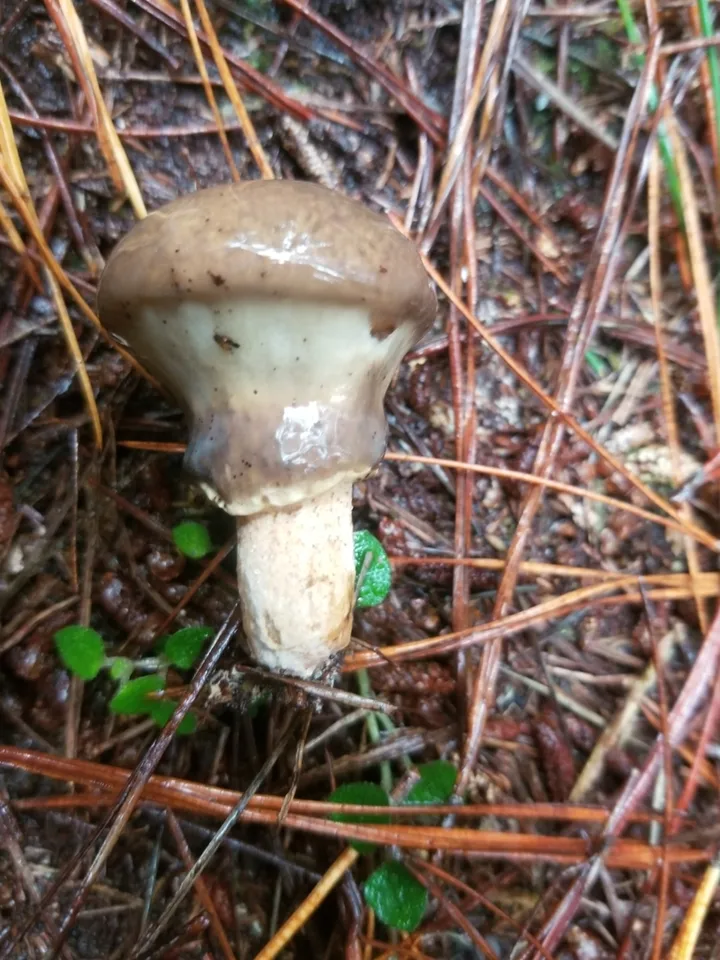
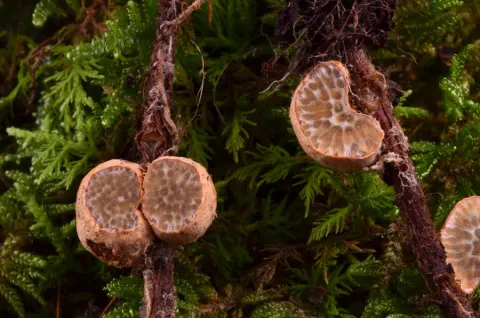
Foto yang diasosiasikan dengan Suillus salmonicolor pada iNaturalist. Identifikasi mengikuti sumber; bukan penentuan spesimen independen.
Kredit dan penggunaan
(c) claire, some rights reserved (CC BY), uploaded by claire
Ukuran dan format gambar disesuaikan tanpa pemotongan, retus, atau penambahan skala. Lisensi sumber dipertahankan.
Sumber profil
- [1] Suillus salmonicolor — Wikipedia (en)
- [2] Catalogue of Life Base2026-09-11 — Suillus salmonicolor
- [3] Dokumentasi visual — Suillus salmonicolor
- [4] Dokumentasi visual — Suillus salmonicolor
Rujukan halaman ini
Fungi. Suillus salmonicolor. Rilis data fungi-2026-10-12-expansion-2. https://fungi-atlas.mgadib.chatgpt.site/jamur/suillus-salmonicolor/.
Status: impor sumber; pemeriksaan editorial per profil belum selesai. Untuk klaim biologis, gunakan rujukan pada bagian terkait dan periksa konteks sumber aslinya.