Ciri dan struktur
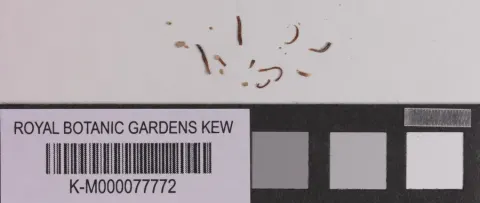
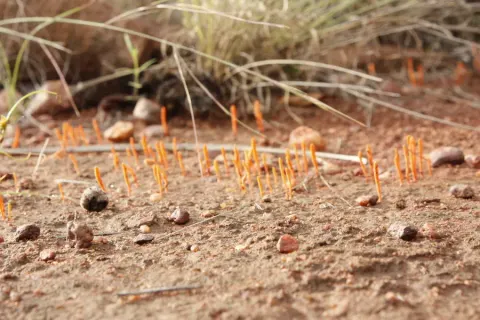
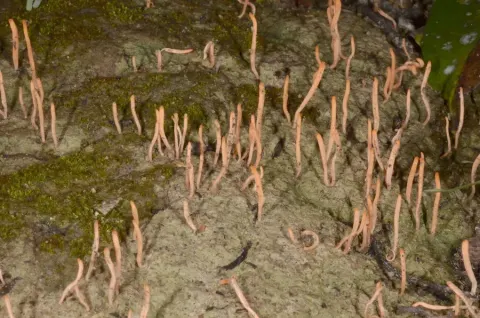
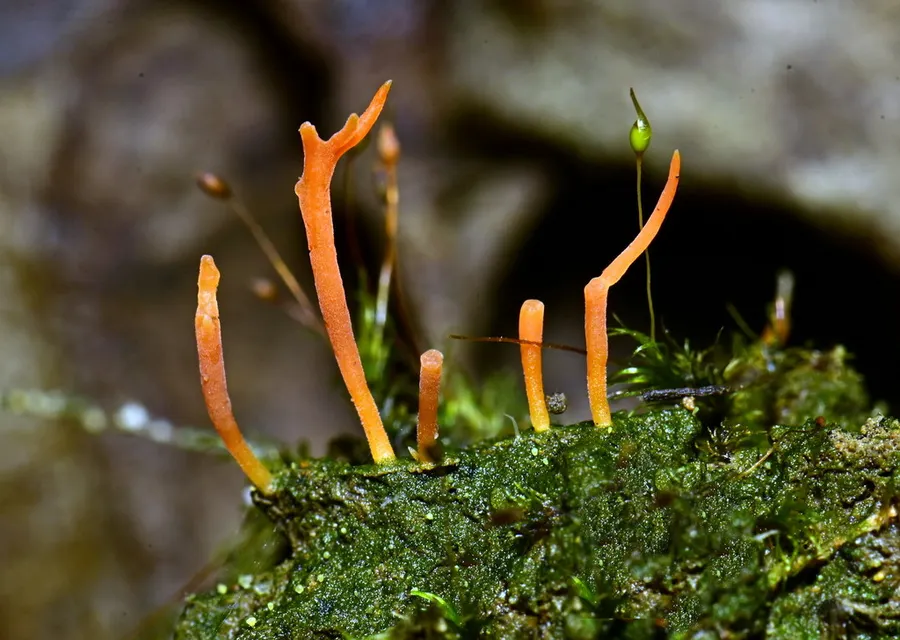
The species forms two distinct structures: a vegetative body (the thallus) that exists year-round, and reproductive structures (the basidiomata) that appear seasonally. The thallus appears as a thin green crust growing on the , lacking any internal differentiation into distinct layers. This simple structure distinguishes it from related species which have more complex, scale-like thalli. The thallus contains single-celled green algae (the ) that form a symbiotic relationship with the fungus. The reproductive structures (basidiomata) are club-shaped and unbranched, reaching 20–30 mm in height and 1.0–1.5 mm in diameter. They are either cylindrical or slightly flattened, and their surface shows a distinctive pattern of circumferential cracks reminiscent of an old carrot. The basidiomata are dull orange-pink in colour with a dull yellow interior. Under the microscope, several distinctive features can be observed. The spore-producing cells (basidia) are club-shaped (), measuring 23–45 by 4–7 micrometres (μm), and bear two to four projections (sterigmata) on which spores develop. The spores themselves (basidiospores) typically measure 5.0–8.0 by 3.5-4.5 μm and are ellipsoid to elongated in shape, sometimes appearing cylindrical. The internal tissue is composed of parallel, densely packed fungal threads (hyphae) that appear yellowish when viewed in mass but individually are colourless. Unlike many related fungi, the hyphae lack specialised connecting structures called clamp connections. The species can be distinguished from the superficially similar genus Multiclavula by its undifferentiated thallus structure and its association with green algae, rather than the blue-green algae found in Multiclavula.
Habitat dan peran ekologis
Sulzbacheromyces caatingae is known from northeastern Brazil, where it occurs across several distinct vegetation types. The species was first discovered in the Parque Nacional Serra das Confusões in Piauí state, within the semi-arid Caatinga biome. It has subsequently been found in several other locations, including the Araripe National Forest in Ceará state, the Mata do Pau-Ferro ecological reserve in Paraíba state, and the Campus I forest fragments of the Federal University of Paraíba. It was recorded from Mato Grosso do Sul in 2023. The species shows considerable , occurring in three main habitat types: the semi-arid Caatinga proper, upland wet forest enclaves within the Caatinga (known locally as brejos de 'altitude'), and remnants of Atlantic Forest. This distribution spans areas with significantly different rainfall patterns, from the predominantly dry Caatinga with its 7–9 month dry season to the more humid Atlantic forest fragments. Within these habitats, S. caatingae typically grows on roadside soil banks and on termite nests, usually near the edges of well-preserved forest. It grows gregariously, meaning multiple individuals occur together, and the development of its reproductive structures appears to be triggered by rainfall.
- Habitat atau konteks temuan
- hutan
- Substrat
- Informasi belum tersedia pada sumber rilis ini.
- Peran atau konteks
- Pembentuk liken
Reproduksi
The species forms two distinct structures: a vegetative body (the thallus) that exists year-round, and reproductive structures (the basidiomata) that appear seasonally. The thallus appears as a thin green crust growing on the , lacking any internal differentiation into distinct layers. This simple structure distinguishes it from related species which have more complex, scale-like thalli. The thallus contains single-celled green algae (the ) that form a symbiotic relationship with the fungus. The reproductive structures (basidiomata) are club-shaped and unbranched, reaching 20–30 mm in height and 1.0–1.5 mm in diameter. They are either cylindrical or slightly flattened, and their surface shows a distinctive pattern of circumferential cracks reminiscent of an old carrot.
Catatan identitas dan cakupan
- Nama diterima mengikuti Catalogue of Life Base2026-09-11; uraian mempertahankan konsep dan nama sumber aslinya.
- Original geographic, specimen and life-cycle scope retained; source import awaits individual editorial review.
- Impor dan terjemahan otomatis belum diperiksa editorial per profil. Struktur reproduktif yang disebutkan tidak membuktikan seluruh siklus hidup diketahui.
- Pengukuran pada uraian mengikuti spesimen, kultur, dan metode sumber; angka tidak diperluas ke semua populasi.
Catatan distribusi dalam narasi mengikuti sumbernya. Dokumentasi spesimen atau foto mengikuti catatan sumber. Bukti wilayah Indonesia dan penilaian konservasi tidak disimpulkan dari gambar.
Melihat dengan konteks
Dokumentasi Sulzbacheromyces caatingae menurut asosiasi foto pada record takson iNaturalist. Kredit: Alan Rockefeller. Identitas mengikuti sumber; bukan penentuan spesimen independen.
- Jenis
- Fotografi
- Kredit
- (c) Alan Rockefeller, some rights reserved (CC BY), uploaded by Alan Rockefeller
- Lisensi
- CC BY 4.0
- Sumber media
- Buka entri sumber
Sumber profil
- [1] Sulzbacheromyces caatingae — Wikipedia (en)
- [2] Catalogue of Life Base2026-09-11 — Sulzbacheromyces caatingae
- [3] Dokumentasi visual — Sulzbacheromyces caatingae
Rujukan halaman ini
Fungi. Sulzbacheromyces caatingae. Rilis data fungi-2026-10-12-expansion-2. https://fungi-atlas.mgadib.chatgpt.site/jamur/sulzbacheromyces-caatingae/.
Status: impor sumber; pemeriksaan editorial per profil belum selesai. Untuk klaim biologis, gunakan rujukan pada bagian terkait dan periksa konteks sumber aslinya.