01 / Morfologi

Ciri dan struktur

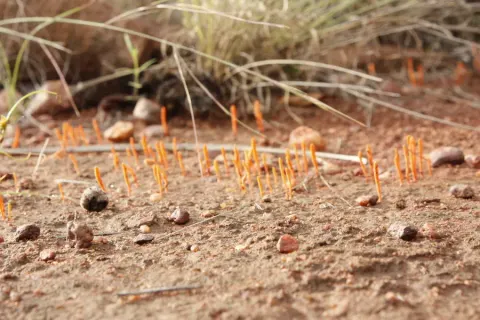
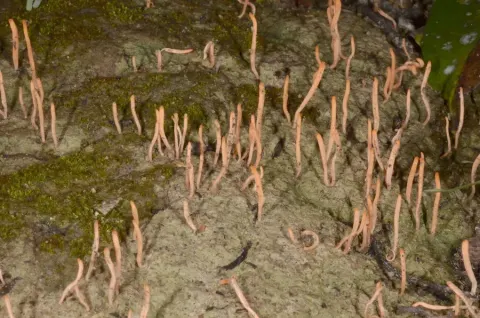
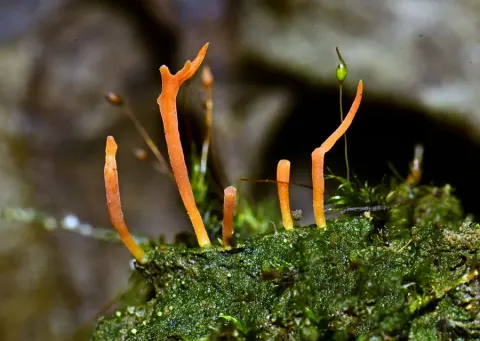
The organism forms a distinct crusty layer (thallus) on its , covering areas of 5–30 cm in diameter. This crust appears dark green to indigo blue and becomes darker with age. It contains clusters of single-celled green algae (known as algae) that are nearly spherical or elliptical in shape and are surrounded by transparent fungal threads (hyphae). The most conspicuous features are its upright fruiting bodies, which are club-shaped or cylindrical, occasionally branching from the base. These structures reach 0.3–2.5 cm in height and are pale to creamy white when fresh, turning beige when dried. Under the microscope, the reproductive cells (basidia) produce transparent, elliptical spores and possess 2–4 delicate protrusions (sterigmata) through which spores are released.

Sebagian uraian ditampilkan dalam bahasa sumber; terjemahannya belum tersedia atau belum lolos pemeriksaan.

Rujukan: [1]

Pengukuran mengikuti objek, spesimen atau kultur, dan metode yang disebutkan sumber. Baca uraian asli untuk konteks lengkap.

02 / Kehidupan

Habitat dan peran ekologis

Sulzbacheromyces fossicola is found across tropical and subtropical regions of Asia, including China, Singapore, northern India, and Thailand. It specifically grows on yellow and red clay soils or rocks that have been exposed to the elements for two to three years, preferring shaded locations. While initially discovered in Singapore in 1950, subsequent discoveries have shown it to be widespread across southern Asia, though its preferred habitat requirements may limit its local abundance.

Sebagian uraian ditampilkan dalam bahasa sumber; terjemahannya belum tersedia atau belum lolos pemeriksaan.

Rujukan: [1]

Habitat atau konteks temuan
Informasi belum tersedia pada sumber rilis ini.
Substrat
Informasi belum tersedia pada sumber rilis ini.
Peran atau konteks
Pembentuk liken
Temukan hubungan serupa
03 / Siklus hidup

Reproduksi

The organism forms a distinct crusty layer (thallus) on its , covering areas of 5–30 cm in diameter. This crust appears dark green to indigo blue and becomes darker with age. It contains clusters of single-celled green algae (known as algae) that are nearly spherical or elliptical in shape and are surrounded by transparent fungal threads (hyphae). The most conspicuous features are its upright fruiting bodies, which are club-shaped or cylindrical, occasionally branching from the base. These structures reach 0.3–2.5 cm in height and are pale to creamy white when fresh, turning beige when dried. Under the microscope, the reproductive cells (basidia) produce transparent, elliptical spores and possess 2–4 delicate protrusions (sterigmata) through which spores are released.

Sebagian uraian ditampilkan dalam bahasa sumber; terjemahannya belum tersedia atau belum lolos pemeriksaan.

Rujukan: [1]

Sinonim menurut acuan taksonomi rilis: Clavaria fossicola; Multiclavula fossicola
04 / Batas informasi

Catatan identitas dan cakupan

  • Nama diterima mengikuti Catalogue of Life Base2026-09-11; uraian mempertahankan konsep dan nama sumber aslinya.
  • Original geographic, specimen and life-cycle scope retained; source import awaits individual editorial review.
  • Impor dan terjemahan otomatis belum diperiksa editorial per profil. Struktur reproduktif yang disebutkan tidak membuktikan seluruh siklus hidup diketahui.
  • Pengukuran pada uraian mengikuti spesimen, kultur, dan metode sumber; angka tidak diperluas ke semua populasi.

Catatan distribusi dalam narasi mengikuti sumbernya. Dokumentasi spesimen atau foto mengikuti catatan sumber. Bukti wilayah Indonesia dan penilaian konservasi tidak disimpulkan dari gambar.

05 / Dokumentasi

Melihat dengan konteks

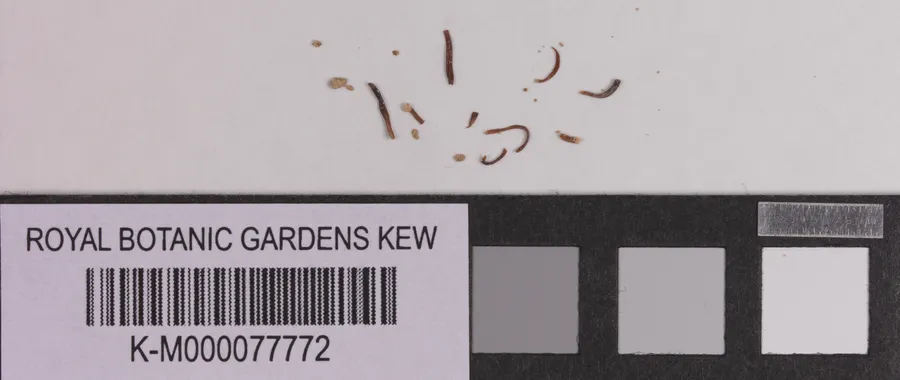
Voucher herbarium Clavaria fossicola (K-M000077772), Royal Botanic Gardens, Kew. Identifikasi mengikuti record spesimen sumber. Foto bahan, kemasan, atau label herbarium sebagaimana tersedia pada record institusi; bukan foto lapangan atau penentuan spesimen independen.

Jenis
Voucher herbarium
Kredit
Royal Botanic Gardens, Kew
Lisensi
CC BY 4.0
Sumber media
Buka entri sumber

Gambar menunjukkan objek menurut identifikasi sumber, bukan verifikasi independen spesimen oleh Fungi. Tidak ada skala baru yang ditambahkan.

06 / Rujukan

Sumber profil

  1. [1] Sulzbacheromyces fossicola — Wikipedia (en)Bagian sumber: Frozen revision 1263318530
    Tanggal penghimpunan sumber: 2026-10-12
    Teks sumber: CC BY-SA4.0 · Wikipedia contributors
  2. [2] Catalogue of Life Base2026-09-11 — Sulzbacheromyces fossicolaBagian sumber: ColDP NameUsage.tsv ID 53FTW; accepted species; source 2073
    Tanggal penghimpunan sumber: 2026-10-12
  3. [3] Dokumentasi visual — Clavaria fossicolaBagian sumber: Individual media record; identification follows the source, not independent determination
    Tanggal penghimpunan sumber: 2026-10-12
    Media sumber: CC BY 4.0 · Royal Botanic Gardens, Kew

Adaptasi teks: CC BY-SA 4.0. Wikipedia contributors — Sulzbacheromyces fossicola — Wikipedia (en)

Uraian asli dan riwayat sumber

Riwayat atau halaman sumber

Ringkasan sumber

Sulzbacheromyces fossicola is a species of basidiolichen in the family Lepidostromataceae. First described in 1950 by E. J. H. Corner as Clavaria fossicola, it is characterised by its dark green to indigo blue crusty growth form and distinctive white, club-shaped fruiting bodies that turn beige when dried. The species forms a thin layer on soil or rocks, where it lives in symbiosis with microscopic green algae. It is distributed across tropical and subtropical Asia, from India to Singapore, where it specifically grows on exposed yellow and red clay soils in shaded locations.

Revisi sumber

Morfologi sumber

The organism forms a distinct crusty layer (thallus) on its , covering areas of 5–30 cm in diameter. This crust appears dark green to indigo blue and becomes darker with age. It contains clusters of single-celled green algae (known as algae) that are nearly spherical or elliptical in shape and are surrounded by transparent fungal threads (hyphae). The most conspicuous features are its upright fruiting bodies, which are club-shaped or cylindrical, occasionally branching from the base. These structures reach 0.3–2.5 cm in height and are pale to creamy white when fresh, turning beige when dried. Under the microscope, the reproductive cells (basidia) produce transparent, elliptical spores and possess 2–4 delicate protrusions (sterigmata) through which spores are released.

Revisi sumber

Ekologi sumber

Sulzbacheromyces fossicola is found across tropical and subtropical regions of Asia, including China, Singapore, northern India, and Thailand. It specifically grows on yellow and red clay soils or rocks that have been exposed to the elements for two to three years, preferring shaded locations. While initially discovered in Singapore in 1950, subsequent discoveries have shown it to be widespread across southern Asia, though its preferred habitat requirements may limit its local abundance.

Revisi sumber

Struktur reproduksi sumber

The organism forms a distinct crusty layer (thallus) on its , covering areas of 5–30 cm in diameter. This crust appears dark green to indigo blue and becomes darker with age. It contains clusters of single-celled green algae (known as algae) that are nearly spherical or elliptical in shape and are surrounded by transparent fungal threads (hyphae). The most conspicuous features are its upright fruiting bodies, which are club-shaped or cylindrical, occasionally branching from the base. These structures reach 0.3–2.5 cm in height and are pale to creamy white when fresh, turning beige when dried. Under the microscope, the reproductive cells (basidia) produce transparent, elliptical spores and possess 2–4 delicate protrusions (sterigmata) through which spores are released.

Revisi sumber

Rujukan halaman ini

Fungi. Sulzbacheromyces fossicola. Rilis data fungi-2026-10-12-expansion-2. https://fungi-atlas.mgadib.chatgpt.site/jamur/sulzbacheromyces-fossicola/.

Status: impor sumber; pemeriksaan editorial per profil belum selesai. Untuk klaim biologis, gunakan rujukan pada bagian terkait dan periksa konteks sumber aslinya.