Ciri dan struktur
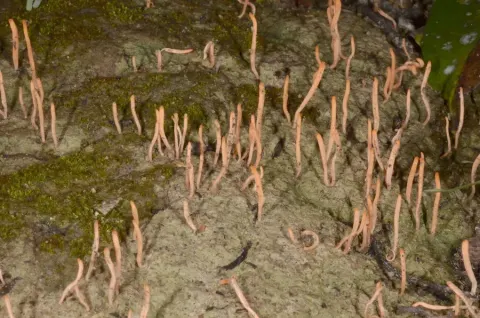
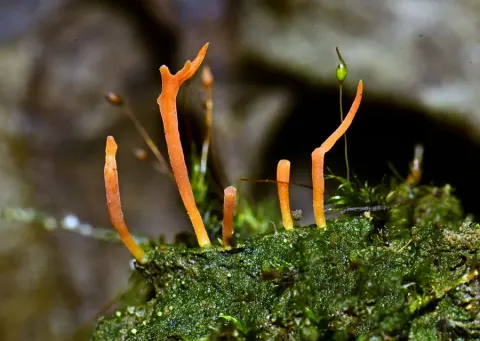
The organism forms a thin, barely noticeable crust containing single-celled green algae that have multiple chloroplasts and a large oil-containing body. Its most distinctive features are the upright fruiting bodies, which are club-shaped—narrow at the base and widening towards the tip. These structures reach 2–4.2 cm in height and are deep orange to reddish-orange in colour, except for their whitish-orange base. When dried, they become pale orange or orange-white, often with a pinkish tinge. The fruiting bodies have shallow lengthwise grooves and are hollow when mature. Under the microscope, they show a complex internal structure of fungal threads (hyphae) arranged in distinct layers, producing transparent, elongated spores.
Habitat dan peran ekologis
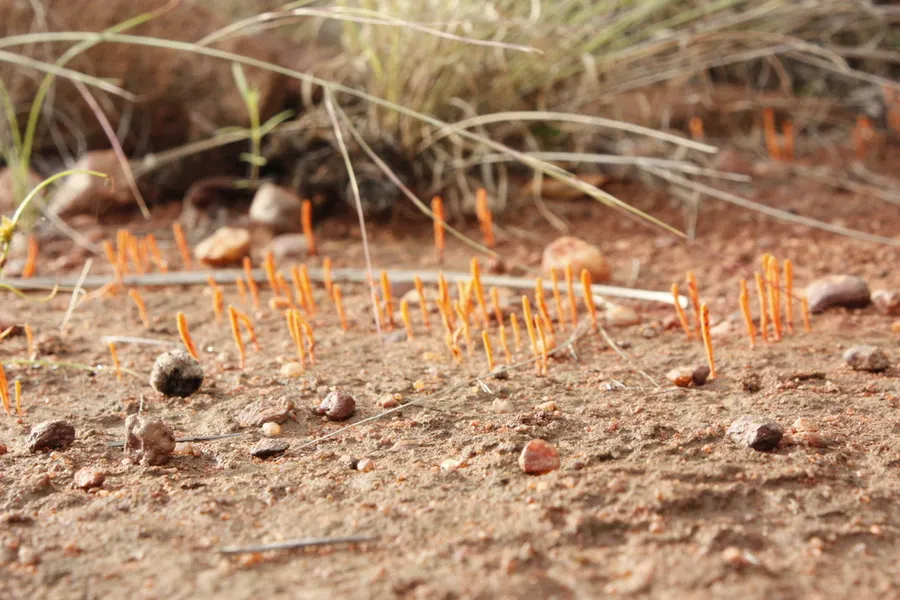
Sulzbacheromyces miomboensis is currently known only from the Haut-Katanga Province of the DRC, where it is common in its preferred habitat. The species appears in areas with a strongly seasonal climate, characterised by a dry season from May to September/October and a rainy season from November to April, during which rainfall averages 1,240 mm per year. The fruiting bodies emerge halfway through the rainy season, growing on compacted, iron-rich soil, often along dirt roads. These sites are typically very exposed to sun, hot, and have little other vegetation. When conditions are suitable, hundreds of fruiting bodies can appear together, covering several square metres.
- Habitat atau konteks temuan
- Informasi belum tersedia pada sumber rilis ini.
- Substrat
- Informasi belum tersedia pada sumber rilis ini.
- Peran atau konteks
- Belum dikategorikan pada rilis ini.
Reproduksi
The organism forms a thin, barely noticeable crust containing single-celled green algae that have multiple chloroplasts and a large oil-containing body. Its most distinctive features are the upright fruiting bodies, which are club-shaped—narrow at the base and widening towards the tip. These structures reach 2–4.2 cm in height and are deep orange to reddish-orange in colour, except for their whitish-orange base. When dried, they become pale orange or orange-white, often with a pinkish tinge. The fruiting bodies have shallow lengthwise grooves and are hollow when mature. Under the microscope, they show a complex internal structure of fungal threads (hyphae) arranged in distinct layers, producing transparent, elongated spores.
Catatan identitas dan cakupan
- Nama diterima mengikuti Catalogue of Life Base2026-09-11; uraian mempertahankan konsep dan nama sumber aslinya.
- Original geographic, specimen and life-cycle scope retained; source import awaits individual editorial review.
- Impor dan terjemahan otomatis belum diperiksa editorial per profil. Struktur reproduktif yang disebutkan tidak membuktikan seluruh siklus hidup diketahui.
- Pengukuran pada uraian mengikuti spesimen, kultur, dan metode sumber; angka tidak diperluas ke semua populasi.
Catatan distribusi dalam narasi mengikuti sumbernya. Dokumentasi spesimen atau foto mengikuti catatan sumber. Bukti wilayah Indonesia dan penilaian konservasi tidak disimpulkan dari gambar.
Melihat dengan konteks
Dokumentasi Sulzbacheromyces miomboensis menurut asosiasi foto pada record takson iNaturalist. Kredit: Fotografer tidak dicantumkan. Sumber observasi iNaturalist; pengunggah: Kelly Abram. Identitas mengikuti sumber; bukan penentuan spesimen independen.
- Jenis
- Fotografi
- Kredit
- Fotografer tidak dicantumkan. Sumber observasi iNaturalist; pengunggah: Kelly Abram
- Lisensi
- CC0 1.0
- Sumber media
- Buka entri sumber
Dokumentasi tambahan
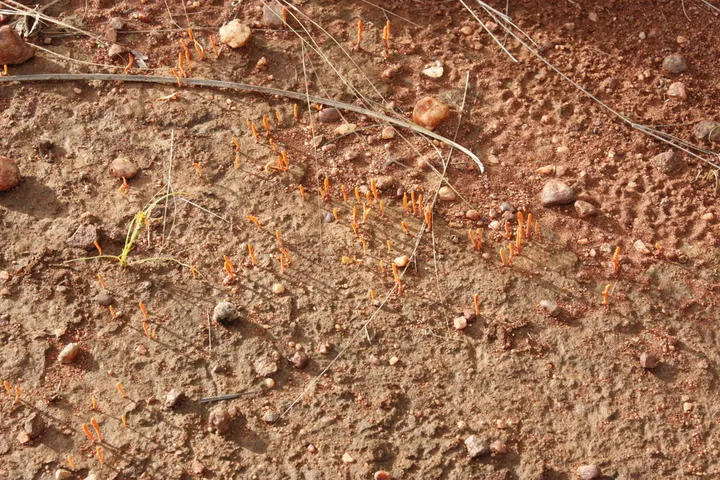
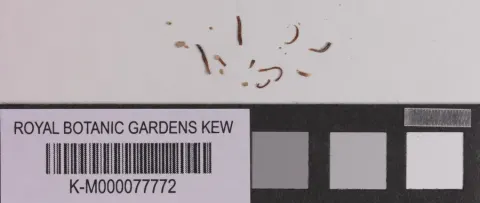
Foto yang diasosiasikan dengan Sulzbacheromyces miomboensis pada iNaturalist. Identifikasi mengikuti sumber; bukan penentuan spesimen independen.
Kredit dan penggunaan
no rights reserved
Ukuran dan format gambar disesuaikan tanpa pemotongan, retus, atau penambahan skala. Lisensi sumber dipertahankan.
Sumber profil
- [1] Sulzbacheromyces miomboensis — Wikipedia (en)
- [2] Catalogue of Life Base2026-09-11 — Sulzbacheromyces miomboensis
- [3] Dokumentasi visual — Sulzbacheromyces miomboensis
- [4] Dokumentasi visual — Sulzbacheromyces miomboensis
Rujukan halaman ini
Fungi. Sulzbacheromyces miomboensis. Rilis data fungi-2026-10-12-expansion-2. https://fungi-atlas.mgadib.chatgpt.site/jamur/sulzbacheromyces-miomboensis/.
Status: impor sumber; pemeriksaan editorial per profil belum selesai. Untuk klaim biologis, gunakan rujukan pada bagian terkait dan periksa konteks sumber aslinya.