Ciri dan struktur
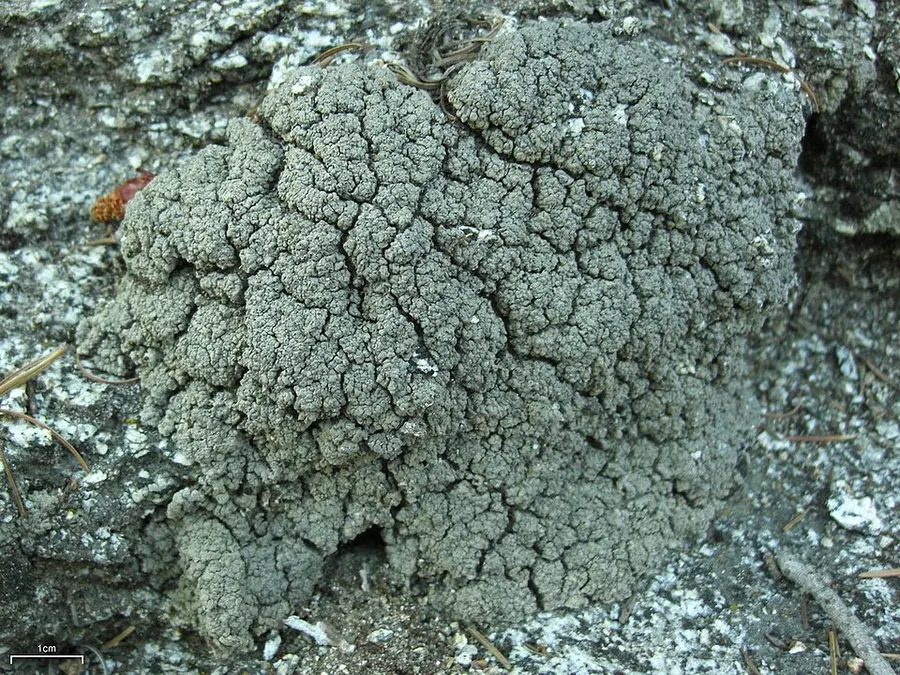
Trapeliopsis steppica has a squamulose (scaly) thallus that is light- to medium-gray in color. The individuals squamules comprising the thallus are rounded to elongated, 0.15–0.50 mm thick and 0.5–1.5 mm long. Soredia are usually present on the thallus surface; they are dark gray to greenish-black to black, organized into regions of rounded soralia. Although morphologically similar to Trapeliopsis californica, T. steppica can be distinguished from that species by the presence of soralia that is dark and rounded, and a thinner upper cortex.
Habitat dan peran ekologis
In addition to Washington, Trapeliopsis steppica has also been recorded from eastern Idaho south to southern California, in grassland and in shrub–steppe. It is most common in areas that have been little affected by grazing. The lichen has also been reported as a common lichen component of the biological soil crust of sagebrush habitats in southwest Idaho.
- Habitat atau konteks temuan
- padang rumput
- Substrat
- Informasi belum tersedia pada sumber rilis ini.
- Peran atau konteks
- Pembentuk liken
Reproduksi
Trapeliopsis steppica has a squamulose (scaly) thallus that is light- to medium-gray in color. The individuals squamules comprising the thallus are rounded to elongated, 0.15–0.50 mm thick and 0.5–1.5 mm long. Soredia are usually present on the thallus surface; they are dark gray to greenish-black to black, organized into regions of rounded soralia.
Catatan identitas dan cakupan
- Nama diterima mengikuti Catalogue of Life Base2026-09-11; uraian mempertahankan konsep dan nama sumber aslinya.
- Original geographic, specimen and life-cycle scope retained; source import awaits individual editorial review.
- Impor dan terjemahan otomatis belum diperiksa editorial per profil. Struktur reproduktif yang disebutkan tidak membuktikan seluruh siklus hidup diketahui.
- Pengukuran pada uraian mengikuti spesimen, kultur, dan metode sumber; angka tidak diperluas ke semua populasi.
Catatan distribusi dalam narasi mengikuti sumbernya. Dokumentasi spesimen atau foto mengikuti catatan sumber. Bukti wilayah Indonesia dan penilaian konservasi tidak disimpulkan dari gambar.
Melihat dengan konteks
Dokumentasi Trapeliopsis steppica dari Wikimedia Commons. Trapeliopsis steppica 20100809.15 Mount Wilson, San Gabriels, so. CA Identifikasi mengikuti record berkas sumber.
- Jenis
- Fotografi
- Kredit
- Jason Hollinger
- Lisensi
- CC BY 2.0
- Sumber media
- Buka entri sumber
Sumber profil
- [1] Trapeliopsis steppica — Wikipedia (en)
- [2] Catalogue of Life Base2026-09-11 — Trapeliopsis steppica
- [3] Dokumentasi visual — Trapeliopsis steppica
Rujukan halaman ini
Fungi. Trapeliopsis steppica. Rilis data fungi-2026-10-12-expansion-2. https://fungi-atlas.mgadib.chatgpt.site/jamur/trapeliopsis-steppica/.
Status: impor sumber; pemeriksaan editorial per profil belum selesai. Untuk klaim biologis, gunakan rujukan pada bagian terkait dan periksa konteks sumber aslinya.