Ciri dan struktur
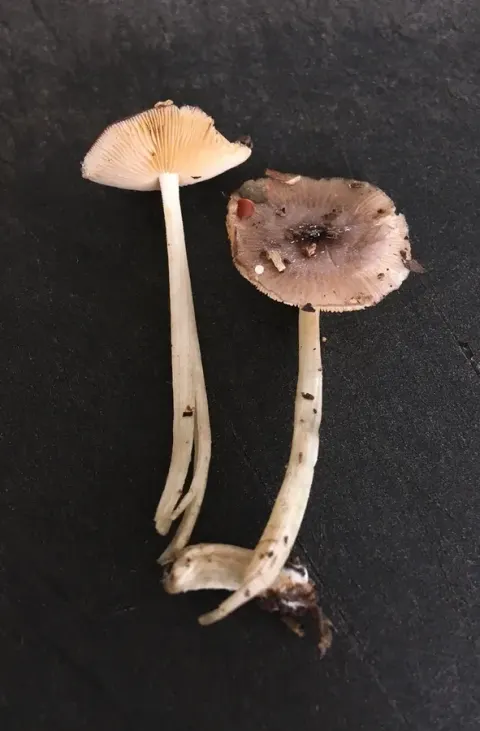
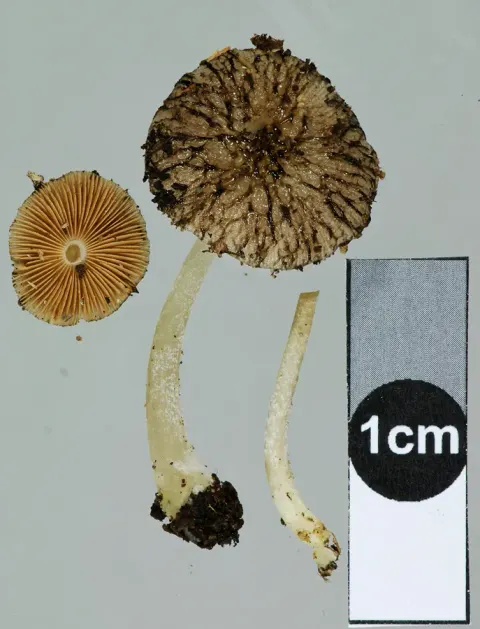
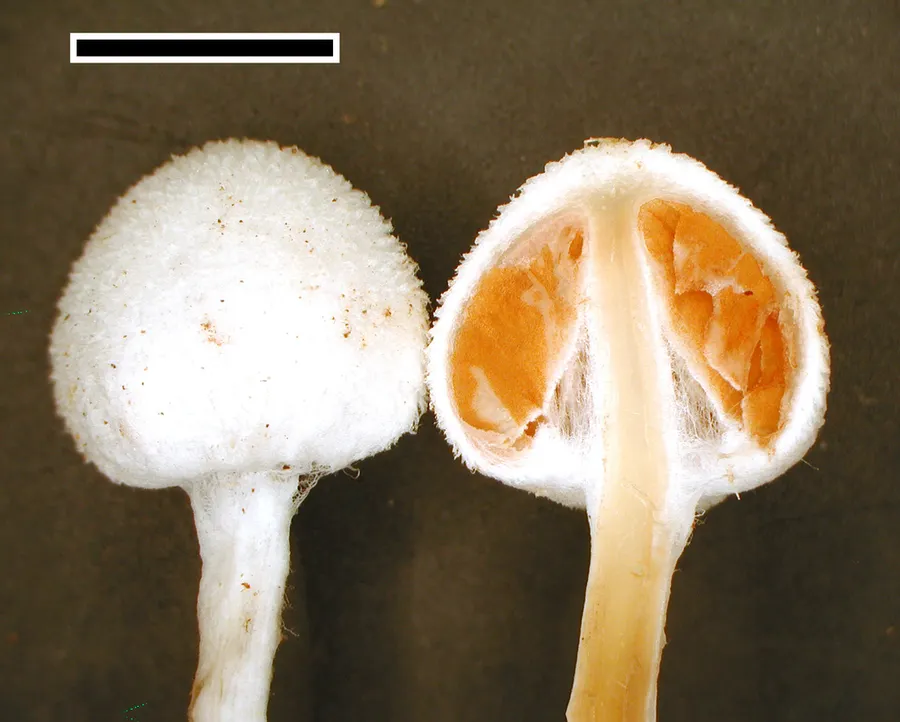
Although the type collection at Kew is in poor condition, there can be no doubt that it represents a specimen of this fungus commonly found in the forests of New Zealand. In many instances, carpophores can be observed in which the pileus does not open and the lamellae are not exposed. In old and weathered specimens in which a convex or even campanulate pileus frequently occurs, rust brown gills are clearly visible. The deep colour of the lamellae does not change and can still be seen in the type material collected some 80 years ago. From the microscopical point of view the genus Tympanella could be compared with Galeropsis Velenovsky 1930. The macroscopical characters however are strikingly different. Tympanella never grows in xerothermic localities like Galeropsis, but prefers wetter conditions in rain forests of New Zealand. Cunningham identified a collection of this fungus (PDD 6389) as Secotium leucocephalum Massee, but it seems that the spores were not thoroughly investigated. Because of the elliptical, warted,rust brown spores, the type of S. leucocephalum represents a well established species of the genus Thaxterogaster Singer (T. leucocephalum (Massee) Singer and Smith). Pileus 7-30 mm diam., globose when young, secotioid, later becoming convex or even campanulate but margin always strongly incurved: clay, buff, cream or whitish coloured; densely covered by small scales or squamules, conspicuous white fibrillose veil remnants (especially on young fruiting bodies) towards the margin, dry, non striate. Lamellae always distinctly lamellate, never lacunose or anastomosing, adnate or adnexed, occasionally subdecurrent: rust brown or cinnamon brown, with floccose, with coloured edge.
Habitat dan peran ekologis
Although the type collection at Kew is in poor condition, there can be no doubt that it represents a specimen of this fungus commonly found in the forests of New Zealand. In many instances, carpophores can be observed in which the pileus does not open and the lamellae are not exposed. In old and weathered specimens in which a convex or even campanulate pileus frequently occurs, rust brown gills are clearly visible. The deep colour of the lamellae does not change and can still be seen in the type material collected some 80 years ago. From the microscopical point of view the genus Tympanella could be compared with Galeropsis Velenovsky 1930. The macroscopical characters however are strikingly different. Tympanella never grows in xerothermic localities like Galeropsis, but prefers wetter conditions in rain forests of New Zealand. Cunningham identified a collection of this fungus (PDD 6389) as Secotium leucocephalum Massee, but it seems that the spores were not thoroughly investigated. Because of the elliptical, warted,rust brown spores, the type of S. leucocephalum represents a well established species of the genus Thaxterogaster Singer (T. leucocephalum (Massee) Singer and Smith).
- Habitat atau konteks temuan
- hutan
- Substrat
- Informasi belum tersedia pada sumber rilis ini.
- Peran atau konteks
- Belum dikategorikan pada rilis ini.
Reproduksi
Although the type collection at Kew is in poor condition, there can be no doubt that it represents a specimen of this fungus commonly found in the forests of New Zealand. In many instances, carpophores can be observed in which the pileus does not open and the lamellae are not exposed. In old and weathered specimens in which a convex or even campanulate pileus frequently occurs, rust brown gills are clearly visible. The deep colour of the lamellae does not change and can still be seen in the type material collected some 80 years ago. From the microscopical point of view the genus Tympanella could be compared with Galeropsis Velenovsky 1930. The macroscopical characters however are strikingly different.
Catatan identitas dan cakupan
- Nama diterima mengikuti Catalogue of Life Base2026-09-11; uraian mempertahankan konsep dan nama sumber aslinya.
- Historical description as cited by BiotaNZ. Preserve explicit New Zealand/locality, host and specimen qualifiers. Distribution is the cited source scope, not a current global range.
- Impor dan terjemahan otomatis belum diperiksa editorial per profil. Struktur reproduktif yang disebutkan tidak membuktikan seluruh siklus hidup diketahui.
- Pengukuran pada uraian mengikuti spesimen, kultur, dan metode sumber; angka tidak diperluas ke semua populasi.
Catatan distribusi dalam narasi mengikuti sumbernya. Dokumentasi spesimen atau foto mengikuti catatan sumber. Bukti wilayah Indonesia dan penilaian konservasi tidak disimpulkan dari gambar.
Melihat dengan konteks
Dokumentasi Tympanella galanthina menurut asosiasi foto pada record takson iNaturalist. Kredit: Jerry Cooper. Identitas mengikuti sumber; bukan penentuan spesimen independen.
- Jenis
- Fotografi
- Kredit
- (c) Jerry Cooper, some rights reserved (CC BY), uploaded by Jerry Cooper
- Lisensi
- CC BY 4.0
- Sumber media
- Buka entri sumber
Dokumentasi tambahan
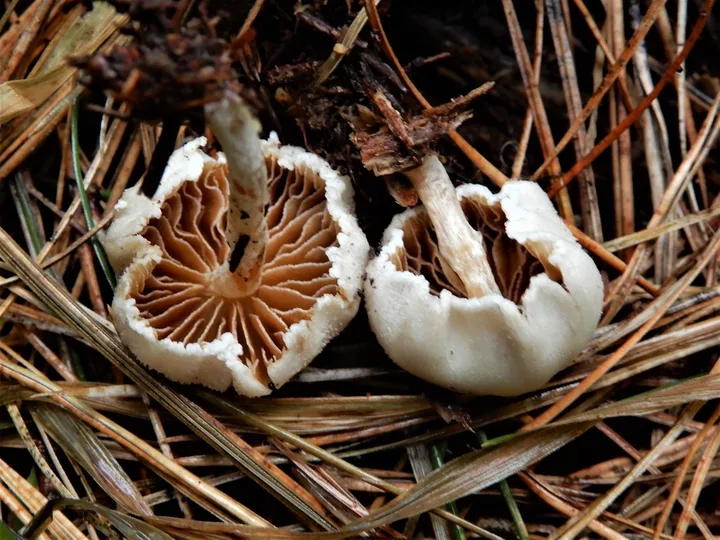
Foto yang diasosiasikan dengan Tympanella galanthina pada iNaturalist. Identifikasi mengikuti sumber; bukan penentuan spesimen independen.
Kredit dan penggunaan
(c) Grey Smith, some rights reserved (CC BY), uploaded by Grey Smith
Ukuran dan format gambar disesuaikan tanpa pemotongan, retus, atau penambahan skala. Lisensi sumber dipertahankan.
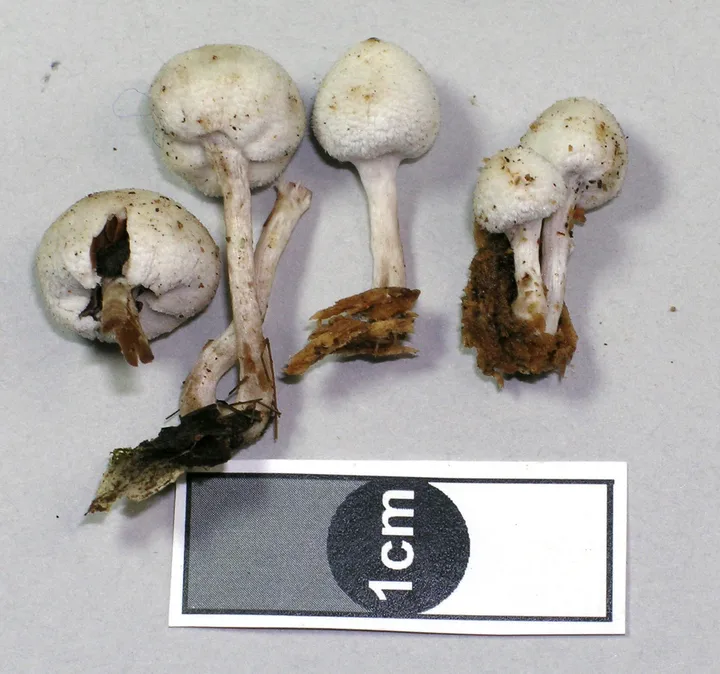
Foto yang diasosiasikan dengan Tympanella galanthina pada iNaturalist. Identifikasi mengikuti sumber; bukan penentuan spesimen independen.
Kredit dan penggunaan
(c) Jerry Cooper, some rights reserved (CC BY), uploaded by Jerry Cooper
Ukuran dan format gambar disesuaikan tanpa pemotongan, retus, atau penambahan skala. Lisensi sumber dipertahankan.
Sumber profil
- [1] Horak, E. 1971: Contributions to the knowledge of the Agaricales s.l. (Fungi) of New Zealand. New Zealand Journal of Botany 9(3): 463-493. — Tympanella galanthina
- [2] Catalogue of Life Base2026-09-11 — Tympanella galanthina
- [3] Dokumentasi visual — Tympanella galanthina
- [4] Dokumentasi visual — Tympanella galanthina
- [5] Dokumentasi visual — Tympanella galanthina
Rujukan halaman ini
Fungi. Tympanella galanthina. Rilis data fungi-2026-10-12-expansion-2. https://fungi-atlas.mgadib.chatgpt.site/jamur/tympanella-galanthina/.
Status: impor sumber; pemeriksaan editorial per profil belum selesai. Untuk klaim biologis, gunakan rujukan pada bagian terkait dan periksa konteks sumber aslinya.