Ciri dan struktur
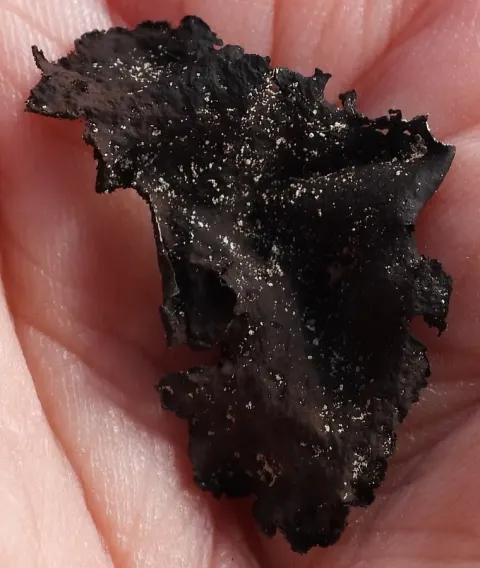
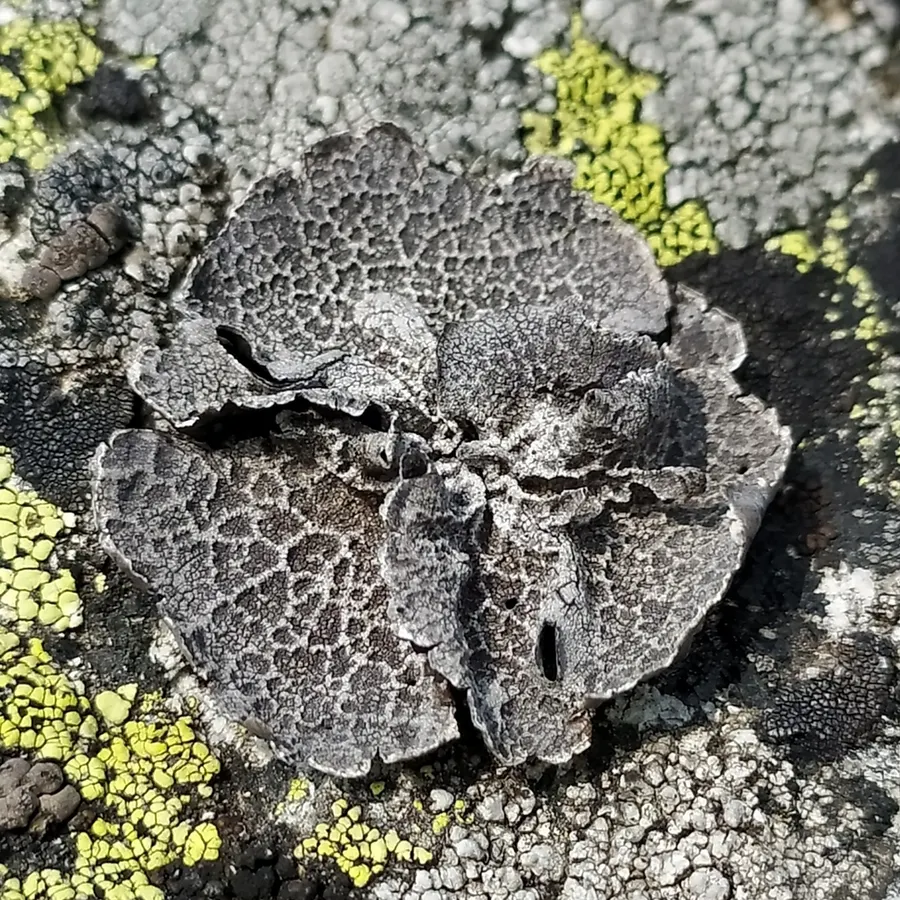
Umbilicaria decussata forms stiff, circular patches (known as thalli) up to 5 cm across. Each thallus attaches to the rock at a central point on its underside, like an umbrella. The upper surface ranges from light to dark grey and has a distinctive pattern of sharp ridges that radiate outward from the centre, becoming a more net-like pattern of weaker ridges toward the edges. In older parts of the lichen, particularly near the centre, the surface develops a white weathered layer. The underside of the thallus is sooty black due to a dense covering of tiny, dark spores called . These spores are either spherical or egg-shaped and measure about 7 μm across. While these spores typically cover the entire underside in multiple layers, some specimens may have a narrow band around the edge where they are absent, revealing the lichen's natural light grey to brown colouring underneath. Reproductive structures (apothecia) are rarely seen in this species. When present, these appear as small black discs raised on short stalks. This matches Villars's original 1789 description, where he noted that the fruiting bodies appeared as large black spots along the margins and were uncommonly seen. The lichen's species epithet decussata refers to the cross-like pattern formed by its ridges, a feature that Villars highlighted in his first description of the species. This pattern, along with its stiff, cartilage-like texture and distinctive colouring (brown-grey above and black below), helps distinguish it from related species.
Habitat dan peran ekologis
Umbilicaria decussata is a cosmopolitan lichen species found on all continents, including Antarctica, with a particularly strong presence in high alpine environments. It typically grows at elevations between 4,500 and 5,000 metres above sea level, where it colonises siliceous (silicon-rich) rocks, especially on the vertical faces of large, wind-exposed boulders. Its preference for sites that remain above the winter snowline is characteristic of its ecological niche in these extreme environments. While the species has a global distribution, it shows varying abundance across different mountain ranges. In South America, it can be found along the entire length of the Andes mountain chain, from Venezuela in the north to Patagonia in the south, though it is considerably less common in these regions compared to other parts of its range. Its presence in Europe was first documented in the French Alps, where it was originally discovered growing on granitic rocks in several high-altitude locations. Laboratory studies have shown that U. decussata show considerable resilience to photoinhibition (light-induced stress) compared to other Antarctic lichens. When exposed to high-intensity light at low temperatures (5°C), simulating summer conditions in Antarctica, it demonstrated more efficient recovery mechanisms and better photoprotective capabilities than the fruticose lichen species Usnea antarctica.
- Habitat atau konteks temuan
- Informasi belum tersedia pada sumber rilis ini.
- Substrat
- Informasi belum tersedia pada sumber rilis ini.
- Peran atau konteks
- Pembentuk liken
Reproduksi
The underside of the thallus is sooty black due to a dense covering of tiny, dark spores called . These spores are either spherical or egg-shaped and measure about 7 μm across. While these spores typically cover the entire underside in multiple layers, some specimens may have a narrow band around the edge where they are absent, revealing the lichen's natural light grey to brown colouring underneath. Reproductive structures (apothecia) are rarely seen in this species. When present, these appear as small black discs raised on short stalks. This matches Villars's original 1789 description, where he noted that the fruiting bodies appeared as large black spots along the margins and were uncommonly seen.
Catatan identitas dan cakupan
- Nama diterima mengikuti Catalogue of Life Base2026-09-11; uraian mempertahankan konsep dan nama sumber aslinya.
- Original geographic, specimen and life-cycle scope retained; source import awaits individual editorial review.
- Impor dan terjemahan otomatis belum diperiksa editorial per profil. Struktur reproduktif yang disebutkan tidak membuktikan seluruh siklus hidup diketahui.
- Pengukuran pada uraian mengikuti spesimen, kultur, dan metode sumber; angka tidak diperluas ke semua populasi.
Catatan distribusi dalam narasi mengikuti sumbernya. Dokumentasi spesimen atau foto mengikuti catatan sumber. Bukti wilayah Indonesia dan penilaian konservasi tidak disimpulkan dari gambar.
Melihat dengan konteks
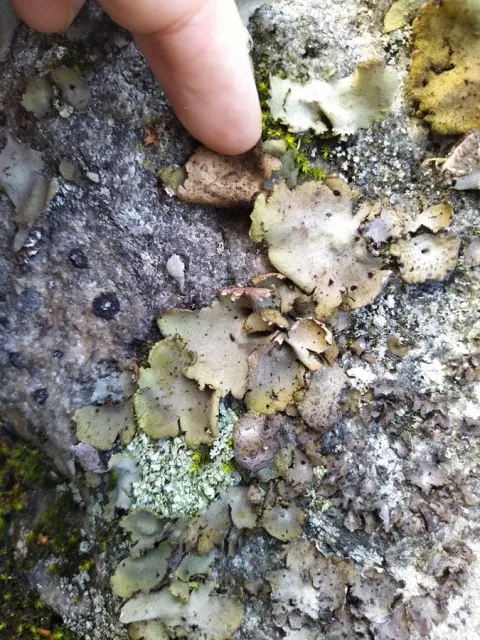
Dokumentasi Umbilicaria decussata menurut asosiasi foto pada record takson iNaturalist. Kredit: Алексей Ябс. Identitas mengikuti sumber; bukan penentuan spesimen independen.
- Jenis
- Fotografi
- Kredit
- no rights reserved, uploaded by Алексей Ябс
- Lisensi
- CC0 1.0
- Sumber media
- Buka entri sumber
Dokumentasi tambahan
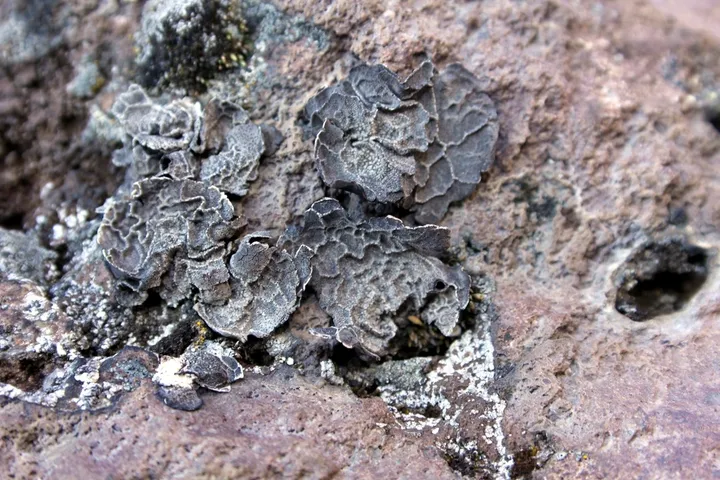
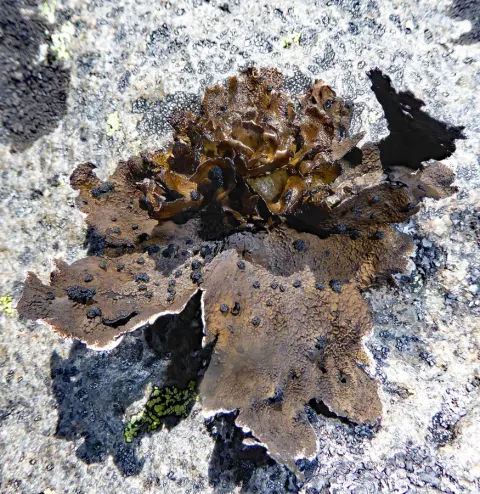
Foto yang diasosiasikan dengan Umbilicaria decussata pada iNaturalist. Identifikasi mengikuti sumber; bukan penentuan spesimen independen.
Kredit dan penggunaan
(c) Alan Rockefeller, some rights reserved (CC BY), uploaded by Alan Rockefeller
Ukuran dan format gambar disesuaikan tanpa pemotongan, retus, atau penambahan skala. Lisensi sumber dipertahankan.
Sumber profil
- [1] Umbilicaria decussata — Wikipedia (en)
- [2] Catalogue of Life Base2026-09-11 — Umbilicaria decussata
- [3] Dokumentasi visual — Umbilicaria decussata
- [4] Dokumentasi visual — Umbilicaria decussata
Rujukan halaman ini
Fungi. Umbilicaria decussata. Rilis data fungi-2026-10-12-expansion-2. https://fungi-atlas.mgadib.chatgpt.site/jamur/umbilicaria-decussata/.
Status: impor sumber; pemeriksaan editorial per profil belum selesai. Untuk klaim biologis, gunakan rujukan pada bagian terkait dan periksa konteks sumber aslinya.