Ciri dan struktur
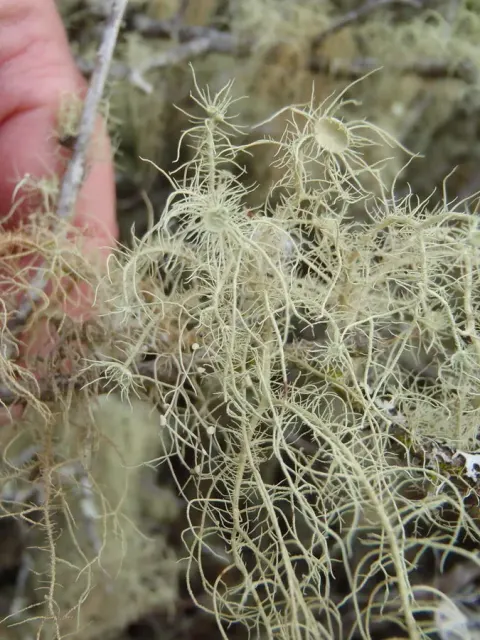
The thallus (vegetative tissue) of this fruticose (bush-like) lichen is densely branched, and forms tangled masses of stems which are prostrate or pendulous. The branches are smooth and somewhat knobbly or spiny, and a greenish-grey colour. The larger stems become articulated, dividing into inflated, sausage-like segments. The lichen is not blackish at the base and sometimes becomes detached, continuing to grow while draped over its support.
Habitat dan peran ekologis
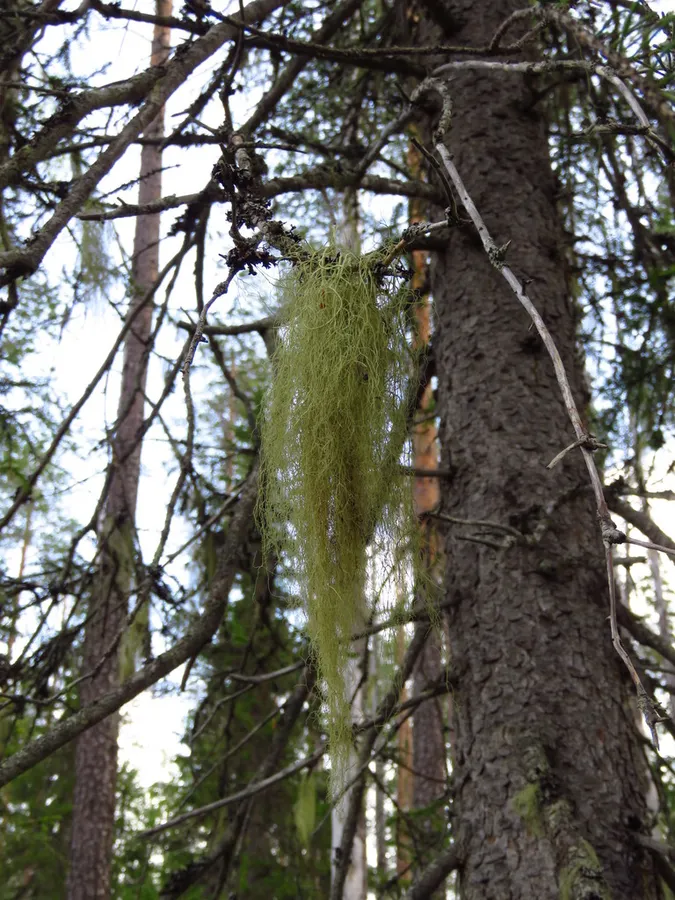
This lichen is very sensitive to air pollution, especially from sulphur dioxide; it has a widespread but sparse distribution in mainland Europe, but has become extinct in many areas, surviving best in Brittany. It occurs on various Mediterranean and Atlantic islands and is present in Saudi Arabia, and the mountainous regions of East Africa and North Africa. In the British Isles, it used to be widespread but disappeared from many areas during the Industrial Revolution. It is reasonably common in southwestern England, from the New Forest westwards, and is known from scattered locations in Wales, particularly Pembrokeshire. It is rare in southern and western Ireland. Sometimes this lichen grows on the ground, in the slacks among sand dunes growing over rough vegetation. More often it is arboreal, often high in the canopy or in hedgerows, and not attached to anything, but draped over twigs and branches. Here it is difficult to spot from below and its presence may only become apparent should fragments of the lichen fall to the ground during storms or after snowfall. Like all lichens, this species involves a mutual relationship between an alga and a fungus; in this instance the alga is a green alga, but not Trentepohlia.
- Habitat atau konteks temuan
- hutan
- Substrat
- tanah
- Peran atau konteks
- Pembentuk liken
Reproduksi
Like all lichens, this species involves a mutual relationship between an alga and a fungus; in this instance the alga is a green alga, but not Trentepohlia. Reproduction in this species is mainly by fragmentation of the thallus, with an apparent absence of spore production limiting its ability to recolonise parts of its range where it has been extirpated.
Catatan identitas dan cakupan
- Nama diterima mengikuti Catalogue of Life Base2026-09-11; uraian mempertahankan konsep dan nama sumber aslinya.
- Original geographic, specimen and life-cycle scope retained; source import awaits individual editorial review.
- Impor dan terjemahan otomatis belum diperiksa editorial per profil. Struktur reproduktif yang disebutkan tidak membuktikan seluruh siklus hidup diketahui.
- Pengukuran pada uraian mengikuti spesimen, kultur, dan metode sumber; angka tidak diperluas ke semua populasi.
Catatan distribusi dalam narasi mengikuti sumbernya. Dokumentasi spesimen atau foto mengikuti catatan sumber. Bukti wilayah Indonesia dan penilaian konservasi tidak disimpulkan dari gambar.
Melihat dengan konteks
Dokumentasi Usnea articulata menurut asosiasi foto pada record takson iNaturalist. Kredit: Annika Lindqvist. Identitas mengikuti sumber; bukan penentuan spesimen independen.
- Jenis
- Fotografi
- Kredit
- (c) Annika Lindqvist, some rights reserved (CC BY), uploaded by Annika Lindqvist
- Lisensi
- CC BY 4.0
- Sumber media
- Buka entri sumber
Dokumentasi tambahan
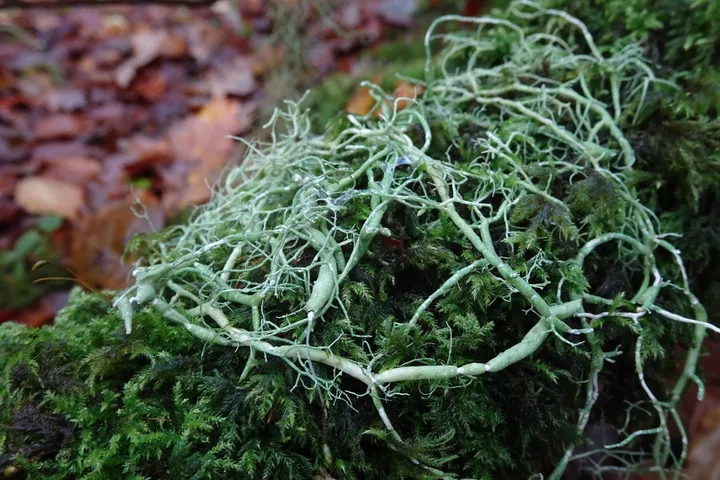
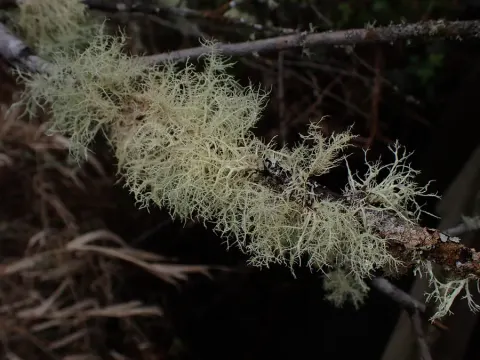
Foto yang diasosiasikan dengan Usnea articulata pada iNaturalist. Identifikasi mengikuti sumber; bukan penentuan spesimen independen.
Kredit dan penggunaan
(c) Zeke Marshall, some rights reserved (CC BY), uploaded by Zeke Marshall
Ukuran dan format gambar disesuaikan tanpa pemotongan, retus, atau penambahan skala. Lisensi sumber dipertahankan.
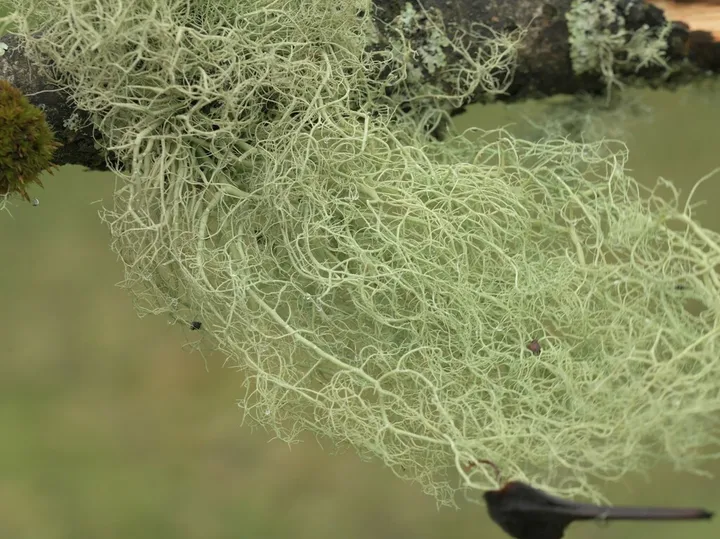
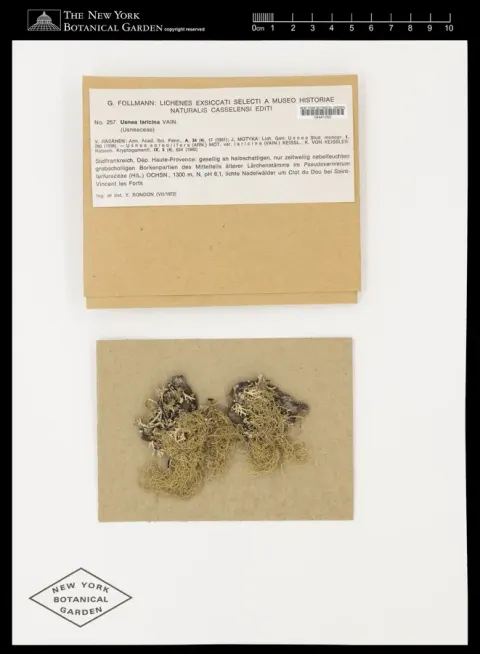
Foto yang diasosiasikan dengan Usnea articulata pada iNaturalist. Identifikasi mengikuti sumber; bukan penentuan spesimen independen.
Kredit dan penggunaan
no rights reserved, uploaded by Kian Hayles-Cotton
Ukuran dan format gambar disesuaikan tanpa pemotongan, retus, atau penambahan skala. Lisensi sumber dipertahankan.
Sumber profil
- [1] Usnea articulata — Wikipedia (en)
- [2] Catalogue of Life Base2026-09-11 — Usnea articulata
- [3] Dokumentasi visual — Usnea articulata
- [4] Dokumentasi visual — Usnea articulata
- [5] Dokumentasi visual — Usnea articulata
Rujukan halaman ini
Fungi. Usnea articulata. Rilis data fungi-2026-10-12-expansion-2. https://fungi-atlas.mgadib.chatgpt.site/jamur/usnea-articulata/.
Status: impor sumber; pemeriksaan editorial per profil belum selesai. Untuk klaim biologis, gunakan rujukan pada bagian terkait dan periksa konteks sumber aslinya.