01 / Morfologi

Ciri dan struktur

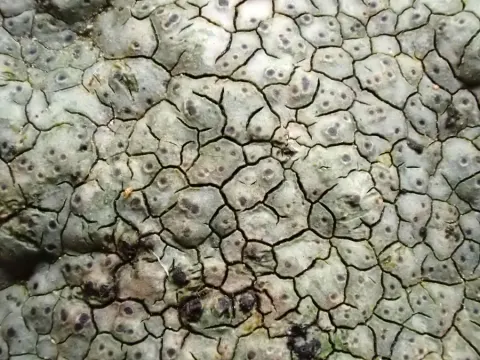
The lichen forms a thallus that is or -areolate, meaning it consists of small, separate or clustered patches () that somewhat preserve the appearance of its host. The areoles measure 0.1–0.8 mm (occasionally up to 1 mm) across, have flat surfaces initially but develop into convex, very convex, or even somewhat globular structures as they mature. They are typically 0.1–0.4 mm thick and covered with a distinctive whitish-grey crystalline powdery coating (). The margins and undersides of the areoles range in colour from light brown to blackish. Under microscopic examination, the lichen shows a layered structure. The (outer protective layer) consists of a pigmented layer 10–12 μm thick made up of 1–2 layers of cells with very light to light brown walls, topped by a 5–11 μm thick layer of dead cells that is occasionally absent in places. This is covered by a layer of thick crystals that may also be absent in some areas. The , containing photosynthetic partner cells, is 55–80 μm thick with algal cells measuring (7)8–15.5 μm in diameter. The medulla (inner layer) does not react with iodine (J–), measures 100–300 μm thick, and consists of filamentous hyphae (fungal threads) that are generally not very dense, with abundant large crystals and occasionally abundant brown necrotic parts of the host. The reproductive structures (ascomata or "fruiting bodies") measure approximately 200–240 μm in diameter and are either completely embedded within the thallus or slightly protruding when fully developed. They appear in groups of 1–4 within the areoles and are visible from above due to their blackish-brown or black periostiolar area (the area surrounding the opening of the fruiting body).

Sebagian uraian ditampilkan dalam bahasa sumber; terjemahannya belum tersedia atau belum lolos pemeriksaan.

Rujukan: [1]

Pengukuran mengikuti objek, spesimen atau kultur, dan metode yang disebutkan sumber. Baca uraian asli untuk konteks lengkap.

02 / Kehidupan

Habitat dan peran ekologis

Verrucula arnoldaria has specific habitat preferences, typically growing on calcareous rock formations. It favours surfaces that are sheltered from direct rainfall and water runoff, particularly on overhanging rock faces (subcorvels). The species shows a preference for compact limestone and dolomitic substrates. In the documented locations, it has been found on various types of calcareous rock including Burdigalian molasse (a type of sandstone with calcareous cement), dolomitic limestone, and Upper Jurassic limestone (specifically in the Tithonian facies). The lichen often grows on rock faces with specific orientations, frequently facing north, northeast, east, or south-southeast, and typically on very steep surfaces with inclinations of 90–110° (vertical to slightly overhanging). The known distribution of Verrucula arnoldaria is limited to southern France and northeastern Spain. In France, specimens have been collected from multiple locations in Provence, including sites in the departments of Vaucluse, Bouches-du-Rhône, as well as from Languedoc and Saône-et-Loire in east-central France. In Spain, the species has been documented in Catalonia, specifically in the province of Tarragona (Serra de Prades).

Sebagian uraian ditampilkan dalam bahasa sumber; terjemahannya belum tersedia atau belum lolos pemeriksaan.

Rujukan: [1]

Habitat atau konteks temuan
Informasi belum tersedia pada sumber rilis ini.
Substrat
Informasi belum tersedia pada sumber rilis ini.
Peran atau konteks
Pembentuk liken
Temukan hubungan serupa
03 / Siklus hidup

Reproduksi

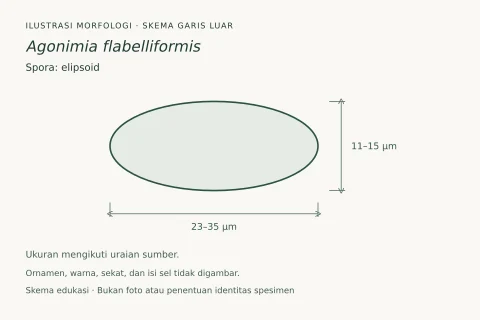
The reproductive structures (ascomata or "fruiting bodies") measure approximately 200–240 μm in diameter and are either completely embedded within the thallus or slightly protruding when fully developed. They appear in groups of 1–4 within the areoles and are visible from above due to their blackish-brown or black periostiolar area (the area surrounding the opening of the fruiting body). The (the outer wall of the fruiting body) is 25–35 μm thick at the base and colourless, with only the external periostiolar part being brown. The (sterile filaments between the asci) measure 15–30 by 1.5–3 μm. The asci (spore-producing structures) are 42–60 by 15–20 μm in size. The spores are ellipsoid, measuring 10–11.4–13 by 6.5–6.9–7.5 μm, with a length-to-width ratio of 1.4–1.7–2.0.

Sebagian uraian ditampilkan dalam bahasa sumber; terjemahannya belum tersedia atau belum lolos pemeriksaan.

Rujukan: [1]

04 / Batas informasi

Catatan identitas dan cakupan

  • Nama diterima mengikuti Catalogue of Life Base2026-09-11; uraian mempertahankan konsep dan nama sumber aslinya.
  • Original geographic, specimen and life-cycle scope retained; source import awaits individual editorial review.
  • Impor dan terjemahan otomatis belum diperiksa editorial per profil. Struktur reproduktif yang disebutkan tidak membuktikan seluruh siklus hidup diketahui.
  • Pengukuran pada uraian mengikuti spesimen, kultur, dan metode sumber; angka tidak diperluas ke semua populasi.

Catatan distribusi dalam narasi mengikuti sumbernya. Dokumentasi spesimen atau foto mengikuti catatan sumber. Bukti wilayah Indonesia dan penilaian konservasi tidak disimpulkan dari gambar.

05 / Dokumentasi

Melihat dengan konteks

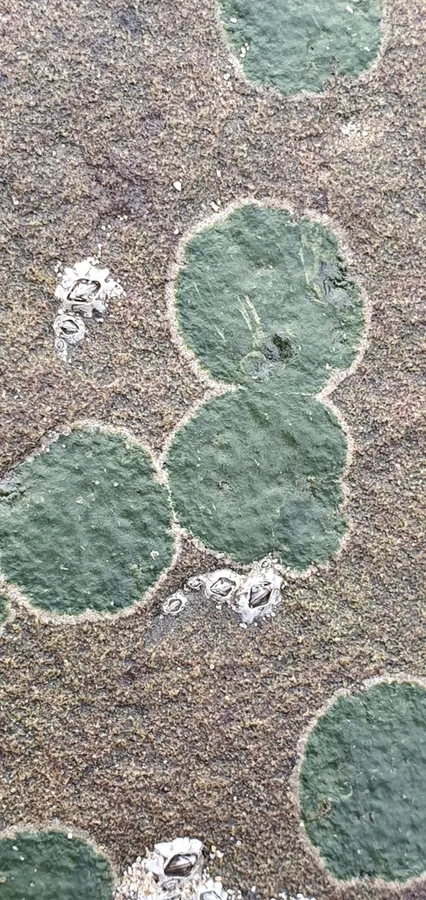
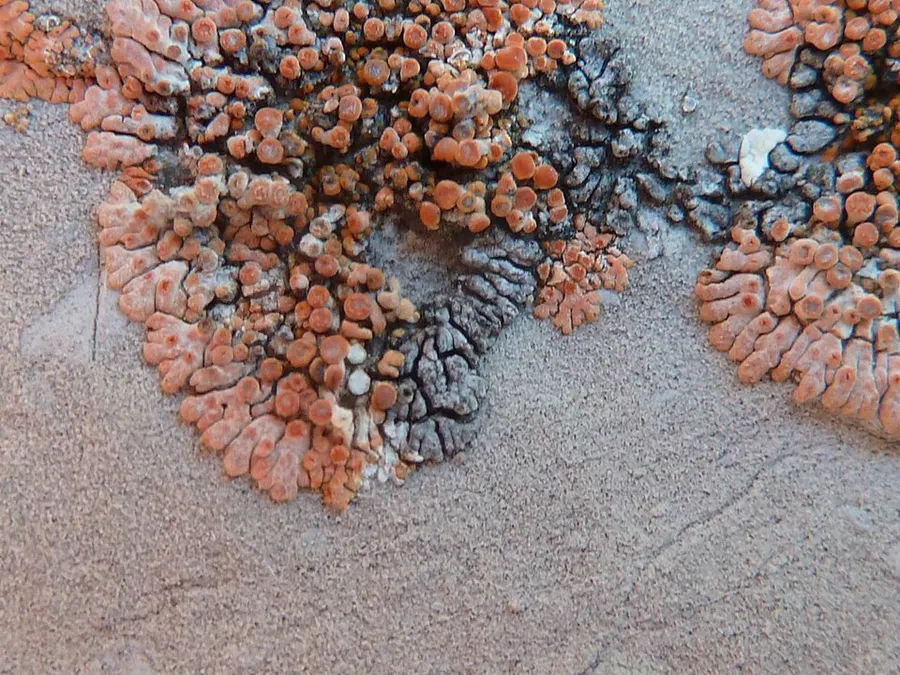
Dokumentasi Verrucula arnoldaria dari Wikimedia Commons. Verrucula arnoldaria (Mirabeau, Hérault, Provence, France) Identifikasi mengikuti record berkas sumber.

Jenis
Fotografi
Kredit
Jymm
Sumber media
Buka entri sumber

Gambar menunjukkan objek menurut identifikasi sumber, bukan verifikasi independen spesimen oleh Fungi. Tidak ada skala baru yang ditambahkan.

06 / Rujukan

Sumber profil

  1. [1] Verrucula arnoldaria — Wikipedia (en)Bagian sumber: Frozen revision 1288927642
    Tanggal penghimpunan sumber: 2026-10-12
    Teks sumber: CC BY-SA4.0 · Wikipedia contributors
  2. [2] Catalogue of Life Base2026-09-11 — Verrucula arnoldariaBagian sumber: ColDP NameUsage.tsv ID 5B8P7; accepted species; source 2073
    Tanggal penghimpunan sumber: 2026-10-12
  3. [3] Dokumentasi visual — Verrucula arnoldariaBagian sumber: Individual media record; identification follows the source, not independent determination
    Tanggal penghimpunan sumber: 2026-10-12
    Media sumber: CC BY-SA 4.0 · Jymm

Adaptasi teks: CC BY-SA 4.0. Wikipedia contributors — Verrucula arnoldaria — Wikipedia (en)

Uraian asli dan riwayat sumber

Riwayat atau halaman sumber

Ringkasan sumber

Verrucula arnoldaria is a rare species of lichenicolous (lichen-dwelling) lichen in the family Verrucariaceae. It grows parasitically on the thallus of the rock-dwelling, crustose lichen Calogaya arnoldii. The known distribution of V. arnoldaria is limited to southern France and northeastern Spain.

Revisi sumber

Morfologi sumber

The lichen forms a thallus that is or -areolate, meaning it consists of small, separate or clustered patches () that somewhat preserve the appearance of its host. The areoles measure 0.1–0.8 mm (occasionally up to 1 mm) across, have flat surfaces initially but develop into convex, very convex, or even somewhat globular structures as they mature. They are typically 0.1–0.4 mm thick and covered with a distinctive whitish-grey crystalline powdery coating (). The margins and undersides of the areoles range in colour from light brown to blackish. Under microscopic examination, the lichen shows a layered structure. The (outer protective layer) consists of a pigmented layer 10–12 μm thick made up of 1–2 layers of cells with very light to light brown walls, topped by a 5–11 μm thick layer of dead cells that is occasionally absent in places. This is covered by a layer of thick crystals that may also be absent in some areas. The , containing photosynthetic partner cells, is 55–80 μm thick with algal cells measuring (7)8–15.5 μm in diameter. The medulla (inner layer) does not react with iodine (J–), measures 100–300 μm thick, and consists of filamentous hyphae (fungal threads) that are generally not very dense, with abundant large crystals and occasionally abundant brown necrotic parts of the host. The reproductive structures (ascomata or "fruiting bodies") measure approximately 200–240 μm in diameter and are either completely embedded within the thallus or slightly protruding when fully developed. They appear in groups of 1–4 within the areoles and are visible from above due to their blackish-brown or black periostiolar area (the area surrounding the opening of the fruiting body).

Revisi sumber

Ekologi sumber

Verrucula arnoldaria has specific habitat preferences, typically growing on calcareous rock formations. It favours surfaces that are sheltered from direct rainfall and water runoff, particularly on overhanging rock faces (subcorvels). The species shows a preference for compact limestone and dolomitic substrates. In the documented locations, it has been found on various types of calcareous rock including Burdigalian molasse (a type of sandstone with calcareous cement), dolomitic limestone, and Upper Jurassic limestone (specifically in the Tithonian facies). The lichen often grows on rock faces with specific orientations, frequently facing north, northeast, east, or south-southeast, and typically on very steep surfaces with inclinations of 90–110° (vertical to slightly overhanging). The known distribution of Verrucula arnoldaria is limited to southern France and northeastern Spain. In France, specimens have been collected from multiple locations in Provence, including sites in the departments of Vaucluse, Bouches-du-Rhône, as well as from Languedoc and Saône-et-Loire in east-central France. In Spain, the species has been documented in Catalonia, specifically in the province of Tarragona (Serra de Prades).

Revisi sumber

Struktur reproduksi sumber

The reproductive structures (ascomata or "fruiting bodies") measure approximately 200–240 μm in diameter and are either completely embedded within the thallus or slightly protruding when fully developed. They appear in groups of 1–4 within the areoles and are visible from above due to their blackish-brown or black periostiolar area (the area surrounding the opening of the fruiting body). The (the outer wall of the fruiting body) is 25–35 μm thick at the base and colourless, with only the external periostiolar part being brown. The (sterile filaments between the asci) measure 15–30 by 1.5–3 μm. The asci (spore-producing structures) are 42–60 by 15–20 μm in size. The spores are ellipsoid, measuring 10–11.4–13 by 6.5–6.9–7.5 μm, with a length-to-width ratio of 1.4–1.7–2.0.

Revisi sumber

Rujukan halaman ini

Fungi. Verrucula arnoldaria. Rilis data fungi-2026-10-12-expansion-2. https://fungi-atlas.mgadib.chatgpt.site/jamur/verrucula-arnoldaria/.

Status: impor sumber; pemeriksaan editorial per profil belum selesai. Untuk klaim biologis, gunakan rujukan pada bagian terkait dan periksa konteks sumber aslinya.