01 / Morfologi

Ciri dan struktur

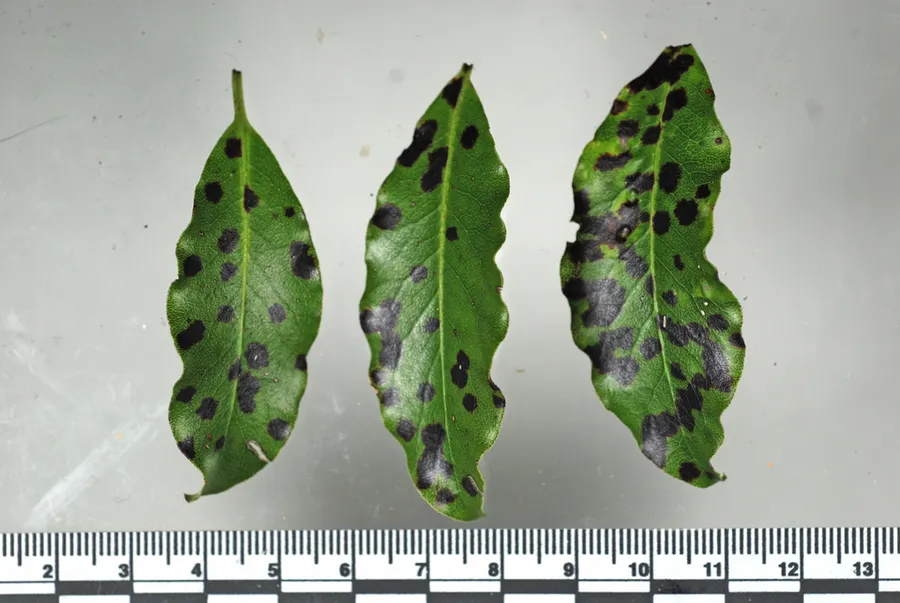
Leaf spots on the upper surface of the leaf, roughly circular, 2-12 mm diameter, dull black, necrotic, mostly discrete but sometimes confluent. Mycelium subcuticular, with light-brown and hyaline cells in no particular order, hyphae 5-7 µm wide with individual cells varying from 5 to 35 µm in length, septa thickened and dark-brown. Ascocarp a thyrothecium, fruitbodies arranged in groups on the black spots, discrete, shining black, dimidate or flattened convex, 120-160 µm in diameter. The ascocarp has an ostiole, 10-20 µm diameter, at maturity. Upper wall of the ascocarp composed of two layers of dark-brown, non-radiating cells, 3-5 µm wide. Lower wall composed of a single layer of subhyaline cells, 3-5 µm wide. Asci arranged radially round a central column of paraphysoid tissue, bitunicate, ellipsoidal to subclavate, 45-65 µm long x 15-20 µm wide, with 8 spores, apex rounded and thickened. Ascospores arranged in 1-2 rows, unicellular, obovate, brown with a transverse hyaline zone (1-2 µm wide) just above the middle, 10-14 µm long x 5-7 µm wide, with a small (about 2 µm long), conical, hyaline basal appendage. A thin gelatinous coat of uniform thickness surrounds the ascospore. Conidia borne in structures similar to ascocarps, ellipsoidal, hyaline, 5-8 x 4-6 µm. Conidiophores not seen.

Sebagian uraian ditampilkan dalam bahasa sumber; terjemahannya belum tersedia atau belum lolos pemeriksaan.

Rujukan: [1]

Pengukuran mengikuti objek, spesimen atau kultur, dan metode yang disebutkan sumber. Baca uraian asli untuk konteks lengkap.

02 / Kehidupan

Habitat dan peran ekologis

On living leaves of Pittosporum tenuifolium and of Myrsine australis. The specific epithet refers to the gelatinous coat surrounding the ascospore. The main characteristic that distinguishes the New Zealand species from other Vizella spp. is the gelatinous coat surrounding each ascospore. Müller & von Arx (1955), after examining Vizella gomphispora (Berkeley & Broome) Hughes, V. royenae von Arx & Müller, and V. bingervilliana C.Moreau & M.Moreau, concluded that these three species were conspecific with the older V. appendiculosa (Montagne & Berkeley) Theissen. In addition to the possession of a gelatinous coat, the New Zealand species differs from V. appendiculosa sensu lato in that (a) its ascospores have the hyaline band in the middle rather than close to the apex (Hughes 1953; von Arx & Müller 1975) and (b) rather than having thick hyphae composed of "almost cuboid" cells up to 12 µm wide (Hughes 1953), the width of its hyphal cells does not exceed 7 µm and the length varies from 5 µm to 35 µm. In common with the Australian V. oleariae Swart, both the conidial and ascal states of the New Zealand species are found in the same colony. However, the conidia of the New Zealand species, unlike those of V. oleariae, remain hyaline at maturity and the mycelium does not have the regular alternation of paired hyaline cells as with dark cells as described for V. oleariae (Swart 1971).

Sebagian uraian ditampilkan dalam bahasa sumber; terjemahannya belum tersedia atau belum lolos pemeriksaan.

Rujukan: [1]

Habitat atau konteks temuan
Informasi belum tersedia pada sumber rilis ini.
Substrat
Informasi belum tersedia pada sumber rilis ini.
Peran atau konteks
Belum dikategorikan pada rilis ini.
Temukan hubungan serupa
03 / Siklus hidup

Reproduksi

Leaf spots on the upper surface of the leaf, roughly circular, 2-12 mm diameter, dull black, necrotic, mostly discrete but sometimes confluent. Mycelium subcuticular, with light-brown and hyaline cells in no particular order, hyphae 5-7 µm wide with individual cells varying from 5 to 35 µm in length, septa thickened and dark-brown. Ascocarp a thyrothecium, fruitbodies arranged in groups on the black spots, discrete, shining black, dimidate or flattened convex, 120-160 µm in diameter. The ascocarp has an ostiole, 10-20 µm diameter, at maturity. Upper wall of the ascocarp composed of two layers of dark-brown, non-radiating cells, 3-5 µm wide. Lower wall composed of a single layer of subhyaline cells, 3-5 µm wide.

Sebagian uraian ditampilkan dalam bahasa sumber; terjemahannya belum tersedia atau belum lolos pemeriksaan.

Rujukan: [1]

04 / Batas informasi

Catatan identitas dan cakupan

  • Nama diterima mengikuti Catalogue of Life Base2026-09-11; uraian mempertahankan konsep dan nama sumber aslinya.
  • Historical description as cited by BiotaNZ. Preserve explicit New Zealand/locality, host and specimen qualifiers. Distribution is the cited source scope, not a current global range.
  • Impor dan terjemahan otomatis belum diperiksa editorial per profil. Struktur reproduktif yang disebutkan tidak membuktikan seluruh siklus hidup diketahui.
  • Pengukuran pada uraian mengikuti spesimen, kultur, dan metode sumber; angka tidak diperluas ke semua populasi.

Catatan distribusi dalam narasi mengikuti sumbernya. Dokumentasi spesimen atau foto mengikuti catatan sumber. Bukti wilayah Indonesia dan penilaian konservasi tidak disimpulkan dari gambar.

05 / Dokumentasi

Melihat dengan konteks

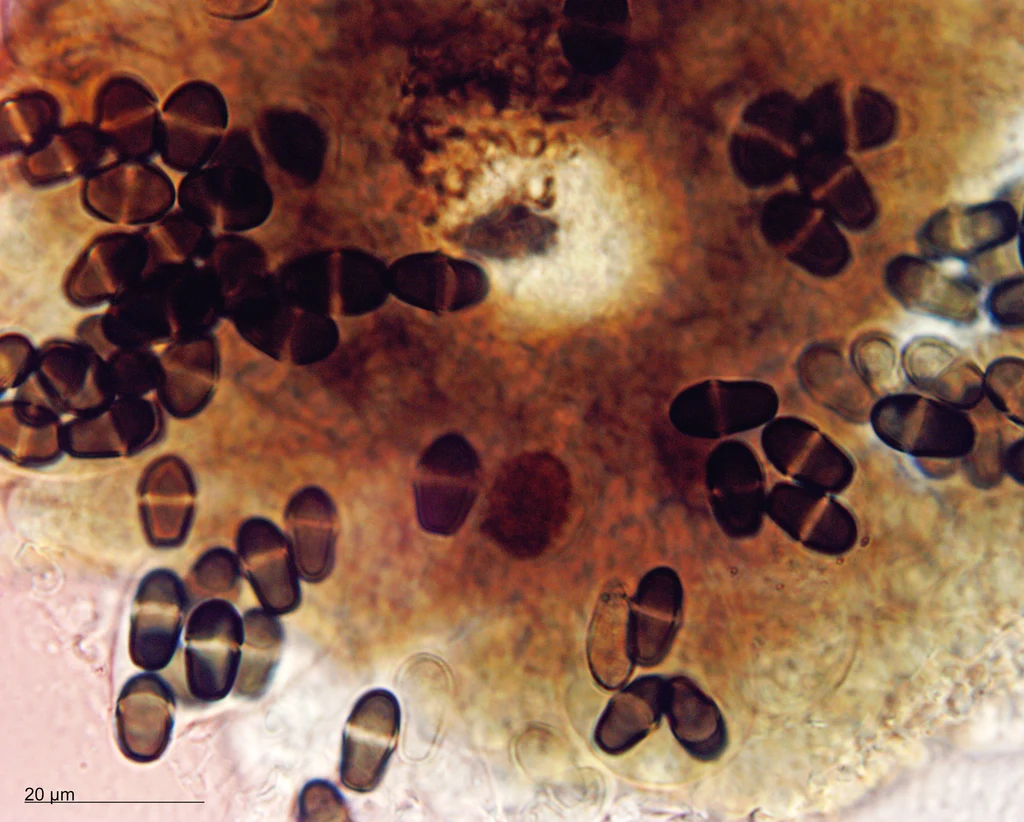
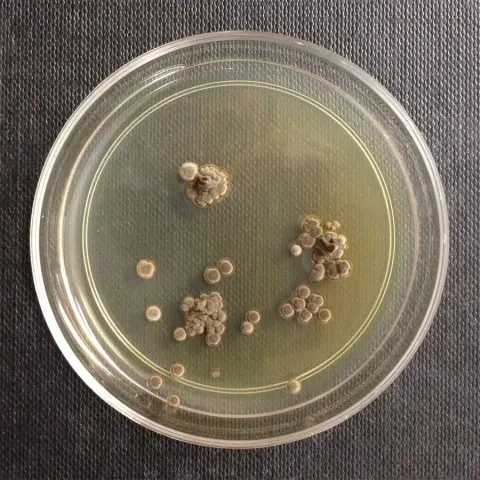
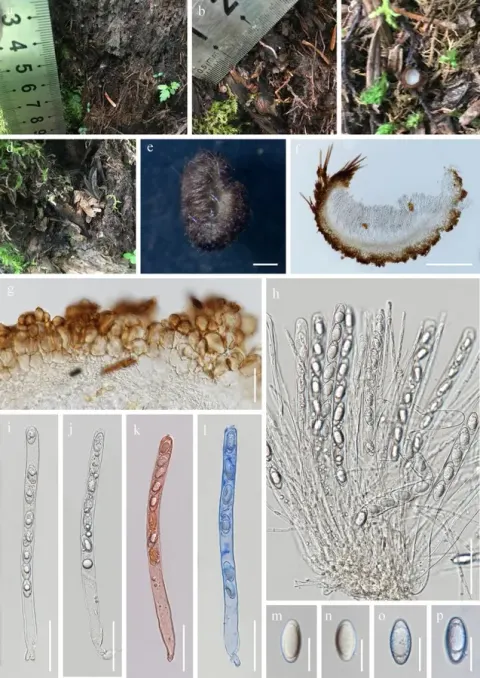
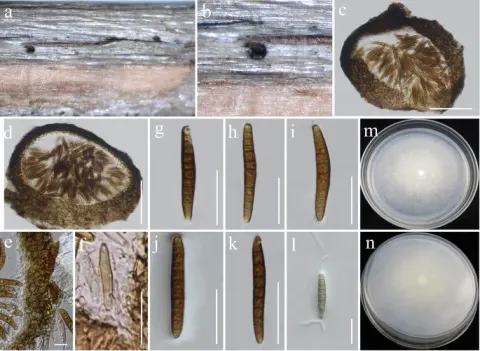
Dokumentasi Vizella tunicata menurut asosiasi foto pada record takson iNaturalist. Kredit: Jerry Cooper. Identitas mengikuti sumber; bukan penentuan spesimen independen.

Jenis
Fotografi
Kredit
(c) Jerry Cooper, some rights reserved (CC BY), uploaded by Jerry Cooper
Lisensi
CC BY 4.0
Sumber media
Buka entri sumber

Gambar menunjukkan objek menurut identifikasi sumber, bukan verifikasi independen spesimen oleh Fungi. Tidak ada skala baru yang ditambahkan.

Dokumentasi tambahan

06 / Rujukan

Sumber profil

  1. [1] Gadgil, P.D. 1995: Mycological records 4: Vizella tunicata sp. nov. New Zealand Journal of Forestry Science 25(1): 107-110. — Vizella tunicataBagian sumber: biota:1cb0ecb1-36b9-11d5-9548-00d0592d548c:1cb1ab95-36b9-11d5-9548-00d0592d548c
    Tanggal penghimpunan sumber: 2026-10-12
    Teks sumber: CC BY 4.0 · Gadgil, P.D. 1995: Mycological records 4: Vizella tunicata sp. nov. New Zealand Journal of Forestry Science 25(1): 107-110.
  2. [2] Catalogue of Life Base2026-09-11 — Vizella tunicataBagian sumber: ColDP NameUsage.tsv ID 5BNR9; accepted species; source 2073
    Tanggal penghimpunan sumber: 2026-10-12
  3. [3] Dokumentasi visual — Vizella tunicataBagian sumber: Identitas mengikuti sumber dokumentasi; bukan penentuan spesimen independen.
    Tanggal penghimpunan sumber: 2026-10-17
    Media sumber: CC BY 4.0 · (c) Jerry Cooper, some rights reserved (CC BY), uploaded by Jerry Cooper
  4. [4] Dokumentasi visual — Vizella tunicataBagian sumber: Identitas mengikuti sumber dokumentasi; bukan penentuan spesimen independen.
    Tanggal penghimpunan sumber: 2026-10-17
    Teks sumber: CC BY 4.0 · (c) Jerry Cooper, some rights reserved (CC BY), uploaded by Jerry Cooper

Adaptasi teks: CC BY 4.0. Gadgil, P.D. 1995: Mycological records 4: Vizella tunicata sp. nov. New Zealand Journal of Forestry Science 25(1): 107-110. — Gadgil, P.D. 1995: Mycological records 4: Vizella tunicata sp. nov. New Zealand Journal of Forestry Science 25(1): 107-110. — Vizella tunicata

Uraian asli dan riwayat sumber

Riwayat atau halaman sumber

Ringkasan sumber

Leaf spots on the upper surface of the leaf, roughly circular, 2-12 mm diameter, dull black, necrotic, mostly discrete but sometimes confluent. Mycelium subcuticular, with light-brown and hyaline cells in no particular order, hyphae 5-7 µm wide with individual cells varying from 5 to 35 µm in length, septa thickened and dark-brown. Ascocarp a thyrothecium, fruitbodies arranged in groups on the black spots, discrete, shining black, dimidate or flattened convex, 120-160 µm in diameter. The ascocarp has an ostiole, 10-20 µm diameter, at maturity.

Revisi sumber

Morfologi sumber

Leaf spots on the upper surface of the leaf, roughly circular, 2-12 mm diameter, dull black, necrotic, mostly discrete but sometimes confluent. Mycelium subcuticular, with light-brown and hyaline cells in no particular order, hyphae 5-7 µm wide with individual cells varying from 5 to 35 µm in length, septa thickened and dark-brown. Ascocarp a thyrothecium, fruitbodies arranged in groups on the black spots, discrete, shining black, dimidate or flattened convex, 120-160 µm in diameter. The ascocarp has an ostiole, 10-20 µm diameter, at maturity. Upper wall of the ascocarp composed of two layers of dark-brown, non-radiating cells, 3-5 µm wide. Lower wall composed of a single layer of subhyaline cells, 3-5 µm wide. Asci arranged radially round a central column of paraphysoid tissue, bitunicate, ellipsoidal to subclavate, 45-65 µm long x 15-20 µm wide, with 8 spores, apex rounded and thickened. Ascospores arranged in 1-2 rows, unicellular, obovate, brown with a transverse hyaline zone (1-2 µm wide) just above the middle, 10-14 µm long x 5-7 µm wide, with a small (about 2 µm long), conical, hyaline basal appendage. A thin gelatinous coat of uniform thickness surrounds the ascospore. Conidia borne in structures similar to ascocarps, ellipsoidal, hyaline, 5-8 x 4-6 µm. Conidiophores not seen.

Revisi sumber

Ekologi sumber

On living leaves of Pittosporum tenuifolium and of Myrsine australis. The specific epithet refers to the gelatinous coat surrounding the ascospore. The main characteristic that distinguishes the New Zealand species from other Vizella spp. is the gelatinous coat surrounding each ascospore. Müller & von Arx (1955), after examining Vizella gomphispora (Berkeley & Broome) Hughes, V. royenae von Arx & Müller, and V. bingervilliana C.Moreau & M.Moreau, concluded that these three species were conspecific with the older V. appendiculosa (Montagne & Berkeley) Theissen. In addition to the possession of a gelatinous coat, the New Zealand species differs from V. appendiculosa sensu lato in that (a) its ascospores have the hyaline band in the middle rather than close to the apex (Hughes 1953; von Arx & Müller 1975) and (b) rather than having thick hyphae composed of "almost cuboid" cells up to 12 µm wide (Hughes 1953), the width of its hyphal cells does not exceed 7 µm and the length varies from 5 µm to 35 µm. In common with the Australian V. oleariae Swart, both the conidial and ascal states of the New Zealand species are found in the same colony. However, the conidia of the New Zealand species, unlike those of V. oleariae, remain hyaline at maturity and the mycelium does not have the regular alternation of paired hyaline cells as with dark cells as described for V. oleariae (Swart 1971).

Revisi sumber

Struktur reproduksi sumber

Leaf spots on the upper surface of the leaf, roughly circular, 2-12 mm diameter, dull black, necrotic, mostly discrete but sometimes confluent. Mycelium subcuticular, with light-brown and hyaline cells in no particular order, hyphae 5-7 µm wide with individual cells varying from 5 to 35 µm in length, septa thickened and dark-brown. Ascocarp a thyrothecium, fruitbodies arranged in groups on the black spots, discrete, shining black, dimidate or flattened convex, 120-160 µm in diameter. The ascocarp has an ostiole, 10-20 µm diameter, at maturity. Upper wall of the ascocarp composed of two layers of dark-brown, non-radiating cells, 3-5 µm wide. Lower wall composed of a single layer of subhyaline cells, 3-5 µm wide.

Revisi sumber

Rujukan halaman ini

Fungi. Vizella tunicata. Rilis data fungi-2026-10-12-expansion-2. https://fungi-atlas.mgadib.chatgpt.site/jamur/vizella-tunicata/.

Status: impor sumber; pemeriksaan editorial per profil belum selesai. Untuk klaim biologis, gunakan rujukan pada bagian terkait dan periksa konteks sumber aslinya.