01 / Morfologi

Ciri dan struktur

Wallemia sebi has transparent hyphae, that are usually 1.5–2.5 μm wide, forming a compact mycelium. Conidiphores, the specialized stalks for asexual reproduction, are arranged in a parallel fashion and are usually unbranched. The conidiogenous cells are cylindrical and produce arthrospore-like conidia in packages of four. Conidia are cylindrical initially and soon become spherical in shape, approximately 2–2.5 μm in diameter, and form long bending chains up to 1 mm long.

Sebagian uraian ditampilkan dalam bahasa sumber; terjemahannya belum tersedia atau belum lolos pemeriksaan.

Rujukan: [1]

Pengukuran mengikuti objek, spesimen atau kultur, dan metode yang disebutkan sumber. Baca uraian asli untuk konteks lengkap.

02 / Kehidupan

Habitat dan peran ekologis

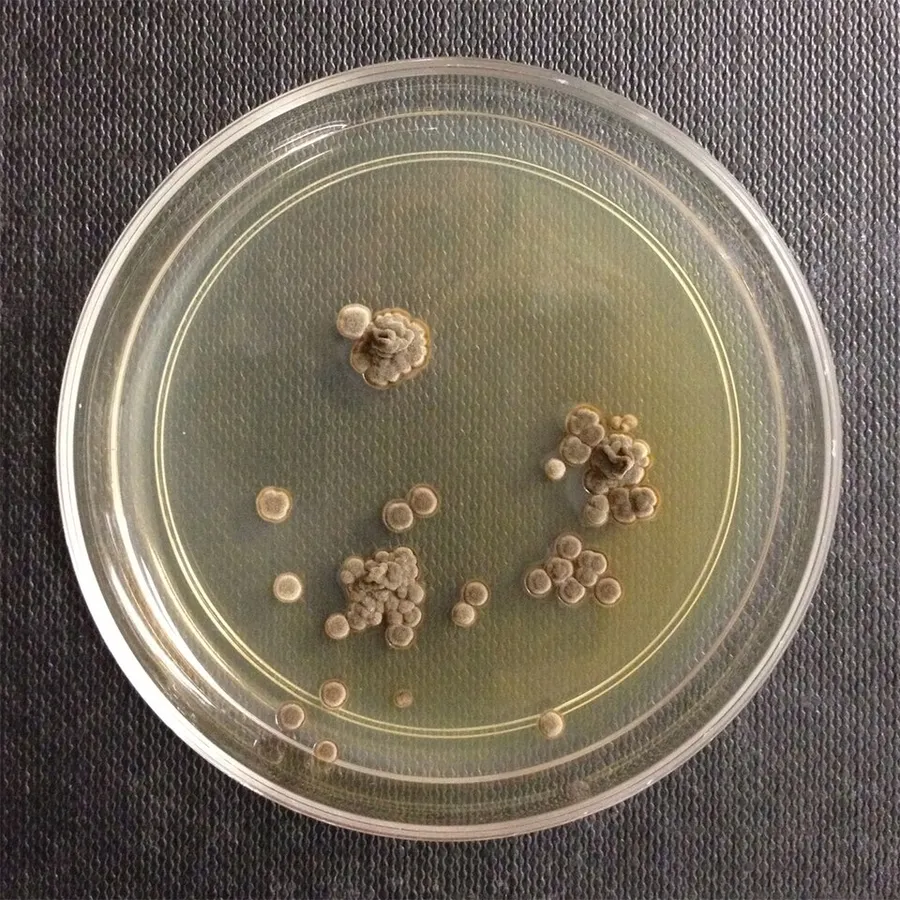
It is commonly found on highly sugared or salted materials, such as jams, bread, cakes, sugar, bacon, salted meats, and salted fish. It is also found in indoor air, house dust, and soil. Wallemia sebi has been isolated from hair, hay, textiles and man. It can grow slowly without additional solute in the growth medium, and form small, reddish-brown, powdery colonies. Wallemia sebi can grow slowly on specialized fungal media with low water activity without additional solutes. On agar, W. sebi forms small brown colonies with a fine velvety texture, that have long rows of spores that may round up and become free at maturity. The colonies usually can grow to 2-2.5 millimeters, and sometimes to 4 to 5 millimeters in diameter. Wallemia sebi typically grow on MEA, MY50G, W-4 and W-10 agar. Wallemia sebi invade food with low water activity, and the food contamination has been reported in many foodstuffs across a broad range of habitats. For example, W. sebi is one of the most common fungi isolated from spices. Along with other xerophilic fungi, they cause loss of flavor and volatile components, production of off-flavors, and clumping in ground spices. Also, W. sebi is considered to be the principal fungus spoiling dried and salted fish.

Sebagian uraian ditampilkan dalam bahasa sumber; terjemahannya belum tersedia atau belum lolos pemeriksaan.

Rujukan: [1]

Habitat atau konteks temuan
kultur yang didokumentasikan
Substrat
Informasi belum tersedia pada sumber rilis ini.
Peran atau konteks
Belum dikategorikan pada rilis ini.
Temukan hubungan serupa
03 / Siklus hidup

Reproduksi

Wallemia sebi has transparent hyphae, that are usually 1.5–2.5 μm wide, forming a compact mycelium. Conidiphores, the specialized stalks for asexual reproduction, are arranged in a parallel fashion and are usually unbranched. The conidiogenous cells are cylindrical and produce arthrospore-like conidia in packages of four. Conidia are cylindrical initially and soon become spherical in shape, approximately 2–2.5 μm in diameter, and form long bending chains up to 1 mm long.

Sebagian uraian ditampilkan dalam bahasa sumber; terjemahannya belum tersedia atau belum lolos pemeriksaan.

Rujukan: [1]

Sinonim menurut acuan taksonomi rilis: Catenularia fuliginea; Hemispora stellata; Sporendonema epizoum; Sporendonema sebi; Torula epizoa
04 / Batas informasi

Catatan identitas dan cakupan

  • Nama diterima mengikuti Catalogue of Life Base2026-09-11; uraian mempertahankan konsep dan nama sumber aslinya.
  • Original geographic, specimen and life-cycle scope retained; source import awaits individual editorial review.
  • Impor dan terjemahan otomatis belum diperiksa editorial per profil. Struktur reproduktif yang disebutkan tidak membuktikan seluruh siklus hidup diketahui.
  • Pengukuran pada uraian mengikuti spesimen, kultur, dan metode sumber; angka tidak diperluas ke semua populasi.

Catatan distribusi dalam narasi mengikuti sumbernya. Dokumentasi spesimen atau foto mengikuti catatan sumber. Bukti wilayah Indonesia dan penilaian konservasi tidak disimpulkan dari gambar.

05 / Dokumentasi

Melihat dengan konteks

Dokumentasi Wallemia sebi dari Wikimedia Commons. A culture of Wallemia sebi on a Petri dish Identifikasi mengikuti record berkas sumber.

Jenis
Fotografi
Kredit
Hainguyen1984
Sumber media
Buka entri sumber

Gambar menunjukkan objek menurut identifikasi sumber, bukan verifikasi independen spesimen oleh Fungi. Tidak ada skala baru yang ditambahkan.

06 / Rujukan

Sumber profil

  1. [1] Wallemia sebi — Wikipedia (en)Bagian sumber: Frozen revision 1314867383
    Tanggal penghimpunan sumber: 2026-10-12
    Teks sumber: CC BY-SA4.0 · Wikipedia contributors
  2. [2] Catalogue of Life Base2026-09-11 — Wallemia sebiBagian sumber: ColDP NameUsage.tsv ID 7G6CY; accepted species; source 2073
    Tanggal penghimpunan sumber: 2026-10-12
  3. [3] Dokumentasi visual — Wallemia sebiBagian sumber: Individual media record; identification follows the source, not independent determination
    Tanggal penghimpunan sumber: 2026-10-12
    Media sumber: CC BY-SA 3.0 · Hainguyen1984

Adaptasi teks: CC BY-SA 4.0. Wikipedia contributors — Wallemia sebi — Wikipedia (en)

Uraian asli dan riwayat sumber

Riwayat atau halaman sumber

Ringkasan sumber

Wallemia sebi is a xerophilic fungus of the phylum Basidiomycota. It is commonly found on highly sugared or salted materials, such as jams, bread, cakes, sugar, bacon, salted meats, and salted fish. It is also found in indoor air, house dust, and soil. One distinctive feature of W. sebi is its relationship with water activity. Most fungi are profoundly affected by the availability of water. The ability to tolerate environments with low water activity has been found mostly in Ascomycota, but rarely in Basidiomycota.

Revisi sumber

Morfologi sumber

Wallemia sebi has transparent hyphae, that are usually 1.5–2.5 μm wide, forming a compact mycelium. Conidiphores, the specialized stalks for asexual reproduction, are arranged in a parallel fashion and are usually unbranched. The conidiogenous cells are cylindrical and produce arthrospore-like conidia in packages of four. Conidia are cylindrical initially and soon become spherical in shape, approximately 2–2.5 μm in diameter, and form long bending chains up to 1 mm long.

Revisi sumber

Ekologi sumber

It is commonly found on highly sugared or salted materials, such as jams, bread, cakes, sugar, bacon, salted meats, and salted fish. It is also found in indoor air, house dust, and soil. Wallemia sebi has been isolated from hair, hay, textiles and man. It can grow slowly without additional solute in the growth medium, and form small, reddish-brown, powdery colonies. Wallemia sebi can grow slowly on specialized fungal media with low water activity without additional solutes. On agar, W. sebi forms small brown colonies with a fine velvety texture, that have long rows of spores that may round up and become free at maturity. The colonies usually can grow to 2-2.5 millimeters, and sometimes to 4 to 5 millimeters in diameter. Wallemia sebi typically grow on MEA, MY50G, W-4 and W-10 agar. Wallemia sebi invade food with low water activity, and the food contamination has been reported in many foodstuffs across a broad range of habitats. For example, W. sebi is one of the most common fungi isolated from spices. Along with other xerophilic fungi, they cause loss of flavor and volatile components, production of off-flavors, and clumping in ground spices. Also, W. sebi is considered to be the principal fungus spoiling dried and salted fish.

Revisi sumber

Struktur reproduksi sumber

Wallemia sebi has transparent hyphae, that are usually 1.5–2.5 μm wide, forming a compact mycelium. Conidiphores, the specialized stalks for asexual reproduction, are arranged in a parallel fashion and are usually unbranched. The conidiogenous cells are cylindrical and produce arthrospore-like conidia in packages of four. Conidia are cylindrical initially and soon become spherical in shape, approximately 2–2.5 μm in diameter, and form long bending chains up to 1 mm long.

Revisi sumber

Rujukan halaman ini

Fungi. Wallemia sebi. Rilis data fungi-2026-10-12-expansion-2. https://fungi-atlas.mgadib.chatgpt.site/jamur/wallemia-sebi/.

Status: impor sumber; pemeriksaan editorial per profil belum selesai. Untuk klaim biologis, gunakan rujukan pada bagian terkait dan periksa konteks sumber aslinya.