Ciri dan struktur
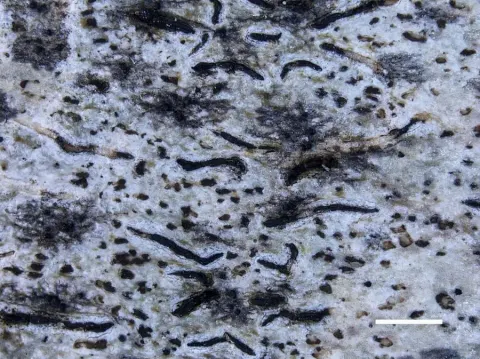
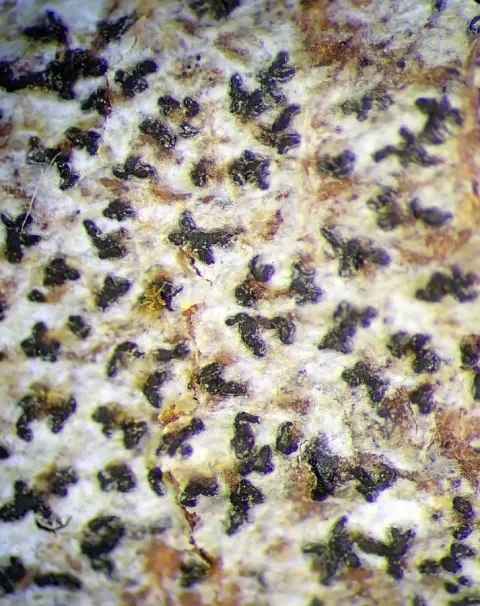
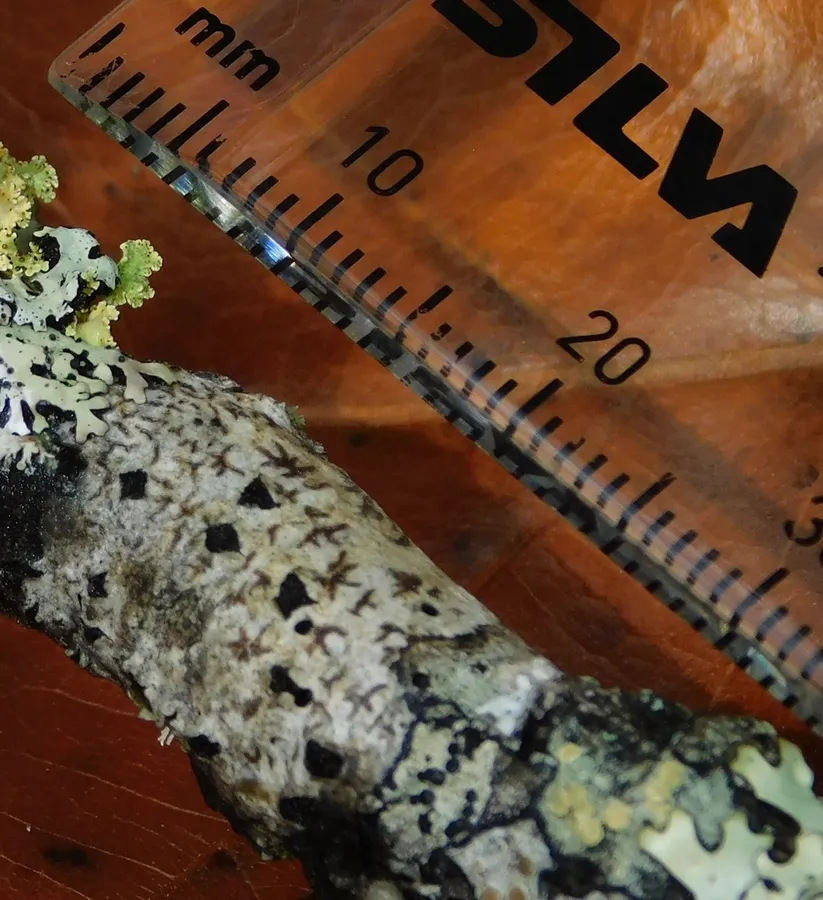
The thallus is mainly embedded in the outer bark (), grey-white to pale fawn, and forms circular to elliptic patches at least 6×3 cm, each bounded by a dark brown hypothalline line. In microscopic preparations the hyphae stain blue with iodine. Standard spot tests on the thallus are negative (K−, C−, KC−, PD−, UV−). The apothecia are numerous and often crowded, forming elongated, slit-like structures () that are usually irregularly star-shaped (), only occasionally neatly stellate, and reaching up to 12 mm across in the largest aggregates. The individual "arms" are narrow (about 0.08–0.16 mm wide) and pale to dark reddish-brown, without . Microscopically, the apothecia are 80–130 μm tall. The is reddish-brown and turns olivaceous with K, while the hymenium is hyaline and iodine-positive (I+ blue). The asci are and eight-spored, with only a minute amyloid ring at the apex, and the ascospores are typically 17–24×6–8 μm, 3–4-septate, and macrocephalic (with the upper cell larger than the lower). North American collections have been reported with slightly smaller spores, about 15–22 × 5–7 μm, while retaining the same general spore form and chemistry. Spores are hyaline and smooth when young, but older spores develop brown, granular warting. Pycnidia have not been observed. The species is lichenized with the green alga Trentepohlia as its photobiont. Chemically, the diagnostic feature is gyrophoric acid confined to the apothecia, detectable as a C+ (red) reaction in apothecial sections.
Habitat dan peran ekologis
In Britain, Arthonia anglica has been found on the bark of mature trees in long-established woodland, recorded from trunks or main branches of beech (Fagus) and holly (Ilex). The few known gatherings include material from southern England, with a modern collection reported from North Devon on holly in cliff woodland, and an older record from the New Forest area on holly. In Spain, A. anglica has been reported from Galicia, where it was collected on Alnus glutinosa and represents the first record for the Iberian Peninsula. The only earlier Spanish report was from La Gomera in the Canary Islands. In eastern North America, A. anglica has been recorded mainly from humid, mesic hardwood forests, especially in streamside woodlands in the Ozark region. It has been collected on the bark of hardwoods including maple (Acer) and hornbeam (Carpinus), and has also been found at middle to low elevations in the southern Appalachian Mountains as well as in the coastal plain and piedmont of the southeastern United States. It has also been recorded in Virginia and Wisconsin. The species appears to have a very southern British distribution and has so far been confirmed from only a small number of collections.
- Habitat atau konteks temuan
- hutan
- Substrat
- Informasi belum tersedia pada sumber rilis ini.
- Peran atau konteks
- Pembentuk liken
Reproduksi
The apothecia are numerous and often crowded, forming elongated, slit-like structures () that are usually irregularly star-shaped (), only occasionally neatly stellate, and reaching up to 12 mm across in the largest aggregates. The individual "arms" are narrow (about 0.08–0.16 mm wide) and pale to dark reddish-brown, without . Microscopically, the apothecia are 80–130 μm tall. The is reddish-brown and turns olivaceous with K, while the hymenium is hyaline and iodine-positive (I+ blue). The asci are and eight-spored, with only a minute amyloid ring at the apex, and the ascospores are typically 17–24×6–8 μm, 3–4-septate, and macrocephalic (with the upper cell larger than the lower). North American collections have been reported with slightly smaller spores, about 15–22 × 5–7 μm, while retaining the same general spore form and chemistry.
Catatan identitas dan cakupan
- Nama diterima mengikuti Catalogue of Life Base2026-09-11; uraian mempertahankan konsep dan nama sumber aslinya.
- Original geographic, specimen and life-cycle scope retained; source import awaits individual editorial review.
- Impor dan terjemahan otomatis belum diperiksa editorial per profil. Struktur reproduktif yang disebutkan tidak membuktikan seluruh siklus hidup diketahui.
- Pengukuran pada uraian mengikuti spesimen, kultur, dan metode sumber; angka tidak diperluas ke semua populasi.
Catatan distribusi dalam narasi mengikuti sumbernya. Dokumentasi spesimen atau foto mengikuti catatan sumber. Bukti wilayah Indonesia dan penilaian konservasi tidak disimpulkan dari gambar.
Melihat dengan konteks
Dokumentasi Arthonia anglica menurut asosiasi foto pada record takson iNaturalist. Kredit: Michael J. Papay. Identitas mengikuti sumber; bukan penentuan spesimen independen.
- Jenis
- Fotografi
- Kredit
- (c) Michael J. Papay, some rights reserved (CC BY)
- Lisensi
- CC BY 4.0
- Sumber media
- Buka entri sumber
Dokumentasi tambahan
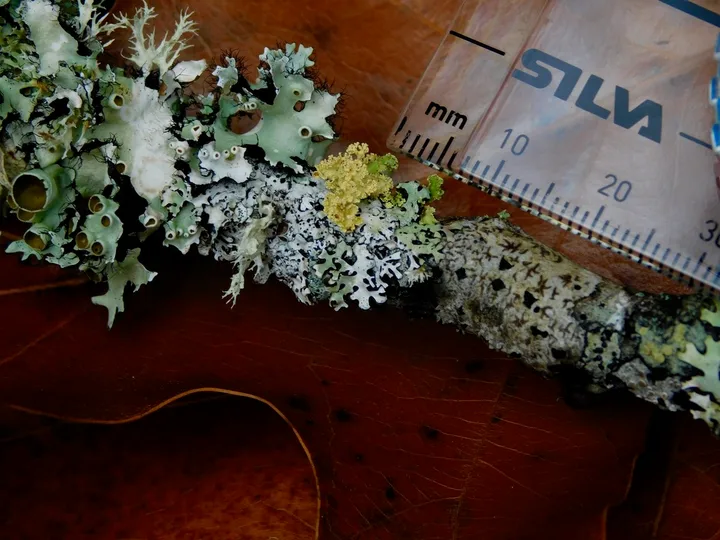
Foto yang diasosiasikan dengan Arthonia anglica pada iNaturalist. Identifikasi mengikuti sumber; bukan penentuan spesimen independen.
Kredit dan penggunaan
(c) Michael J. Papay, some rights reserved (CC BY)
Ukuran dan format gambar disesuaikan tanpa pemotongan, retus, atau penambahan skala. Lisensi sumber dipertahankan.
Sumber profil
- [1] Arthonia anglica — Wikipedia (en)
- [2] Catalogue of Life Base2026-09-11 — Arthonia anglica
- [3] Dokumentasi visual — Arthonia anglica
- [4] Dokumentasi visual — Arthonia anglica
Rujukan halaman ini
Fungi. Arthonia anglica. Rilis data fungi-2026-10-12-expansion-2. https://fungi-atlas.mgadib.chatgpt.site/jamur/arthonia-anglica/.
Status: impor sumber; pemeriksaan editorial per profil belum selesai. Untuk klaim biologis, gunakan rujukan pada bagian terkait dan periksa konteks sumber aslinya.