01 / Morfologi

Ciri dan struktur

Arthonia graphidicola does not form a conspicuous thallus of its own, instead developing within the thallus of Graphis scripta. The apothecia are tiny and scattered, initially developing beneath the bark surface and then breaking through as small, fleck-like fruiting bodies. They are rounded to somewhat angular, about 0.06–0.16 mm across, or elongate (often tapering to pointed ends) and up to about 0.42 mm long; they are reddish- to dark-brown and lack . Under the microscope, the apothecia are about 60–85 micrometres (μm) tall, with a reddish-brown hymenium that turns dull olivaceous in potassium hydroxide solution (K), and gives a red reaction with iodine. The is hyaline and iodine-positive (I+ blue). The asci are and 8-spored (about 35–40 × 15–17 μm), and in K/I typically show only a minute amyloid ring at the apex. The ascospores are oblong to ovoid, macrocephalic, and 2–3-septate, measuring (13–)14–17 × 4.5–5.5 μm; they are initially hyaline and smooth, but later become covered in dark brown granular warts. Pycnidia are uncommon. When present they are immersed (about 40 μm across) and produce hyaline, rod-shaped conidia around 4.5–5.5 × 0.8 μm. Arthonia graphidicola is one of the few lichenicolous Arthonia species reported from hosts in the Graphidaceae, and it can be confused with A. diorygmae because both have hyaline ascospores of similar size (about 13–17 × 4–5.5 μm). It differs in its host and in fruiting-body characters: A. graphidicola grows on the thallus of Graphis scripta and forms very small, often cleft, fleck-like apothecia (typically 0.06–0.16 mm across, sometimes elongate), with a pale reddish-brown asciogenous layer; its ascospores are 2–3-septate and become brown and warty at maturity.

Sebagian uraian ditampilkan dalam bahasa sumber; terjemahannya belum tersedia atau belum lolos pemeriksaan.

Rujukan: [1]

Pengukuran mengikuti objek, spesimen atau kultur, dan metode yang disebutkan sumber. Baca uraian asli untuk konteks lengkap.

02 / Kehidupan

Habitat dan peran ekologis

In Britain, Arthonia graphidicola has been recorded only as a commensal on Graphis scripta growing on hazel (Corylus) bark. The type collection is from Benderloch (Argyll), and additional specimens were reported from other western Scottish localities, including Loch Sunart (West Inverness-shire), Seil (Argyll), and several sites on Skye (Tokovaig Wood, Kilmore hazelwood, and Coille Gaireallach). These records suggest a distribution centred on mild, oceanic districts in western Scotland, in habitats supporting well-developed populations of the host lichen on hazel.

Sebagian uraian ditampilkan dalam bahasa sumber; terjemahannya belum tersedia atau belum lolos pemeriksaan.

Rujukan: [1]

Habitat atau konteks temuan
Informasi belum tersedia pada sumber rilis ini.
Substrat
Informasi belum tersedia pada sumber rilis ini.
Peran atau konteks
Pembentuk liken
Temukan hubungan serupa
03 / Siklus hidup

Reproduksi

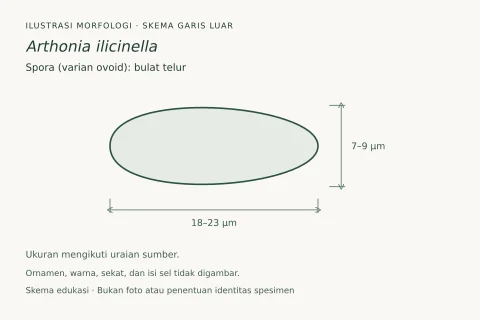
Under the microscope, the apothecia are about 60–85 micrometres (μm) tall, with a reddish-brown hymenium that turns dull olivaceous in potassium hydroxide solution (K), and gives a red reaction with iodine. The is hyaline and iodine-positive (I+ blue). The asci are and 8-spored (about 35–40 × 15–17 μm), and in K/I typically show only a minute amyloid ring at the apex. The ascospores are oblong to ovoid, macrocephalic, and 2–3-septate, measuring (13–)14–17 × 4.5–5.5 μm; they are initially hyaline and smooth, but later become covered in dark brown granular warts. Pycnidia are uncommon. When present they are immersed (about 40 μm across) and produce hyaline, rod-shaped conidia around 4.5–5.5 × 0.8 μm.

Sebagian uraian ditampilkan dalam bahasa sumber; terjemahannya belum tersedia atau belum lolos pemeriksaan.

Rujukan: [1]

04 / Batas informasi

Catatan identitas dan cakupan

  • Nama diterima mengikuti Catalogue of Life Base2026-09-11; uraian mempertahankan konsep dan nama sumber aslinya.
  • Original geographic, specimen and life-cycle scope retained; source import awaits individual editorial review.
  • Impor dan terjemahan otomatis belum diperiksa editorial per profil. Struktur reproduktif yang disebutkan tidak membuktikan seluruh siklus hidup diketahui.
  • Pengukuran pada uraian mengikuti spesimen, kultur, dan metode sumber; angka tidak diperluas ke semua populasi.

Catatan distribusi dalam narasi mengikuti sumbernya. Dokumentasi spesimen atau foto mengikuti catatan sumber. Bukti wilayah Indonesia dan penilaian konservasi tidak disimpulkan dari gambar.

05 / Dokumentasi

Melihat dengan konteks

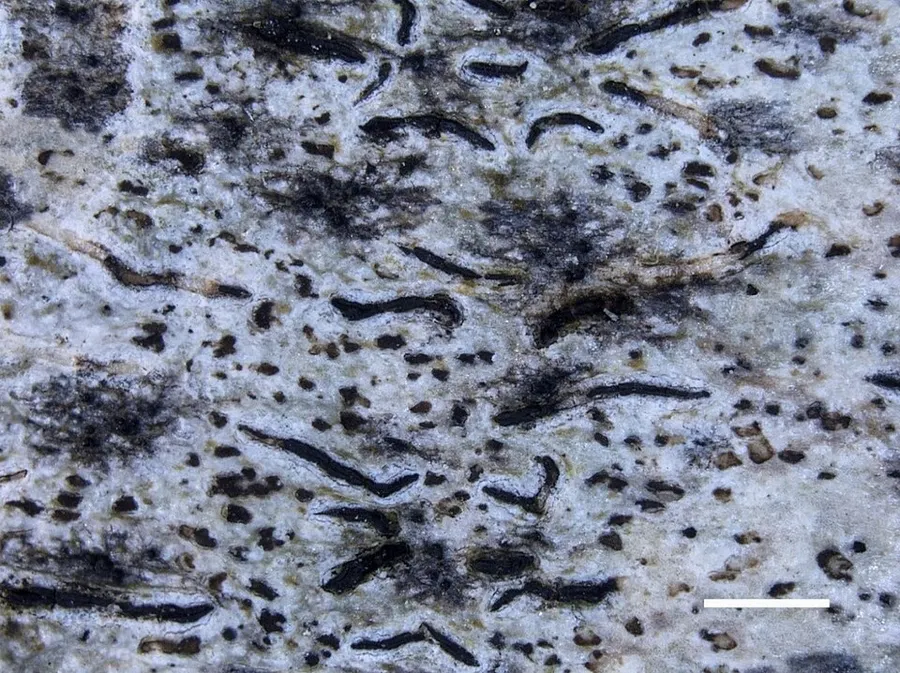
Dokumentasi Arthonia graphidicola dari Wikimedia Commons. The lichenicolous (lichen-dwelling) fungus Arthonia graphidicola , growing on the script lichen species Graphis scripta . Scale = 1 mm Identifikasi mengikuti record berkas sumber.

Jenis
Fotografi
Kredit
Andreas Frisch
Sumber media
Buka entri sumber

Gambar menunjukkan objek menurut identifikasi sumber, bukan verifikasi independen spesimen oleh Fungi. Tidak ada skala baru yang ditambahkan.

06 / Rujukan

Sumber profil

  1. [1] Arthonia graphidicola — Wikipedia (en)Bagian sumber: Frozen revision 1338752188
    Tanggal penghimpunan sumber: 2026-10-12
    Teks sumber: CC BY-SA4.0 · Wikipedia contributors
  2. [2] Catalogue of Life Base2026-09-11 — Arthonia graphidicolaBagian sumber: ColDP NameUsage.tsv ID GXGX; accepted species; source 2073
    Tanggal penghimpunan sumber: 2026-10-12
  3. [3] Dokumentasi visual — Arthonia graphidicolaBagian sumber: Individual media record; identification follows the source, not independent determination
    Tanggal penghimpunan sumber: 2026-10-12
    Media sumber: CC BY-SA 4.0 · Andreas Frisch

Adaptasi teks: CC BY-SA 4.0. Wikipedia contributors — Arthonia graphidicola — Wikipedia (en)

Uraian asli dan riwayat sumber

Riwayat atau halaman sumber

Ringkasan sumber

Arthonia graphidicola is a species of lichen-dwelling fungus in the family Arthoniaceae. The fungus forms tiny reddish- to dark-brown flecks that initially develop beneath the bark surface before breaking through, typically measuring about 0.06–0.16 mm across or forming elongated structures up to about 0.4 mm long. It produces ascospores that are initially colourless and smooth but later become covered in dark brown granular warts, with the upper cell larger than the lower ones. The species is known from western Scotland, where it grows exclusively on the script lichen species Graphis scripta found on hazel bark in mild, oceanic districts.

Revisi sumber

Morfologi sumber

Arthonia graphidicola does not form a conspicuous thallus of its own, instead developing within the thallus of Graphis scripta. The apothecia are tiny and scattered, initially developing beneath the bark surface and then breaking through as small, fleck-like fruiting bodies. They are rounded to somewhat angular, about 0.06–0.16 mm across, or elongate (often tapering to pointed ends) and up to about 0.42 mm long; they are reddish- to dark-brown and lack . Under the microscope, the apothecia are about 60–85 micrometres (μm) tall, with a reddish-brown hymenium that turns dull olivaceous in potassium hydroxide solution (K), and gives a red reaction with iodine. The is hyaline and iodine-positive (I+ blue). The asci are and 8-spored (about 35–40 × 15–17 μm), and in K/I typically show only a minute amyloid ring at the apex. The ascospores are oblong to ovoid, macrocephalic, and 2–3-septate, measuring (13–)14–17 × 4.5–5.5 μm; they are initially hyaline and smooth, but later become covered in dark brown granular warts. Pycnidia are uncommon. When present they are immersed (about 40 μm across) and produce hyaline, rod-shaped conidia around 4.5–5.5 × 0.8 μm. Arthonia graphidicola is one of the few lichenicolous Arthonia species reported from hosts in the Graphidaceae, and it can be confused with A. diorygmae because both have hyaline ascospores of similar size (about 13–17 × 4–5.5 μm). It differs in its host and in fruiting-body characters: A. graphidicola grows on the thallus of Graphis scripta and forms very small, often cleft, fleck-like apothecia (typically 0.06–0.16 mm across, sometimes elongate), with a pale reddish-brown asciogenous layer; its ascospores are 2–3-septate and become brown and warty at maturity.

Revisi sumber

Ekologi sumber

In Britain, Arthonia graphidicola has been recorded only as a commensal on Graphis scripta growing on hazel (Corylus) bark. The type collection is from Benderloch (Argyll), and additional specimens were reported from other western Scottish localities, including Loch Sunart (West Inverness-shire), Seil (Argyll), and several sites on Skye (Tokovaig Wood, Kilmore hazelwood, and Coille Gaireallach). These records suggest a distribution centred on mild, oceanic districts in western Scotland, in habitats supporting well-developed populations of the host lichen on hazel.

Revisi sumber

Struktur reproduksi sumber

Under the microscope, the apothecia are about 60–85 micrometres (μm) tall, with a reddish-brown hymenium that turns dull olivaceous in potassium hydroxide solution (K), and gives a red reaction with iodine. The is hyaline and iodine-positive (I+ blue). The asci are and 8-spored (about 35–40 × 15–17 μm), and in K/I typically show only a minute amyloid ring at the apex. The ascospores are oblong to ovoid, macrocephalic, and 2–3-septate, measuring (13–)14–17 × 4.5–5.5 μm; they are initially hyaline and smooth, but later become covered in dark brown granular warts. Pycnidia are uncommon. When present they are immersed (about 40 μm across) and produce hyaline, rod-shaped conidia around 4.5–5.5 × 0.8 μm.

Revisi sumber

Rujukan halaman ini

Fungi. Arthonia graphidicola. Rilis data fungi-2026-10-12-expansion-2. https://fungi-atlas.mgadib.chatgpt.site/jamur/arthonia-graphidicola/.

Status: impor sumber; pemeriksaan editorial per profil belum selesai. Untuk klaim biologis, gunakan rujukan pada bagian terkait dan periksa konteks sumber aslinya.